Tell us about the job
Takes about a minute. No obligation.

A contractor quoting furnace repair in Martin County works out pretty quickly that the weather record here, while real, does not carry much diagnostic weight. 38 severe weather events were recorded in Martin County, Indiana between 2015 and 2024. At that rate, severe weather lands infrequently enough that it has not been the defining load on most residential systems. What wears a furnace out in this county is ordinary run time, deferred filter changes, and heat exchanger fatigue from years of cycling. A contractor who finds a cracked exchanger or a failing inducer motor is looking at age and upkeep, not storm exposure.
Ductwork laid down for one generation of heating gets adapted, patched, and asked to carry whatever came next. Half the homes in Martin County, Indiana were built in 1981 or earlier (2020-2024 ACS 5-year). A furnace that has run in a house that old has likely seen more than one replacement, and the parts it takes may no longer be on a standard order. When a contractor opens the unit, the question is not only what failed but whether a matching component is still manufactured or has to be sourced from a specialty supplier, which changes both the timeline and the bill. That is what the repair actually turns on.
The Parts of a Furnace a Contractor Checks First
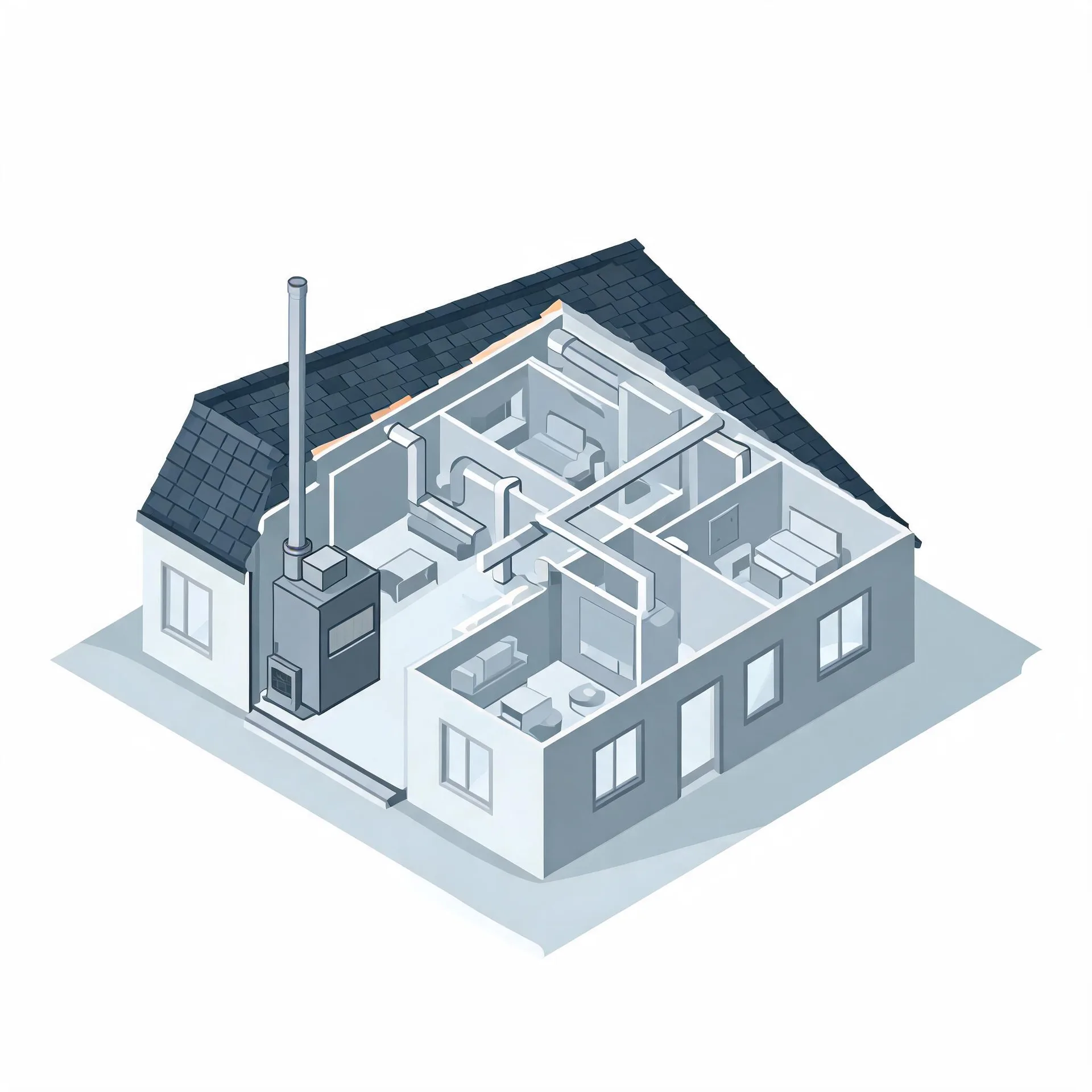
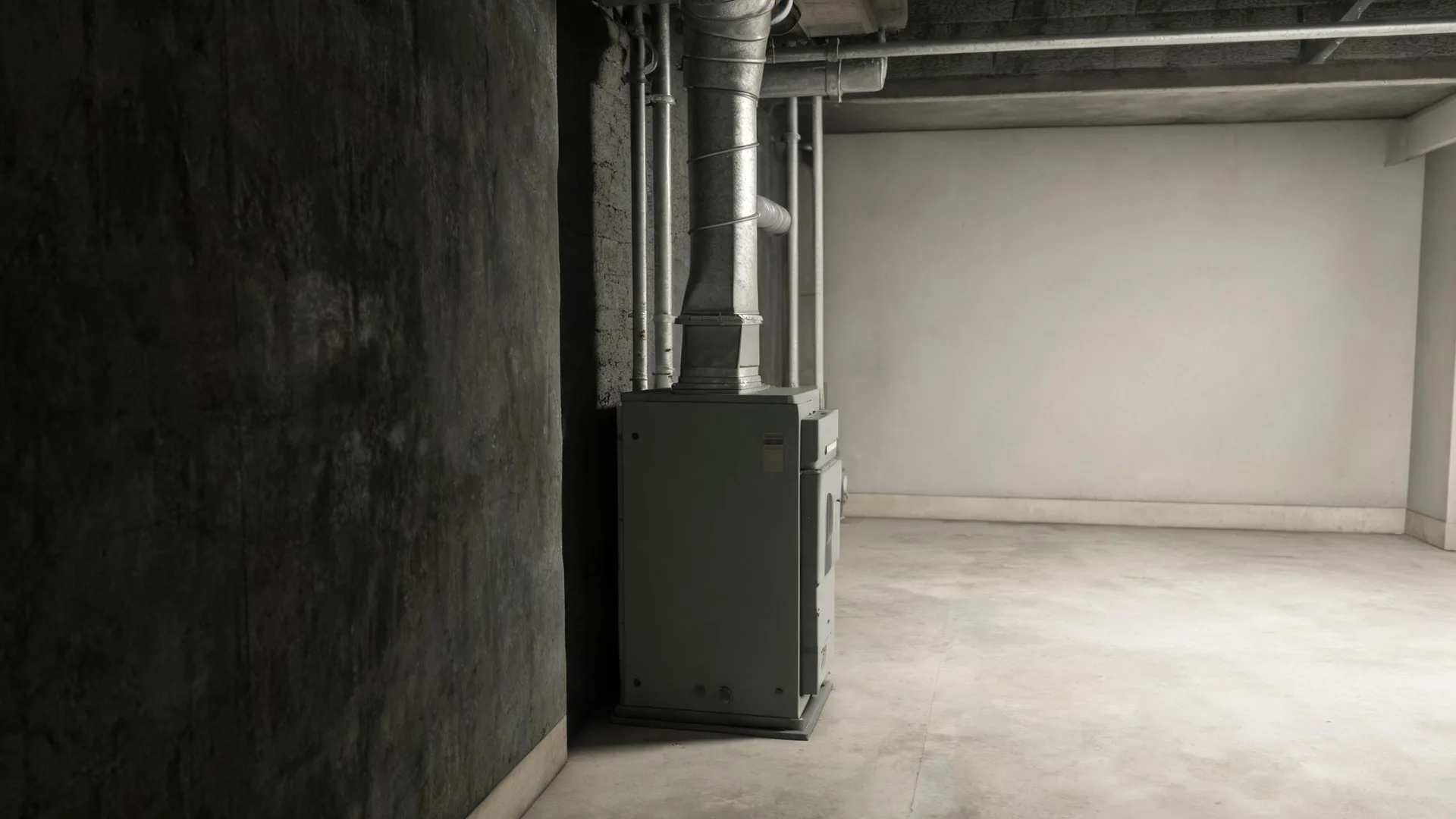
The furnace itself sits in a mechanical room, basement, or utility closet and is the piece a contractor goes to first. Inside it, the heat exchanger is the part most worth understanding: it separates combustion gases from the air your household breathes, and a crack there is a serious fault. The burners, which fire inside the exchanger, are another early stop.
The blower motor sits at the base of the furnace cabinet and pushes conditioned air out through your ducts. Alongside it, the inducer motor and the igniter are small parts that fail more often than the furnace as a whole. The flue pipe runs from the cabinet to an exterior vent and carries exhaust gases out of the house.
The drawing shows a typical furnace layout, and a licensed contractor determines which components apply to the specific equipment and installation in your home.
Find a contractor in Martin CountyMartin County, Indiana, by the numbers
38 severe weather events were recorded in Martin County, Indiana between 2015 and 2024.
NOAA National Centers for Environmental Information, Storm Events Database, bulk CSV export, events 2015-01-01 through 2024-12-31.Half the homes in Martin County, Indiana were built in 1981 or earlier (2020-2024 ACS 5-year).
U.S. Census Bureau, 2020-2024 American Community Survey 5-Year EstimatesMartin County, Indiana holds 4,583 housing units (2020-2024 ACS 5-year).
U.S. Census Bureau, 2020-2024 American Community Survey 5-Year EstimatesOwners occupy 78.5% of the occupied homes in Martin County, Indiana (2020-2024 ACS 5-year).
U.S. Census Bureau, 2020-2024 American Community Survey 5-Year EstimatesCodes & Standards Governing Furnace Repair in Martin County, Indiana4 sourced rules and standards
What Happens When the Contractor Comes Out
Non-weatherized gas furnaces manufactured on or after November 19, 2015 must reach 80.0 percent AFUE.
Non-weatherized oil-fired furnaces manufactured on or after November 19, 2015 must reach 83.0 percent AFUE.
Mobile home gas furnaces manufactured on or after November 19, 2015 must reach 80.0 percent AFUE.
Non-weatherized gas furnaces manufactured on or after December 18, 2028 must reach 95.0 percent AFUE, up from the 80.0 percent minimum that applies to units manufactured before that date.
Severe Weather Events in Martin County, Year by Year
Furnaces in Martin County work against whatever the local climate demands, and storms push that demand hard. How often severe weather hits here shapes how hard the equipment runs and how quickly it wears.
38 severe weather events, 2015–2024. Source: NOAA National Centers for Environmental Information, Storm Events Database.