Tell us about the job
Takes about a minute. No obligation.

A contractor quoting furnace installation in Martin County works out the heating load from the structure itself, not from a weather record that rarely drives the decision. 38 severe weather events were recorded in Martin County, Indiana between 2015 and 2024. At that rate, severe weather touches most homes occasionally rather than routinely, so the variables that determine what equipment a house needs and how it gets installed are insulation quality, duct layout, and the age of what is being replaced. A contractor who sizes the furnace to the building rather than to a catalog entry is the one whose install holds.
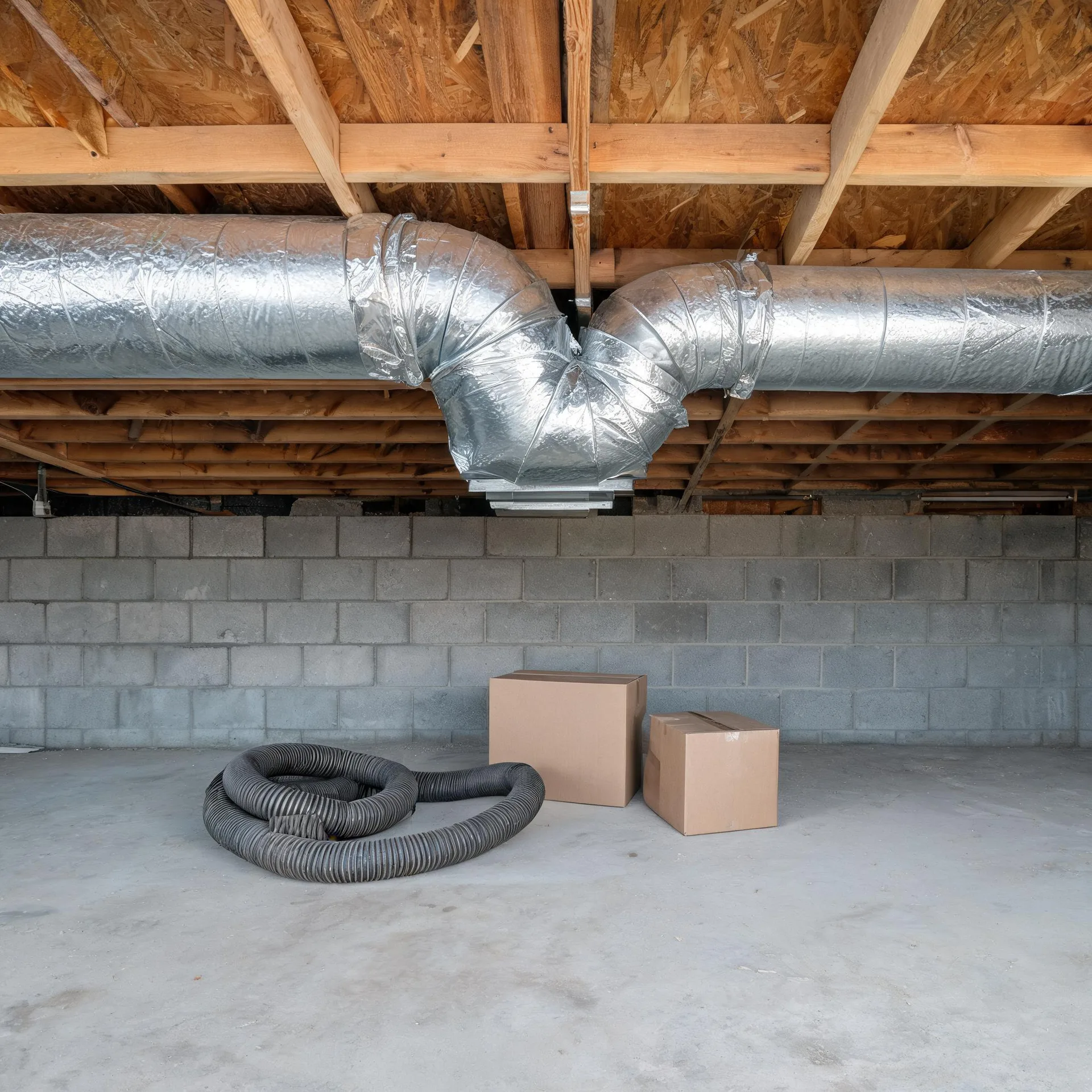
Ductwork laid down for one generation of heating equipment rarely carries the next without a contractor checking it first. Half the homes in Martin County, Indiana were built in 1981 or earlier (2020-2024 ACS 5-year). A furnace installed into runs sized for an older system may push too much air through too little space, or distribute heat unevenly across the house. The electrical service is the same story: what was adequate then may fall short of what a modern unit draws. A contractor quoting a furnace here opens access panels and measures before anything gets ordered.
What Gets Installed With a New Furnace

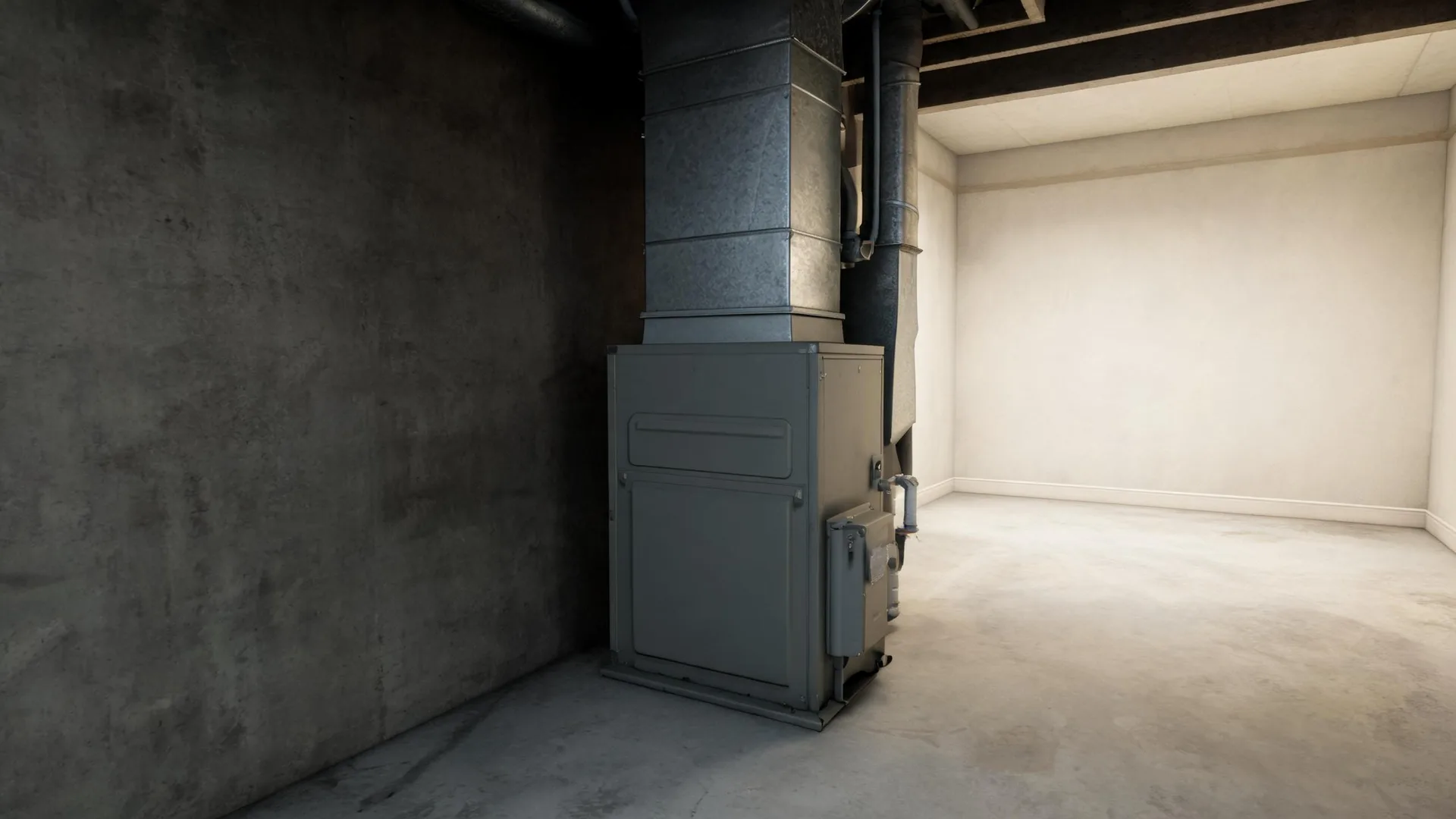
The furnace itself sits in the basement, utility room, or crawl space and is the unit a homeowner would see first. It houses the burner assembly, the heat exchanger, and the blower in a single cabinet. Those three components work together to produce heat and push it into the living space.
The flue pipe runs from the furnace up through the house and out through the roof or an exterior wall, carrying combustion gases out of the home. The thermostat mounts on an interior wall and is the control point a homeowner touches directly. A contractor also installs or connects the filter housing, which sits at the air intake side of the furnace cabinet.
The drawing shows a typical layout, and a licensed contractor determines exactly what applies to your house based on what is already there.
Find a contractor in Martin CountyMartin County, Indiana, by the numbers
38 severe weather events were recorded in Martin County, Indiana between 2015 and 2024.
NOAA National Centers for Environmental Information, Storm Events Database, bulk CSV export, events 2015-01-01 through 2024-12-31.Half the homes in Martin County, Indiana were built in 1981 or earlier (2020-2024 ACS 5-year).
U.S. Census Bureau, 2020-2024 American Community Survey 5-Year EstimatesMartin County, Indiana holds 4,583 housing units (2020-2024 ACS 5-year).
U.S. Census Bureau, 2020-2024 American Community Survey 5-Year EstimatesOwners occupy 78.5% of the occupied homes in Martin County, Indiana (2020-2024 ACS 5-year).
U.S. Census Bureau, 2020-2024 American Community Survey 5-Year EstimatesFurnace Installation Rules & Standards for Martin County, Indiana4 sourced codes and standards
What the installation actually looks like
Non-weatherized gas furnaces manufactured on or after November 19, 2015 must reach 80.0 percent AFUE.
Non-weatherized oil-fired furnaces manufactured on or after November 19, 2015 must reach 83.0 percent AFUE.
Mobile home gas furnaces manufactured on or after November 19, 2015 must reach 80.0 percent AFUE.
Non-weatherized gas furnaces manufactured on or after December 18, 2028 must reach 95.0 percent AFUE, up from the 80.0 percent minimum that applies to units manufactured before that date.
Severe Weather Events in Martin County
Weather puts direct stress on heating equipment: hard cold snaps, rapid temperature swings, and storm-driven power fluctuations all shorten the working life of a furnace that was sized or installed without local conditions in mind. What a furnace handles in Martin County is a local specification, not a generic one.
38 severe weather events, 2015–2024. Source: NOAA National Centers for Environmental Information, Storm Events Database.