Tell us about the job
Takes about a minute. No obligation.

A furnace repair call in Orange County starts with what the equipment has been through inside the house, not outside it. 69 severe weather events were recorded in Orange County, Indiana between 2015 and 2024. At that rate, severe weather is a periodic fact of life here, but it falls short of the sustained load that makes storm wear the first suspect on a repair estimate. A contractor will open the unit and look at heat exchangers, igniters, and blower components for the kind of wear that builds up over years of normal cycling. Deferred maintenance and original install quality account for most of what they find.
Half the homes in Orange County, Indiana were built in 1980 or earlier (2020-2024 ACS 5-year). A furnace that has been running in a house of this vintage has almost certainly been serviced by more than one contractor over the years, and the repair record does not come with the house. What a contractor actually finds when they open the unit determines the scope: a heat exchanger that was patched rather than replaced, a flue connection that was adapted rather than fitted correctly, or original components still in place. Each of those produces a different repair, a different parts list, and a different bill.
The Parts of a Furnace a Contractor Checks First
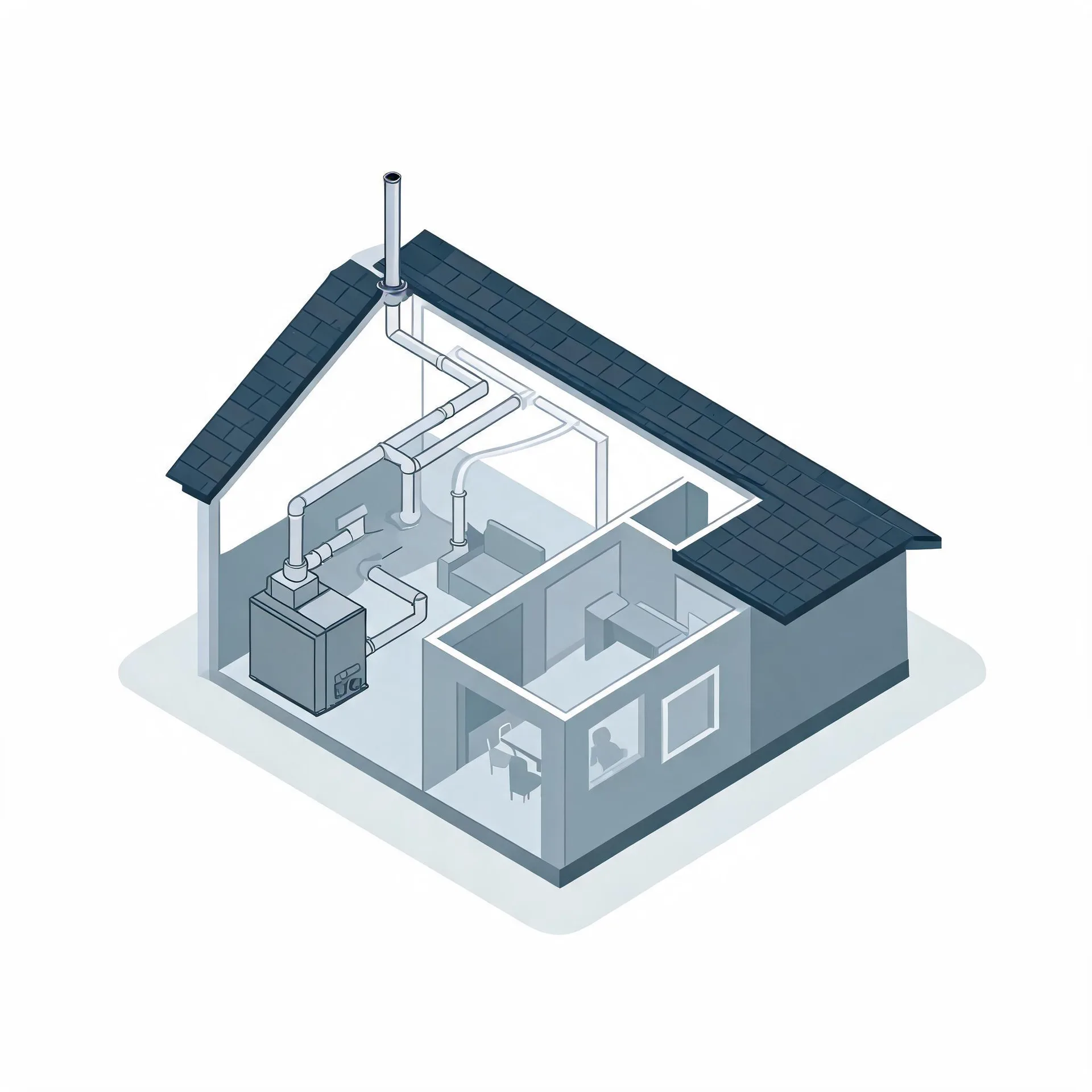
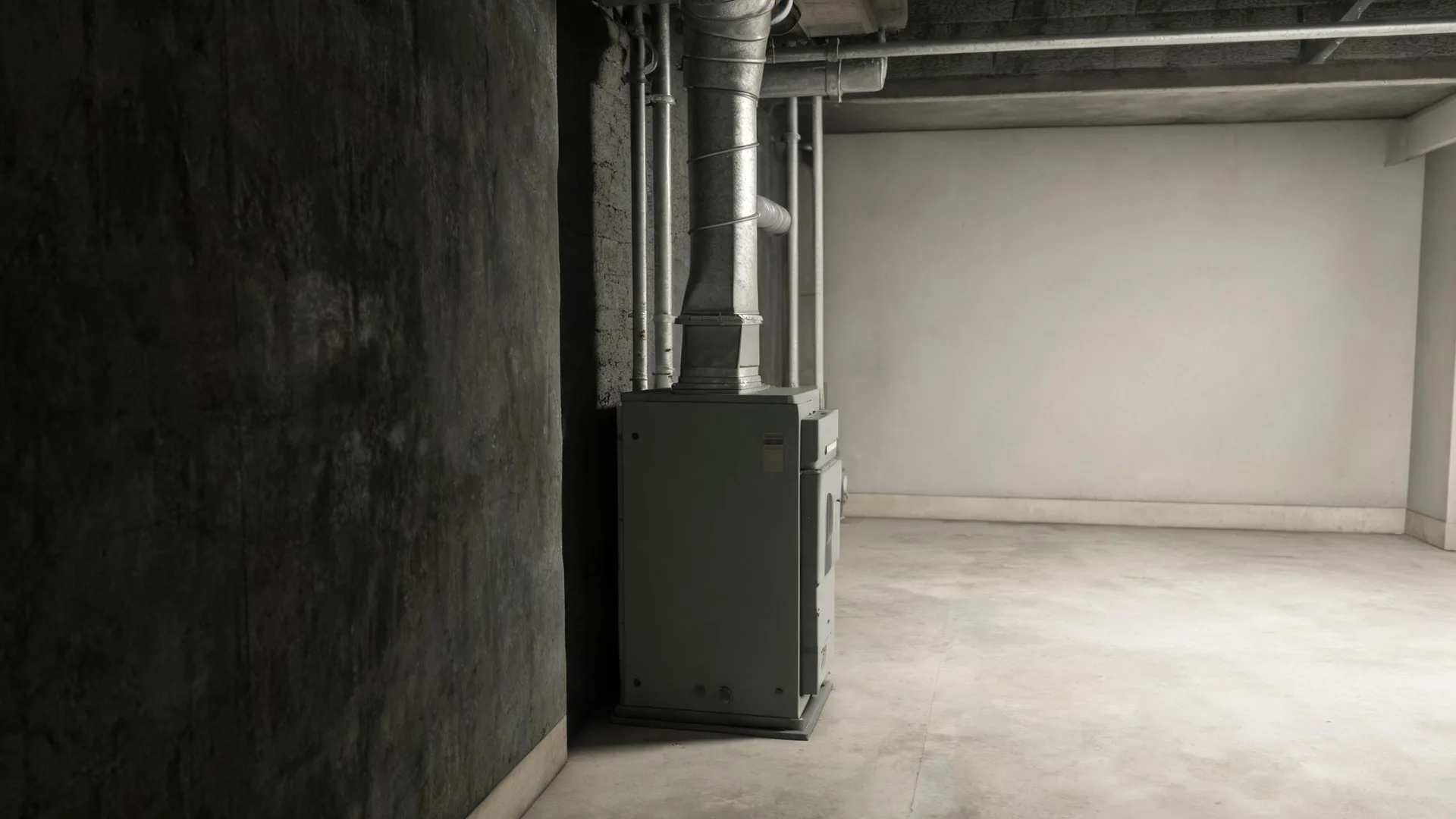
The heat exchanger sits at the core of the furnace cabinet in your mechanical room or basement. It is the piece that warms the air, and when it cracks or corrodes, you may smell something off or find the system short-cycling. The burner assembly feeds directly into it, and a contractor will examine both together when tracing a heating or combustion problem.
The blower motor sits below the heat exchanger and pushes conditioned air into the supply ducts. The control board, mounted inside the cabinet, runs the sequence that tells each part when to fire and when to stop. The flue pipe runs from the top of the furnace out through the wall or roof, and a blockage or breach there shows up fast as a safety fault.
The drawing shows a general layout of these components, and a licensed contractor determines what applies to the specific furnace and installation in your home.
Find a contractor in Orange CountyOrange County, Indiana, by the numbers
69 severe weather events were recorded in Orange County, Indiana between 2015 and 2024.
NOAA National Centers for Environmental Information, Storm Events Database, bulk CSV export, events 2015-01-01 through 2024-12-31.Half the homes in Orange County, Indiana were built in 1980 or earlier (2020-2024 ACS 5-year).
U.S. Census Bureau, 2020-2024 American Community Survey 5-Year EstimatesOrange County, Indiana holds 9,101 housing units (2020-2024 ACS 5-year).
U.S. Census Bureau, 2020-2024 American Community Survey 5-Year EstimatesOwners occupy 78.7% of the occupied homes in Orange County, Indiana (2020-2024 ACS 5-year).
U.S. Census Bureau, 2020-2024 American Community Survey 5-Year EstimatesCodes & Standards That Apply to Furnace Repair in Orange County, Indiana4 sourced rules and standards
What HVAC Repair Looks Like in Orange County
Non-weatherized gas furnaces manufactured on or after November 19, 2015 must reach 80.0 percent AFUE.
Non-weatherized oil-fired furnaces manufactured on or after November 19, 2015 must reach 83.0 percent AFUE.
Mobile home gas furnaces manufactured on or after November 19, 2015 must reach 80.0 percent AFUE.
Non-weatherized gas furnaces manufactured on or after December 18, 2028 must reach 95.0 percent AFUE, up from the 80.0 percent minimum that applies to units manufactured before that date.
Severe Weather Events in Orange County
Hard weather puts real hours on a furnace. Every heating system that holds a building through rough conditions is working in a way that quiet winters never demand, and that workload shows up eventually as wear that needs attention.
69 severe weather events, 2015–2024. Source: NOAA National Centers for Environmental Information, Storm Events Database.