Tell us about the job
Takes about a minute. No obligation.
A furnace failure in Daviess County sends a contractor back through the system's history before they settle on a cause. 49 severe weather events were recorded in Daviess County, Indiana between 2015 and 2024. At that rate, severe weather is an occasional pressure on equipment here, not a grinding condition, so wear from deferred maintenance or a poor original install accounts for most of what contractors find when a furnace stops working. Heat exchangers crack from age and neglect. Ignitors and control boards fail when they were borderline to begin with. The weather record is real, but it does not do the work of explaining a failed component that was already at the end of its service life.
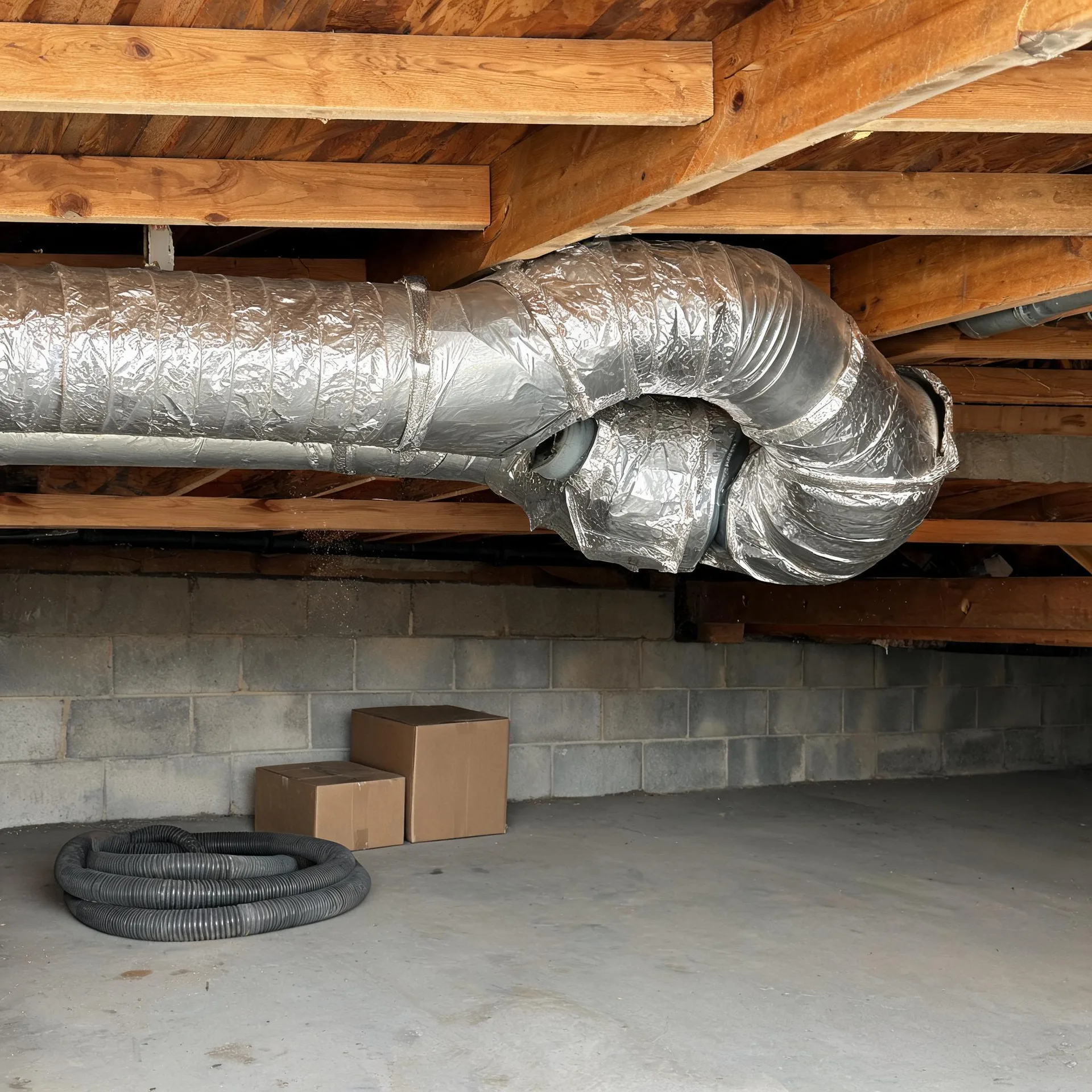
Ductwork and heat exchangers in houses this old carry a history of seasonal stress that shows up the moment a furnace is opened for diagnosis. Half the homes in Daviess County, Indiana were built in 1975 or earlier (2020-2024 ACS 5-year). A furnace that has run through that many Indiana winters is a strong candidate for cracked heat exchangers, degraded ignition components, and limit switches whose replacements sit on a short-supply shelf or have to be sourced from specialty suppliers. A contractor working on a system in stock like this prices the repair around part availability as much as labor.
The Parts of a Furnace a Contractor Checks First
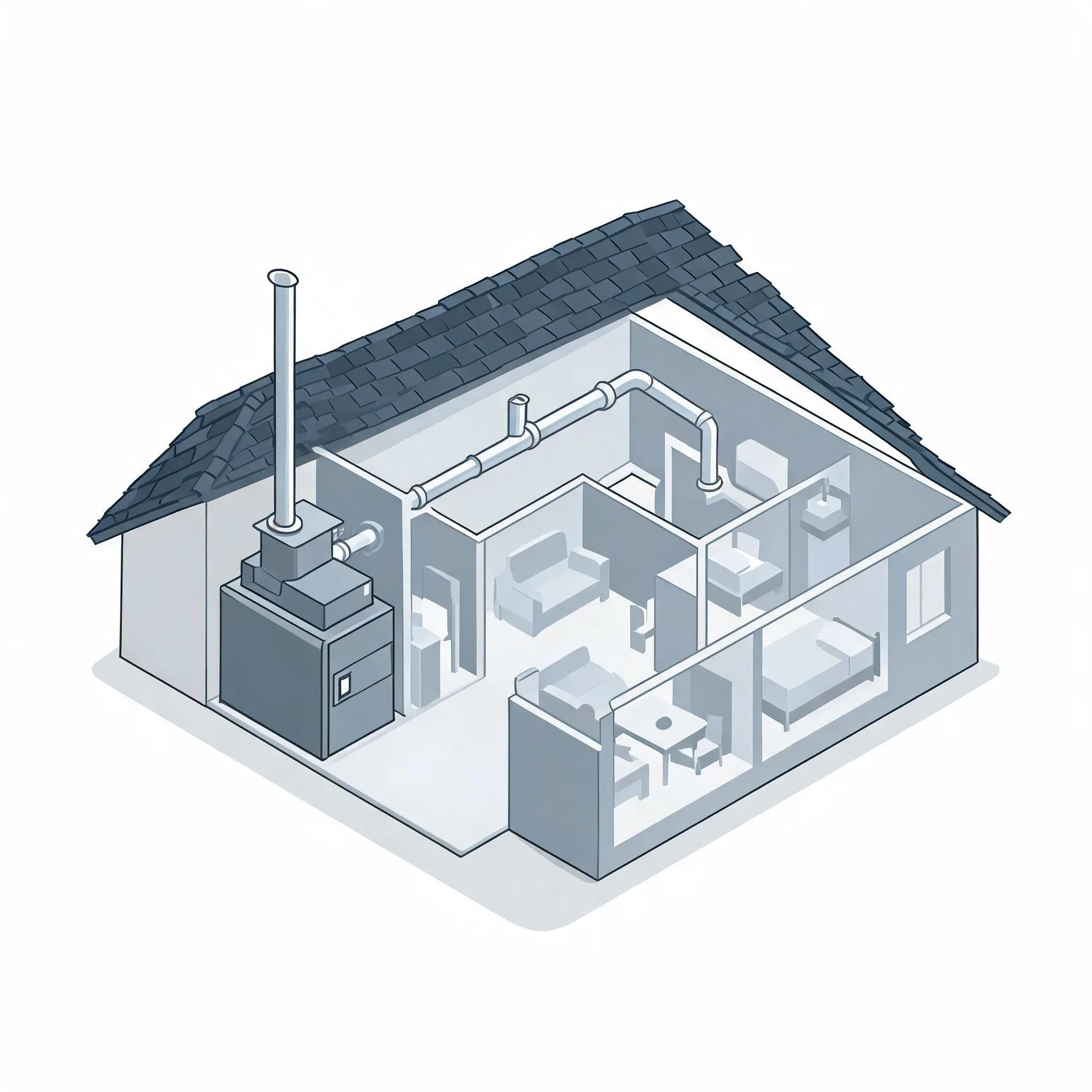
The furnace cabinet sits in the basement, utility room, or crawlspace and holds the components a contractor goes to first when something has failed. Inside it are the heat exchanger, the burners, and the blower motor. A cracked heat exchanger, a burner that won't light, or a blower that runs but moves little air each point toward a different repair.
The flue pipe runs from the cabinet up and out of the house, carrying combustion gases away. Near the cabinet sit the gas valve and the control board, which together manage when and how the burners fire. A faulty gas valve starves the burners; a failed control board can shut the whole system down.
The drawing shows a typical furnace layout, and a licensed contractor determines exactly which parts apply to your house.
Find a contractor in Daviess CountyDaviess County by the numbers
49 severe weather events were recorded in Daviess County, Indiana between 2015 and 2024.
NOAA National Centers for Environmental Information, Storm Events Database, bulk CSV export, events 2015-01-01 through 2024-12-31.Half the homes in Daviess County, Indiana were built in 1975 or earlier (2020-2024 ACS 5-year).
U.S. Census Bureau, 2020-2024 American Community Survey 5-Year EstimatesDaviess County, Indiana holds 12,887 housing units (2020-2024 ACS 5-year).
U.S. Census Bureau, 2020-2024 American Community Survey 5-Year EstimatesOwners occupy 72.4% of the occupied homes in Daviess County, Indiana (2020-2024 ACS 5-year).
U.S. Census Bureau, 2020-2024 American Community Survey 5-Year EstimatesFurnace Repair Rules & Codes for Daviess County, Indiana4 sourced standards and regulations
What HVAC Repair Looks Like in Daviess County
Non-weatherized gas furnaces manufactured on or after November 19, 2015 must reach 80.0 percent AFUE.
Non-weatherized oil-fired furnaces manufactured on or after November 19, 2015 must reach 83.0 percent AFUE.
Mobile home gas furnaces manufactured on or after November 19, 2015 must reach 80.0 percent AFUE.
Non-weatherized gas furnaces manufactured on or after December 18, 2028 must reach 95.0 percent AFUE, up from the 80.0 percent minimum that applies to units manufactured before that date.
Severe Weather Events in Daviess County
Extreme weather puts real stress on furnace components, and how hard a system works over time shapes what repairs it eventually needs. That pattern is local, tied to what the weather here actually does year after year.
49 severe weather events, 2015–2024. Source: NOAA National Centers for Environmental Information, Storm Events Database.