Tell us about the job
Takes about a minute. No obligation.
A contractor quoting a furnace repair in Lawrence County has to work out whether the failure came from the system itself or from what the area has put it through. 45 severe weather events were recorded in Lawrence County, Indiana between 2015 and 2024. At that rate, severe weather is a real but occasional presence, not a constant grind on equipment. Heat exchangers crack from age and poor combustion, not from storm seasons. Ignitors, pressure switches and draft motors wear on their own schedule, and the weather record here does not accelerate that schedule enough to move it to the front of a diagnosis.
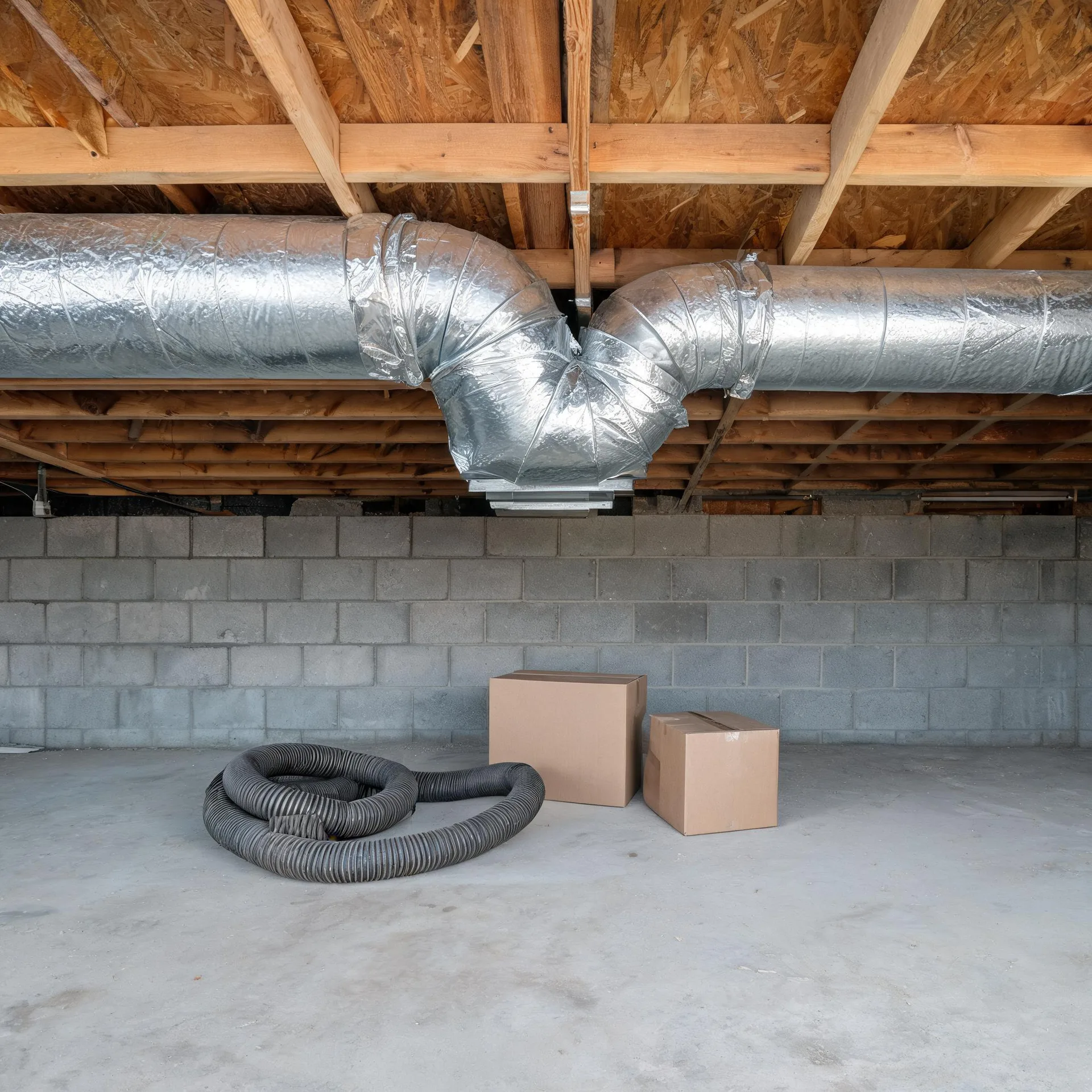
A furnace sitting in stock this old has almost certainly been replaced at least once since the house was built, which means the unit a contractor opens today was installed into infrastructure it was not originally matched to. Half the homes in Lawrence County, Indiana were built in 1973 or earlier (2020-2024 ACS 5-year). That gap is where furnace repair gets complicated: the heat exchanger, burner assembly, and flue connections a contractor finds once the cabinet is open reflect what whoever did the last install left behind, not what a house of this age would have started with. If the parts that surface are still available, the repair moves forward. If they are not, the scope changes in ways the building year alone could not have predicted.
The Parts of a Furnace a Contractor Checks First
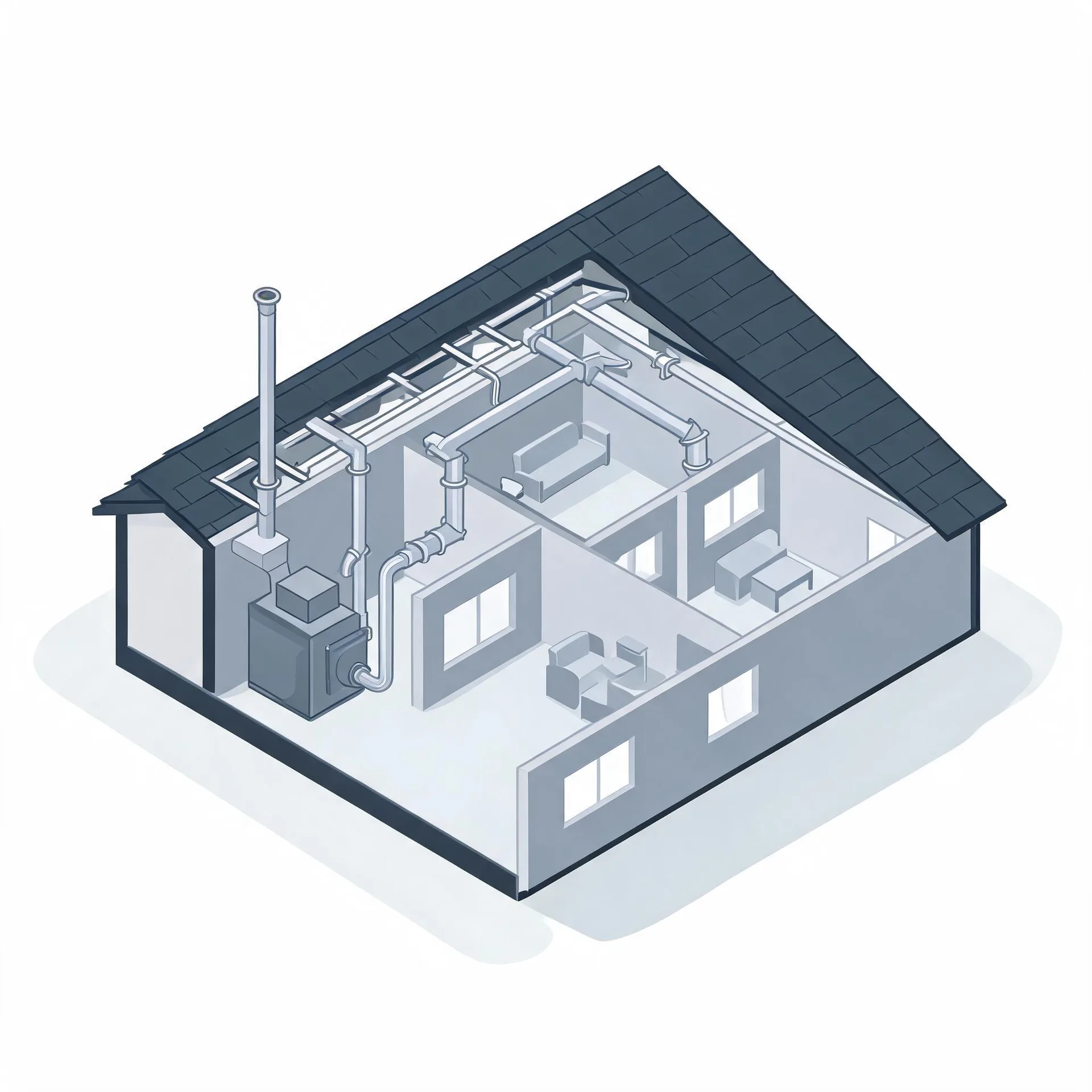
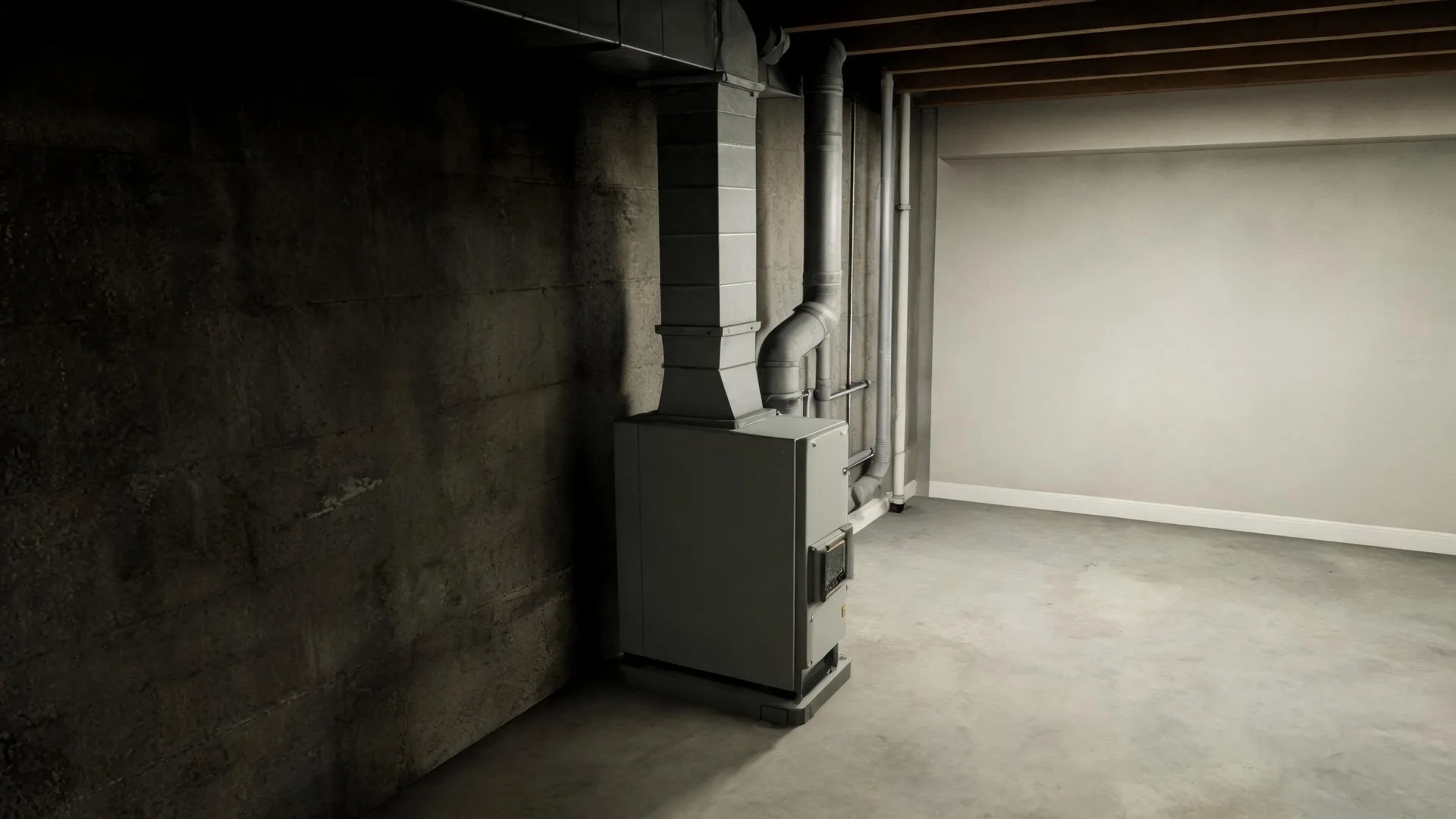
The furnace itself sits in the basement, utility room, or closet and is the piece a contractor goes to first. Inside it, the heat exchanger and burner assembly take the most wear. A cracked heat exchanger or a burner that fails to light is what most repair calls come down to.
The blower motor moves conditioned air out of the furnace and into the house. Alongside it, the control board, igniter, and flame sensor each have a specific job in the startup sequence, and any one of them can stop a furnace cold while everything else in the unit looks fine.
The drawing shows a general layout of a furnace system, and a licensed contractor determines what applies to your specific home and equipment.
Find a contractor in Lawrence CountyLawrence County, Indiana, by the numbers
45 severe weather events were recorded in Lawrence County, Indiana between 2015 and 2024.
NOAA National Centers for Environmental Information, Storm Events Database, bulk CSV export, events 2015-01-01 through 2024-12-31.Half the homes in Lawrence County, Indiana were built in 1973 or earlier (2020-2024 ACS 5-year).
U.S. Census Bureau, 2020-2024 American Community Survey 5-Year EstimatesLawrence County, Indiana holds 20,545 housing units (2020-2024 ACS 5-year).
U.S. Census Bureau, 2020-2024 American Community Survey 5-Year EstimatesOwners occupy 80.7% of the occupied homes in Lawrence County, Indiana (2020-2024 ACS 5-year).
U.S. Census Bureau, 2020-2024 American Community Survey 5-Year EstimatesCodes & Standards Covering Furnace Repair in Lawrence County, Indiana4 sourced rules and standards
What Happens When the Contractor Arrives
Non-weatherized gas furnaces manufactured on or after November 19, 2015 must reach 80.0 percent AFUE.
Non-weatherized oil-fired furnaces manufactured on or after November 19, 2015 must reach 83.0 percent AFUE.
Mobile home gas furnaces manufactured on or after November 19, 2015 must reach 80.0 percent AFUE.
Non-weatherized gas furnaces manufactured on or after December 18, 2028 must reach 95.0 percent AFUE, up from the 80.0 percent minimum that applies to units manufactured before that date.
Severe Weather Events in Lawrence County
Heating equipment in Lawrence County works against whatever the local climate throws at it, and that workload adds up over time. A furnace that cycles hard through rough weather accumulates stress that shows up as repair needs, which is why local conditions are part of the picture here.
45 severe weather events, 2015–2024. Source: NOAA National Centers for Environmental Information, Storm Events Database.