Tell us about the job
Takes about a minute. No obligation.

A furnace in Marion County has been running against real, repeated strain, and that shapes what a contractor has to establish before quoting a repair. 227 severe weather events were recorded in Marion County, Indiana between 2015 and 2024. At that rate, severe weather is part of the normal operating history of any system here, not an exception. A contractor checking a failed heat exchanger or a worn inducer motor is looking at cumulative load, and the repair scope follows from what the components actually show, not from a general assumption about age.
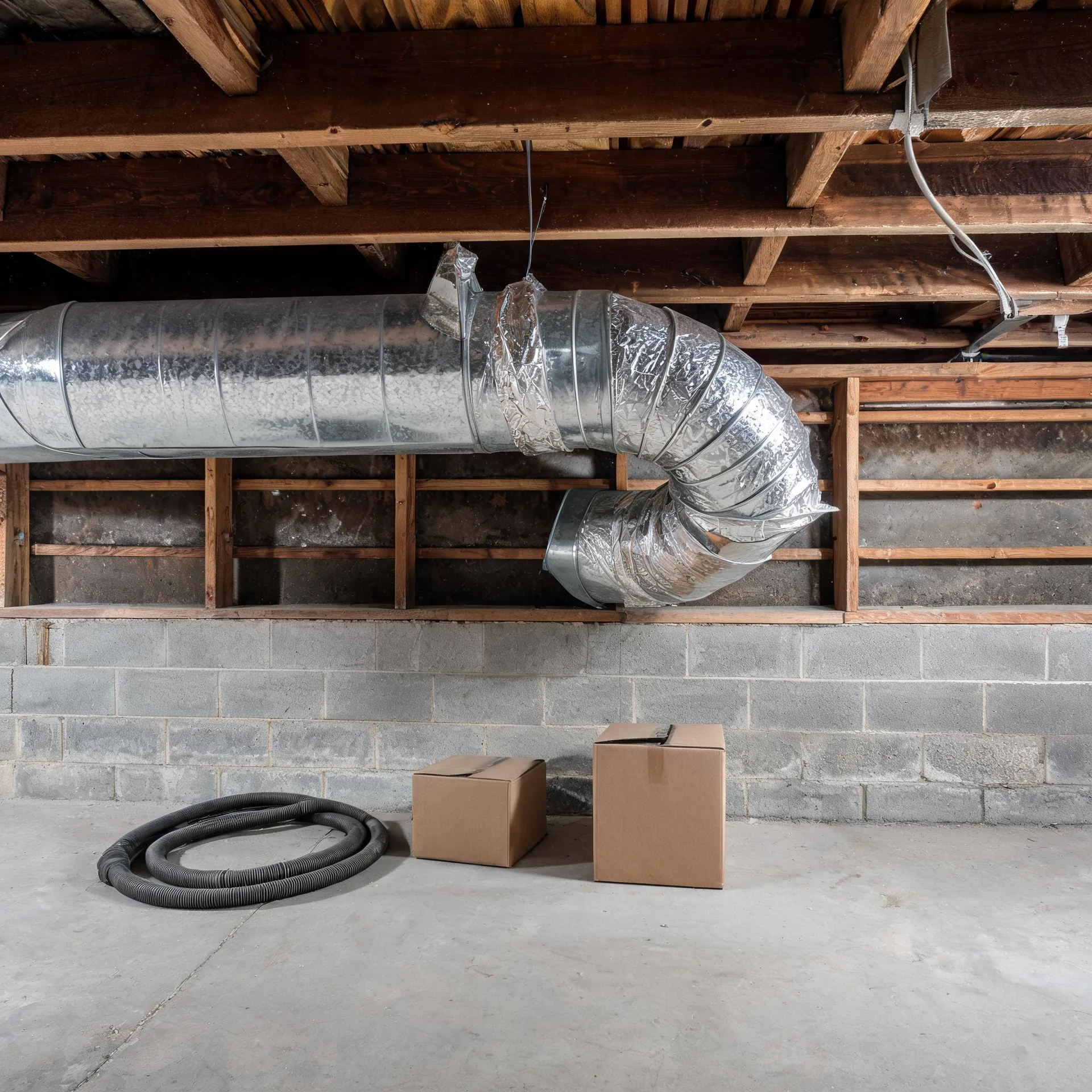
Ductwork and wiring in a house are installed once and rarely replaced wholesale, but the furnace inside that house has likely been swapped at least once since the original build. Half the homes in Marion County, Indiana were built in 1973 or earlier (2020-2024 ACS 5-year). That gap matters for repair work because what a contractor finds when the furnace is opened can include heat exchangers and burner assemblies old enough that parts sourcing becomes a real variable in the job. A repair that prices simply on the surface can change once the unit is apart and the model number goes to a supplier.
The Parts of a Furnace a Contractor Checks First
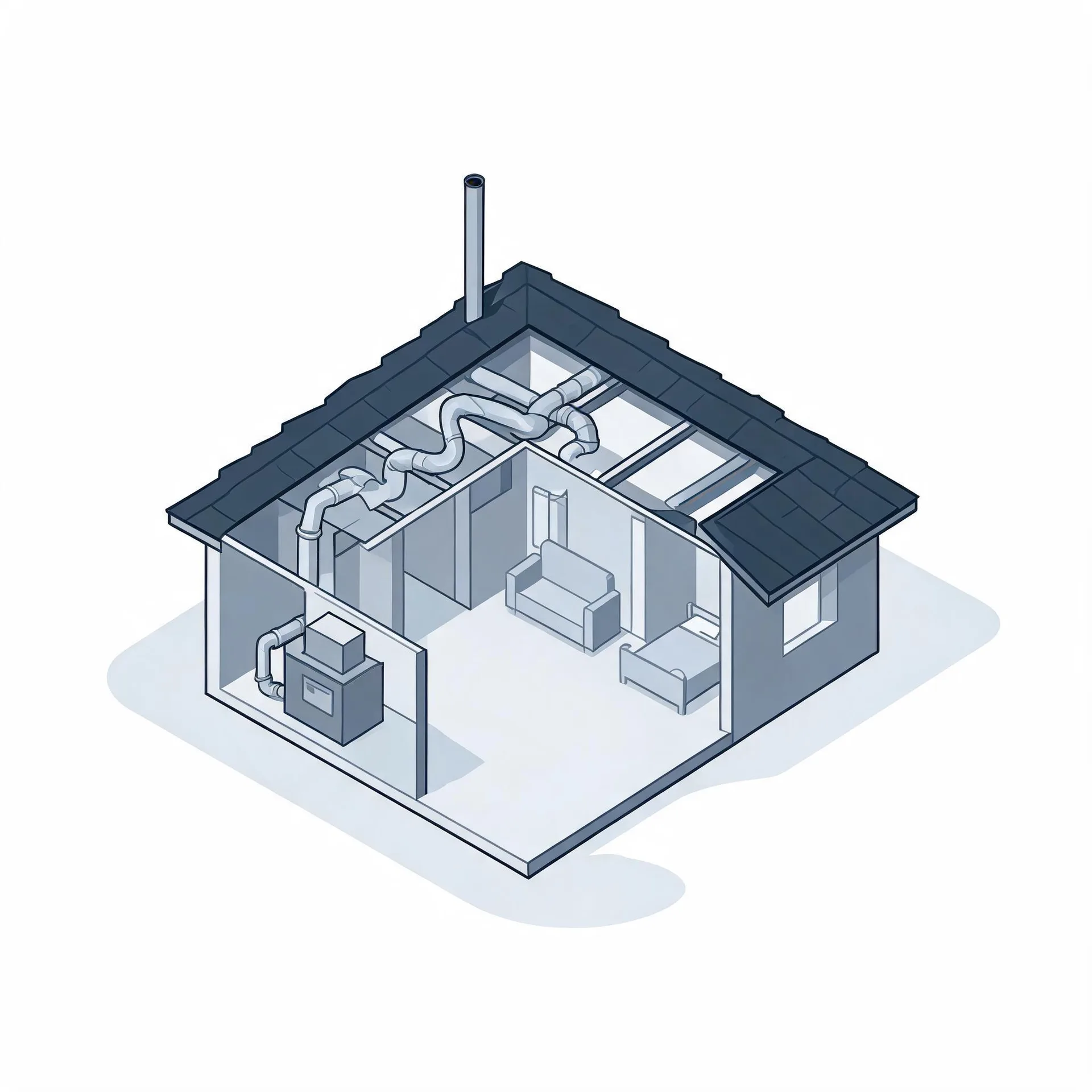
The furnace itself sits in the basement, utility room, or closet and is the piece a contractor goes to first. Inside it, the heat exchanger is the part that warms the air your home circulates, and a crack or failure there is one of the more serious findings a repair visit can turn up. The burner assembly, ignitor, and flame sensor all live inside that cabinet as well, and any one of them can be the reason a furnace stops lighting or shuts down mid-cycle.
The blower motor sits in the lower section of the furnace cabinet and pushes conditioned air through the system. The flue pipe runs from the top or back of the furnace to an exterior vent, carrying combustion gases out of the house. The filter housing sits where return air enters the unit, and a blocked filter puts strain on both the blower and the heat exchanger.
The drawing shows a typical furnace layout, and a licensed contractor determines which components apply to the specific equipment and configuration in your home.
Find a contractor in Marion CountyMarion County, Indiana, by the numbers
227 severe weather events were recorded in Marion County, Indiana between 2015 and 2024.
NOAA National Centers for Environmental Information, Storm Events Database, bulk CSV export, events 2015-01-01 through 2024-12-31.Half the homes in Marion County, Indiana were built in 1973 or earlier (2020-2024 ACS 5-year).
U.S. Census Bureau, 2020-2024 American Community Survey 5-Year EstimatesMarion County, Indiana holds 441,040 housing units (2020-2024 ACS 5-year).
U.S. Census Bureau, 2020-2024 American Community Survey 5-Year EstimatesOwners occupy 56.5% of the occupied homes in Marion County, Indiana (2020-2024 ACS 5-year).
U.S. Census Bureau, 2020-2024 American Community Survey 5-Year EstimatesCodes & Standards Covering Furnace Repair in Marion County, Indiana4 sourced rules and standards
What HVAC Repair Looks Like in Marion County
Non-weatherized gas furnaces manufactured on or after November 19, 2015 must reach 80.0 percent AFUE.
Non-weatherized oil-fired furnaces manufactured on or after November 19, 2015 must reach 83.0 percent AFUE.
Mobile home gas furnaces manufactured on or after November 19, 2015 must reach 80.0 percent AFUE.
Non-weatherized gas furnaces manufactured on or after December 18, 2028 must reach 95.0 percent AFUE, up from the 80.0 percent minimum that applies to units manufactured before that date.
Severe Weather Events in Marion County
Extreme weather puts real stress on heating equipment, pushing furnaces to run harder and longer than they were sized for under ordinary conditions. How much of that pressure a furnace in Marion County absorbs is a local question, and the record below shows what the weather here has actually looked like.
227 severe weather events, 2015–2024. Source: NOAA National Centers for Environmental Information, Storm Events Database.