Tell us about the job
Takes about a minute. No obligation.

A contractor quoting a furnace repair in Hamilton County will check the heat exchanger, the igniter, and the blower motor before anything else, because those components carry the load of ordinary winter demand far more than they carry weather stress. 137 severe weather events were recorded in Hamilton County, Indiana between 2015 and 2024. That puts this area in the middle of the national picture, which means severe weather is a real part of a system's service life here, but a furnace that has stopped working is still more likely to have failed at a part that wore out from seasonal cycling than from acute storm events. Age and maintenance gaps are what a contractor expects to find on the opened unit.
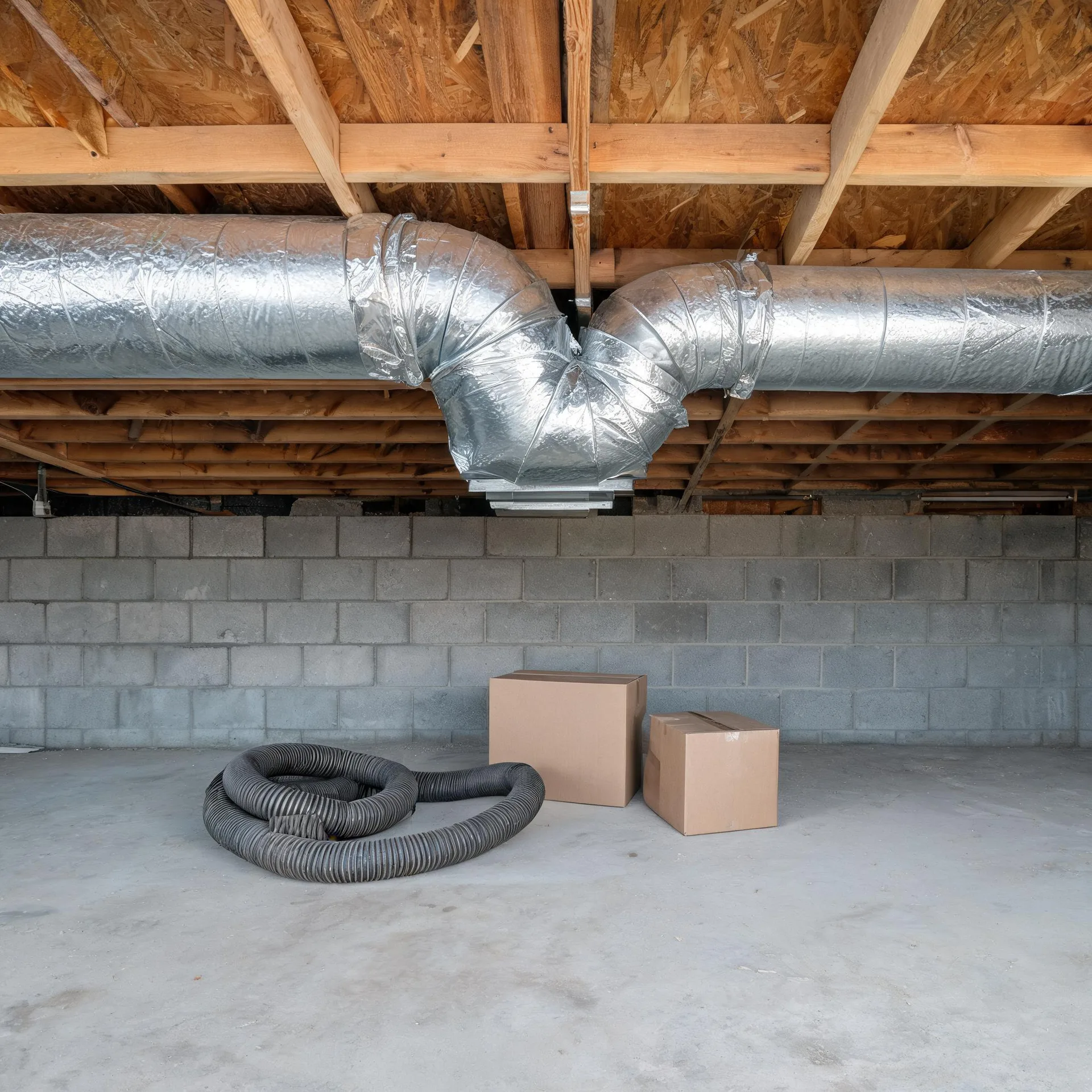
Stock built for modern forced-air systems carries ductwork and electrical service that fit what a furnace contractor encounters today. Half the homes in Hamilton County, Indiana were built in 2001 or earlier (2020-2024 ACS 5-year). That recency means the house itself is rarely where a repair stalls. What stalls it is what the opened furnace turns out to need: a heat exchanger, a control board, a draft inducer motor, and whether those parts are still in production for that unit. The building is not the variable. The unit is.
The Parts of a Furnace a Contractor Checks First

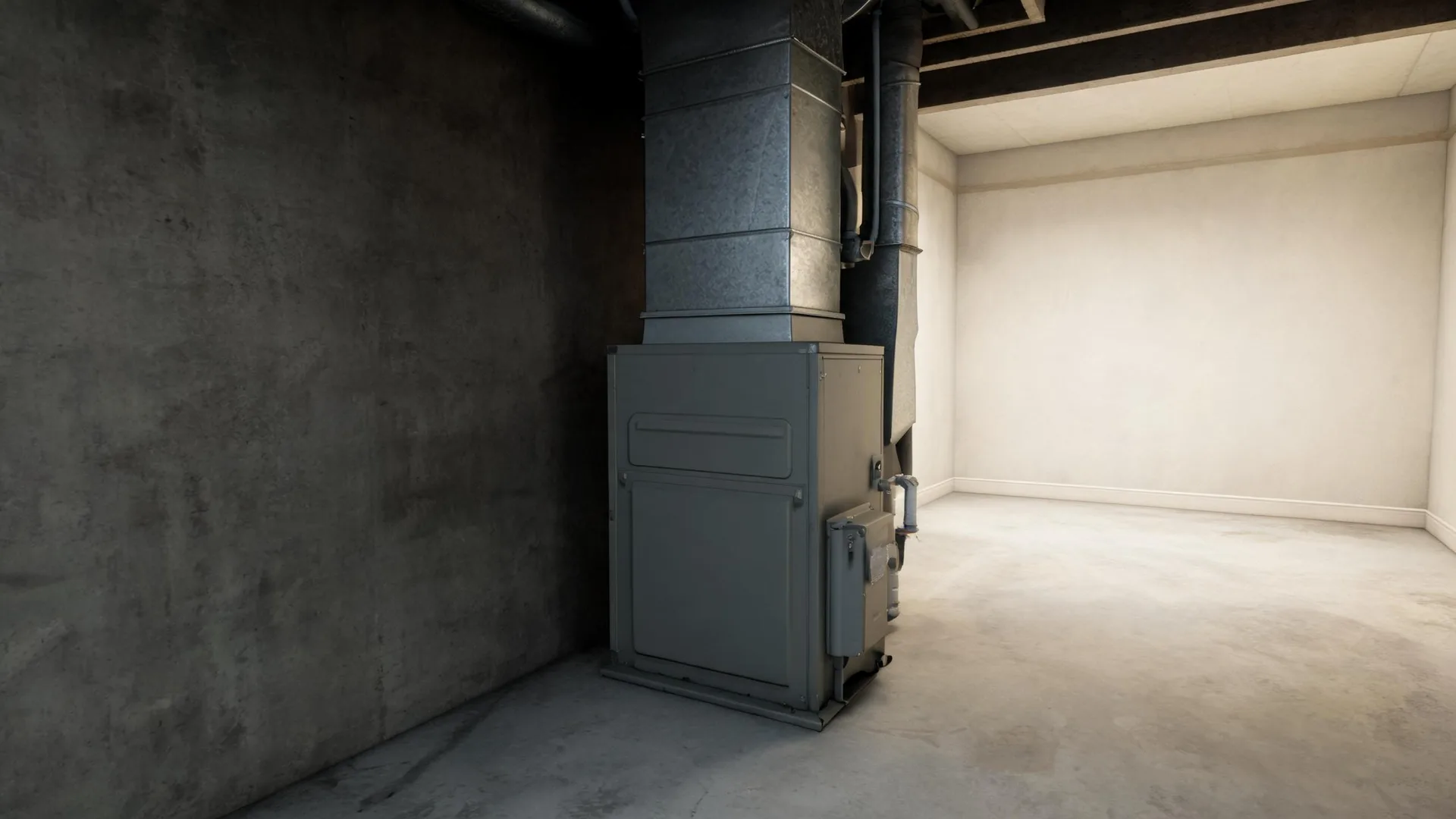
The furnace itself sits in the basement, utility room, or closet and is the piece a contractor opens first. Inside it, the heat exchanger is the part most likely to cause a shutdown or unsafe condition when it cracks, and the burners directly below it are where ignition problems begin. The blower motor moves air across that exchanger and into the house.
The flue pipe runs from the furnace up and out of the house, carrying combustion gases away, and a contractor checks it for blockage or separation at the joints. Alongside the furnace, the filter housing and the evaporator coil sit in the air path, and a dirty or collapsed filter starves the whole system of airflow before anything else has a chance to fail.
The drawing shows a general layout of these components, and a licensed contractor determines what applies to your specific equipment and installation.
Find a contractor in Hamilton CountyHamilton County, Indiana, by the numbers
137 severe weather events were recorded in Hamilton County, Indiana between 2015 and 2024.
NOAA National Centers for Environmental Information, Storm Events Database, bulk CSV export, events 2015-01-01 through 2024-12-31.Half the homes in Hamilton County, Indiana were built in 2001 or earlier (2020-2024 ACS 5-year).
U.S. Census Bureau, 2020-2024 American Community Survey 5-Year EstimatesHamilton County, Indiana holds 144,746 housing units (2020-2024 ACS 5-year).
U.S. Census Bureau, 2020-2024 American Community Survey 5-Year EstimatesOwners occupy 76.1% of the occupied homes in Hamilton County, Indiana (2020-2024 ACS 5-year).
U.S. Census Bureau, 2020-2024 American Community Survey 5-Year EstimatesCodes & Standards Covering Furnace Repair in Hamilton County, Indiana4 sourced rules & standards
What HVAC Repair Looks Like in Hamilton County
Non-weatherized gas furnaces manufactured on or after November 19, 2015 must reach 80.0 percent AFUE.
Non-weatherized oil-fired furnaces manufactured on or after November 19, 2015 must reach 83.0 percent AFUE.
Mobile home gas furnaces manufactured on or after November 19, 2015 must reach 80.0 percent AFUE.
Non-weatherized gas furnaces manufactured on or after December 18, 2028 must reach 95.0 percent AFUE, up from the 80.0 percent minimum that applies to units manufactured before that date.
Severe Weather Events in Hamilton County
Extreme weather puts furnaces to work harder and longer, and it ages equipment faster. How often that pressure hits Hamilton County is part of what shapes repair demand here.
137 severe weather events, 2015–2024. Source: NOAA National Centers for Environmental Information, Storm Events Database.