Tell us about the job
Takes about a minute. No obligation.
A furnace repair in Boone County starts with a contractor working out what the equipment has actually been through. 99 severe weather events were recorded in Boone County, Indiana between 2015 and 2024. At that rate, severe weather is a steady feature of life here, and it shows up in the wear patterns a contractor finds: heat exchangers that have cycled hard, igniters that have seen more stress than their age alone would predict, and controls that have been pushed by repeated load spikes. Age and maintenance history still matter, but a contractor here prices the repair after accounting for weather-driven wear, not before.
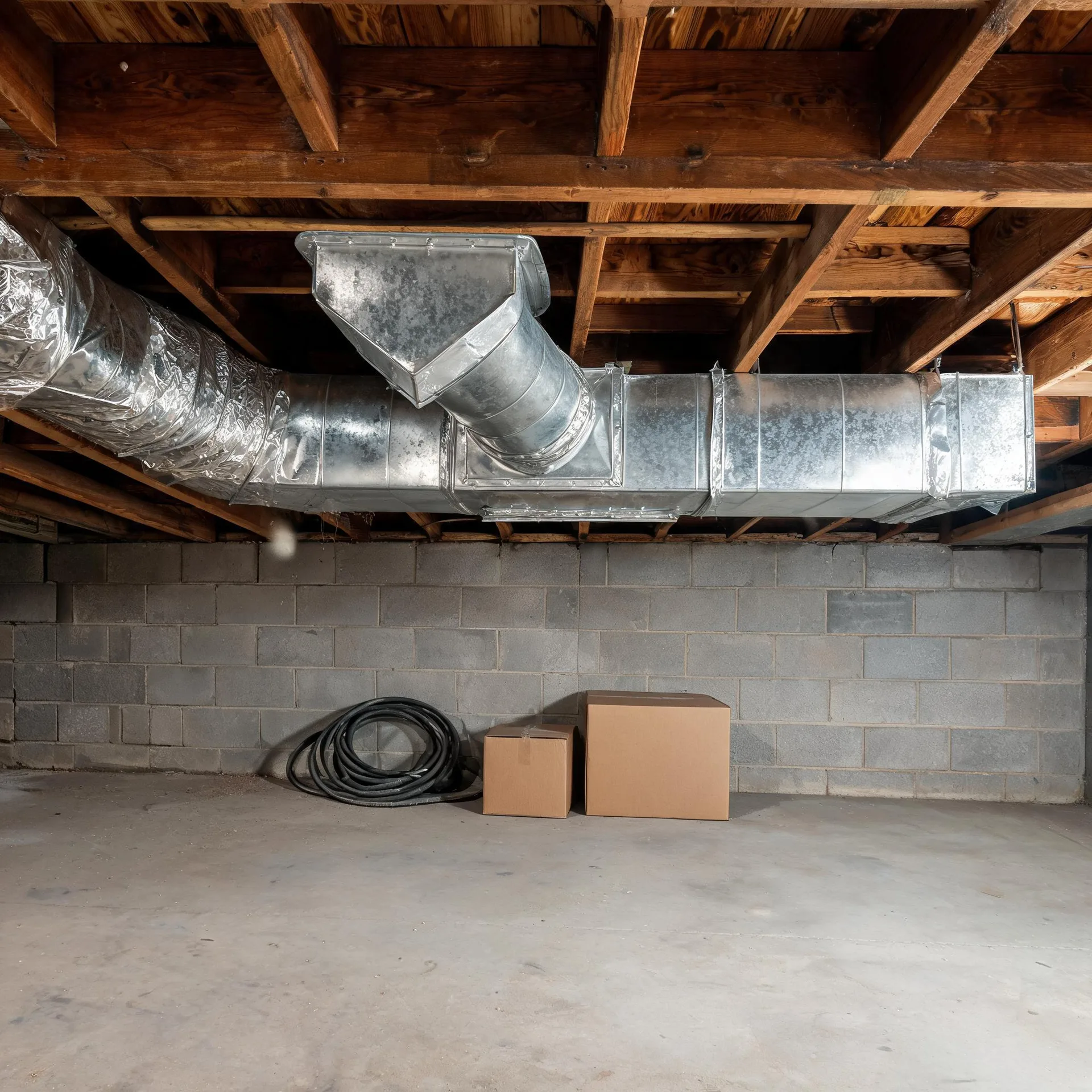
Furnace repair in housing this old turns on a question that has nothing to do with the thermostat reading or the error code a system throws. Half the homes in Boone County, Indiana were built in 1995 or earlier (2020-2024 ACS 5-year). A contractor who opens a furnace in stock from that era is checking whether the cracked heat exchanger, failed inducer motor, or worn pressure switch it needs is still in production. If the part has been discontinued, the repair calculates differently than it would for newer equipment, and the homeowner is choosing between sourcing an obsolete component and replacing the unit outright.
The Parts of a Furnace a Contractor Checks First
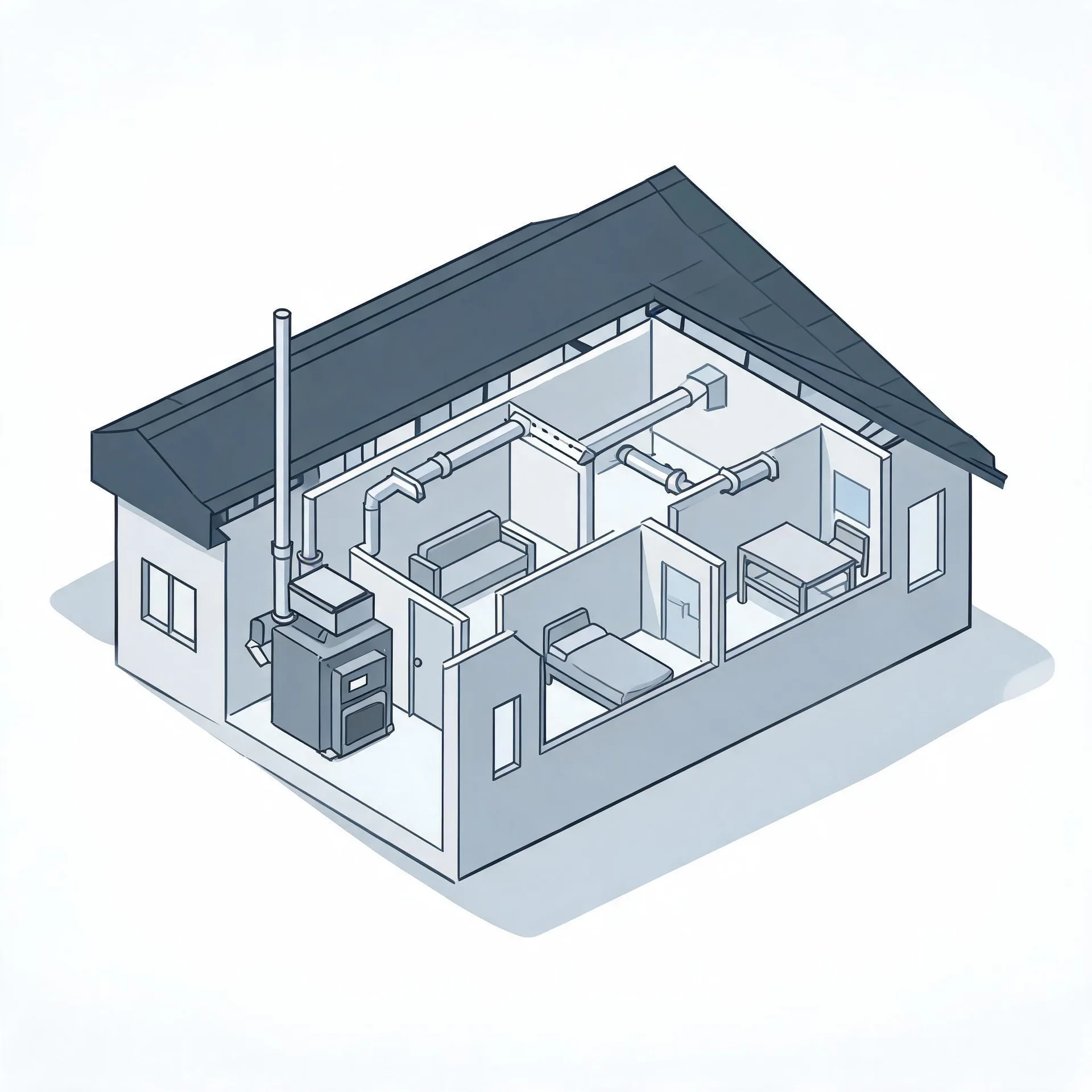
The furnace cabinet sits in the basement, utility room, or closet and holds the core components a contractor goes to first: the heat exchanger, the burner assembly, and the blower motor. A cracked heat exchanger lets combustion gases into the living space. A failed burner or a worn blower motor stops warm air from reaching the rest of the house.
The flue pipe runs from the cabinet up and out of the house, carrying combustion exhaust away. Alongside the cabinet sit the gas valve, the igniter, and the control board, each of which can interrupt the heating cycle on its own when it fails.
The drawing shows a typical furnace layout, and a licensed contractor determines which components apply to the specific system in your home.
Find a contractor in Boone CountyBoone County, by the numbers
99 severe weather events were recorded in Boone County, Indiana between 2015 and 2024.
NOAA National Centers for Environmental Information, Storm Events Database, bulk CSV export, events 2015-01-01 through 2024-12-31.Half the homes in Boone County, Indiana were built in 1995 or earlier (2020-2024 ACS 5-year).
U.S. Census Bureau, 2020-2024 American Community Survey 5-Year EstimatesBoone County, Indiana holds 29,737 housing units (2020-2024 ACS 5-year).
U.S. Census Bureau, 2020-2024 American Community Survey 5-Year EstimatesOwners occupy 78.8% of the occupied homes in Boone County, Indiana (2020-2024 ACS 5-year).
U.S. Census Bureau, 2020-2024 American Community Survey 5-Year EstimatesCodes & Standards Governing Furnace Repair in Boone County, Indiana4 sourced rules & standards
What Happens When a Contractor Comes Out
Non-weatherized gas furnaces manufactured on or after November 19, 2015 must reach 80.0 percent AFUE.
Non-weatherized oil-fired furnaces manufactured on or after November 19, 2015 must reach 83.0 percent AFUE.
Mobile home gas furnaces manufactured on or after November 19, 2015 must reach 80.0 percent AFUE.
Non-weatherized gas furnaces manufactured on or after December 18, 2028 must reach 95.0 percent AFUE, up from the 80.0 percent minimum that applies to units manufactured before that date.
Severe Weather Events in Boone County
Boone County weather puts real stress on furnace components over time. How hard that equipment has worked is partly a function of what the county's weather has asked of it.
99 severe weather events, 2015–2024. Source: NOAA National Centers for Environmental Information, Storm Events Database.