Tell us about the job
Takes about a minute. No obligation.
A contractor quoting a furnace repair in Hancock County has to sort out what actually failed the system before recommending parts or labor. 91 severe weather events were recorded in Hancock County, Indiana between 2015 and 2024. That puts this area near the middle of counties nationally, which means severe weather is a real but occasional presence, not a grinding constant. Furnaces here accumulate wear the way they do almost anywhere: heat exchangers crack from years of cycling, ignitors degrade, and blower motors run until they stop. The weather record does not change that diagnosis, and a contractor who attributes a failed component to storm load is reaching for an explanation the system's service history will usually contradict.
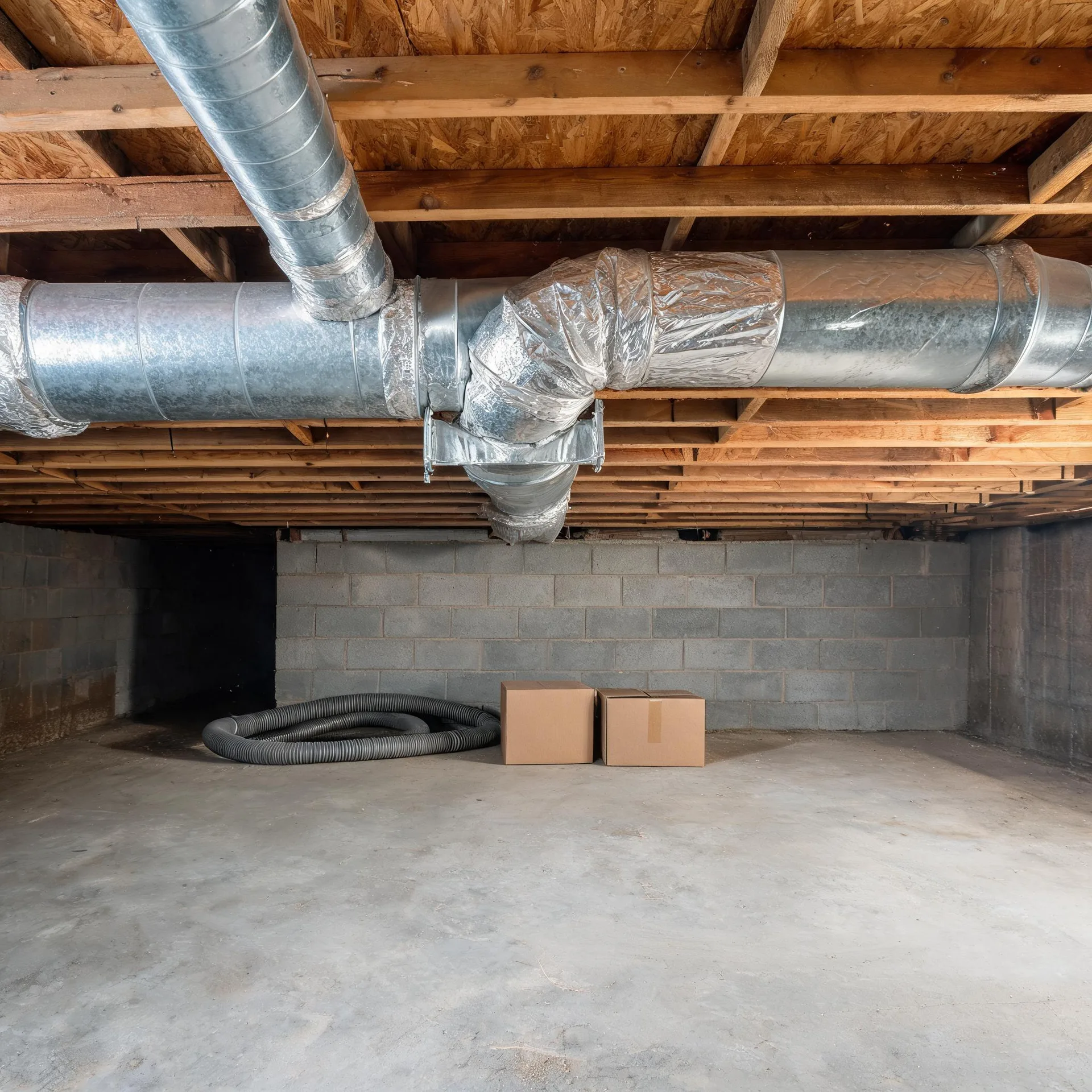
Furnace repair in housing stock this age turns on a specific question: whether the part a contractor pulls from the failed unit is still being made. Half the homes in Hancock County, Indiana were built in 1991 or earlier (2020-2024 ACS 5-year). Equipment put into those homes in the years since has had its own service life, and when a heat exchanger cracks or a control board fails, the contractor opening the furnace is working out whether a replacement part ships this week or has been discontinued. A house that old gives a parts search a harder edge than the repair itself.
The Parts of a Furnace a Contractor Checks First
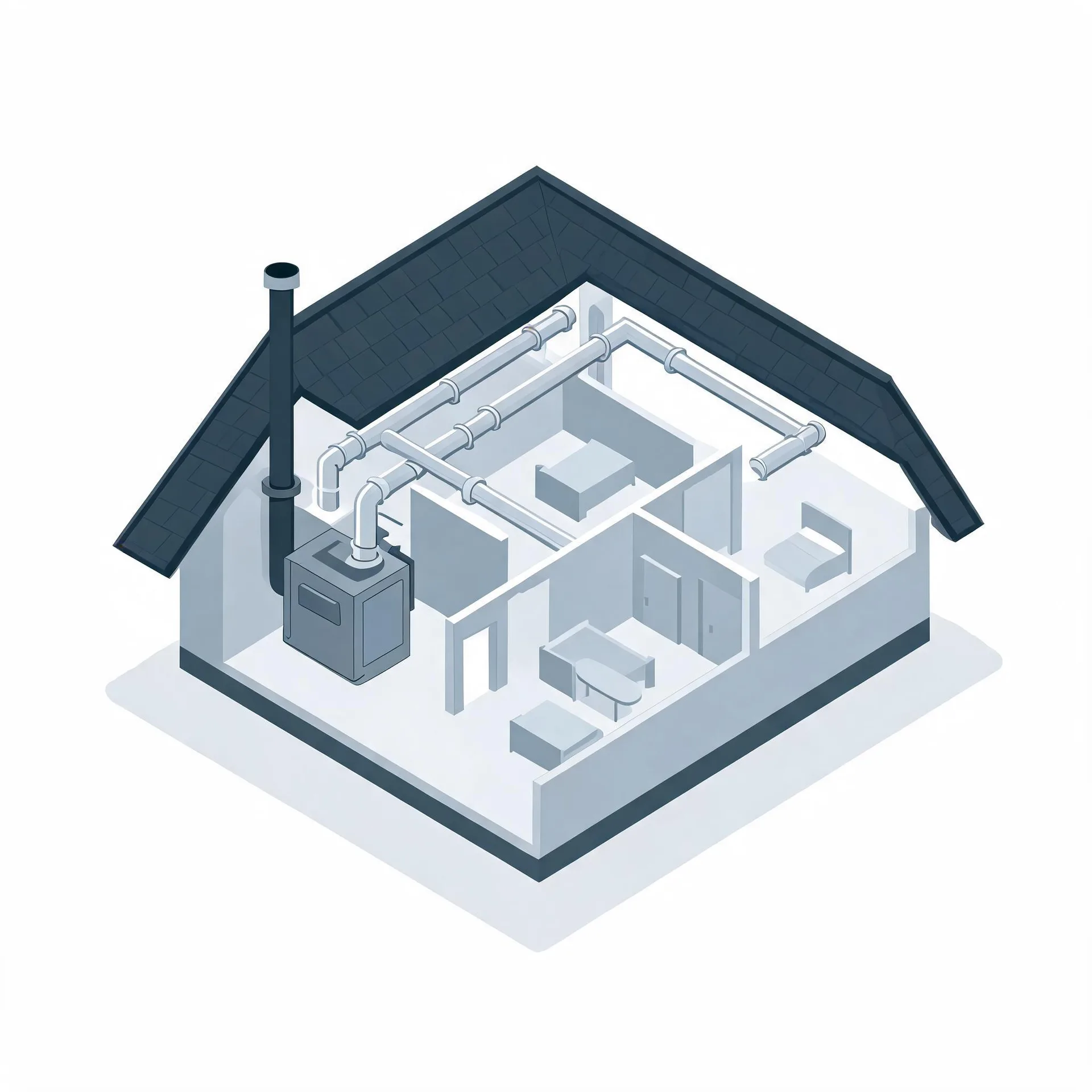
The heat exchanger sits at the core of the furnace cabinet and is the piece a contractor goes to early in a repair call. Cracks or buildup there affect the whole system. The burner assembly sits just below it, mixing gas and air to produce the flame that heats the exchanger.
The blower motor and its fan wheel live in the lower section of the cabinet, pulling air across the exchanger and pushing it into the supply side of the house. The inducer motor sits near the flue outlet and pulls combustion gases out before the blower runs. The control board ties all of it together and is where a contractor reads fault codes when something has stopped working.
The drawing shows a general cutaway of a typical furnace layout, and a licensed contractor determines which components apply to the specific unit and installation in your home.
Find a contractor in Hancock CountyHancock County, Indiana, by the numbers
91 severe weather events were recorded in Hancock County, Indiana between 2015 and 2024.
NOAA National Centers for Environmental Information, Storm Events Database, bulk CSV export, events 2015-01-01 through 2024-12-31.Half the homes in Hancock County, Indiana were built in 1991 or earlier (2020-2024 ACS 5-year).
U.S. Census Bureau, 2020-2024 American Community Survey 5-Year EstimatesHancock County, Indiana holds 34,370 housing units (2020-2024 ACS 5-year).
U.S. Census Bureau, 2020-2024 American Community Survey 5-Year EstimatesOwners occupy 79.5% of the occupied homes in Hancock County, Indiana (2020-2024 ACS 5-year).
U.S. Census Bureau, 2020-2024 American Community Survey 5-Year EstimatesRules & Standards Behind Furnace Repair in Hancock County, Indiana4 sourced rules & standards
What Happens When a Contractor Comes Out
Non-weatherized gas furnaces manufactured on or after November 19, 2015 must reach 80.0 percent AFUE.
Non-weatherized oil-fired furnaces manufactured on or after November 19, 2015 must reach 83.0 percent AFUE.
Mobile home gas furnaces manufactured on or after November 19, 2015 must reach 80.0 percent AFUE.
Non-weatherized gas furnaces manufactured on or after December 18, 2028 must reach 95.0 percent AFUE, up from the 80.0 percent minimum that applies to units manufactured before that date.
Severe Weather Events in Hancock County
Extreme weather puts real strain on furnace components, from heat exchangers to ignition systems, because equipment works hardest when conditions outside are worst. How much of that load a furnace carries depends on what the local climate actually delivers.
91 severe weather events, 2015–2024. Source: NOAA National Centers for Environmental Information, Storm Events Database.