Tell us about the job
Takes about a minute. No obligation.
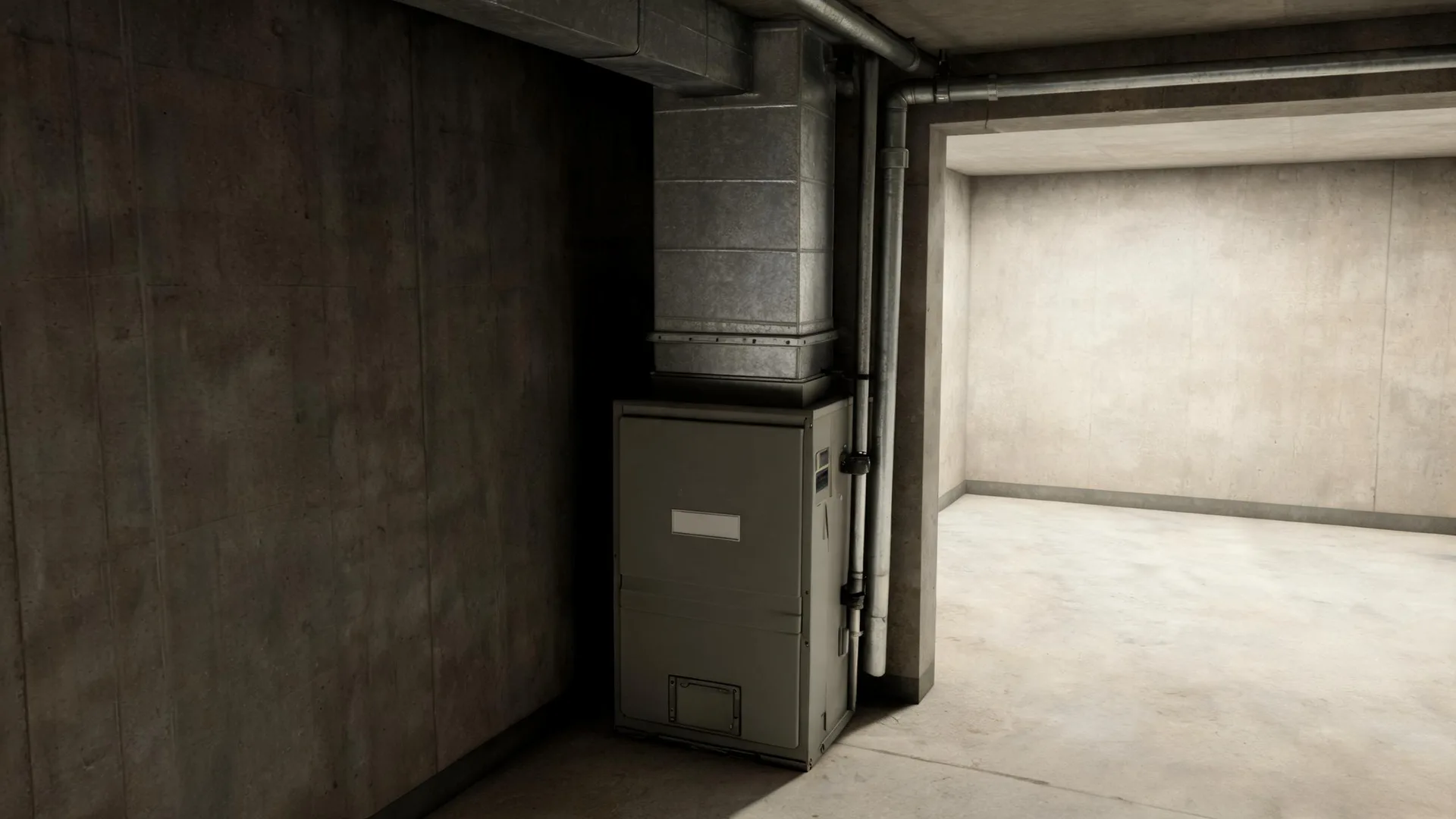
A furnace repair in Johnson County starts with the same questions any good contractor asks: how old is the unit, how has it been serviced, and what gave out first. 84 severe weather events were recorded in Johnson County, Indiana between 2015 and 2024. At that rate, severe weather is real but not relentless, and it does not explain most of what contractors find inside a failing furnace here. Cracked heat exchangers, worn igniters, and failed limit switches trace back to age and skipped maintenance far more often than to storm stress. That is where a contractor's diagnosis starts.
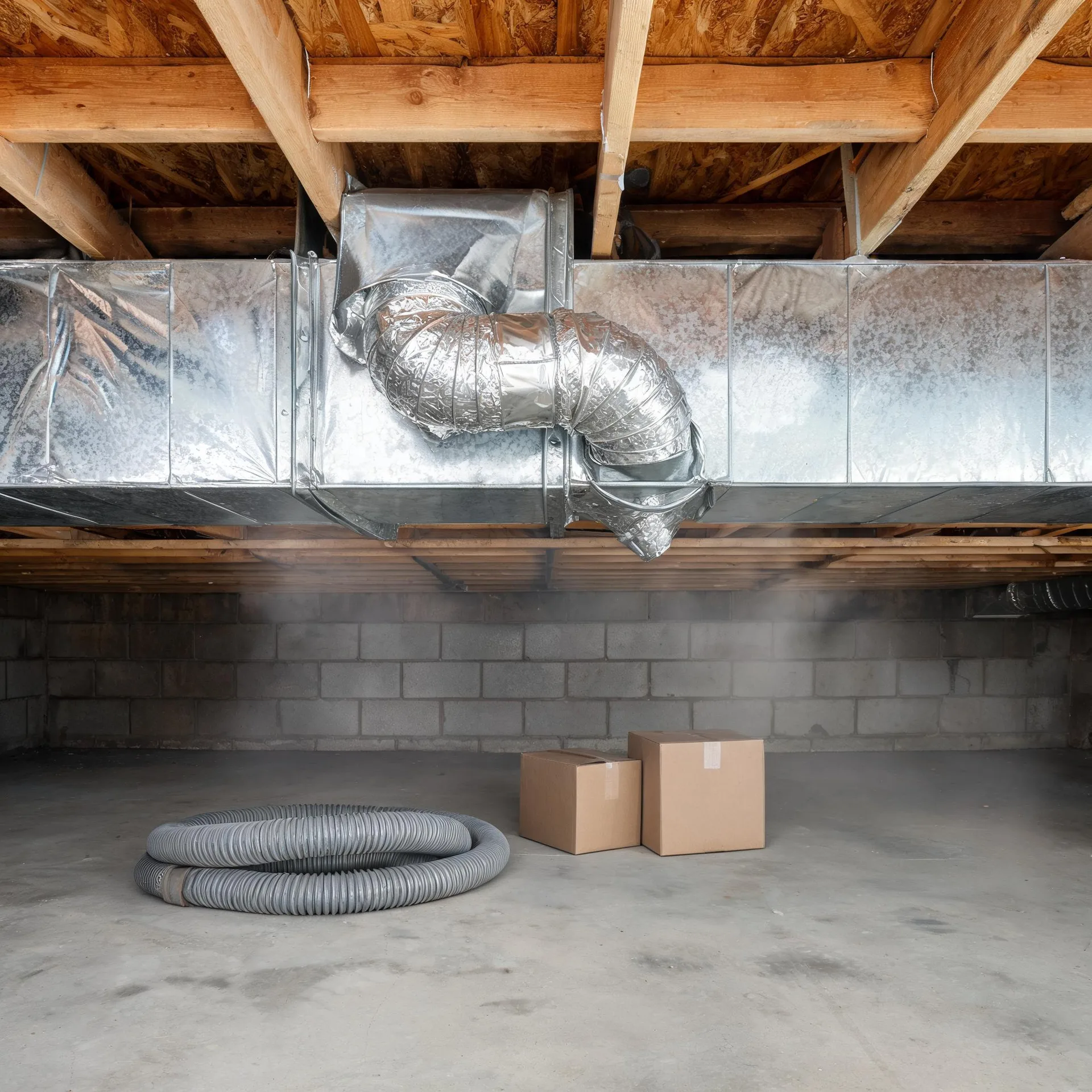
Furnace systems in houses built around the median for this county draw from a parts catalog that has been shrinking for years. Half the homes in Johnson County, Indiana were built in 1993 or earlier (2020-2024 ACS 5-year). When a contractor opens a furnace of that era and identifies a failed heat exchanger, a cracked inducer housing, or a failed control board, the repair depends on whether that specific component is still manufactured or available through secondary supply. A system from that period may require a part that has moved into back-order or been discontinued entirely, which turns a one-visit repair into a sourcing problem before it is anything else.
The Parts of a Furnace a Contractor Checks First
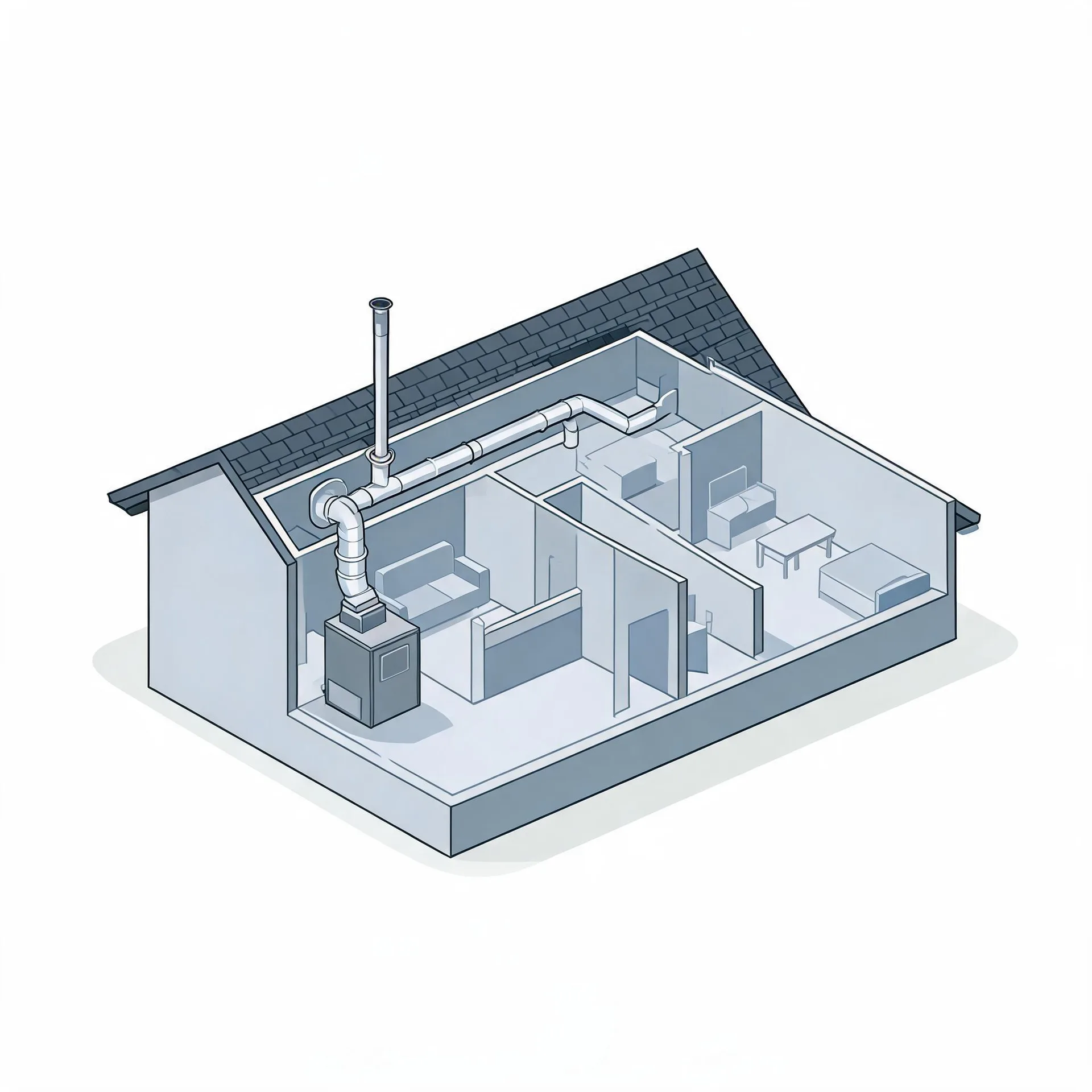
The heat exchanger sits at the core of the furnace cabinet in your basement or utility room, and it is where a contractor looks first when heat output drops or the system short-cycles. The burner assembly feeds it, and a cracked exchanger or a dirty, misfiring burner will cause the whole unit to behave erratically. The blower motor pushes conditioned air out through the supply side, and when it runs weak or fails, rooms go cold even if the burner is fine.
The inducer motor sits at the top of the heat exchanger and pulls combustion gases out through the flue before the blower fires. A failed inducer is a common reason a furnace locks out on a safety fault. The pressure switches, limit switches, and control board all monitor these components and shut the system down when something reads outside its expected range, so a fault code on the board usually tells a contractor where to start.
The drawing shows a representative furnace layout, and a licensed contractor determines which components apply to the specific equipment and installation in your home.
Find a contractor in Johnson CountyJohnson County, Indiana, by the numbers
84 severe weather events were recorded in Johnson County, Indiana between 2015 and 2024.
NOAA National Centers for Environmental Information, Storm Events Database, bulk CSV export, events 2015-01-01 through 2024-12-31.Half the homes in Johnson County, Indiana were built in 1993 or earlier (2020-2024 ACS 5-year).
U.S. Census Bureau, 2020-2024 American Community Survey 5-Year EstimatesJohnson County, Indiana holds 65,915 housing units (2020-2024 ACS 5-year).
U.S. Census Bureau, 2020-2024 American Community Survey 5-Year EstimatesOwners occupy 72.7% of the occupied homes in Johnson County, Indiana (2020-2024 ACS 5-year).
U.S. Census Bureau, 2020-2024 American Community Survey 5-Year EstimatesCodes & Standards Covering Furnace Repair in Johnson County, Indiana4 sourced rules & standards
What Happens When the Contractor Comes Out
Non-weatherized gas furnaces manufactured on or after November 19, 2015 must reach 80.0 percent AFUE.
Non-weatherized oil-fired furnaces manufactured on or after November 19, 2015 must reach 83.0 percent AFUE.
Mobile home gas furnaces manufactured on or after November 19, 2015 must reach 80.0 percent AFUE.
Non-weatherized gas furnaces manufactured on or after December 18, 2028 must reach 95.0 percent AFUE, up from the 80.0 percent minimum that applies to units manufactured before that date.
Severe Weather Events in Johnson County
Hard weather puts real hours on a furnace. Repair needs in Johnson County track directly with what the climate asks of the equipment.
84 severe weather events, 2015–2024. Source: NOAA National Centers for Environmental Information, Storm Events Database.