Tell us about the job
Takes about a minute. No obligation.
A furnace repair in Tipton County starts with the same question a contractor has to settle before anything else: what actually broke it. 40 severe weather events were recorded in Tipton County, Indiana between 2015 and 2024. At that rate, severe weather is a real but infrequent presence, and it does not account for most of what contractors pull apart in a failed furnace here. Heat exchangers crack from age. Igniters and control boards wear out on their own schedule. A contractor working a repair in this county checks those first, because the record here does not point at weather load as the lead suspect.
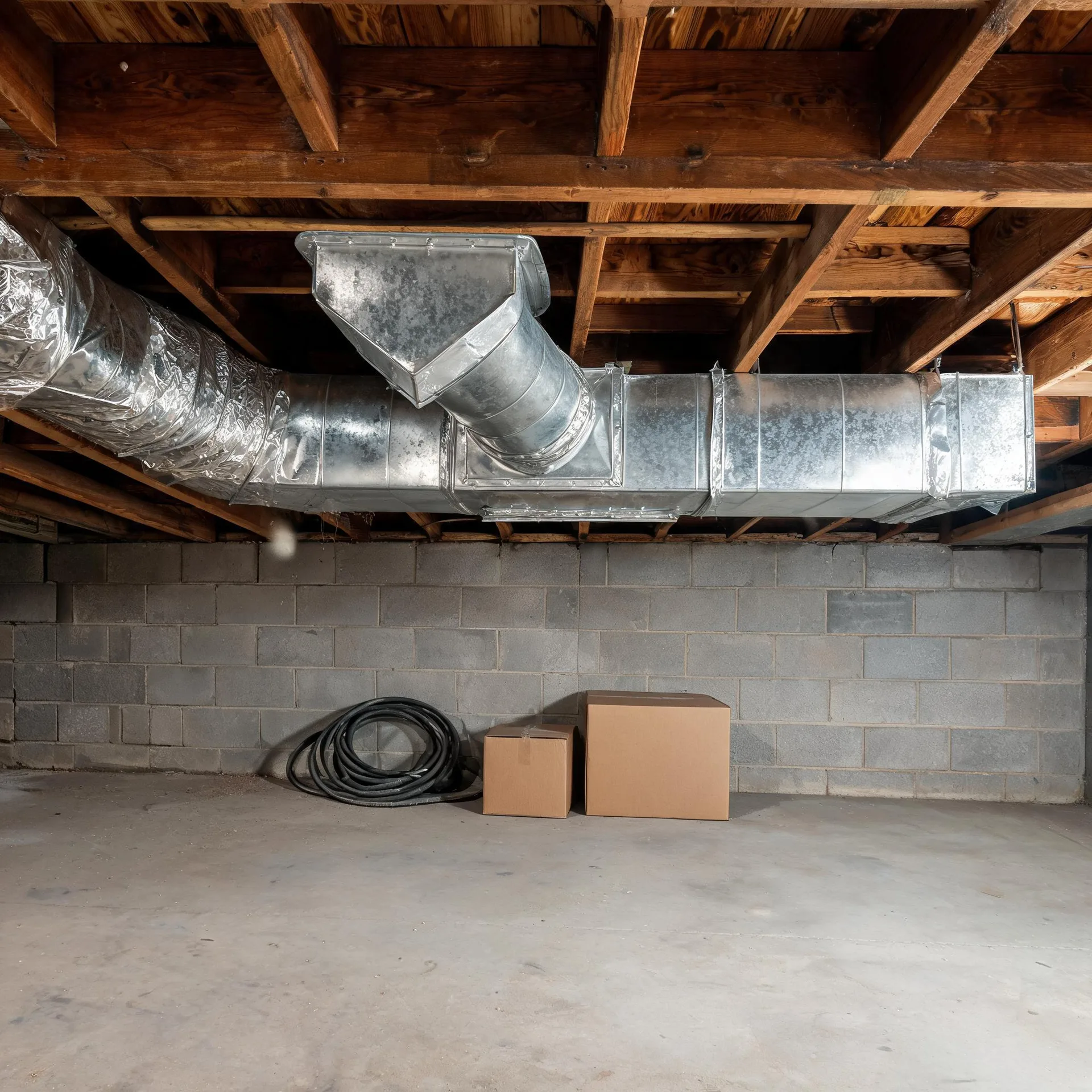
Ductwork that has been patched across generations and a furnace that has outlasted the warranty on its own components are what a contractor opens up to in much of Tipton County. Half the homes in Tipton County, Indiana were built in 1965 or earlier (2020-2024 ACS 5-year). That depth of age in the stock means replacement parts for the furnace models a contractor encounters here are not always on a local shelf. A supplier may have to source them, and some components are simply no longer manufactured, which changes what the repair costs and how long the house goes without heat.
The Parts of a Furnace a Contractor Checks First
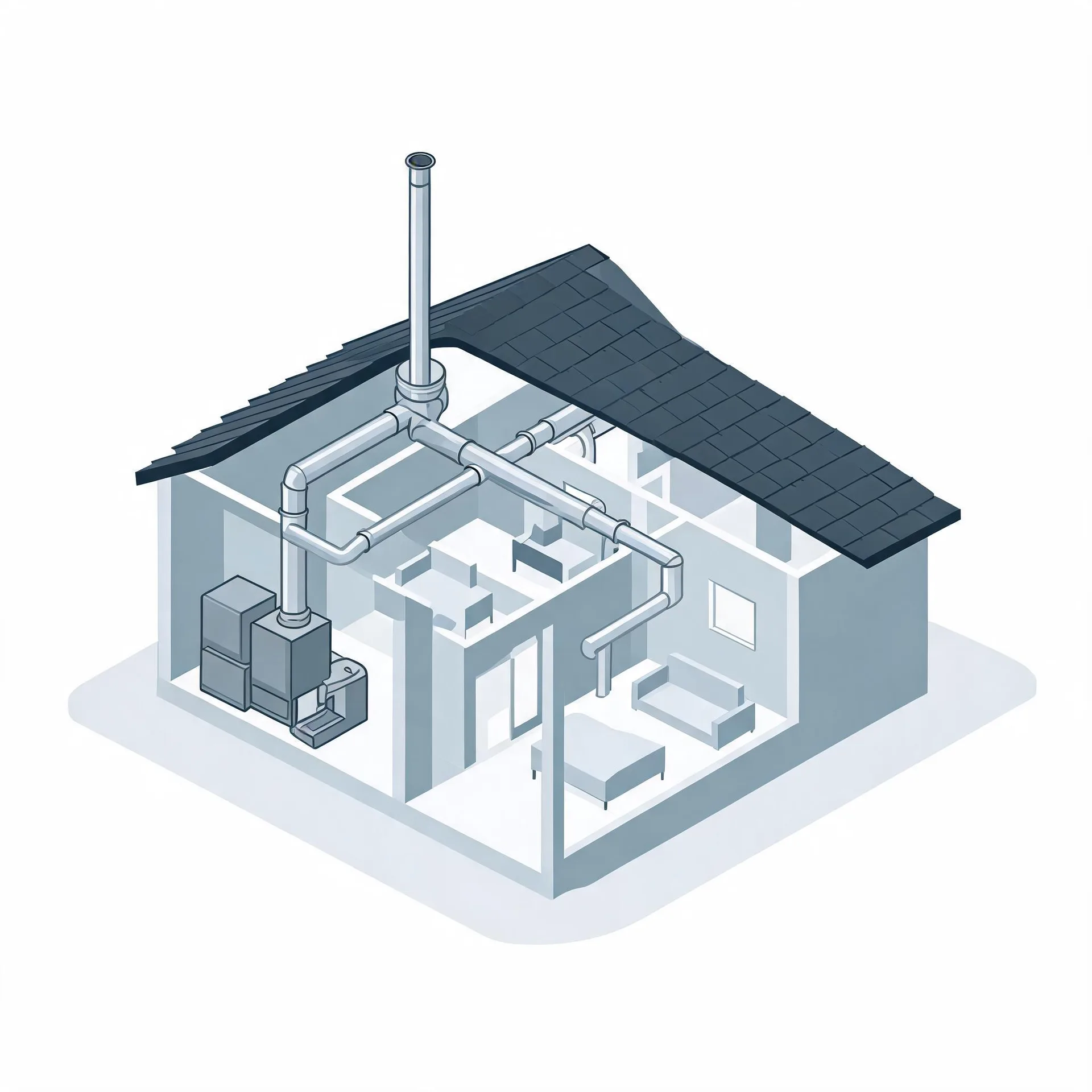
The furnace itself sits in a basement, utility closet, or mechanical room and is the heart of what a contractor examines. Inside it, the heat exchanger is the piece that fails quietly but matters most: cracks in it let combustion gases into living air. The burners and the igniter sit just below it, and when a furnace refuses to start or runs short cycles, those two are where a contractor looks first.
The blower motor sits at the base of the furnace cabinet and pushes conditioned air into the supply side of the house. The control board coordinates every other component, and a fault there can mimic failures elsewhere, which is why a contractor reads its error codes before pulling parts. The flue pipe runs from the cabinet to an exterior wall or chimney and carries exhaust out.
The drawing shows a general layout of these components, and a licensed contractor determines what applies to the specific equipment and configuration in your home.
Find a contractor in Tipton CountyTipton County, by the numbers
40 severe weather events were recorded in Tipton County, Indiana between 2015 and 2024.
NOAA National Centers for Environmental Information, Storm Events Database, bulk CSV export, events 2015-01-01 through 2024-12-31.Half the homes in Tipton County, Indiana were built in 1965 or earlier (2020-2024 ACS 5-year).
U.S. Census Bureau, 2020-2024 American Community Survey 5-Year EstimatesTipton County, Indiana holds 6,845 housing units (2020-2024 ACS 5-year).
U.S. Census Bureau, 2020-2024 American Community Survey 5-Year EstimatesOwners occupy 81.4% of the occupied homes in Tipton County, Indiana (2020-2024 ACS 5-year).
U.S. Census Bureau, 2020-2024 American Community Survey 5-Year EstimatesCodes & Standards Governing Furnace Repair in Tipton County, Indiana4 sourced rules and standards
What happens when the contractor arrives
Non-weatherized gas furnaces manufactured on or after November 19, 2015 must reach 80.0 percent AFUE.
Non-weatherized oil-fired furnaces manufactured on or after November 19, 2015 must reach 83.0 percent AFUE.
Mobile home gas furnaces manufactured on or after November 19, 2015 must reach 80.0 percent AFUE.
Non-weatherized gas furnaces manufactured on or after December 18, 2028 must reach 95.0 percent AFUE, up from the 80.0 percent minimum that applies to units manufactured before that date.
Severe Weather Events in Tipton County
Tipton County weather puts real stress on furnace components over time. How often that stress hits shapes how much repair work local equipment actually needs.
40 severe weather events, 2015–2024. Source: NOAA National Centers for Environmental Information, Storm Events Database.