Tell us about the job
Takes about a minute. No obligation.

A furnace quote in Tipton County starts with the install itself: how the unit was sized for the house, how well the ductwork was sealed, and what condition the equipment is in after years of ordinary heating seasons. 40 severe weather events were recorded in Tipton County, Indiana between 2015 and 2024. At that rate, severe weather touches a system here and then leaves long stretches where nothing unusual is asked of it. A furnace that is underperforming in this county is far more likely carrying a bad original install or simply aging out than absorbing punishment from the climate, and a contractor pricing the job sizes accordingly.
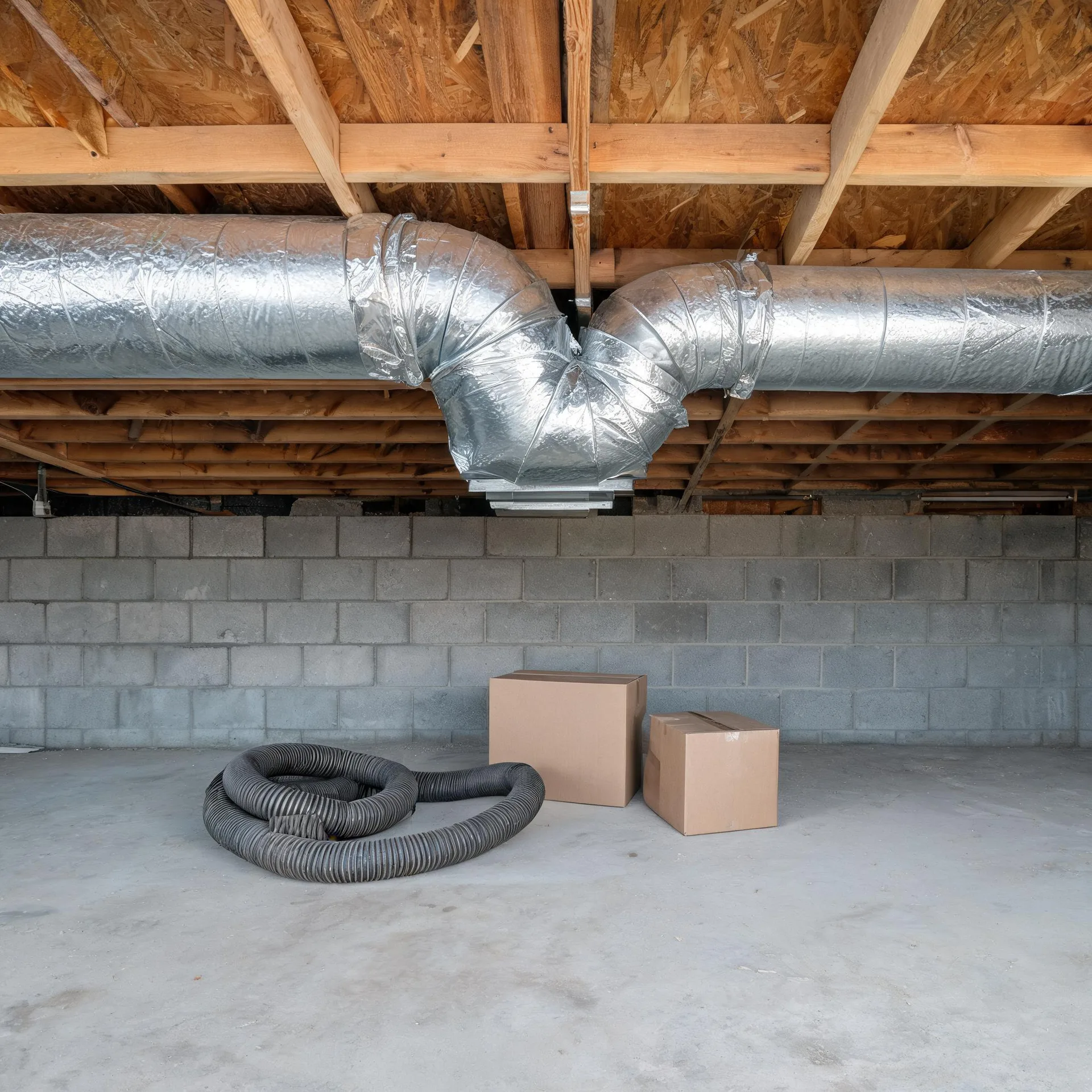
Ductwork laid down for an older gravity or early forced-air furnace carries different dimensions, different static pressure, and different branch layouts than what a modern unit wants. Half the homes in Tipton County, Indiana were built in 1965 or earlier (2020-2024 ACS 5-year). A contractor sizing a new furnace here has to look at what the existing trunk lines can actually move before the equipment choice means much. The electrical service is the same story: a panel installed for that era of heating may not have the capacity a new furnace and its controls draw without a circuit added. Those two things, the duct system and the electrical, are what shape the scope and the price of the job.
What Gets Installed With a New Furnace
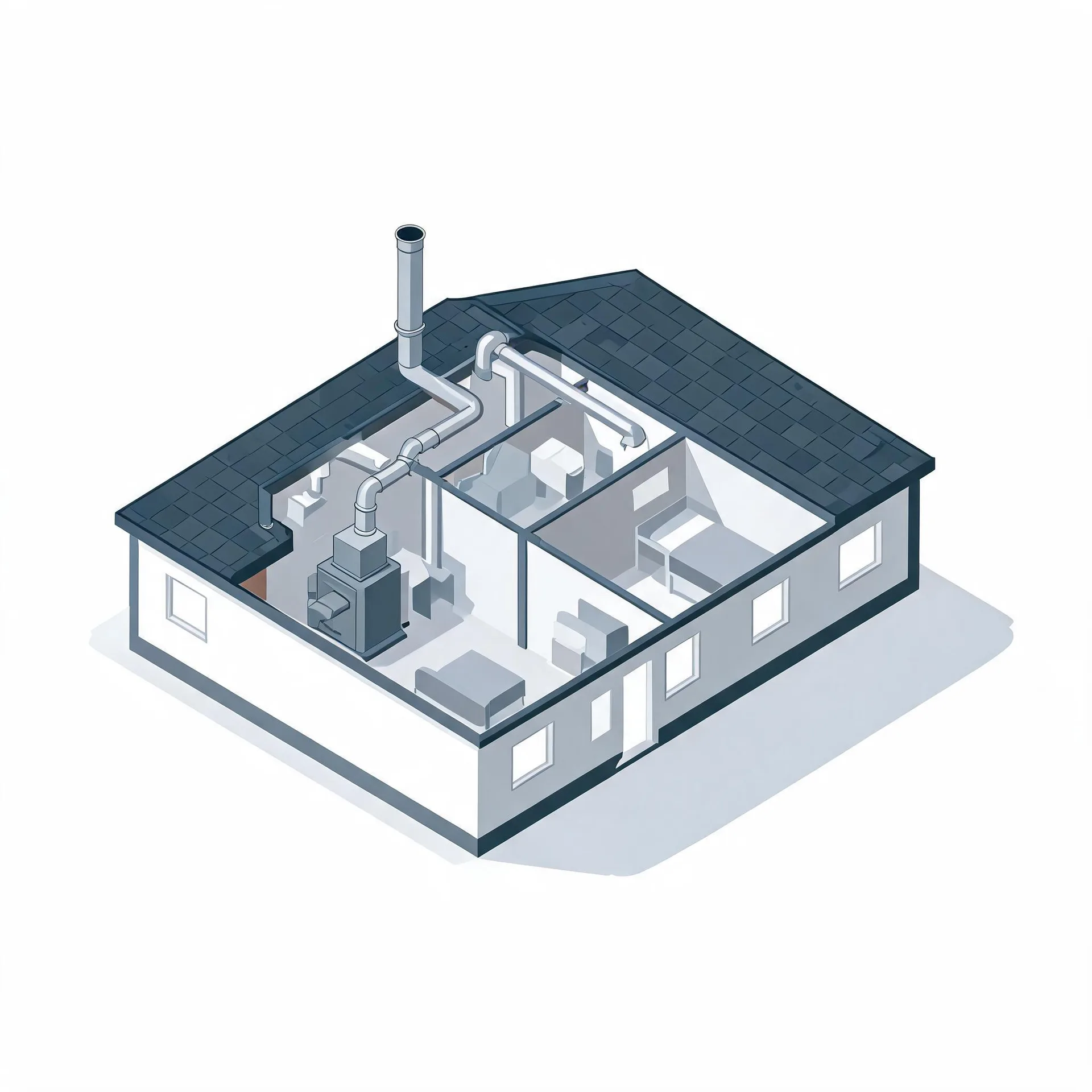
The furnace itself sits in the basement, utility room, or crawl space and is the unit a homeowner sees when they visit the mechanical area. A contractor mounts the air handler or blower cabinet alongside it or within it, depending on the model. That assembly is what moves conditioned air out through the house.
The flue pipe runs from the furnace up through the house and out through the roof or an exterior wall, carrying combustion gases away. The thermostat goes on an interior wall and is the control point the household uses every day. A contractor also sets the condensate drain line where the system requires one, routing it to a floor drain or utility sink.
The drawing shows a general layout of these components, and a licensed contractor determines exactly what applies to your house and its existing setup.
Find a contractor in Tipton CountyTipton County, by the numbers
40 severe weather events were recorded in Tipton County, Indiana between 2015 and 2024.
NOAA National Centers for Environmental Information, Storm Events Database, bulk CSV export, events 2015-01-01 through 2024-12-31.Half the homes in Tipton County, Indiana were built in 1965 or earlier (2020-2024 ACS 5-year).
U.S. Census Bureau, 2020-2024 American Community Survey 5-Year EstimatesTipton County, Indiana holds 6,845 housing units (2020-2024 ACS 5-year).
U.S. Census Bureau, 2020-2024 American Community Survey 5-Year EstimatesOwners occupy 81.4% of the occupied homes in Tipton County, Indiana (2020-2024 ACS 5-year).
U.S. Census Bureau, 2020-2024 American Community Survey 5-Year EstimatesFurnace Installation Rules on the Books for Tipton County, Indiana4 sourced standards and codes
What Happens on Installation Day
Non-weatherized gas furnaces manufactured on or after November 19, 2015 must reach 80.0 percent AFUE.
Non-weatherized oil-fired furnaces manufactured on or after November 19, 2015 must reach 83.0 percent AFUE.
Mobile home gas furnaces manufactured on or after November 19, 2015 must reach 80.0 percent AFUE.
Non-weatherized gas furnaces manufactured on or after December 18, 2028 must reach 95.0 percent AFUE, up from the 80.0 percent minimum that applies to units manufactured before that date.
Severe Weather History in Tipton County
Weather puts real hours on heating equipment. A furnace that carries a home through hard winters ages differently than one that rarely works, and that gap shows up in sizing decisions, equipment selection, and how contractors approach installation in Tipton County.
40 severe weather events, 2015–2024. Source: NOAA National Centers for Environmental Information, Storm Events Database.