Tell us about the job
Takes about a minute. No obligation.
A furnace repair in Shelby County starts with what the system has actually been through, and that picture is more modest than homeowners often expect. 83 severe weather events were recorded in Shelby County, Indiana between 2015 and 2024. At that rate, severe weather is a real but occasional presence, not a constant grind on equipment. A furnace that breaks down here has almost certainly been worn down by age, a skipped filter change, or a component that was running near the end of its service life before any storm arrived. A contractor will check those things first, because that is where the answer usually is.
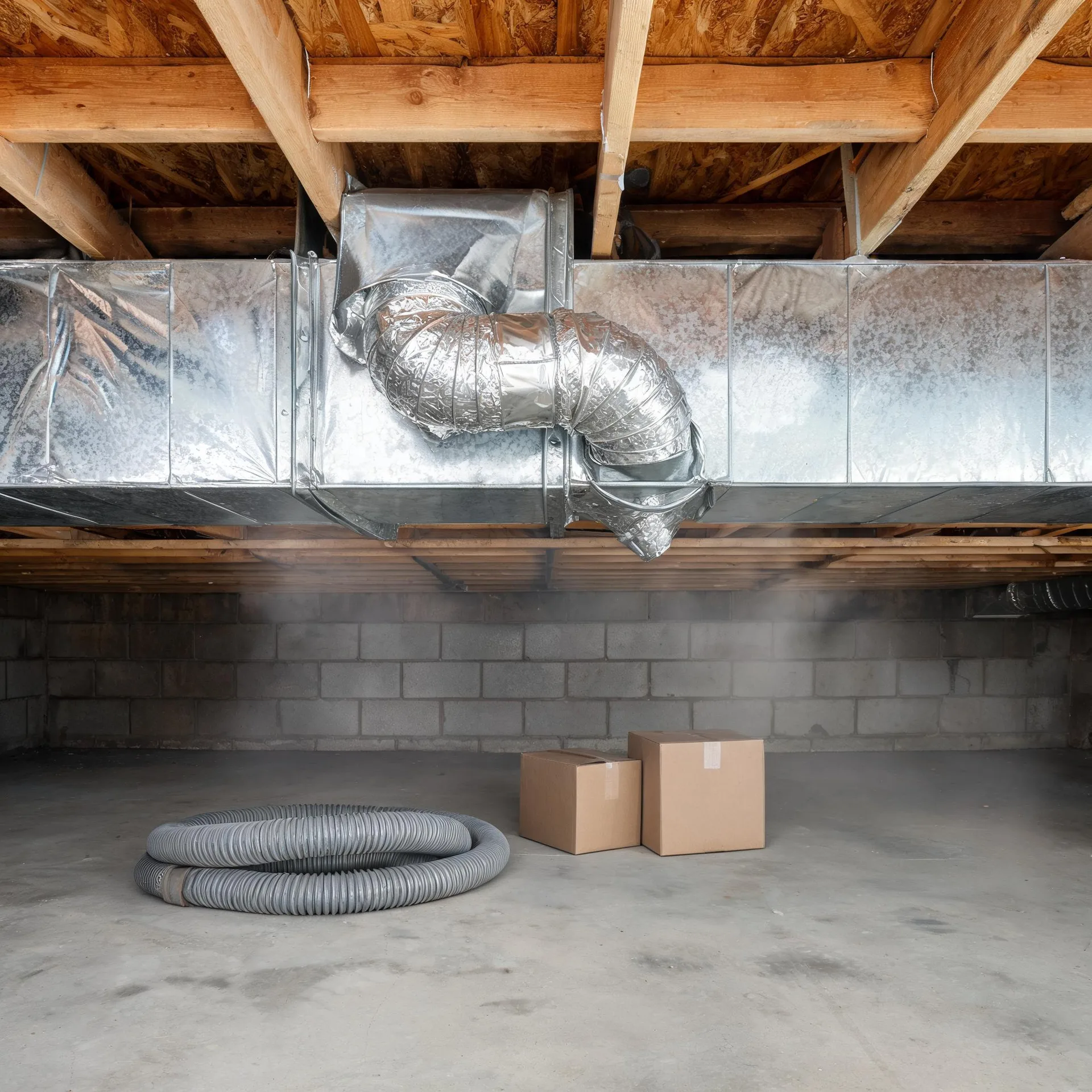
Shelby County's furnace repairs carry a specific complication that shows up once a contractor pulls the cabinet open. Half the homes in Shelby County, Indiana were built in 1972 or earlier (2020-2024 ACS 5-year). A heating system in housing that old has almost certainly been replaced at least once, but its current components still belong to a generation where sourcing a cracked heat exchanger or a failed burner assembly means checking whether that part is still in production. When it is not, the repair scope changes on the spot. A contractor working here prices the job around what the opened unit actually contains and what the supply chain for it looks like, not around what the cabinet says on the outside.
The Parts of a Furnace a Contractor Checks First
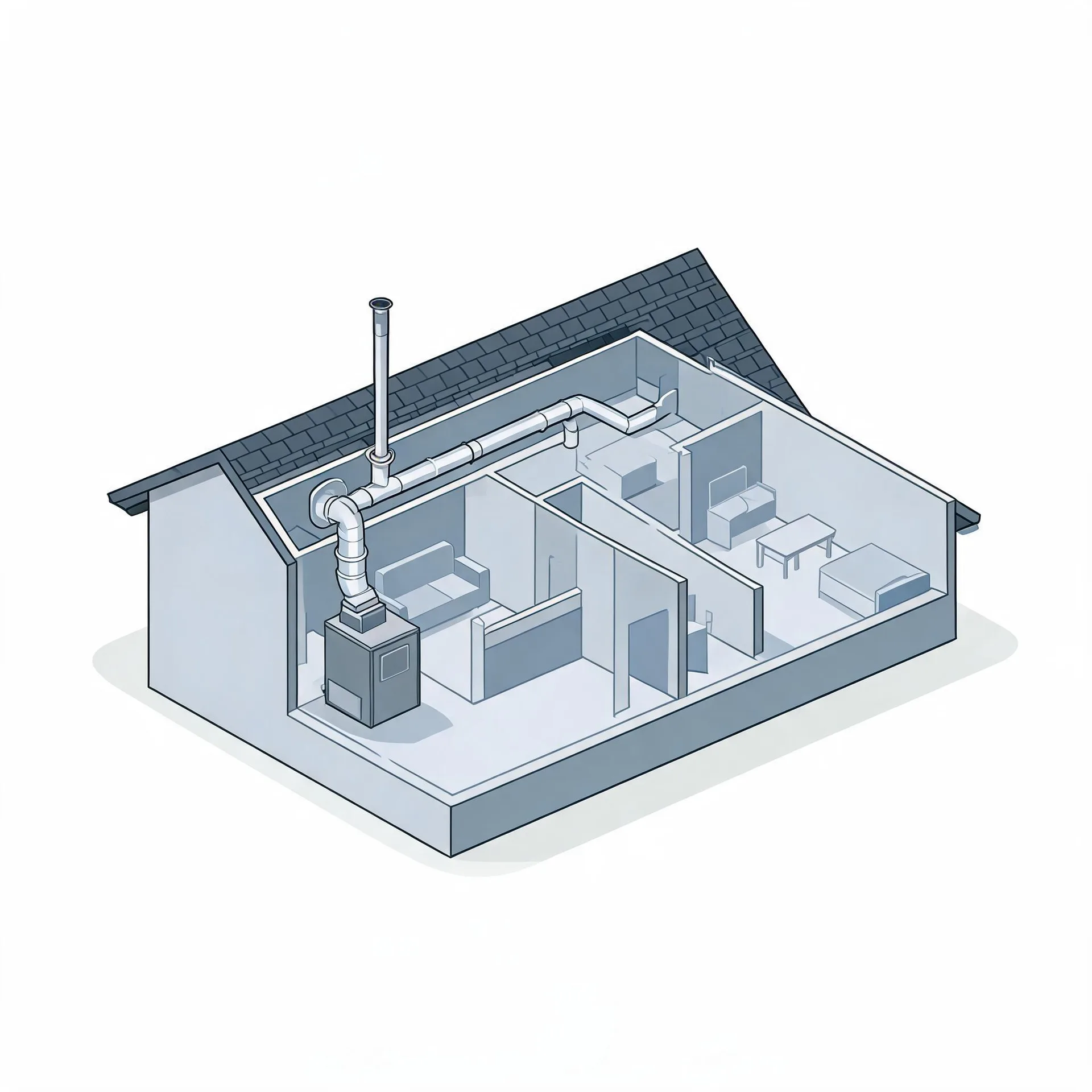
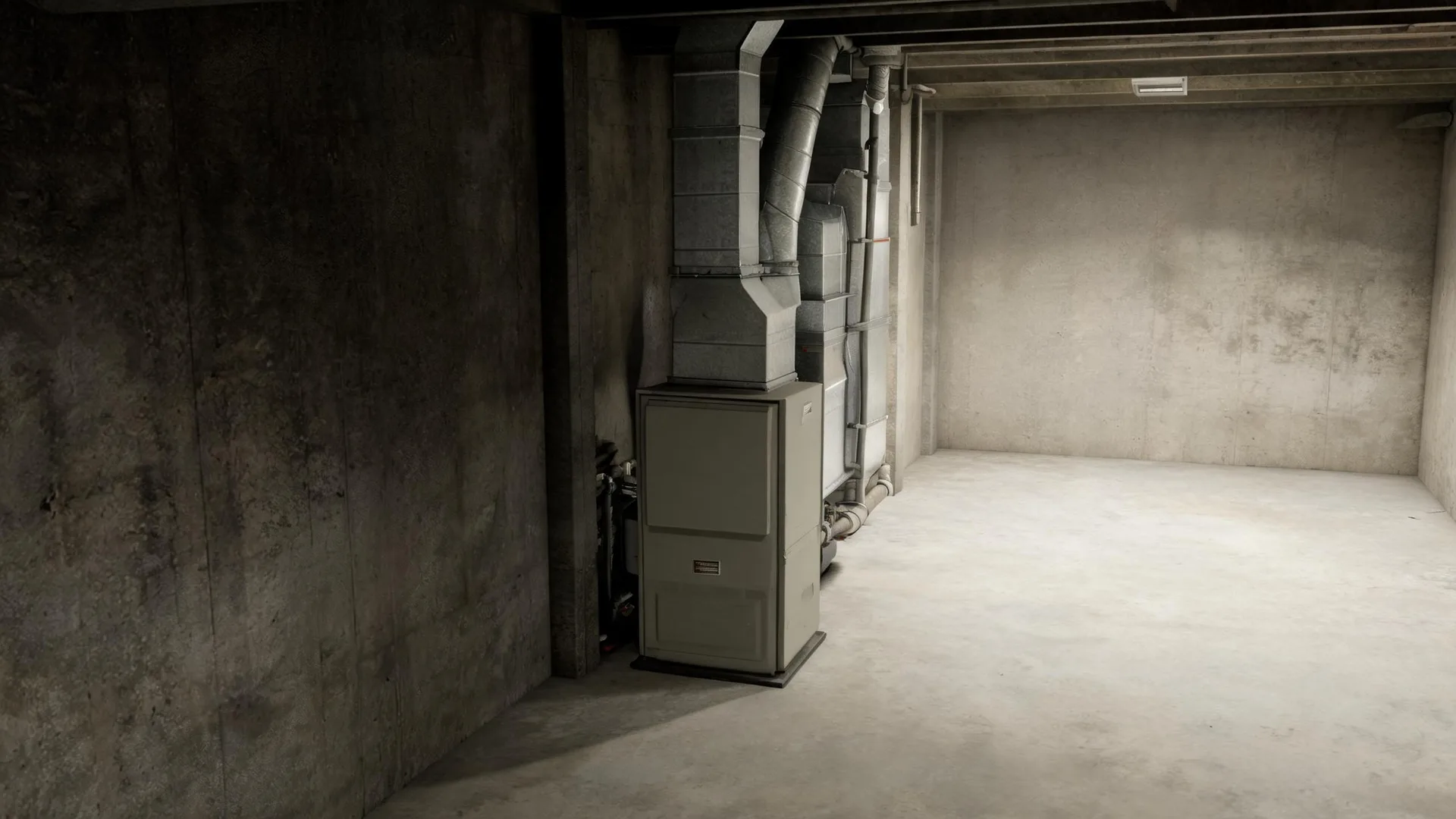
The heat exchanger sits at the core of the furnace cabinet in the basement or utility room, and it is the piece that transfers heat from combustion into the air moving through your home. When it cracks or corrodes, exhaust gases can enter that airstream. The burner assembly sits just below it, and a contractor will read its flame color and pattern to judge whether fuel is igniting cleanly.
The draft inducer motor pulls combustion gases out through the flue and is one of the first things a contractor listens to, since a failing motor produces a distinct sound before it stops entirely. The blower motor sits at the base of the cabinet and moves conditioned air into the supply ducts. The control board ties every component together, and when symptoms shift or seem unrelated, that board is where a contractor looks to trace the fault.
The drawing shows a general layout of these components, and a licensed contractor determines which parts apply and what they find in your specific system.
Find a contractor in Shelby CountyShelby County by the Numbers
83 severe weather events were recorded in Shelby County, Indiana between 2015 and 2024.
NOAA National Centers for Environmental Information, Storm Events Database, bulk CSV export, events 2015-01-01 through 2024-12-31.Half the homes in Shelby County, Indiana were built in 1972 or earlier (2020-2024 ACS 5-year).
U.S. Census Bureau, 2020-2024 American Community Survey 5-Year EstimatesShelby County, Indiana holds 19,674 housing units (2020-2024 ACS 5-year).
U.S. Census Bureau, 2020-2024 American Community Survey 5-Year EstimatesOwners occupy 72.5% of the occupied homes in Shelby County, Indiana (2020-2024 ACS 5-year).
U.S. Census Bureau, 2020-2024 American Community Survey 5-Year EstimatesCodes & Standards Covering Furnace Repair in Shelby County, Indiana4 sourced rules and standards
What HVAC Repair Looks Like in Shelby County
Non-weatherized gas furnaces manufactured on or after November 19, 2015 must reach 80.0 percent AFUE.
Non-weatherized oil-fired furnaces manufactured on or after November 19, 2015 must reach 83.0 percent AFUE.
Mobile home gas furnaces manufactured on or after November 19, 2015 must reach 80.0 percent AFUE.
Non-weatherized gas furnaces manufactured on or after December 18, 2028 must reach 95.0 percent AFUE, up from the 80.0 percent minimum that applies to units manufactured before that date.
Severe Weather Events in Shelby County
Harsh weather puts real strain on furnace systems, driving the kind of thermal cycling and demand spikes that wear components down faster than steady use does. How much of that strain a furnace in Shelby County absorbs is a local question, and local contractors know the difference.
83 severe weather events, 2015–2024. Source: NOAA National Centers for Environmental Information, Storm Events Database.