Tell us about the job
Takes about a minute. No obligation.
A furnace breaking down in Decatur County almost always points back to how old it is and how well it has been maintained, not to weather load. 68 severe weather events were recorded in Decatur County, Indiana between 2015 and 2024. At that rate, severe weather is a real but infrequent presence, and a contractor diagnosing a failed heat exchanger or a cracked inducer will look first at years of service and filter changes, not at what last winter's storms may have done. The weather record belongs in the file. It does not lead the diagnosis.
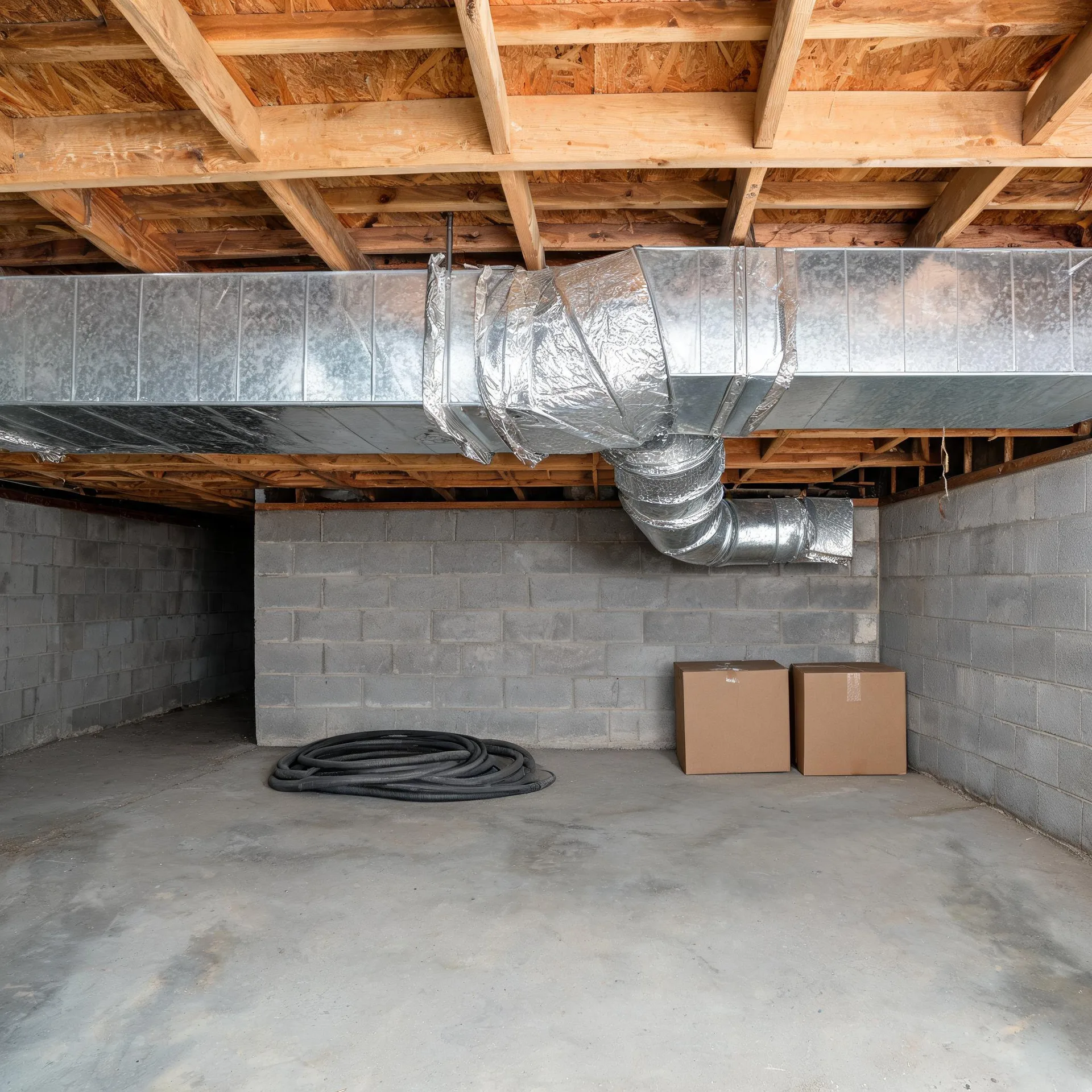
Ductwork in a house this old has been adapted more than once, and the furnace inside it has probably been swapped at least once since the house was new. Half the homes in Decatur County, Indiana were built in 1973 or earlier (2020-2024 ACS 5-year). That history matters at the repair stage because the furnace a contractor opens today is not the original one, and the parts it takes may already be at the edge of what suppliers still stock. A contractor diagnosing a failed heat exchanger or a worn inducer motor pulls the model number first, then checks availability before quoting anything.
The Parts of a Furnace a Contractor Checks First
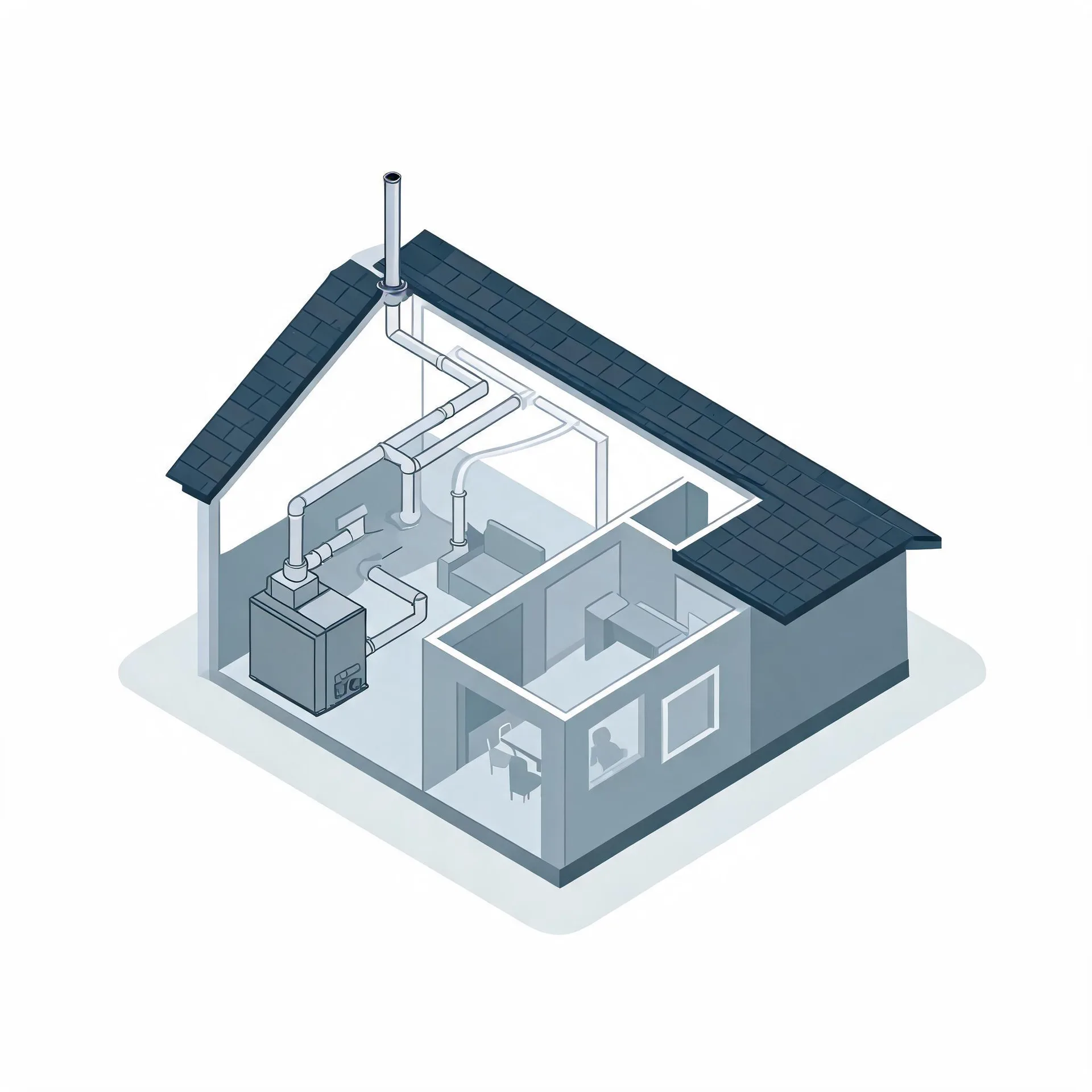
The furnace itself sits in a basement, utility room, or closet and is the piece a contractor goes to first. Inside it, the heat exchanger is the part that fails silently and matters most: cracks there let combustion gases into living air. The burners, which fire beneath it, are checked for uneven flame or buildup that throws off combustion.
The blower motor sits at the base of the furnace cabinet and pushes conditioned air into the duct system. Near it, the inducer motor and the flue pipe move exhaust gases out of the house. The control board, tucked inside the cabinet, is what a contractor reads for fault codes when the system stops responding.
The drawing shows a typical furnace layout, and a licensed contractor determines which components apply to the specific equipment and setup in your home.
Find a contractor in Decatur CountyDecatur County, by the numbers
68 severe weather events were recorded in Decatur County, Indiana between 2015 and 2024.
NOAA National Centers for Environmental Information, Storm Events Database, bulk CSV export, events 2015-01-01 through 2024-12-31.Half the homes in Decatur County, Indiana were built in 1973 or earlier (2020-2024 ACS 5-year).
U.S. Census Bureau, 2020-2024 American Community Survey 5-Year EstimatesDecatur County, Indiana holds 11,685 housing units (2020-2024 ACS 5-year).
U.S. Census Bureau, 2020-2024 American Community Survey 5-Year EstimatesOwners occupy 76.1% of the occupied homes in Decatur County, Indiana (2020-2024 ACS 5-year).
U.S. Census Bureau, 2020-2024 American Community Survey 5-Year EstimatesCodes & Standards Governing Furnace Repair in Decatur County, Indiana4 sourced rules & standards
What HVAC Repair Looks Like in Decatur County
Non-weatherized gas furnaces manufactured on or after November 19, 2015 must reach 80.0 percent AFUE.
Non-weatherized oil-fired furnaces manufactured on or after November 19, 2015 must reach 83.0 percent AFUE.
Mobile home gas furnaces manufactured on or after November 19, 2015 must reach 80.0 percent AFUE.
Non-weatherized gas furnaces manufactured on or after December 18, 2028 must reach 95.0 percent AFUE, up from the 80.0 percent minimum that applies to units manufactured before that date.
Severe Weather Events in Decatur County
Heating equipment works harder and wears faster when the weather around it is punishing. How much strain a furnace takes over time is a local question, and the record below reflects what Decatur County weather has actually asked of it.
68 severe weather events, 2015–2024. Source: NOAA National Centers for Environmental Information, Storm Events Database.