Tell us about the job
Takes about a minute. No obligation.
Furnace installation in Orange County is shaped more by the age and construction of the house than by weather bearing down on the equipment. 69 severe weather events were recorded in Orange County, Indiana between 2015 and 2024. At that rate, severe weather lands as an occasional event rather than a standing condition, which means a contractor quoting a new furnace is spending most of their attention on heat load calculations, duct layout, and the fuel supply the house actually has. A system that failed here almost certainly failed because it was old or undersized, and the replacement specs follow from that diagnosis.
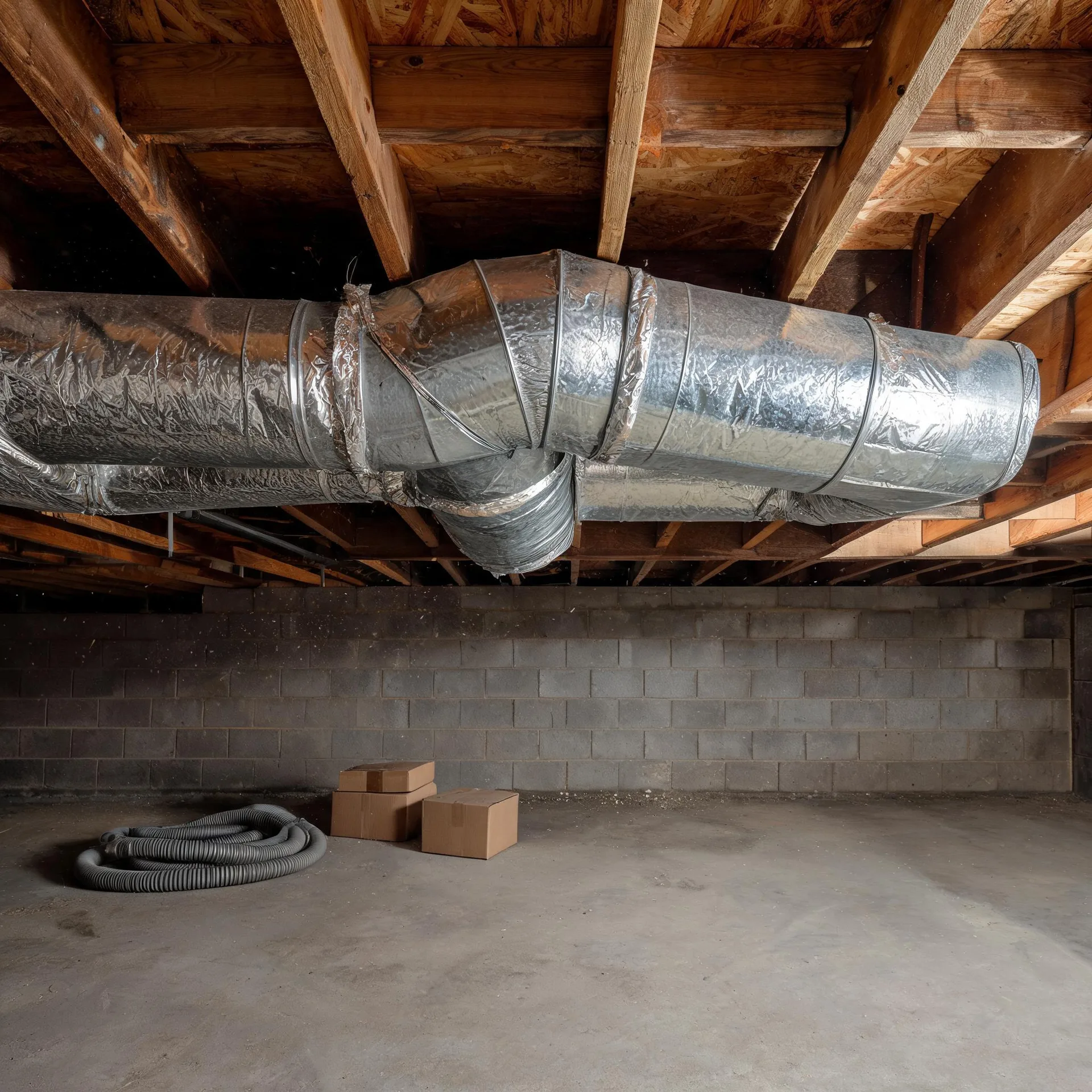
Ductwork laid down for an older furnace was sized for that furnace, and a new unit with different airflow requirements may find it a poor fit. Half the homes in Orange County, Indiana were built in 1980 or earlier (2020-2024 ACS 5-year). A contractor quoting a furnace installation here has to assess what the existing ducts will actually carry before settling on equipment, because a mismatch between the duct system and the new unit pushes air unevenly and makes the furnace work against itself. The electrical service in houses of that vintage is worth checking too, since modern furnaces draw on ignition controls and variable-speed blowers that older wiring was not run for.
What Gets Installed With a New Furnace
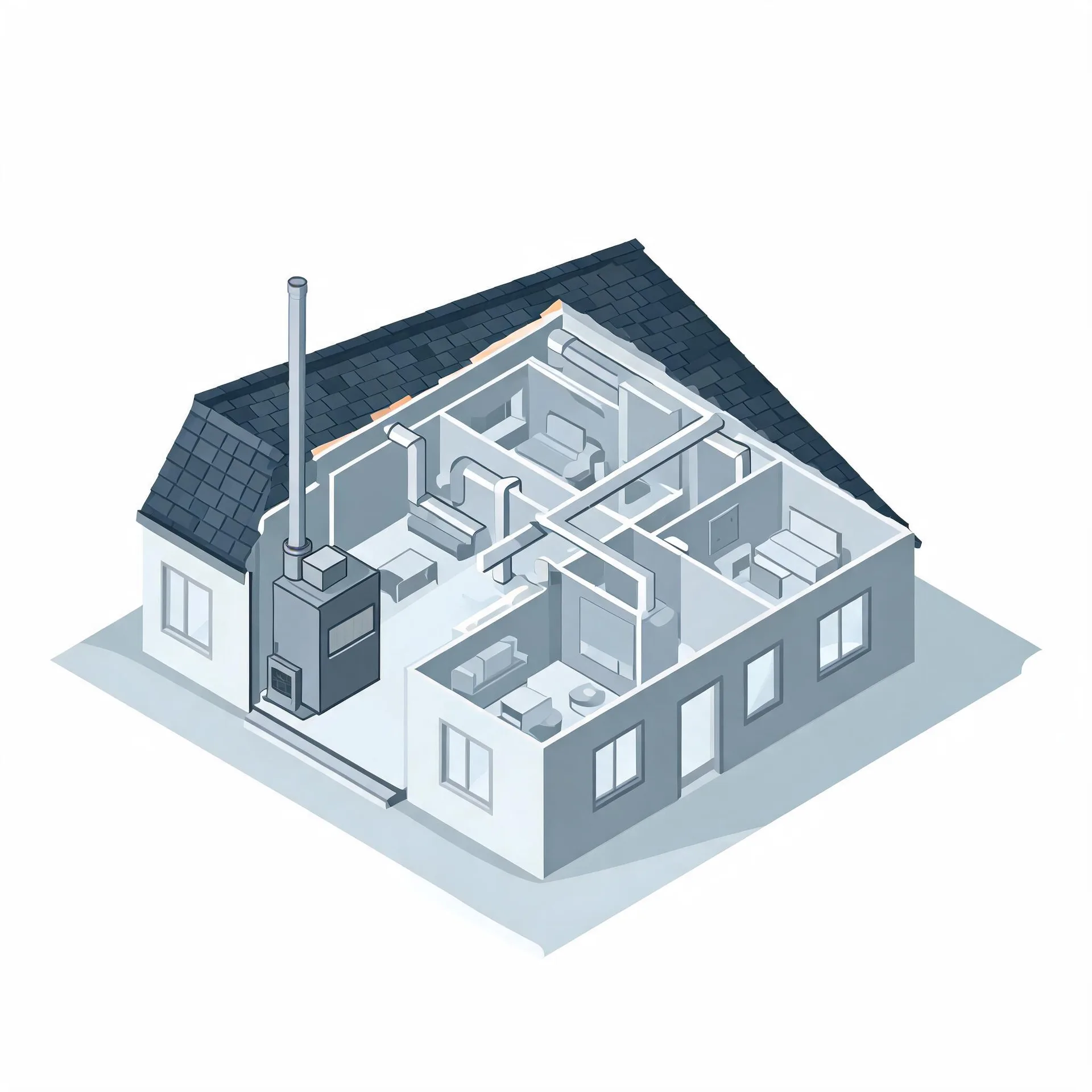
The furnace itself sits in the basement, utility room, or crawl space and is the unit a homeowner would recognize on sight. Inside it, a heat exchanger and a blower work together: the exchanger warms the air, and the blower pushes that air into the supply side of the home. A gas valve and burner assembly connect to the fuel line coming into the house.
A flue pipe runs from the furnace up and out of the house to vent combustion gases away from the living space. Alongside that, a condensate drain line handles moisture on high-efficiency models, and a thermostat goes on an interior wall to give the homeowner control over the whole system.
The drawing shows a typical layout, and a licensed contractor determines exactly which components and configurations apply to your house.
Find a contractor in Orange CountyOrange County, Indiana, by the numbers
69 severe weather events were recorded in Orange County, Indiana between 2015 and 2024.
NOAA National Centers for Environmental Information, Storm Events Database, bulk CSV export, events 2015-01-01 through 2024-12-31.Half the homes in Orange County, Indiana were built in 1980 or earlier (2020-2024 ACS 5-year).
U.S. Census Bureau, 2020-2024 American Community Survey 5-Year EstimatesOrange County, Indiana holds 9,101 housing units (2020-2024 ACS 5-year).
U.S. Census Bureau, 2020-2024 American Community Survey 5-Year EstimatesOwners occupy 78.7% of the occupied homes in Orange County, Indiana (2020-2024 ACS 5-year).
U.S. Census Bureau, 2020-2024 American Community Survey 5-Year EstimatesFurnace Installation Rules for Orange County, Indiana4 codes, standards & rules
What the Installation Actually Looks Like
Non-weatherized gas furnaces manufactured on or after November 19, 2015 must reach 80.0 percent AFUE.
Non-weatherized oil-fired furnaces manufactured on or after November 19, 2015 must reach 83.0 percent AFUE.
Mobile home gas furnaces manufactured on or after November 19, 2015 must reach 80.0 percent AFUE.
Non-weatherized gas furnaces manufactured on or after December 18, 2028 must reach 95.0 percent AFUE, up from the 80.0 percent minimum that applies to units manufactured before that date.
Severe Weather Events in Orange County
Weather puts a measurable load on heating equipment, and that load is specific to where the equipment runs. A furnace sized and installed for the conditions Orange County actually sees will hold up differently than one that was not.
69 severe weather events, 2015–2024. Source: NOAA National Centers for Environmental Information, Storm Events Database.