Tell us about the job
Takes about a minute. No obligation.
A contractor called out to diagnose a furnace repair in Crawford County starts with the system itself: how old it is, how it has been serviced, and what the heat exchanger, igniter, and controls actually show when opened up. 97 severe weather events were recorded in Crawford County, Indiana between 2015 and 2024. That puts this county squarely in the middle of the national distribution for severe weather, which means the weather load alone is rarely what explains a furnace giving out. A cracked heat exchanger or a failing inducer motor here points the contractor toward age and service gaps, not toward storm exposure.
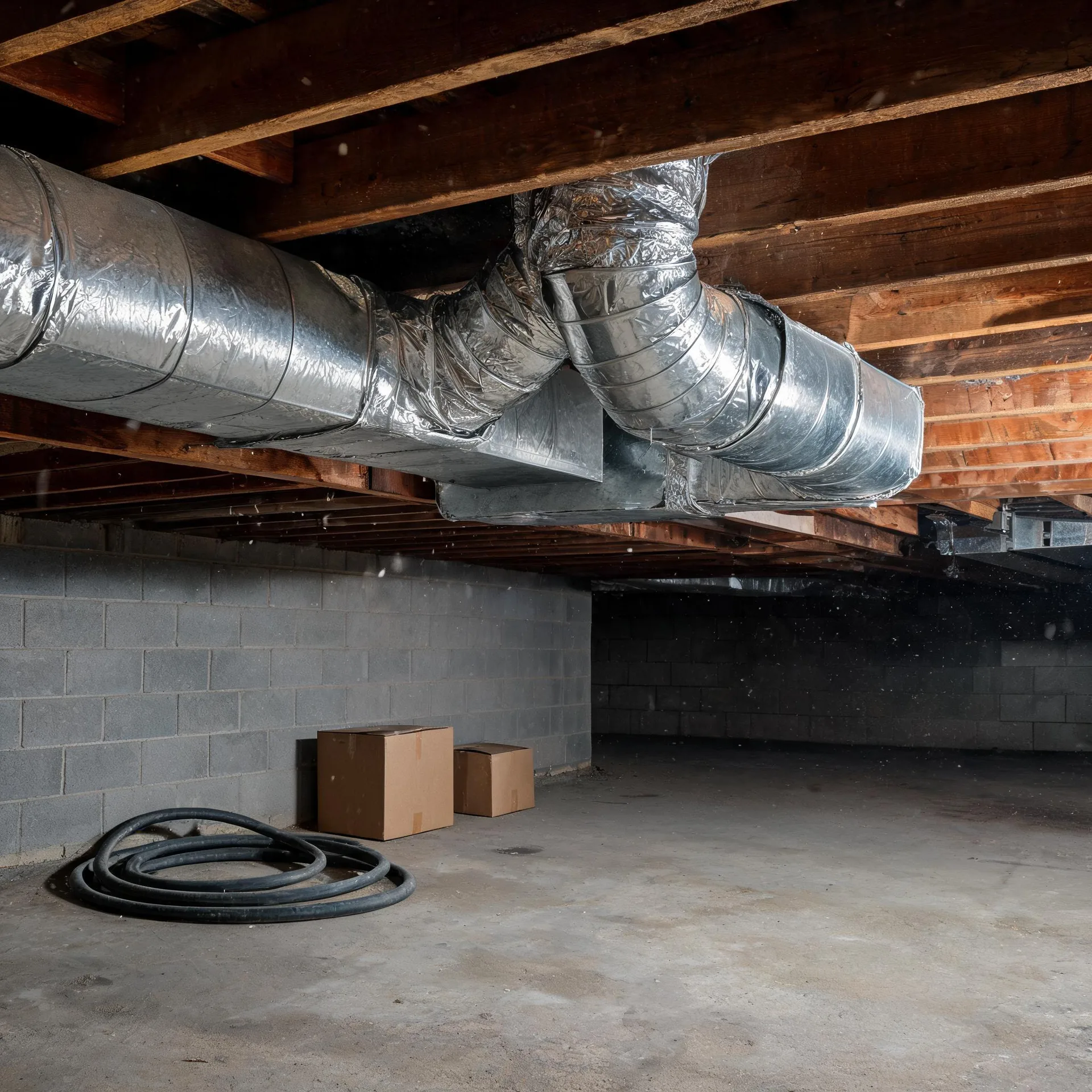
Furnaces serving houses this old have often been swapped or patched more than once, and what a contractor finds when the cabinet comes open is the real variable. Half the homes in Crawford County, Indiana were built in 1984 or earlier (2020-2024 ACS 5-year). Stock that has been heating itself through that many winters accumulates a particular kind of repair profile: heat exchangers show fatigue, limit switches have been replaced before, and the manufacturer may no longer produce the exact blower motor or control board the unit takes. When a part is discontinued, a contractor has to decide whether to fabricate a workaround, source a compatible aftermarket component, or advise replacement instead. That decision, not the diagnosis itself, is where repair jobs in housing like this get complicated and where the final scope often lands somewhere different from the original call.
The Parts of a Furnace a Contractor Checks First
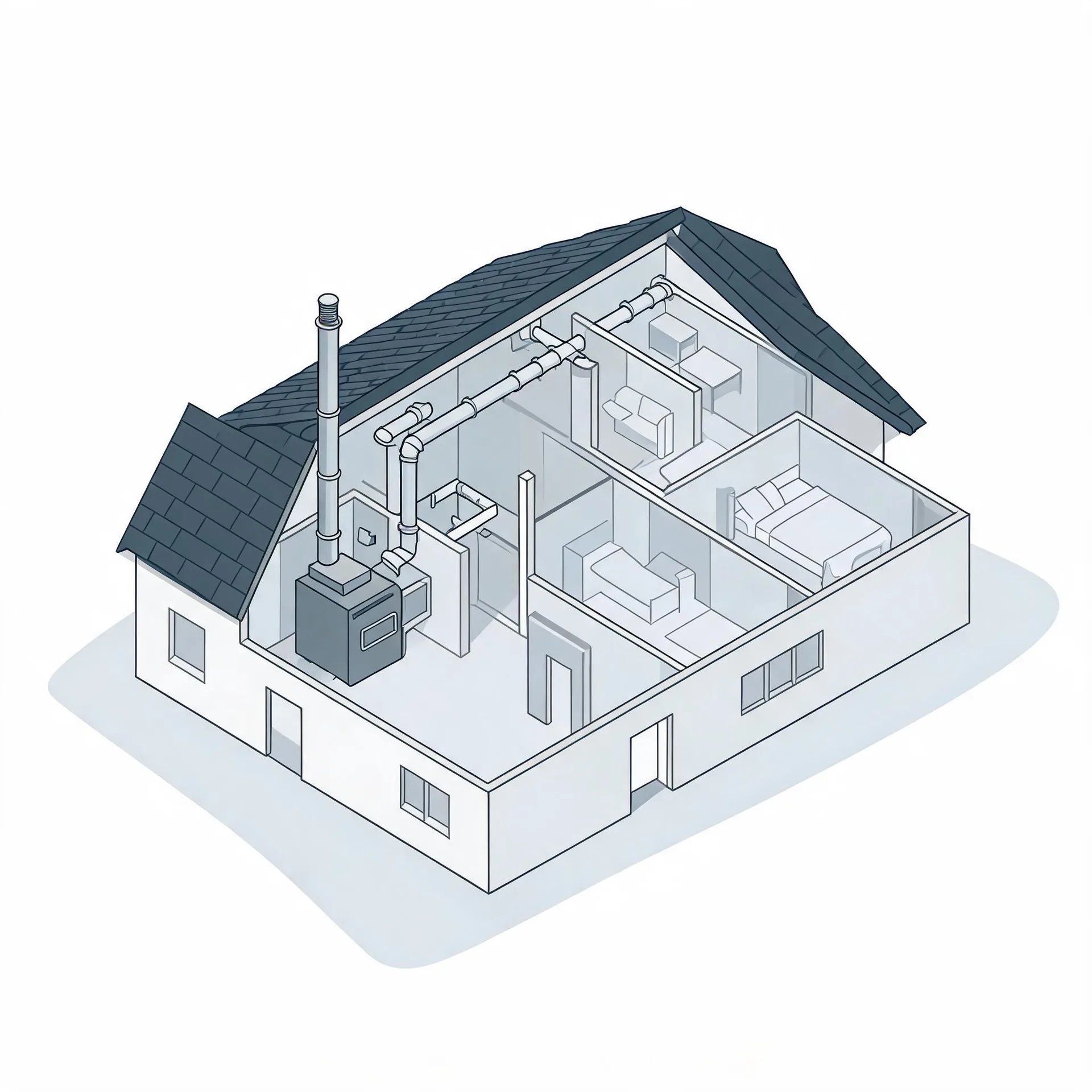
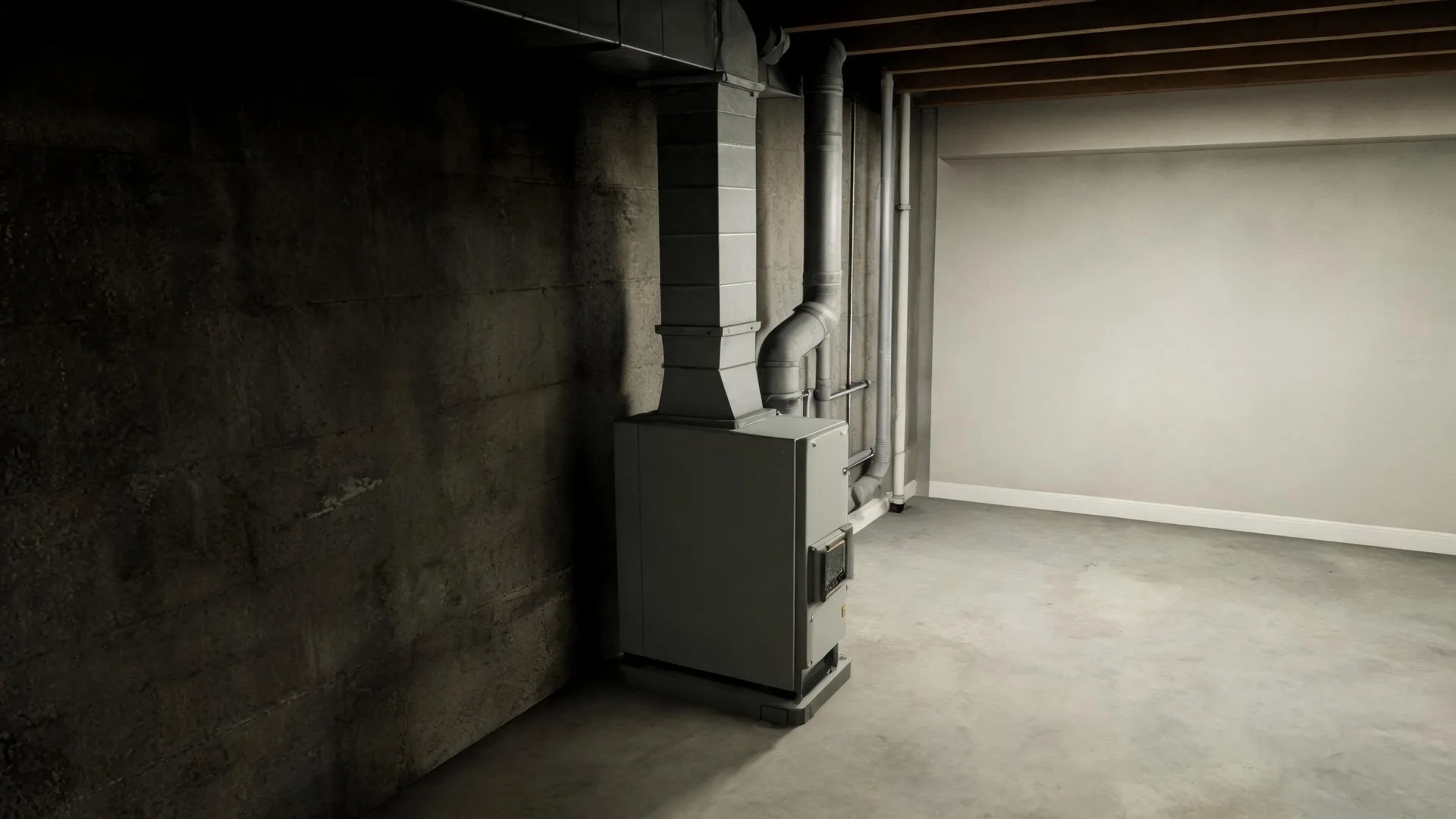
The furnace itself sits in a basement, utility closet, or crawlspace and is the piece a contractor goes to first. Inside it, the heat exchanger is the most common source of serious trouble: cracks there let combustion gases into the air supply. The burners, igniter, and flame sensor are the next things a contractor looks at, since any one of them can cause a furnace that starts poorly, runs in short cycles, or won't fire at all.
The blower motor and its wheel sit inside the furnace cabinet and push conditioned air out through the house. The flue pipe runs from the furnace to an outside vent and carries exhaust gases out. The thermostat, mounted on a wall, sends the call for heat and is worth checking early because a wiring fault or failed component there can look exactly like a furnace problem.
The drawing shows a general layout, and a licensed contractor determines which parts apply to your specific system and setup.
Find a contractor in Crawford CountyCrawford County by the numbers
97 severe weather events were recorded in Crawford County, Indiana between 2015 and 2024.
NOAA National Centers for Environmental Information, Storm Events Database, bulk CSV export, events 2015-01-01 through 2024-12-31.Half the homes in Crawford County, Indiana were built in 1984 or earlier (2020-2024 ACS 5-year).
U.S. Census Bureau, 2020-2024 American Community Survey 5-Year EstimatesCrawford County, Indiana holds 5,914 housing units (2020-2024 ACS 5-year).
U.S. Census Bureau, 2020-2024 American Community Survey 5-Year EstimatesOwners occupy 81.3% of the occupied homes in Crawford County, Indiana (2020-2024 ACS 5-year).
U.S. Census Bureau, 2020-2024 American Community Survey 5-Year EstimatesCodes & Standards Covering Furnace Repair in Crawford County, Indiana4 sourced rules and standards
What Happens When a Contractor Comes Out
Non-weatherized gas furnaces manufactured on or after November 19, 2015 must reach 80.0 percent AFUE.
Non-weatherized oil-fired furnaces manufactured on or after November 19, 2015 must reach 83.0 percent AFUE.
Mobile home gas furnaces manufactured on or after November 19, 2015 must reach 80.0 percent AFUE.
Non-weatherized gas furnaces manufactured on or after December 18, 2028 must reach 95.0 percent AFUE, up from the 80.0 percent minimum that applies to units manufactured before that date.
Severe Weather Events in Crawford County
Extreme weather puts real stress on furnace components, cycling them hard through temperature swings they were not sized to handle alone. How much of that stress a furnace in Crawford County absorbs is a local question, and the record below is part of the answer.
97 severe weather events, 2015–2024. Source: NOAA National Centers for Environmental Information, Storm Events Database.