Tell us about the job
Takes about a minute. No obligation.

A contractor quoting a furnace installation in Hancock County has to treat the local weather load as a design input, not an afterthought. 91 severe weather events were recorded in Hancock County, Indiana between 2015 and 2024. At that rate, severe weather is a standing condition of operating here, and a furnace sized or sealed to catalog minimums will be working against it from the start. Duct connections, heat exchanger fit, and combustion air pathways all have to be specced for what the climate actually delivers, because shortcuts that hold in quieter areas will not hold here.
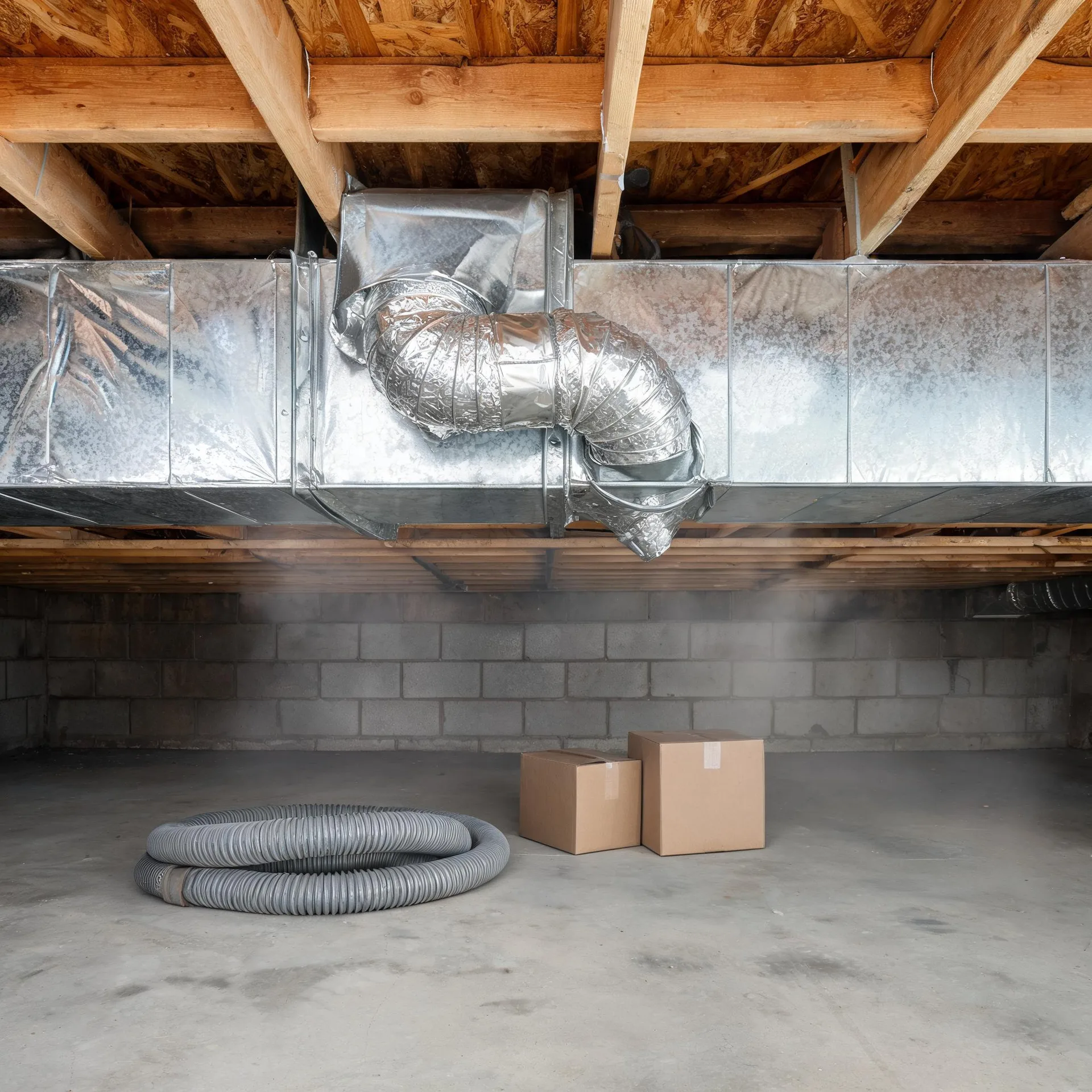
Ductwork in a house built for an earlier generation of furnaces carries the shape of decisions made for that equipment: trunk sizing, branch runs, and return placement that a new furnace's airflow requirements may not match at all. Half the homes in Hancock County, Indiana were built in 1991 or earlier (2020-2024 ACS 5-year). A contractor installing a new furnace in stock this age checks whether the existing duct layout can move the air a modern unit pushes before the equipment itself is ever selected. If the duct system needs modification, that work sets the scope of the job more than the furnace does.
What Gets Installed With a New Furnace
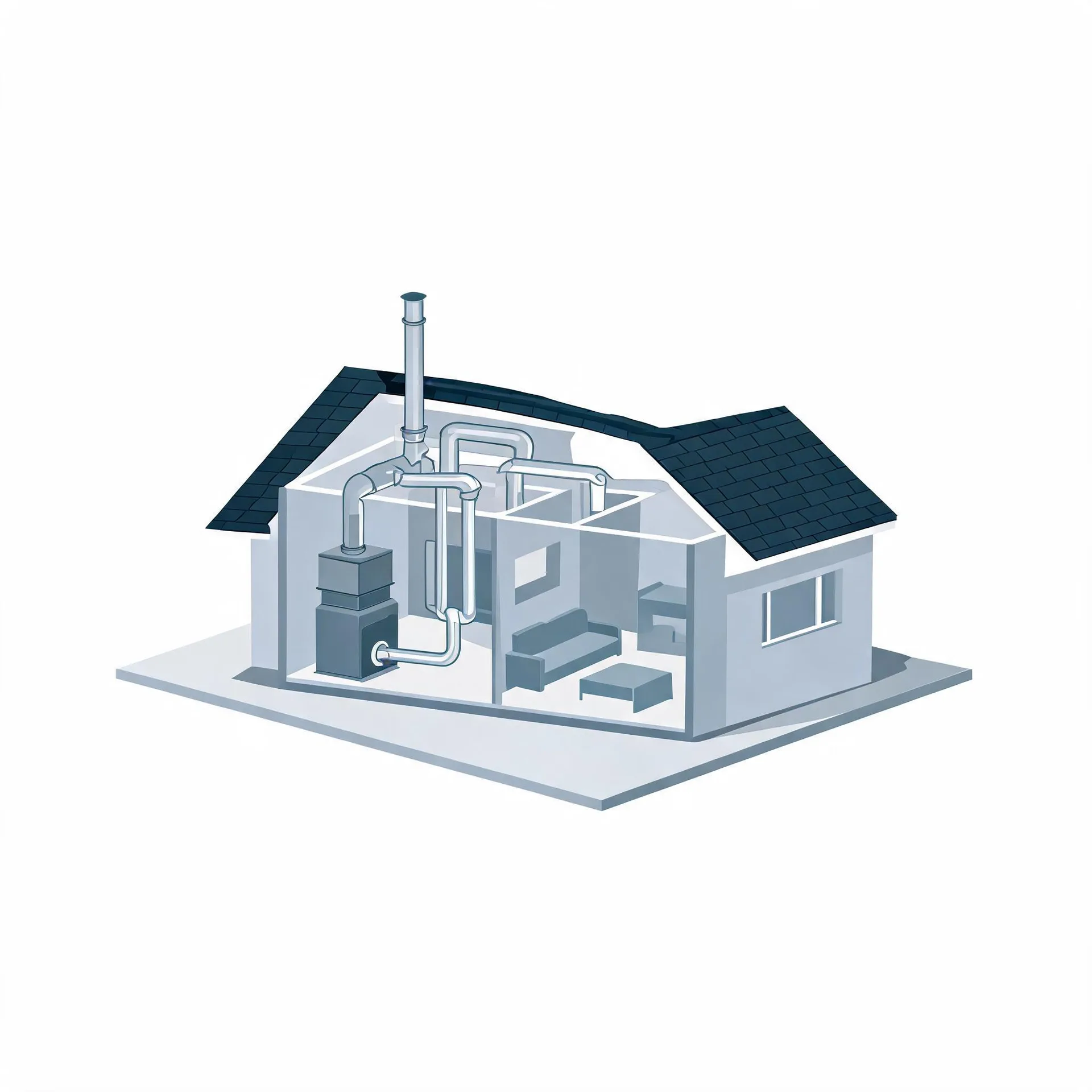
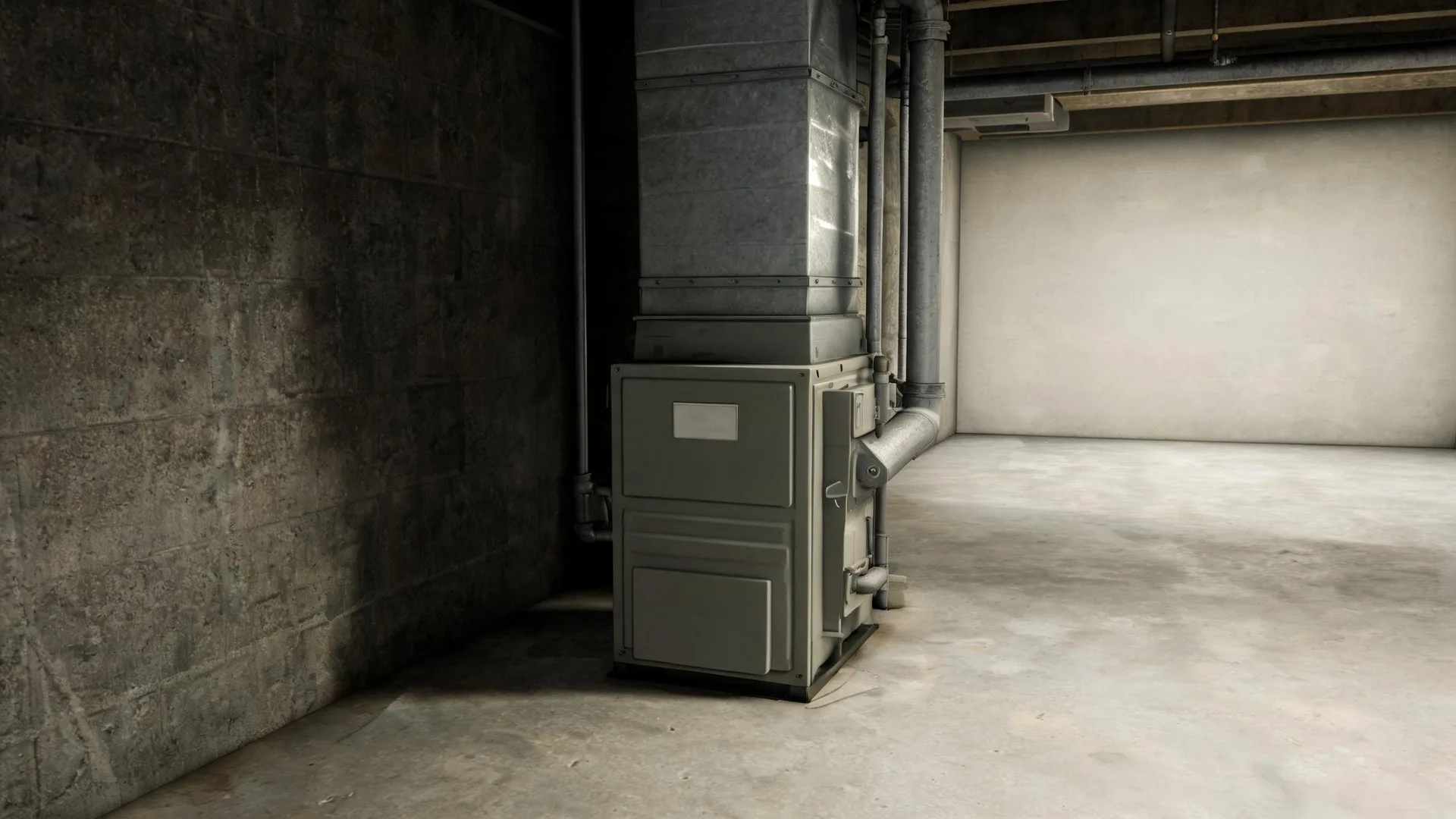
The furnace itself sits inside the house, most often in a basement, utility room, or closet. It holds the burner assembly, the heat exchanger, and the blower in a single cabinet. The burner is where fuel ignites, the heat exchanger transfers that heat to the air stream, and the blower pushes that air into the supply ducts.
The flue pipe runs from the top or back of the furnace cabinet and exits the house, carrying combustion gases out. Alongside the furnace, a contractor installs the thermostat on an interior wall, which is the control point the homeowner uses to set temperatures. A condensate drain line is added on high-efficiency models to carry moisture produced during operation.
The drawing shows a typical layout, and a licensed contractor determines exactly what applies to your house and equipment.
Find a contractor in Hancock CountyHancock County, Indiana, by the numbers
91 severe weather events were recorded in Hancock County, Indiana between 2015 and 2024.
NOAA National Centers for Environmental Information, Storm Events Database, bulk CSV export, events 2015-01-01 through 2024-12-31.Half the homes in Hancock County, Indiana were built in 1991 or earlier (2020-2024 ACS 5-year).
U.S. Census Bureau, 2020-2024 American Community Survey 5-Year EstimatesHancock County, Indiana holds 34,370 housing units (2020-2024 ACS 5-year).
U.S. Census Bureau, 2020-2024 American Community Survey 5-Year EstimatesOwners occupy 79.5% of the occupied homes in Hancock County, Indiana (2020-2024 ACS 5-year).
U.S. Census Bureau, 2020-2024 American Community Survey 5-Year EstimatesCodes & Standards for Furnace Installation in Hancock County, Indiana4 sourced rules & standards
What the Installation Actually Looks Like
Non-weatherized gas furnaces manufactured on or after November 19, 2015 must reach 80.0 percent AFUE.
Non-weatherized oil-fired furnaces manufactured on or after November 19, 2015 must reach 83.0 percent AFUE.
Mobile home gas furnaces manufactured on or after November 19, 2015 must reach 80.0 percent AFUE.
Non-weatherized gas furnaces manufactured on or after December 18, 2028 must reach 95.0 percent AFUE, up from the 80.0 percent minimum that applies to units manufactured before that date.
Severe Weather Events in Hancock County
Hancock County's climate puts real demands on heating equipment, and those demands are not uniform from year to year. A furnace sized and installed for local conditions handles the load that local weather actually creates.
91 severe weather events, 2015–2024. Source: NOAA National Centers for Environmental Information, Storm Events Database.