Tell us about the job
Takes about a minute. No obligation.
A contractor quoting furnace repair in Monroe County starts with age, installation quality, and maintenance history, because those are what wear a furnace out here. 88 severe weather events were recorded in Monroe County, Indiana between 2015 and 2024. At that rate, severe weather is an occasional event, not a standing condition, and it does not account for a cracked heat exchanger or a failing inducer motor. What a contractor finds when they open the unit, whether it is corrosion from a poorly fitted flue, a filter that never got changed, or an igniter running well past its expected life, is what determines the repair scope and the bill.
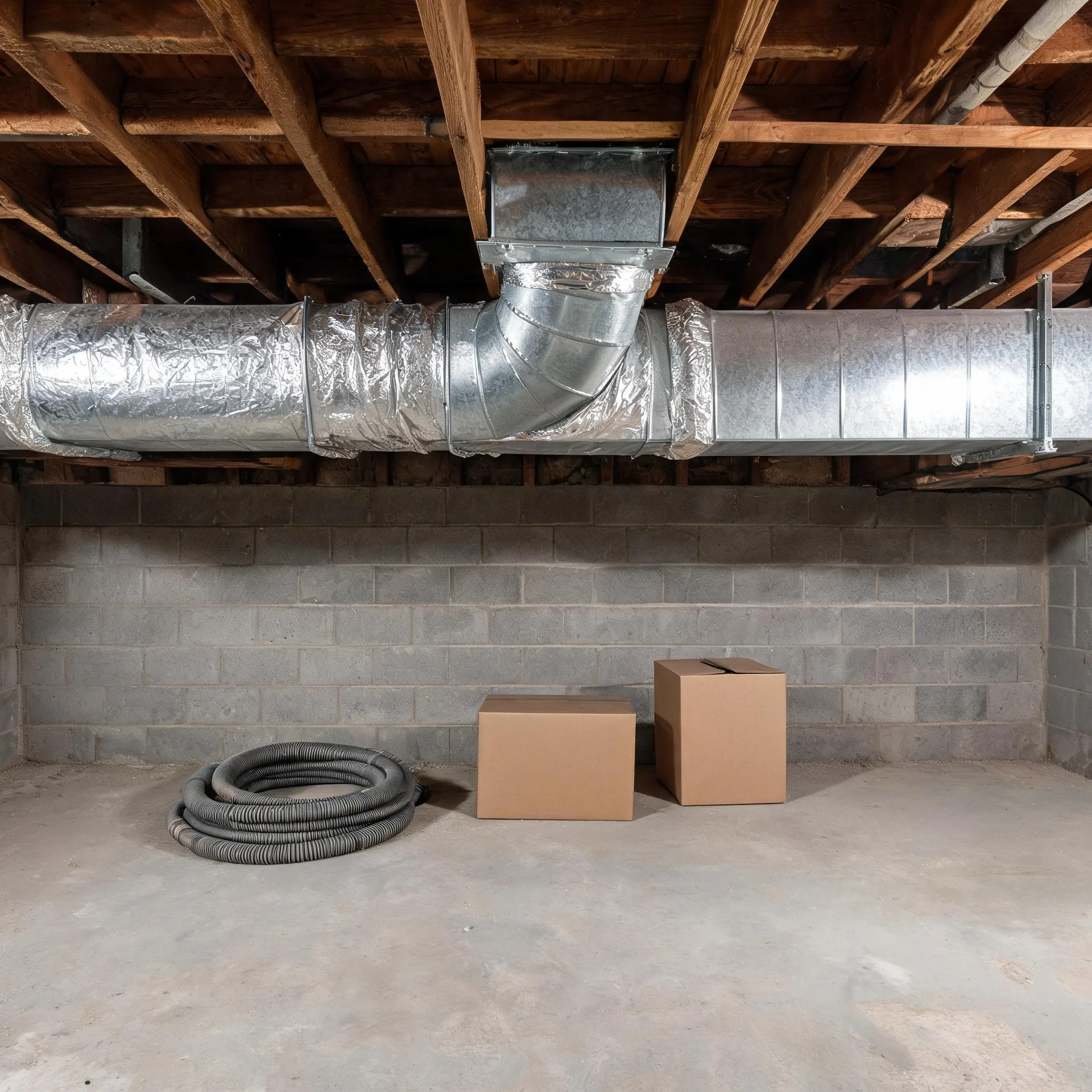
Furnaces in houses this old have been repaired, patched, and partially replaced over a long stretch of time, which means what a contractor finds once the cabinet is open is rarely uniform. Half the homes in Monroe County, Indiana were built in 1986 or earlier (2020-2024 ACS 5-year). A heat exchanger or control board that was swapped in years ago may not match what the original installation called for, and parts that fit it may take real sourcing effort to locate. That gap between what the furnace now is and what the supply chain stocks for it is where a repair in Monroe County gets complicated.
The Parts of a Furnace a Contractor Checks First
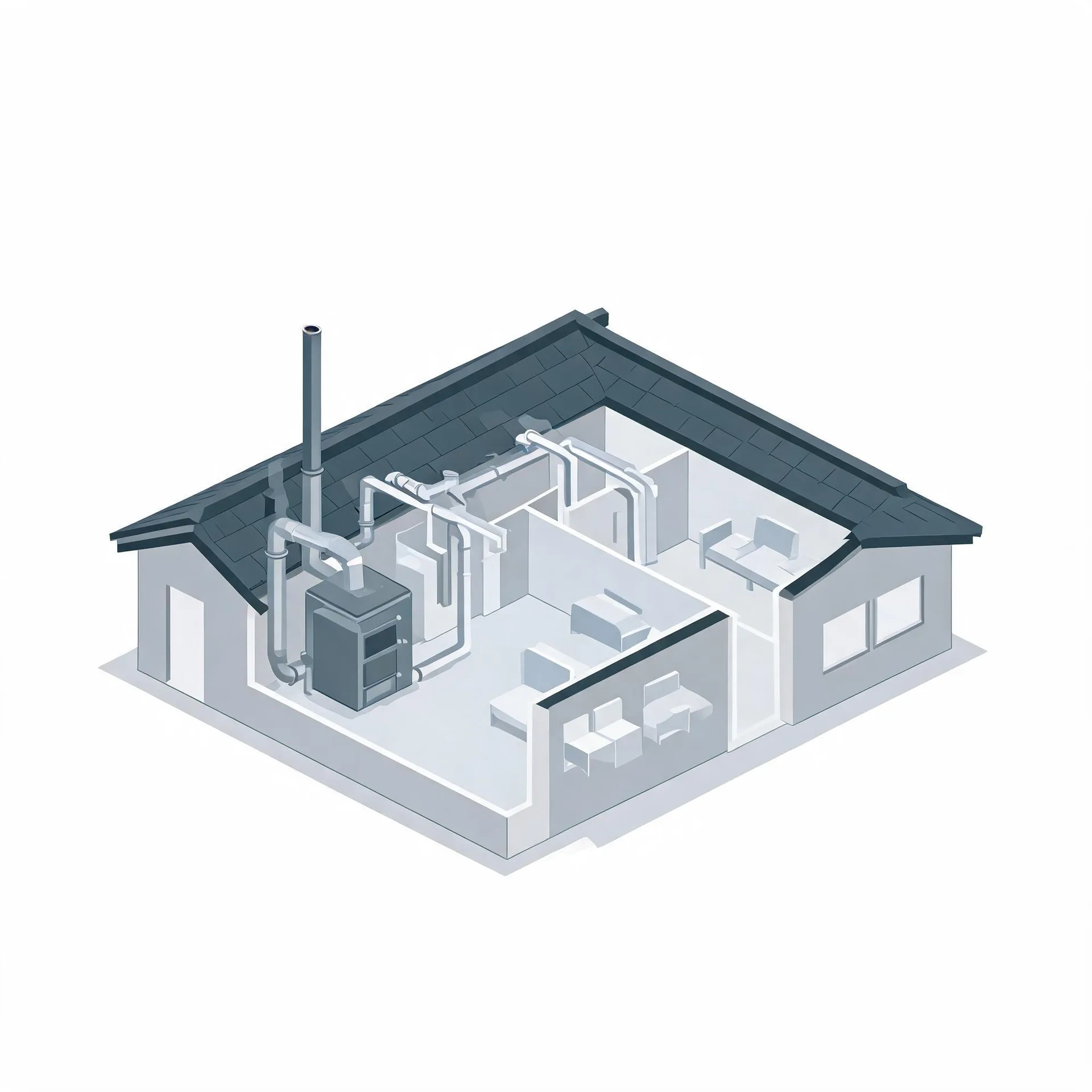
The furnace itself sits in the basement, utility room, or closet and is the piece a contractor goes to first. Inside it, the heat exchanger does the core work of warming air, and a cracked or corroded exchanger is one of the more serious findings a repair visit turns up. The burners, which fire inside that exchanger, are checked for uneven flame, buildup, or failure to light.
The blower motor and its fan wheel sit inside the furnace cabinet and push conditioned air out through the supply side of the house. The inducer motor, which draws combustion gases out before each burn cycle begins, and the igniter, which starts the flame, are both small parts that a contractor reaches early when the furnace runs poorly or not at all. The flue pipe carries exhaust out of the cabinet and through the house structure.
The drawing shows a representative layout, and a licensed contractor determines which components and conditions apply to your specific system.
Find a contractor in Monroe CountyMonroe County, Indiana, by the numbers
88 severe weather events were recorded in Monroe County, Indiana between 2015 and 2024.
NOAA National Centers for Environmental Information, Storm Events Database, bulk CSV export, events 2015-01-01 through 2024-12-31.Half the homes in Monroe County, Indiana were built in 1986 or earlier (2020-2024 ACS 5-year).
U.S. Census Bureau, 2020-2024 American Community Survey 5-Year EstimatesMonroe County, Indiana holds 65,657 housing units (2020-2024 ACS 5-year).
U.S. Census Bureau, 2020-2024 American Community Survey 5-Year EstimatesOwners occupy 54.0% of the occupied homes in Monroe County, Indiana (2020-2024 ACS 5-year).
U.S. Census Bureau, 2020-2024 American Community Survey 5-Year EstimatesCodes & Standards Covering Furnace Repair in Monroe County, Indiana4 sourced rules and standards
What happens when a contractor comes out to your home
Non-weatherized gas furnaces manufactured on or after November 19, 2015 must reach 80.0 percent AFUE.
Non-weatherized oil-fired furnaces manufactured on or after November 19, 2015 must reach 83.0 percent AFUE.
Mobile home gas furnaces manufactured on or after November 19, 2015 must reach 80.0 percent AFUE.
Non-weatherized gas furnaces manufactured on or after December 18, 2028 must reach 95.0 percent AFUE, up from the 80.0 percent minimum that applies to units manufactured before that date.
Severe Weather Events in Monroe County
Extreme weather puts furnaces under load at the worst possible times, and Monroe County's climate is its own. A repair question that might be minor elsewhere can become urgent here, which is why local weather history is part of understanding what the equipment goes through.
88 severe weather events, 2015–2024. Source: NOAA National Centers for Environmental Information, Storm Events Database.