Tell us about the job
Takes about a minute. No obligation.
A contractor quoting a furnace installation in Washington County works out what the house has actually been asking of its heating system before settling on equipment size or a spec. 67 severe weather events were recorded in Washington County, Indiana between 2015 and 2024. At roughly that rate, severe weather is a real but infrequent part of life here, not a standing grind on every component. What that means for an install is that sizing decisions turn on the building's envelope, existing ductwork, and how well the previous system was put in, because those factors carry more weight in this county than raw weather load does. A contractor who skips that assessment and pulls a number from a capacity chart will undersize or oversize the unit.
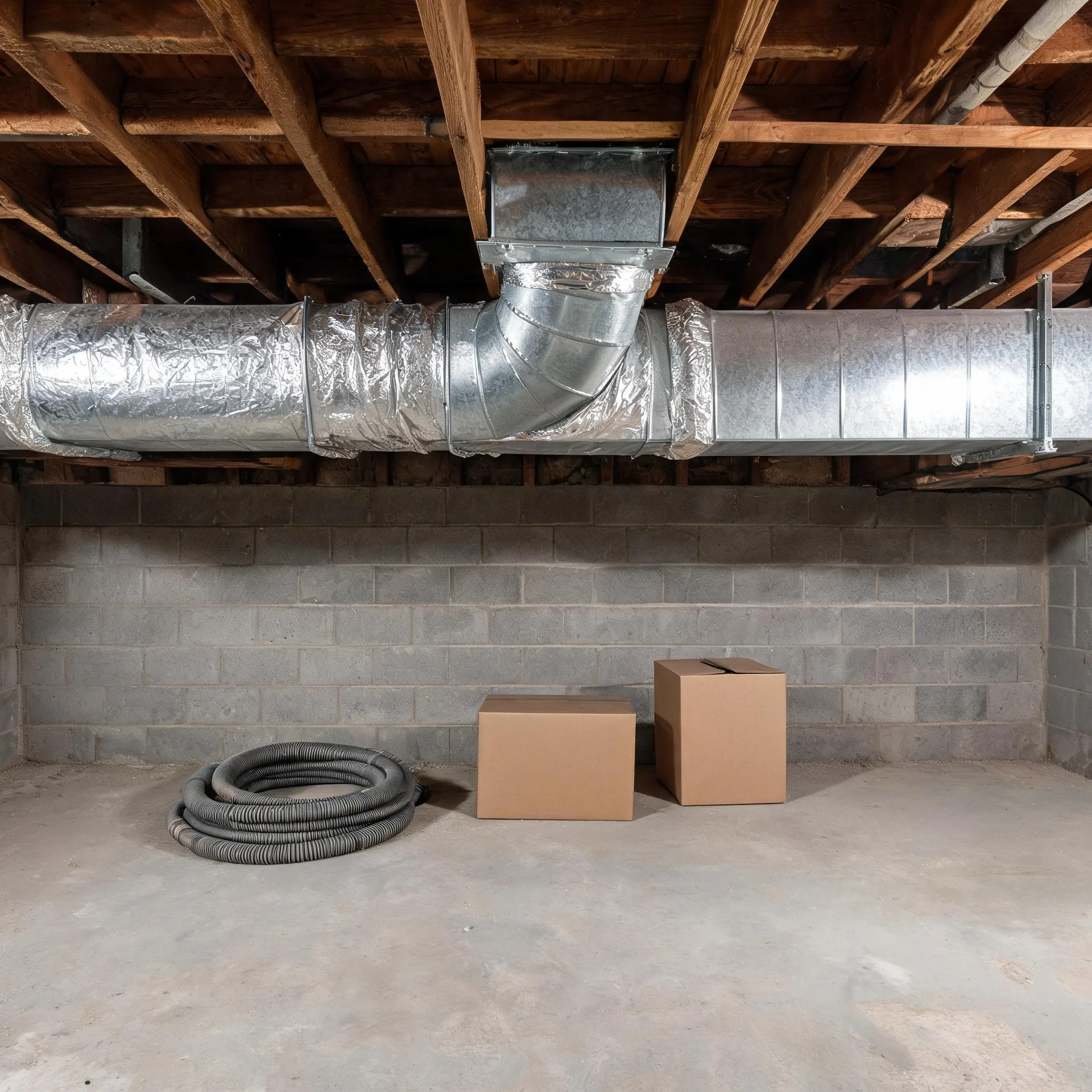
Ductwork laid down for one generation of furnaces carries assumptions about airflow, load, and layout that a new unit may not fit without modification. Half the homes in Washington County, Indiana were built in 1982 or earlier (2020-2024 ACS 5-year). A contractor quoting a furnace installation has to assess whether those existing runs will move air the way the new system expects, and whether the electrical service in the house will carry the load without an upgrade. Those are the two variables that decide how the job is scoped and priced, and both of them live in the walls before the new equipment ever arrives.
What Gets Installed With a New Furnace
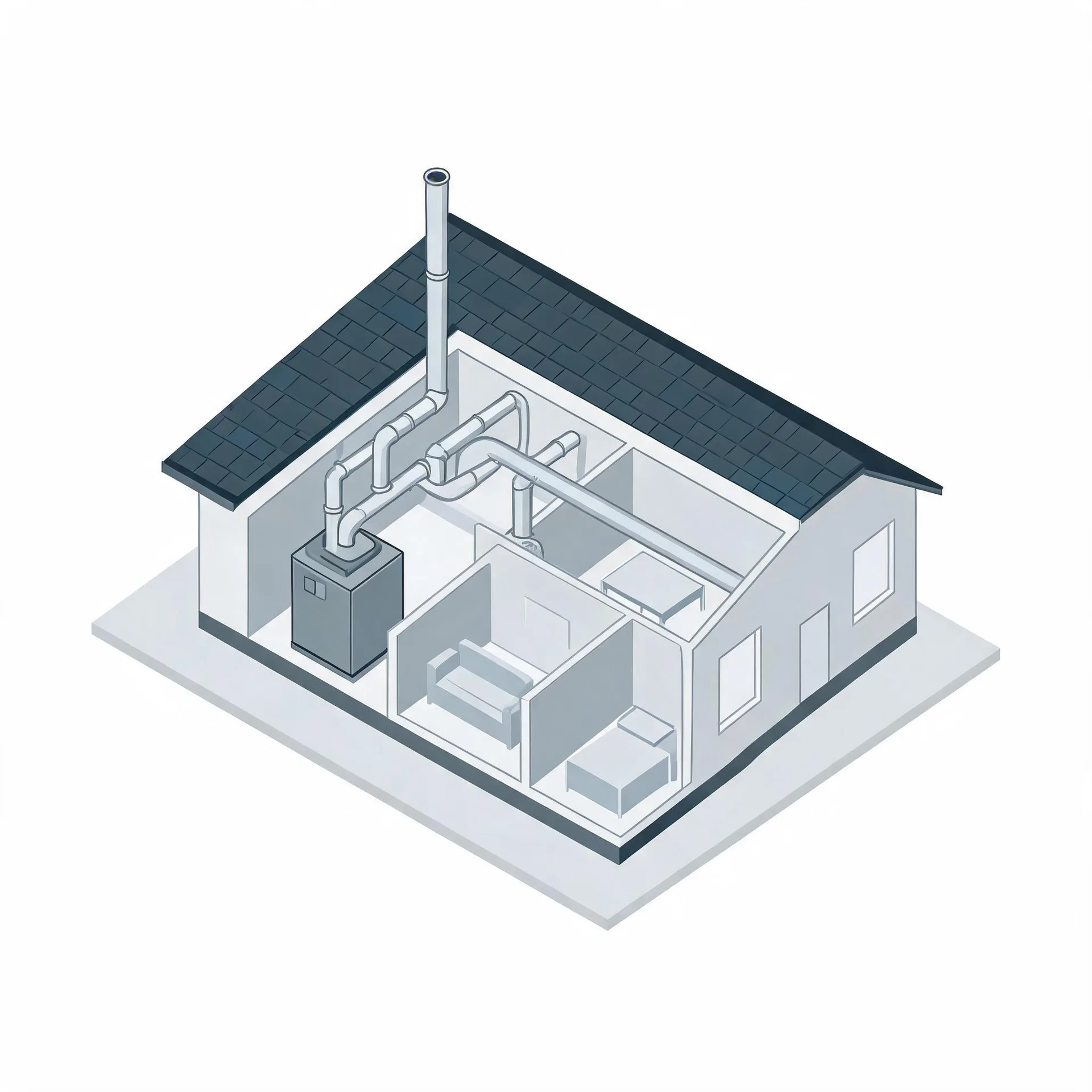
The furnace itself sits inside the house, almost always in a basement, utility room, or closet. It is the main unit a contractor sets in place: the cabinet that holds the heat exchanger, the burner assembly, and the blower that pushes conditioned air out into the home.
The flue pipe runs from the furnace to an exterior wall or up through the roof, carrying combustion exhaust out of the house. Alongside it, the contractor sets the thermostat on an interior wall where it can read the home's actual air temperature and signal the furnace to run.
The drawing shows a typical layout, and a licensed contractor determines what applies to this specific house.
Find a contractor in Washington CountyWashington County, Indiana, by the numbers
67 severe weather events were recorded in Washington County, Indiana between 2015 and 2024.
NOAA National Centers for Environmental Information, Storm Events Database, bulk CSV export, events 2015-01-01 through 2024-12-31.Half the homes in Washington County, Indiana were built in 1982 or earlier (2020-2024 ACS 5-year).
U.S. Census Bureau, 2020-2024 American Community Survey 5-Year EstimatesWashington County, Indiana holds 12,222 housing units (2020-2024 ACS 5-year).
U.S. Census Bureau, 2020-2024 American Community Survey 5-Year EstimatesOwners occupy 82.1% of the occupied homes in Washington County, Indiana (2020-2024 ACS 5-year).
U.S. Census Bureau, 2020-2024 American Community Survey 5-Year EstimatesCodes & Standards Behind Furnace Installation in Washington County, Indiana4 sourced rules and standards
What the Installation Actually Looks Like
Non-weatherized gas furnaces manufactured on or after November 19, 2015 must reach 80.0 percent AFUE.
Non-weatherized oil-fired furnaces manufactured on or after November 19, 2015 must reach 83.0 percent AFUE.
Mobile home gas furnaces manufactured on or after November 19, 2015 must reach 80.0 percent AFUE.
Non-weatherized gas furnaces manufactured on or after December 18, 2028 must reach 95.0 percent AFUE, up from the 80.0 percent minimum that applies to units manufactured before that date.
Severe Weather History in Washington County
Weather in Washington County puts real demands on heating equipment, from hard winters that run furnaces at full load for extended stretches to the storm activity recorded below. A furnace sized and installed for local conditions handles that workload differently than one specified somewhere else.
67 severe weather events, 2015–2024. Source: NOAA National Centers for Environmental Information, Storm Events Database.