Tell us about the job
Takes about a minute. No obligation.
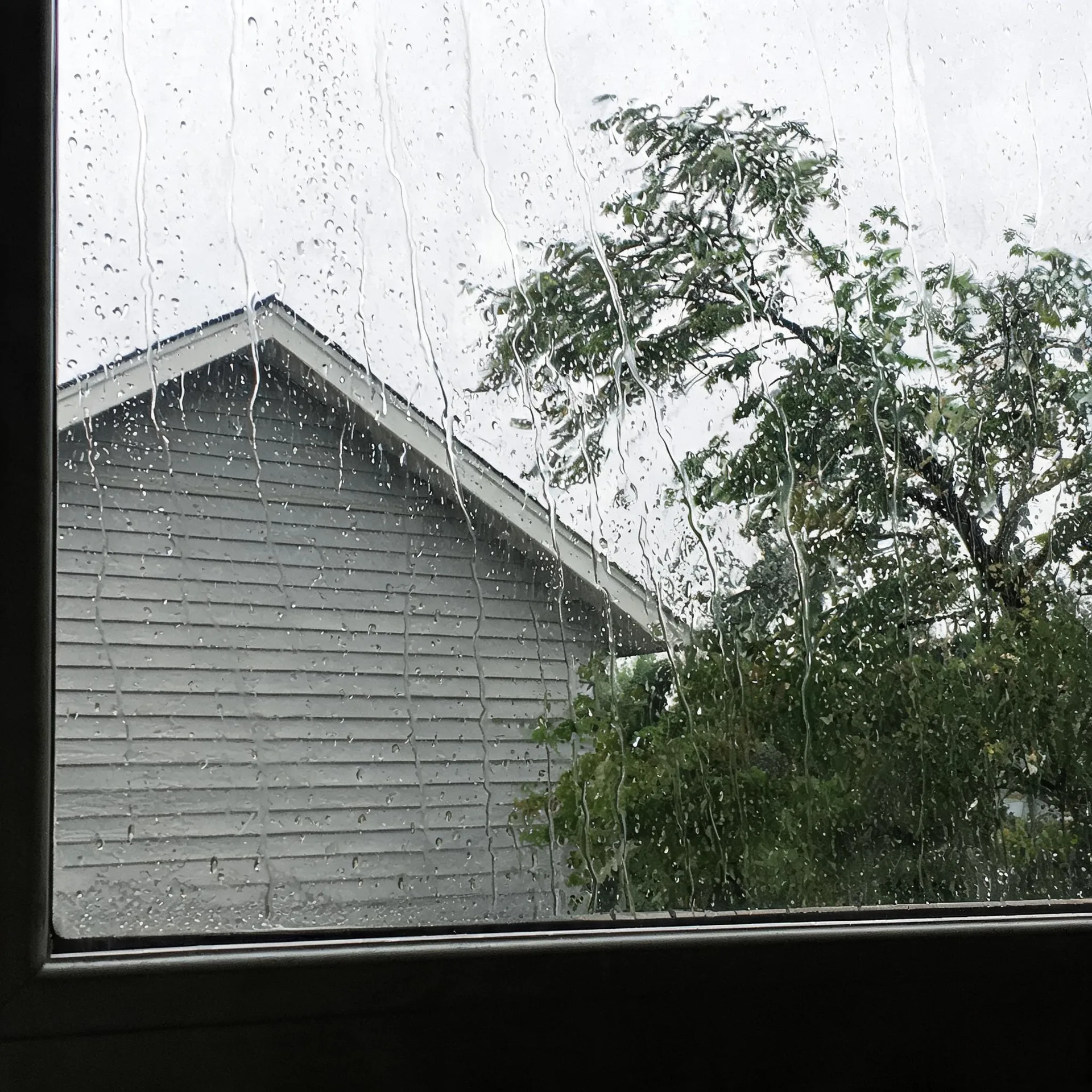
A furnace installation in Dubois County starts with load calculations tied to what this climate actually asks of heating equipment, not what a catalog default suggests. 120 severe weather events were recorded in Dubois County, Indiana between 2015 and 2024. At that rate, severe weather is a standing feature of operating here, steady enough that a contractor has to size equipment for real seasonal stress rather than a mild baseline. Ductwork layout, equipment capacity, and the quality of the seal at every joint all carry more weight in a county where the system will be pushed hard each winter.
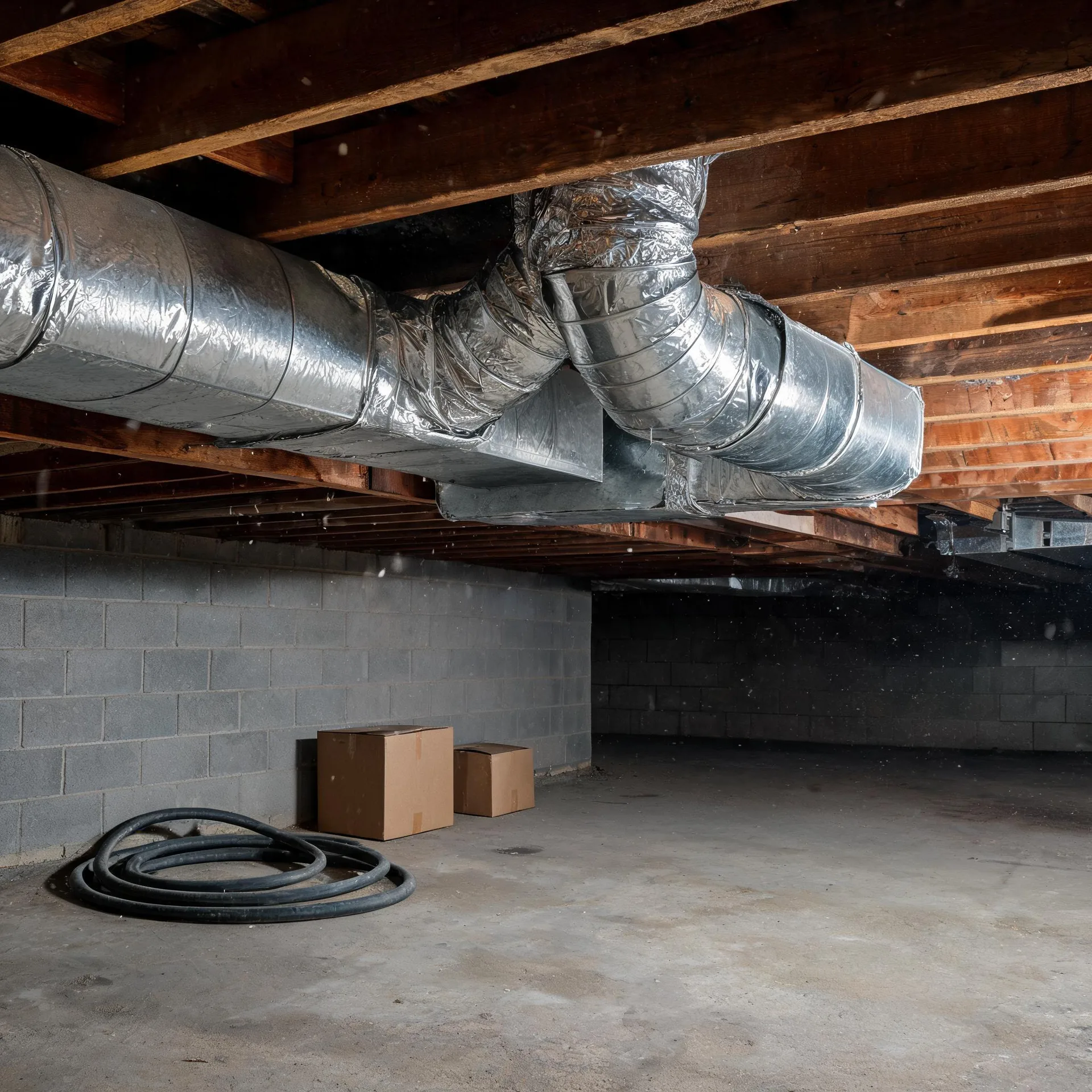
Existing ductwork is what decides whether a furnace installation goes straightforwardly or requires significant additional work. Half the homes in Dubois County, Indiana were built in 1980 or earlier (2020-2024 ACS 5-year). Duct systems laid out for older equipment follow layouts and trunk sizes that a modern furnace does not always match without modification. A contractor will open registers, check trunk dimensions, and assess how the runs are distributed before the new unit is even selected. The electrical service gets the same look, since load requirements have shifted since the original wiring went in.
What Gets Installed With a New Furnace
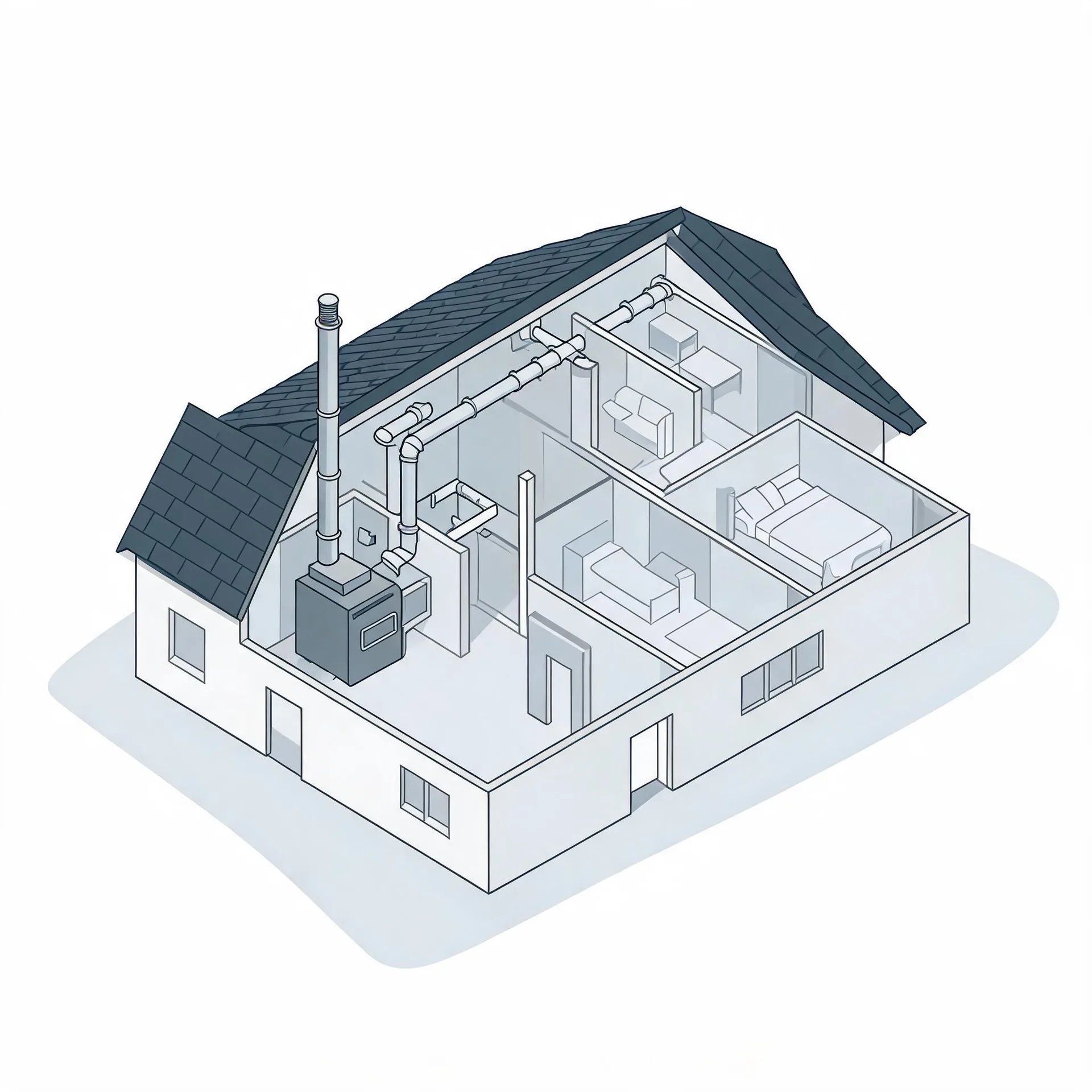
The furnace itself sits in the basement, utility room, or crawlspace and is the piece doing the heating work. A heat exchanger inside it warms the air, and a blower fan pushes that air out into the house. The flue pipe runs from the furnace up and out of the structure, carrying combustion gases away.
The thermostat mounts on a wall in the living space and is the control point the homeowner touches. A contractor also installs or connects the gas line fitting at the furnace and the condensate drain if the unit is a high-efficiency model that produces moisture during operation.
The drawing shows a typical layout, and a licensed contractor determines what applies to your specific home.
Find a contractor in Dubois CountyDubois County, by the numbers
120 severe weather events were recorded in Dubois County, Indiana between 2015 and 2024.
NOAA National Centers for Environmental Information, Storm Events Database, bulk CSV export, events 2015-01-01 through 2024-12-31.Half the homes in Dubois County, Indiana were built in 1980 or earlier (2020-2024 ACS 5-year).
U.S. Census Bureau, 2020-2024 American Community Survey 5-Year EstimatesDubois County, Indiana holds 18,836 housing units (2020-2024 ACS 5-year).
U.S. Census Bureau, 2020-2024 American Community Survey 5-Year EstimatesOwners occupy 74.7% of the occupied homes in Dubois County, Indiana (2020-2024 ACS 5-year).
U.S. Census Bureau, 2020-2024 American Community Survey 5-Year EstimatesFurnace Installation Rules and Codes for Dubois County, Indiana4 sourced standards and regulations
What the installation actually looks like
Non-weatherized gas furnaces manufactured on or after November 19, 2015 must reach 80.0 percent AFUE.
Non-weatherized oil-fired furnaces manufactured on or after November 19, 2015 must reach 83.0 percent AFUE.
Mobile home gas furnaces manufactured on or after November 19, 2015 must reach 80.0 percent AFUE.
Non-weatherized gas furnaces manufactured on or after December 18, 2028 must reach 95.0 percent AFUE, up from the 80.0 percent minimum that applies to units manufactured before that date.
Severe Weather Events in Dubois County
Extreme weather puts real hours on heating equipment, and those hours compound over a system's life. How hard a furnace has to work is a local fact, and this chart reflects the conditions contractors in Dubois County are actually sizing and installing for.
120 severe weather events, 2015–2024. Source: NOAA National Centers for Environmental Information, Storm Events Database.