Tell us about the job
Takes about a minute. No obligation.
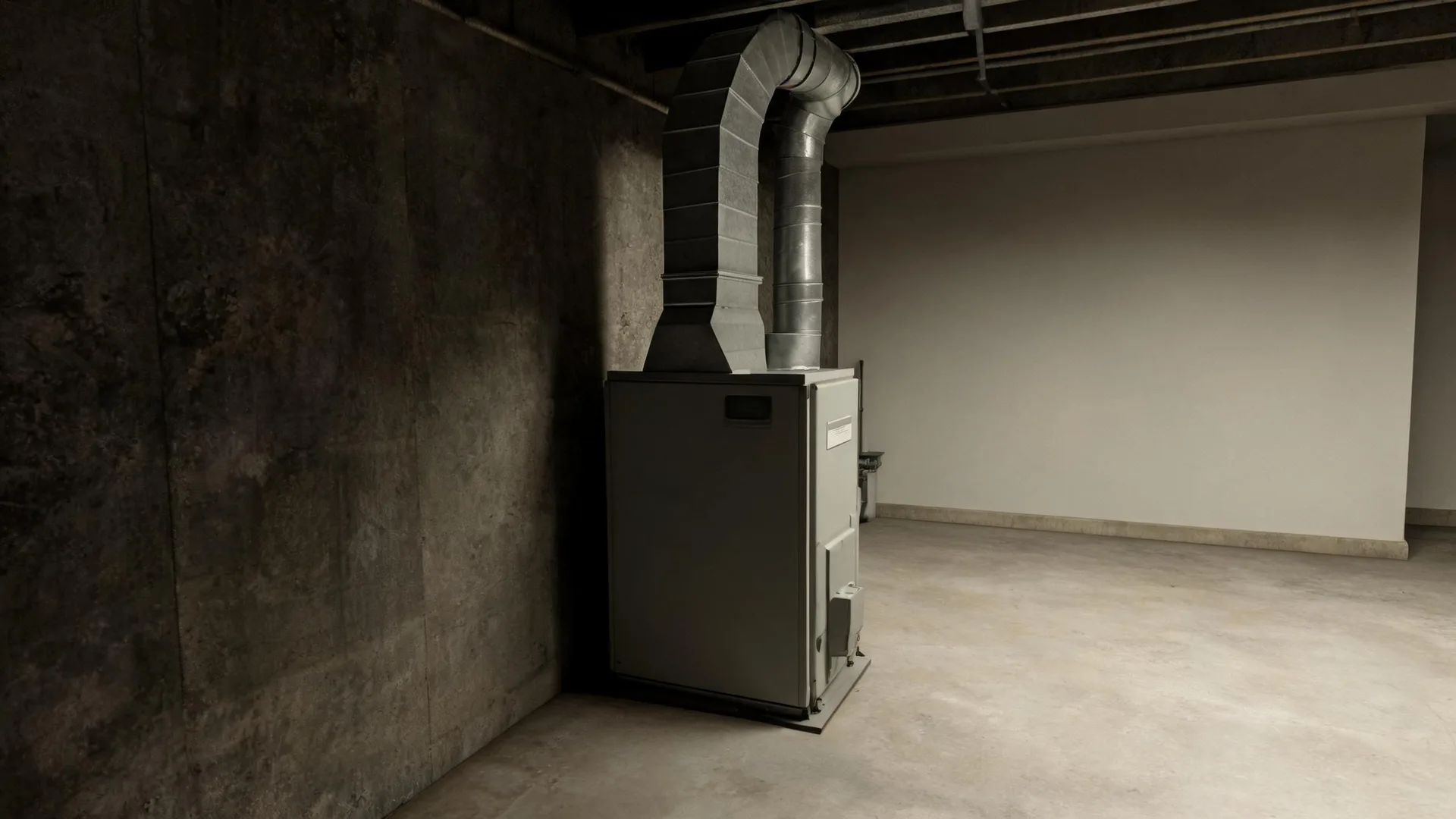
A contractor quoting furnace repair in Marshall County has to account for what the system has already been asked to do before they can say what failed and why. 108 severe weather events were recorded in Marshall County, Indiana between 2015 and 2024. At that rate, severe weather is a standing condition of operating here, and furnaces carry it in their heat exchangers, their ignition assemblies, and the seals that hold combustion gases where they belong. A contractor who finds a cracked exchanger or a failed igniter in this county has a reason to look at stress before assuming neglect.
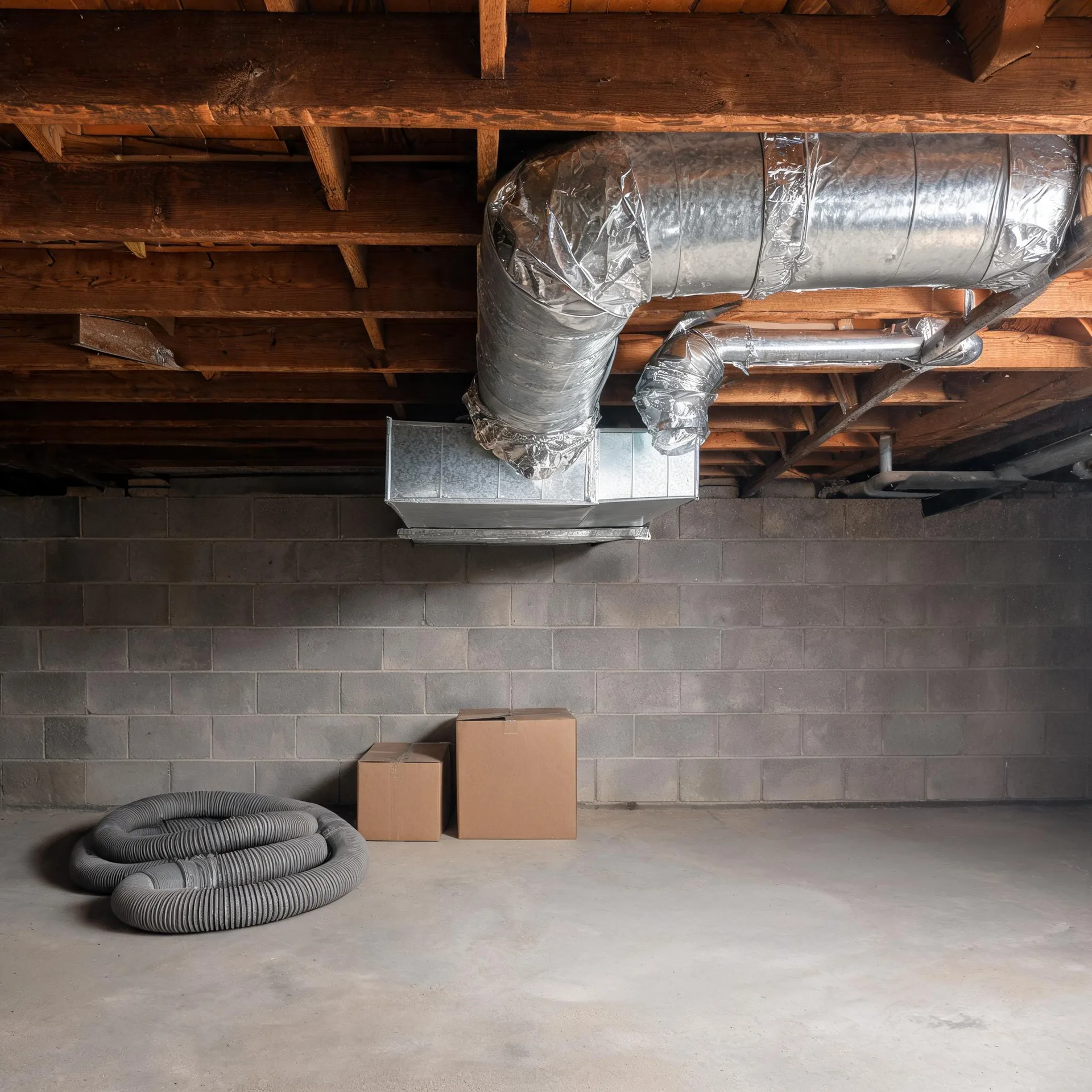
Furnaces in a housing stock this old have histories the cabinet does not advertise. Half the homes in Marshall County, Indiana were built in 1973 or earlier (2020-2024 ACS 5-year). A unit running in a house built before most of its current occupants were born has likely been serviced by several hands, and the components a contractor finds once the panels come off reflect that accumulated wear. Heat exchangers crack in ways that do not show until they are out in the light. Burner assemblies and control boards from that era sit in a narrow supply window, and a contractor quoting the repair has to verify availability before the price on parts means anything.
The Parts of a Furnace a Contractor Checks First
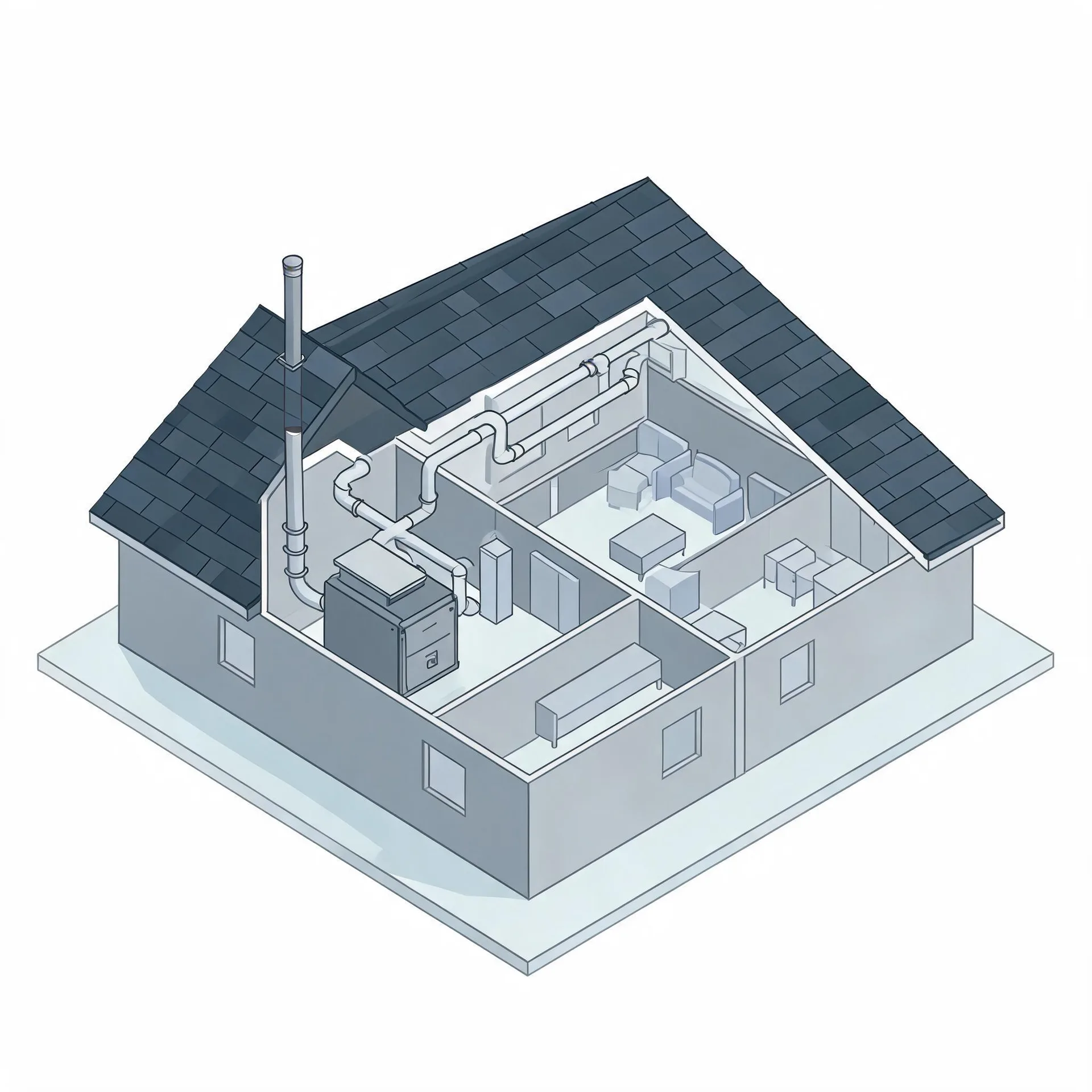
The furnace itself sits in a basement, utility closet, or mechanical room and is the piece a contractor goes to first. Inside it, the heat exchanger is the part that does the core work, and a crack or failure there is a common reason heat stops reaching the rest of the house. The burners, which fire inside that exchanger, are another early suspect when a furnace runs poorly or not at all.
The blower motor pushes conditioned air out through the supply side of the house and sits inside the furnace cabinet. The flue or exhaust vent runs from the furnace to an outside wall or roof and is what a contractor checks when combustion gases are not clearing properly. The thermostat, mounted on a wall in the living space, is where a contractor will often start because a wiring or calibration fault there can mimic a furnace failure.
The drawing shows the general layout of a furnace system, and a licensed contractor determines which parts apply to your specific house and situation.
Find a contractor in Marshall CountyMarshall County, Indiana, by the numbers
108 severe weather events were recorded in Marshall County, Indiana between 2015 and 2024.
NOAA National Centers for Environmental Information, Storm Events Database, bulk CSV export, events 2015-01-01 through 2024-12-31.Half the homes in Marshall County, Indiana were built in 1973 or earlier (2020-2024 ACS 5-year).
U.S. Census Bureau, 2020-2024 American Community Survey 5-Year EstimatesMarshall County, Indiana holds 20,111 housing units (2020-2024 ACS 5-year).
U.S. Census Bureau, 2020-2024 American Community Survey 5-Year EstimatesOwners occupy 76.4% of the occupied homes in Marshall County, Indiana (2020-2024 ACS 5-year).
U.S. Census Bureau, 2020-2024 American Community Survey 5-Year EstimatesCodes & Standards Covering Furnace Repair in Marshall County, Indiana4 sourced rules and standards
What HVAC Repair Looks Like in Marshall County
Non-weatherized gas furnaces manufactured on or after November 19, 2015 must reach 80.0 percent AFUE.
Non-weatherized oil-fired furnaces manufactured on or after November 19, 2015 must reach 83.0 percent AFUE.
Mobile home gas furnaces manufactured on or after November 19, 2015 must reach 80.0 percent AFUE.
Non-weatherized gas furnaces manufactured on or after December 18, 2028 must reach 95.0 percent AFUE, up from the 80.0 percent minimum that applies to units manufactured before that date.
Severe Weather Events in Marshall County
Extreme weather puts real stress on furnace systems, cycling them hard through temperature swings they were not designed to absorb indefinitely. Repair frequency in any county tracks closely with what the weather actually does there, which is why the local record matters.
108 severe weather events, 2015–2024. Source: NOAA National Centers for Environmental Information, Storm Events Database.