Tell us about the job
Takes about a minute. No obligation.
A contractor diagnosing a furnace in Starke County starts by looking at the system itself: how old the heat exchanger is, whether filters were changed, whether the igniter or gas valve shows the slow wear of deferred service. 56 severe weather events were recorded in Starke County, Indiana between 2015 and 2024. At that rate, severe weather lands here now and then, but it does not grind equipment down the way a relentless seasonal load does. A furnace that fails in this county has most likely been failed by time and upkeep, and that is what the repair quote will reflect.
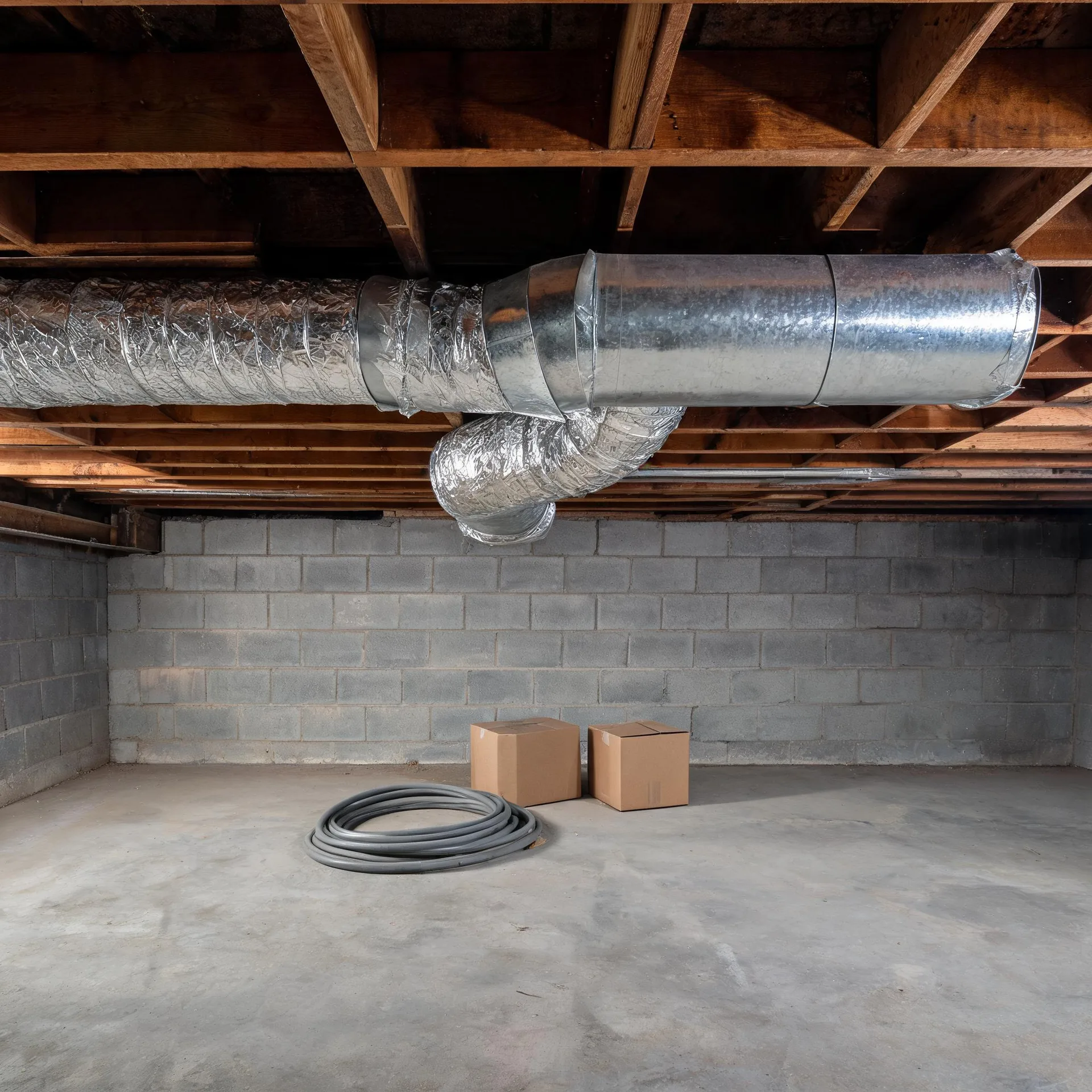
Ductwork in a house this old was sized and routed for whatever heating system was running when the walls went up, and what sits in that furnace cabinet now reflects a later decision, not the original construction. Half the homes in Starke County, Indiana were built in 1974 or earlier (2020-2024 ACS 5-year). That gap matters most when a repair turns on parts availability: a furnace installed in a house of this vintage could be drawing from a manufacturer's catalog that has since closed out, or it could be recent enough that parts ship next day. A contractor cannot tell from the house. They open the unit, read the model data, and check supply before they write a scope.
The Parts of a Furnace a Contractor Checks First
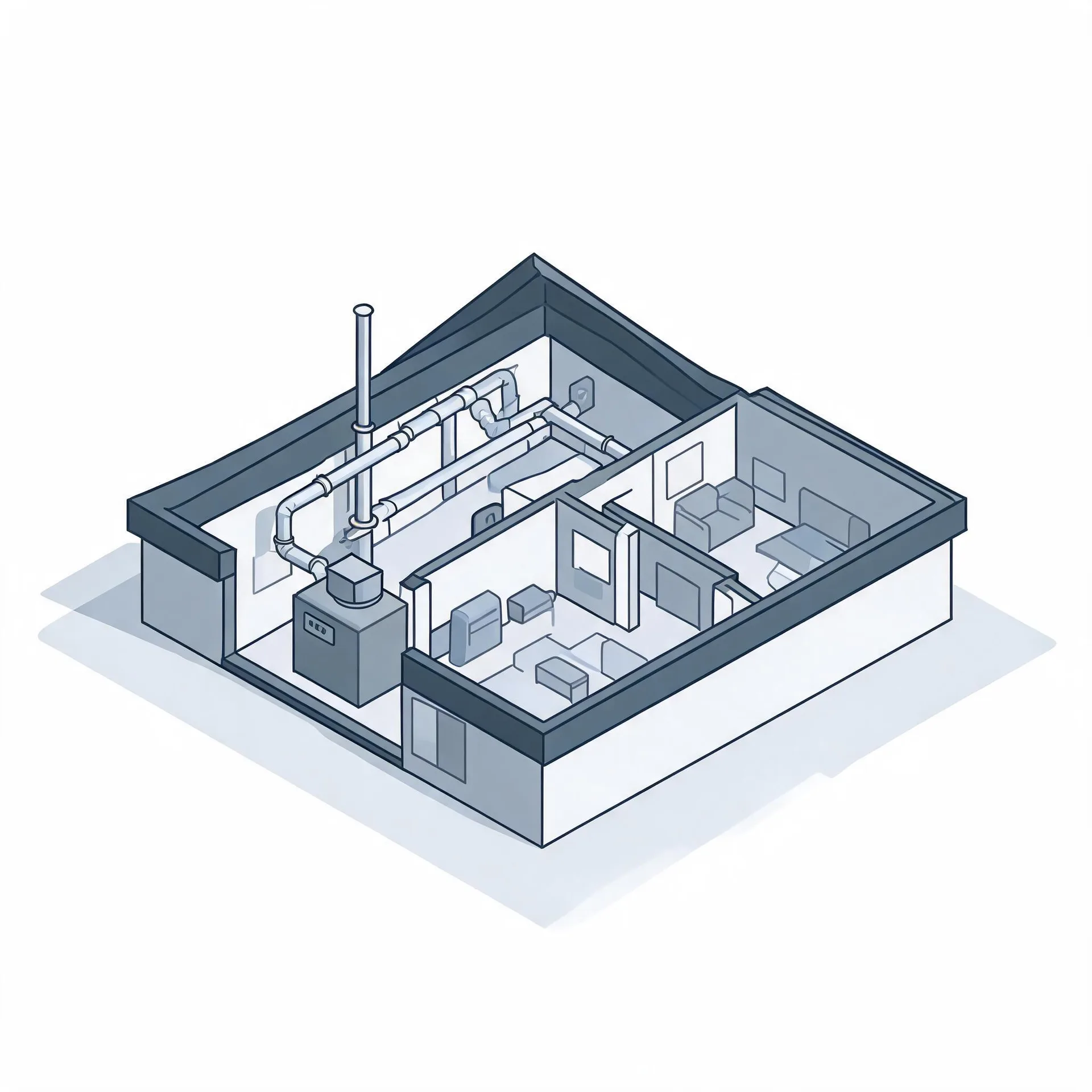
The heat exchanger sits at the core of the furnace cabinet in the basement or utility room, and it is where most serious problems show up. The burner assembly feeds it, the igniter lights the fuel, and the flame sensor confirms combustion is happening. When any of those fail, the furnace stops producing heat or shuts itself off before it should.
The blower motor and its wheel sit at the base of the cabinet and push conditioned air into the supply ducts. A contractor also checks the draft inducer, which pulls combustion gases out through the flue, and the control board, which coordinates every other component. A fault in any of these can read like a heating failure even when the burner itself is fine.
The drawing shows a typical furnace layout, and a licensed contractor determines what applies to your specific system and installation.
Find a contractor in Starke CountyStarke County by the Numbers
56 severe weather events were recorded in Starke County, Indiana between 2015 and 2024.
NOAA National Centers for Environmental Information, Storm Events Database, bulk CSV export, events 2015-01-01 through 2024-12-31.Half the homes in Starke County, Indiana were built in 1974 or earlier (2020-2024 ACS 5-year).
U.S. Census Bureau, 2020-2024 American Community Survey 5-Year EstimatesStarke County, Indiana holds 11,273 housing units (2020-2024 ACS 5-year).
U.S. Census Bureau, 2020-2024 American Community Survey 5-Year EstimatesOwners occupy 83.0% of the occupied homes in Starke County, Indiana (2020-2024 ACS 5-year).
U.S. Census Bureau, 2020-2024 American Community Survey 5-Year EstimatesCodes & Standards for Furnace Repair in Starke County, Indiana4 rules & references
What Happens When a Contractor Comes Out
Non-weatherized gas furnaces manufactured on or after November 19, 2015 must reach 80.0 percent AFUE.
Non-weatherized oil-fired furnaces manufactured on or after November 19, 2015 must reach 83.0 percent AFUE.
Mobile home gas furnaces manufactured on or after November 19, 2015 must reach 80.0 percent AFUE.
Non-weatherized gas furnaces manufactured on or after December 18, 2028 must reach 95.0 percent AFUE, up from the 80.0 percent minimum that applies to units manufactured before that date.
Severe Weather Events in Starke County
Extreme weather puts real load on heating equipment, cycling it hard through temperature swings it was never sized to ignore. How much of that a furnace sees depends on where it sits, which is why local weather history belongs on a page about repair.
56 severe weather events, 2015–2023. Source: NOAA National Centers for Environmental Information, Storm Events Database.