
Tell us about the job
Takes about a minute. No obligation.
A furnace repair in this county starts with what the system has already been through. 126 severe weather events were recorded in Tippecanoe County, Indiana between 2015 and 2024. At that rate, severe weather is part of the normal working life of equipment here, and a contractor opening a heat exchanger or checking a pressure switch is looking at wear that has been building against real environmental load. Age and maintenance history still matter, but a contractor who skips the load question can misread why a part failed and quote a fix that does not hold.
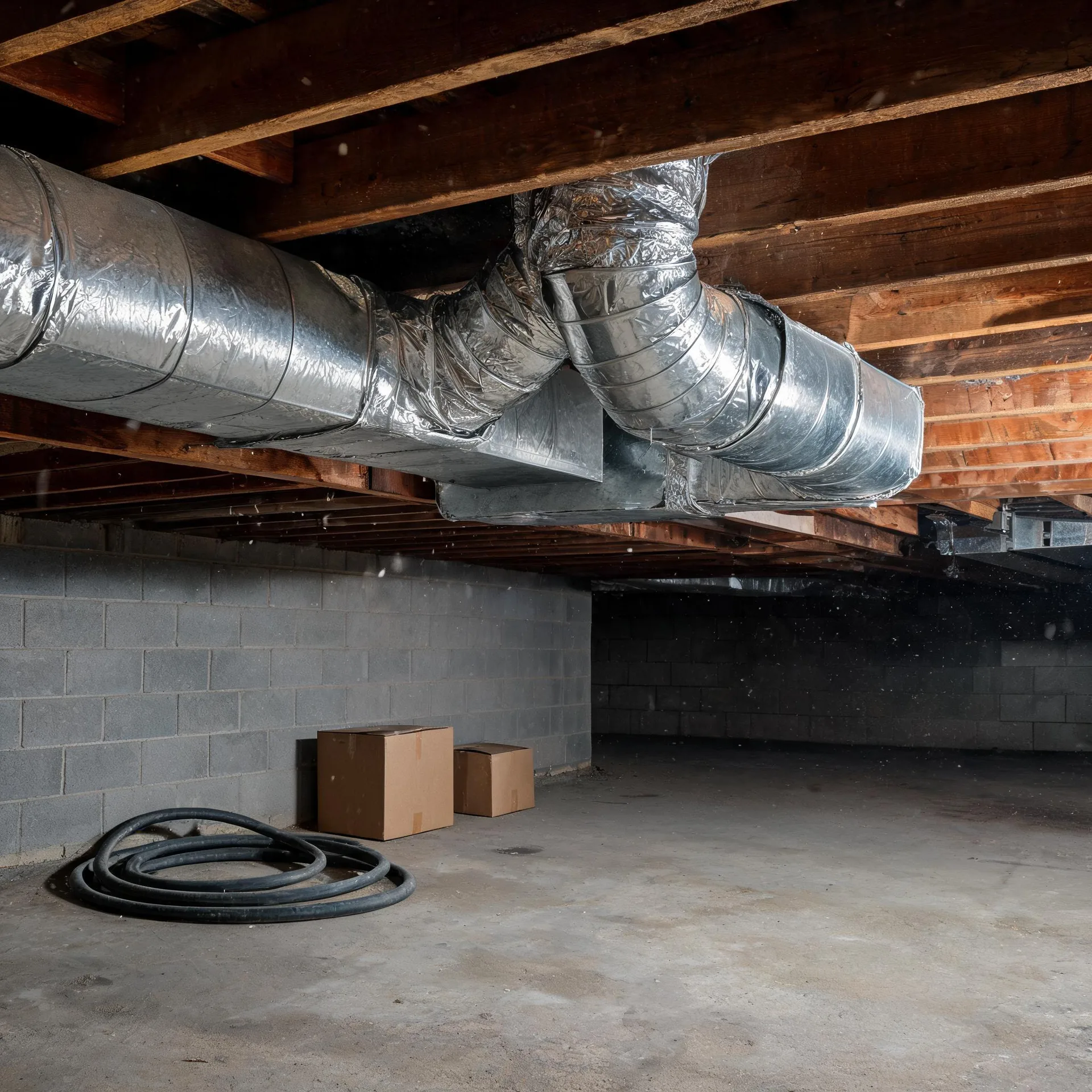
Furnaces in houses this age have usually been through at least one patch cycle, and what a contractor finds once the cabinet is open tends to reflect that. Half the homes in Tippecanoe County, Indiana were built in 1987 or earlier (2020-2024 ACS 5-year). That kind of stock is where heat exchangers crack from expansion fatigue, where burner assemblies run on replacement parts for parts that were already replacements, and where a repair quote can shift once the interior tells a different story than the exterior did. A contractor working here opens the unit before committing to a scope.
The Parts of a Furnace a Contractor Checks First
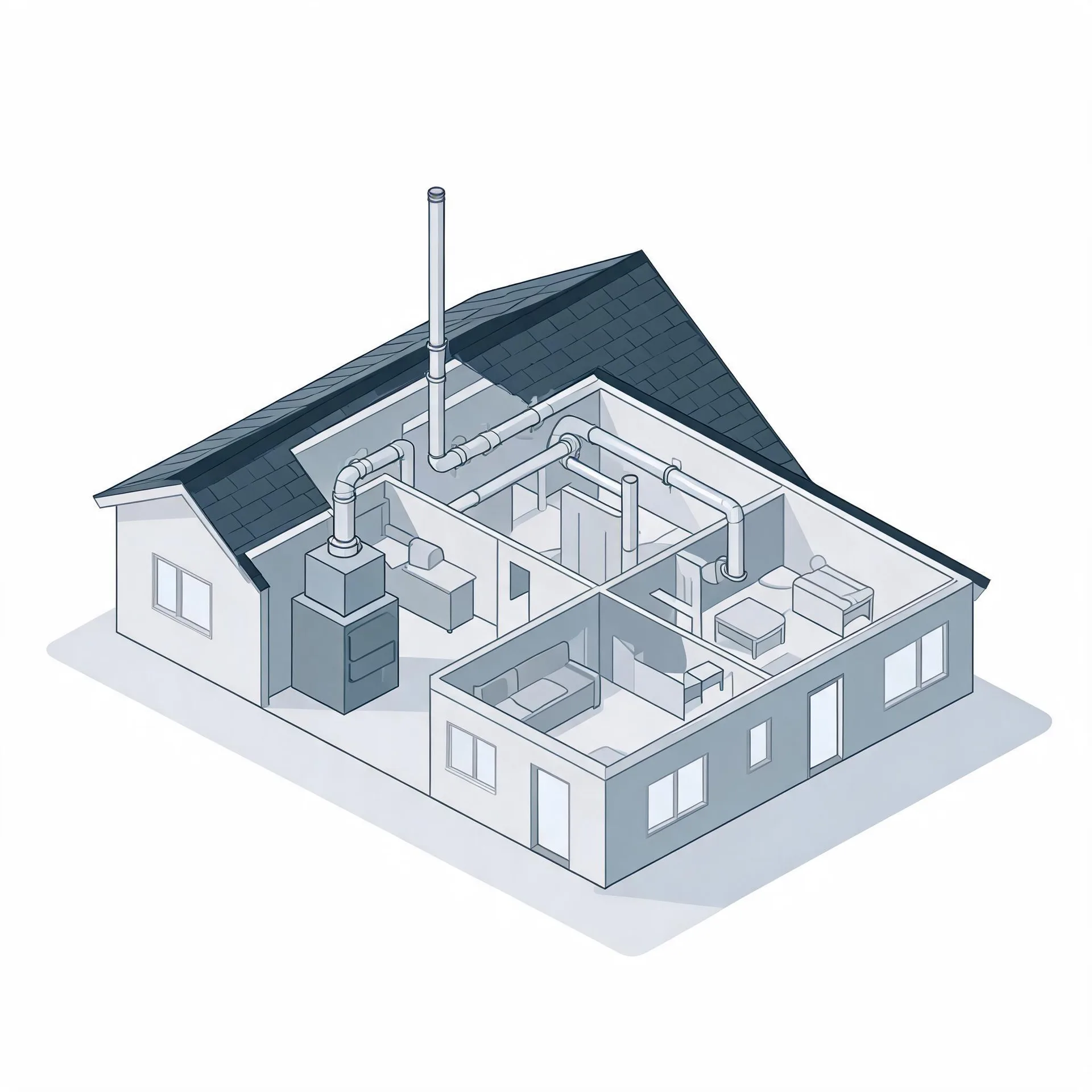
The heat exchanger sits inside the furnace cabinet in the basement or utility closet and is the first place a contractor looks when the system stops heating properly. Cracks or buildup there affect both performance and safety. The burner assembly, just below it, is another early suspect when the furnace fails to ignite or runs unevenly.
The blower motor sits at the base of the cabinet and pushes conditioned air into the duct system. Alongside it, the control board governs the sequence of every component, and a fault there can mimic the symptoms of several other failed parts. The flue pipe runs from the cabinet to an exterior vent and draws combustion gases out of the house.
The drawing shows a general layout of these components, and a licensed contractor determines what applies to the specific furnace and installation in your home.
Find a contractor in Tippecanoe CountyTippecanoe County by the Numbers
126 severe weather events were recorded in Tippecanoe County, Indiana between 2015 and 2024.
NOAA National Centers for Environmental Information, Storm Events Database, bulk CSV export, events 2015-01-01 through 2024-12-31.Half the homes in Tippecanoe County, Indiana were built in 1987 or earlier (2020-2024 ACS 5-year).
U.S. Census Bureau, 2020-2024 American Community Survey 5-Year EstimatesTippecanoe County, Indiana holds 80,647 housing units (2020-2024 ACS 5-year).
U.S. Census Bureau, 2020-2024 American Community Survey 5-Year EstimatesOwners occupy 53.4% of the occupied homes in Tippecanoe County, Indiana (2020-2024 ACS 5-year).
U.S. Census Bureau, 2020-2024 American Community Survey 5-Year EstimatesCodes & Standards Behind Furnace Repair in Tippecanoe County, Indiana4 sourced rules & standards
What the repair visit looks like
Non-weatherized gas furnaces manufactured on or after November 19, 2015 must reach 80.0 percent AFUE.
Non-weatherized oil-fired furnaces manufactured on or after November 19, 2015 must reach 83.0 percent AFUE.
Mobile home gas furnaces manufactured on or after November 19, 2015 must reach 80.0 percent AFUE.
Non-weatherized gas furnaces manufactured on or after December 18, 2028 must reach 95.0 percent AFUE, up from the 80.0 percent minimum that applies to units manufactured before that date.
Severe Weather Events in Tippecanoe County
Extreme weather puts real strain on furnace systems, forcing them to run harder and longer than they were sized for. How much of that strain a furnace in Tippecanoe County absorbs depends on what the local weather record actually looks like.
126 severe weather events, 2015–2024. Source: NOAA National Centers for Environmental Information, Storm Events Database.