Tell us about the job
Takes about a minute. No obligation.
A furnace repair call in White County starts with the system itself, not the season outside. 55 severe weather events were recorded in White County, Indiana between 2015 and 2024. At that rate, severe weather is an event here, not a standing condition, so a contractor arriving at a troubled furnace does not assume the climate drove the failure. What they check first is how the heat exchanger has held up, whether the ignition components have been serviced, and how long the unit has been running past its expected service window. Those are the variables that explain most of what goes wrong in a county where the weather load is real but not relentless.
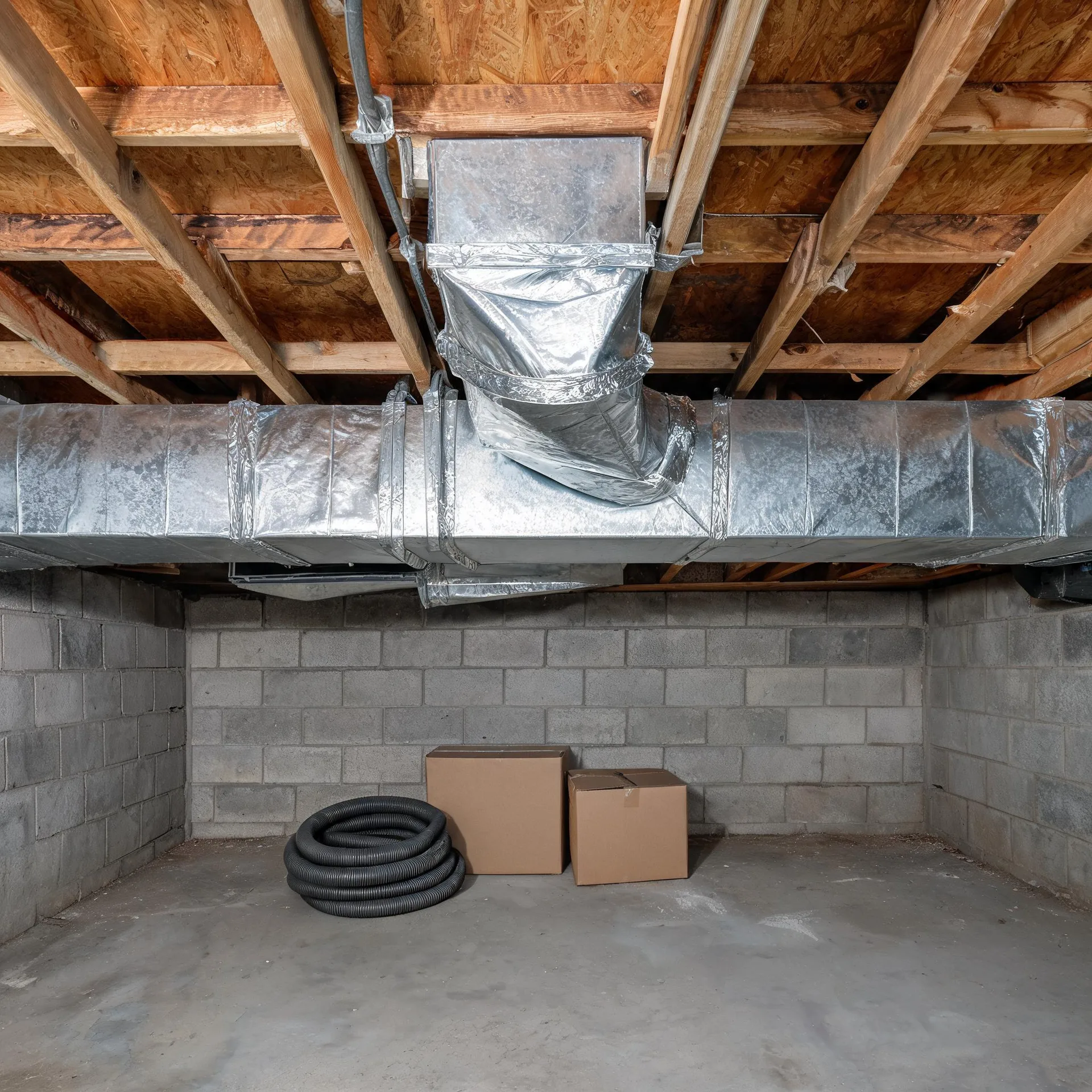
Ductwork in a house built for an earlier era of heating gets opened when a furnace fails, and what a contractor finds inside shapes the entire repair. Half the homes in White County, Indiana were built in 1969 or earlier (2020-2024 ACS 5-year). A furnace running in stock that old has likely been through at least one full equipment replacement, and the original system it replaced is long gone. What that history produces is a parts question: heat exchangers, limit switches, and ignition assemblies for older furnace models sit on shrinking supplier lists, and a contractor has to confirm availability before a repair scope can be priced. That answer changes what gets ordered, how long the job takes, and sometimes whether repair is what gets done.
The Parts of a Furnace a Contractor Checks First
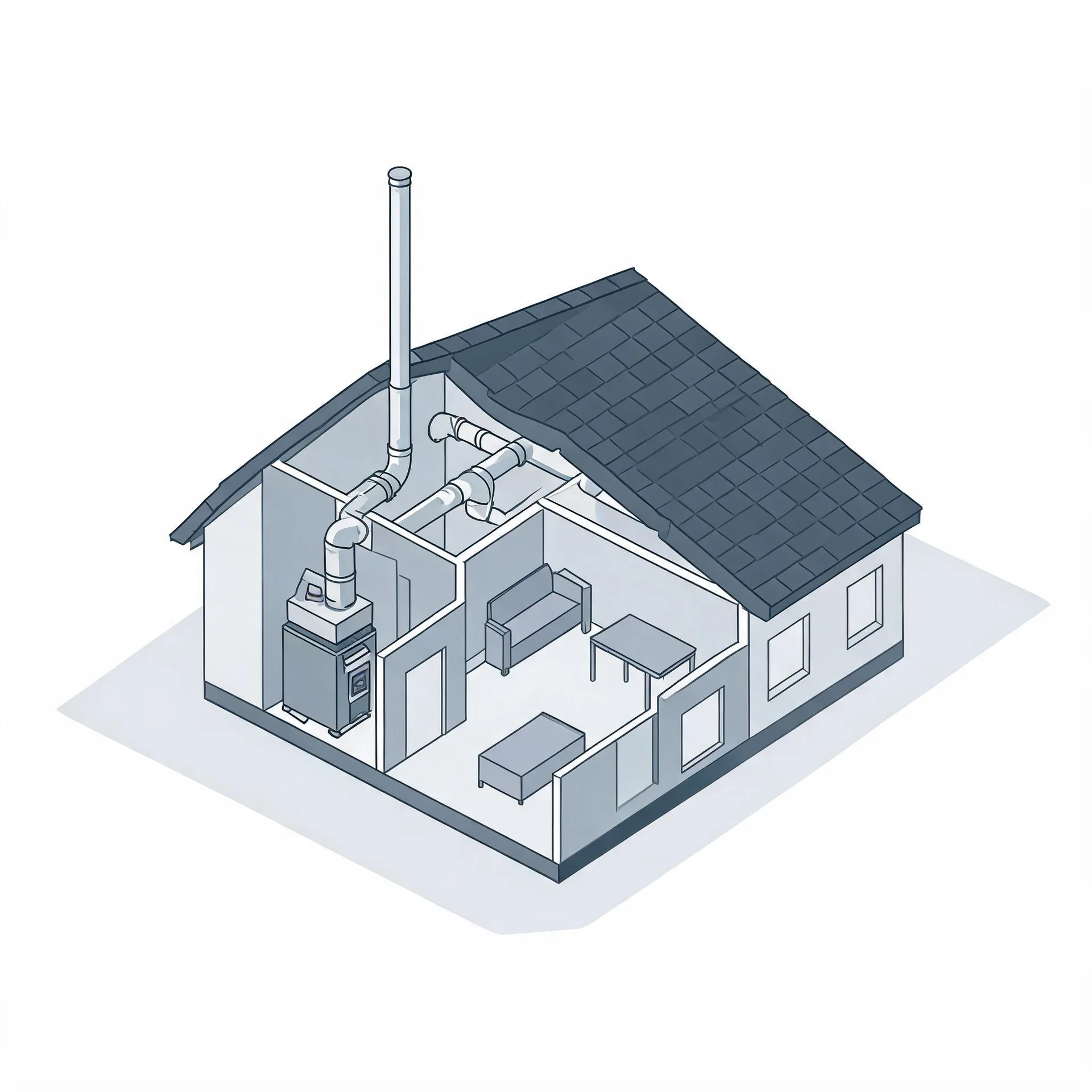
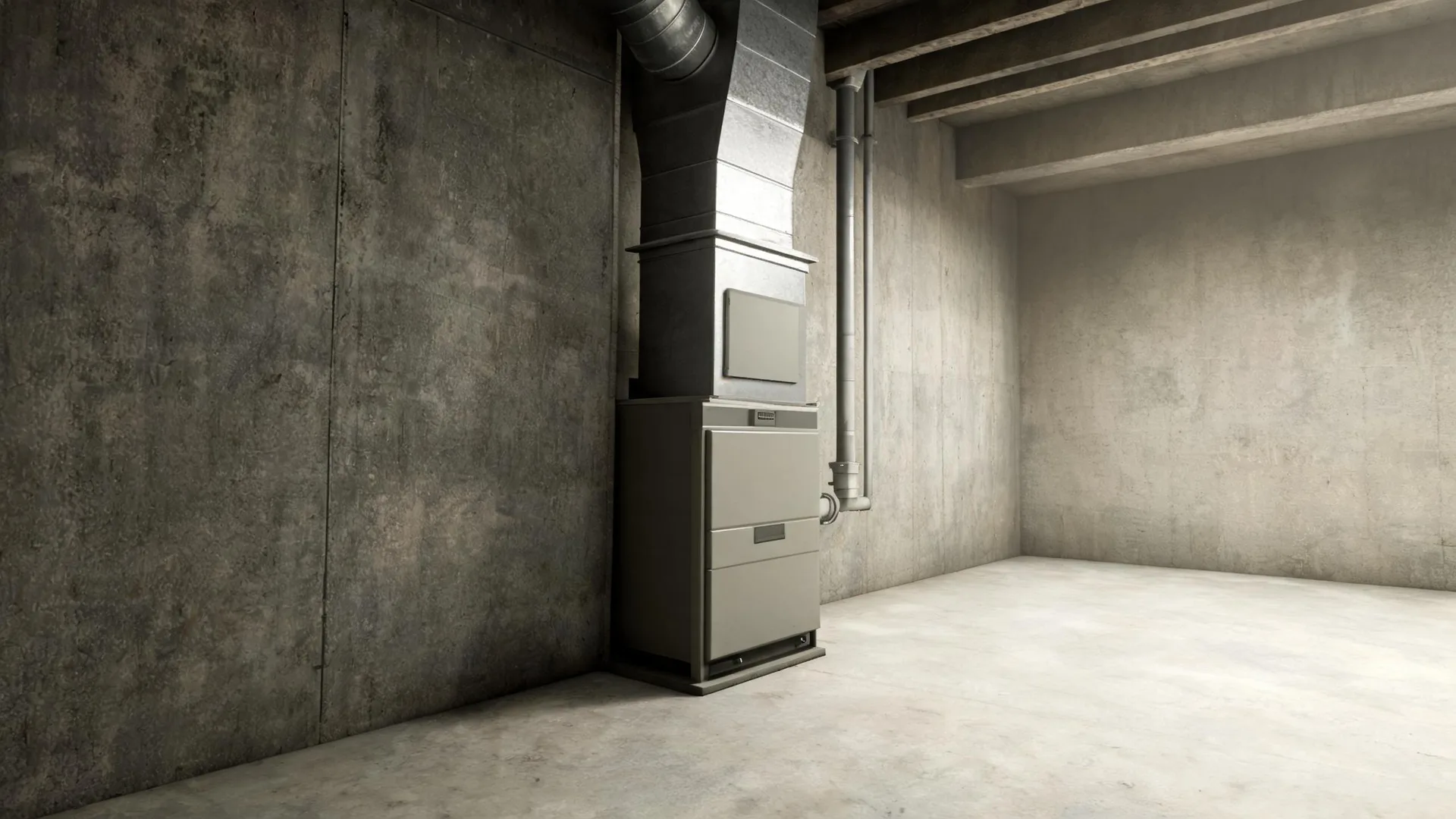
The furnace itself sits in the basement, utility room, or closet and is the piece a contractor goes to first. Inside it, the heat exchanger is the part that fails quietly and matters most: cracks in it let combustion gases into living air. The burners, ignitor, and flame sensor are the other usual suspects when the furnace runs poorly or refuses to start.
The blower motor sits at the base of the furnace cabinet and pushes conditioned air through the house. The flue pipe runs from the furnace up and out of the building, and a blocked or corroded flue shows up as a safety fault. The filter housing sits at the return-air opening and a clogged filter is the first thing a contractor pulls before anything else.
The drawing shows a typical furnace layout, and a licensed contractor determines which components apply and what condition they are in for your specific home.
Find a contractor in White CountyWhite County, Indiana, by the numbers
55 severe weather events were recorded in White County, Indiana between 2015 and 2024.
NOAA National Centers for Environmental Information, Storm Events Database, bulk CSV export, events 2015-01-01 through 2024-12-31.Half the homes in White County, Indiana were built in 1969 or earlier (2020-2024 ACS 5-year).
U.S. Census Bureau, 2020-2024 American Community Survey 5-Year EstimatesWhite County, Indiana holds 12,961 housing units (2020-2024 ACS 5-year).
U.S. Census Bureau, 2020-2024 American Community Survey 5-Year EstimatesOwners occupy 81.0% of the occupied homes in White County, Indiana (2020-2024 ACS 5-year).
U.S. Census Bureau, 2020-2024 American Community Survey 5-Year EstimatesCodes & Standards Governing Furnace Repair in White County, Indiana4 sourced rules and standards
What Happens When a Contractor Comes Out
Non-weatherized gas furnaces manufactured on or after November 19, 2015 must reach 80.0 percent AFUE.
Non-weatherized oil-fired furnaces manufactured on or after November 19, 2015 must reach 83.0 percent AFUE.
Mobile home gas furnaces manufactured on or after November 19, 2015 must reach 80.0 percent AFUE.
Non-weatherized gas furnaces manufactured on or after December 18, 2028 must reach 95.0 percent AFUE, up from the 80.0 percent minimum that applies to units manufactured before that date.
Severe Weather Events in White County
Extreme weather puts real stress on heating equipment, cycling it hard through conditions it was not sized for on a calm day. How often that happens in White County shapes how much wear a furnace accumulates and what kind of repair work contractors see.
55 severe weather events, 2015–2023. Source: NOAA National Centers for Environmental Information, Storm Events Database.