Tell us about the job
Takes about a minute. No obligation.
A furnace repair call in Warren County almost never traces back to the weather. 34 severe weather events were recorded in Warren County, Indiana between 2015 and 2024. At that rate, most furnaces here spend the bulk of their service life without any severe event pushing them hard. What wears a system down is the ordinary work: cycling through cold winters, running against a clogged filter, or carrying the load a poor original install put on the heat exchanger. When a contractor opens a failed furnace here, they are checking the heat exchanger for cracks, the igniter for wear, and the blower motor for signs that deferred maintenance caught up with it.
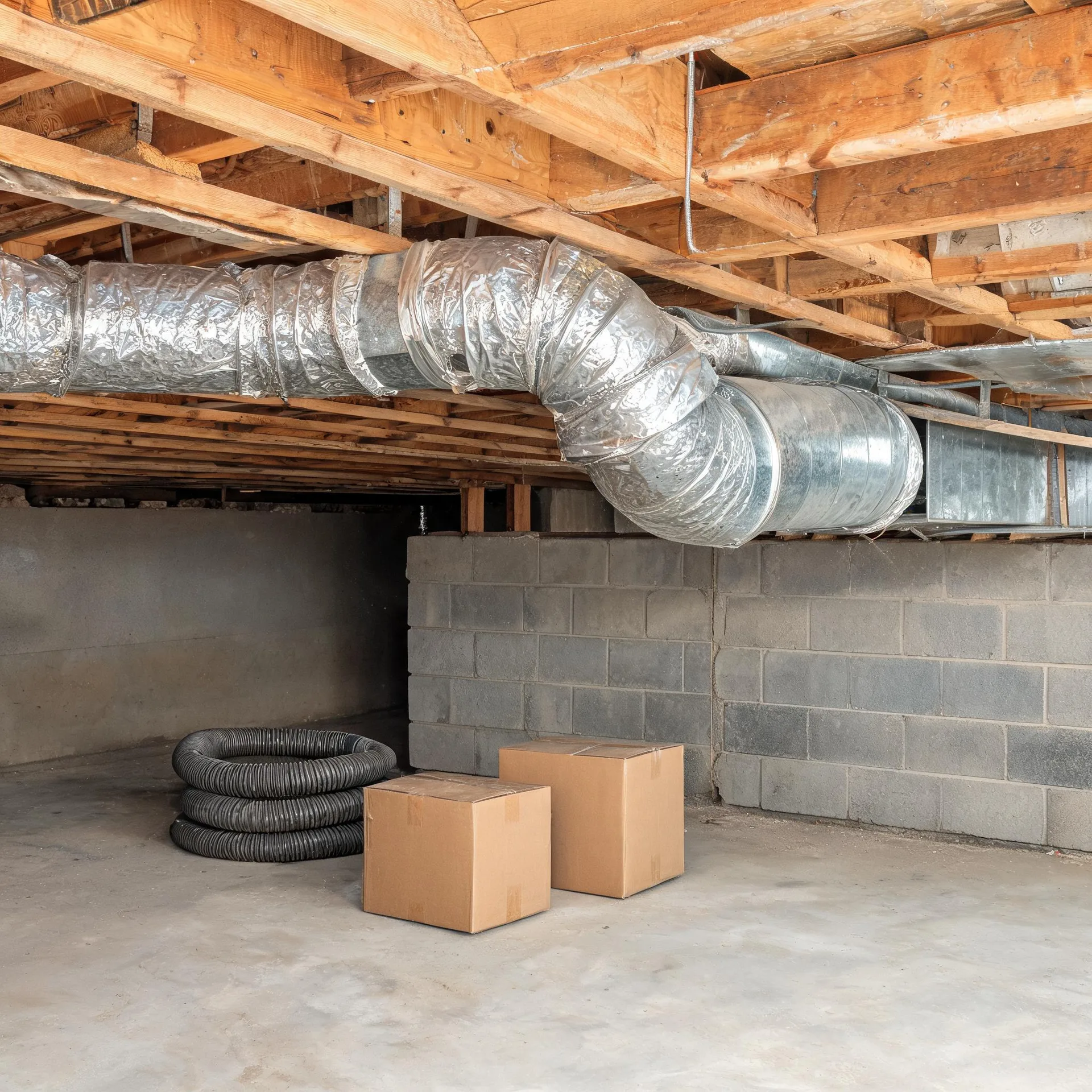
Older furnace stock asks a specific question once the equipment is open: are the parts it takes still made. Half the homes in Warren County, Indiana were built in 1973 or earlier (2020-2024 ACS 5-year). A heat exchanger or blower assembly that has run through that many heating seasons may be serviceable, or it may call for a component that manufacturers stopped producing years ago. That determination comes from what the opened unit actually contains, and a contractor working on furnaces here checks parts availability before quoting a repair, because the answer changes what the job costs and whether it proceeds.
The Parts of a Furnace a Contractor Checks First
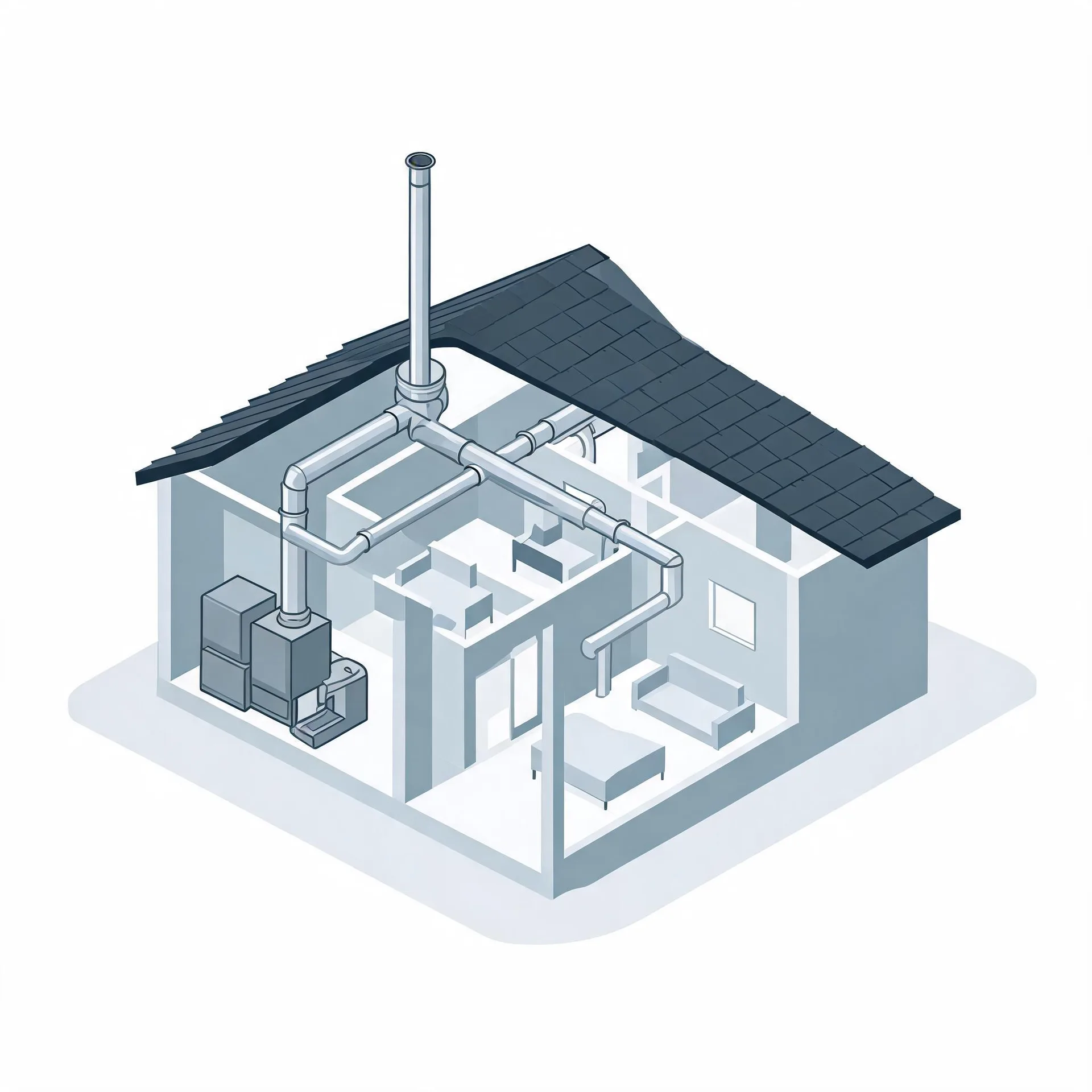
The furnace itself sits in the basement, utility room, or closet and is the piece a contractor goes to first. Inside it, the heat exchanger is the part that fails quietly but seriously: cracks in it let combustion gases into the air supply. The burners, igniter, and flame sensor are the other usual suspects when a furnace won't start or won't stay running.
The blower motor sits at the base of the furnace cabinet and pushes conditioned air out through the house. Beside it, the control board reads signals from the thermostat and tells every other component when to act. A fault in either one can look like a problem somewhere else, so a contractor checks both before drawing conclusions.
The drawing shows a typical furnace layout, and a licensed contractor determines which components apply to your specific system and situation.
Find a contractor in Warren CountyWarren County by the Numbers
34 severe weather events were recorded in Warren County, Indiana between 2015 and 2024.
NOAA National Centers for Environmental Information, Storm Events Database, bulk CSV export, events 2015-01-01 through 2024-12-31.Half the homes in Warren County, Indiana were built in 1973 or earlier (2020-2024 ACS 5-year).
U.S. Census Bureau, 2020-2024 American Community Survey 5-Year EstimatesWarren County, Indiana holds 3,706 housing units (2020-2024 ACS 5-year).
U.S. Census Bureau, 2020-2024 American Community Survey 5-Year EstimatesOwners occupy 82.4% of the occupied homes in Warren County, Indiana (2020-2024 ACS 5-year).
U.S. Census Bureau, 2020-2024 American Community Survey 5-Year EstimatesCodes & Standards Governing Furnace Repair in Warren County, Indiana4 sourced rules & standards
What HVAC Repair Looks Like in Warren County
Non-weatherized gas furnaces manufactured on or after November 19, 2015 must reach 80.0 percent AFUE.
Non-weatherized oil-fired furnaces manufactured on or after November 19, 2015 must reach 83.0 percent AFUE.
Mobile home gas furnaces manufactured on or after November 19, 2015 must reach 80.0 percent AFUE.
Non-weatherized gas furnaces manufactured on or after December 18, 2028 must reach 95.0 percent AFUE, up from the 80.0 percent minimum that applies to units manufactured before that date.
Severe Weather Events in Warren County
Extreme weather puts real hours on a furnace. Repair demand in Warren County tracks closely with what the climate asks of the equipment, which is why local weather history belongs on a page about heating service.
34 severe weather events, 2015–2024. Source: NOAA National Centers for Environmental Information, Storm Events Database.