Tell us about the job
Takes about a minute. No obligation.
A furnace repair in Huntington County starts with what the equipment has already been through. 144 severe weather events were recorded in Huntington County, Indiana between 2015 and 2024. At that rate, severe weather is a standing condition for every system running here, and a contractor working a repair will check heat exchangers, ignition components, and blower assemblies for cumulative wear before looking anywhere else. Age and maintenance history still matter, but they are read against a load that rarely lets up.
Furnace parts wear on their own schedule, and so does the supply chain behind them. Half the homes in Huntington County, Indiana were built in 1966 or earlier (2020-2024 ACS 5-year). In housing built across that span of decades, systems get repaired piecemeal, and by the time a contractor opens a unit here, what is inside often reflects several rounds of substitution. A heat exchanger may be one generation, a blower motor another. That mixture is what decides how the job goes: a contractor has to identify exactly what is in there before sourcing a replacement, because the nameplate and the actual installed components can tell different stories by now.
The Parts of a Furnace a Contractor Checks First
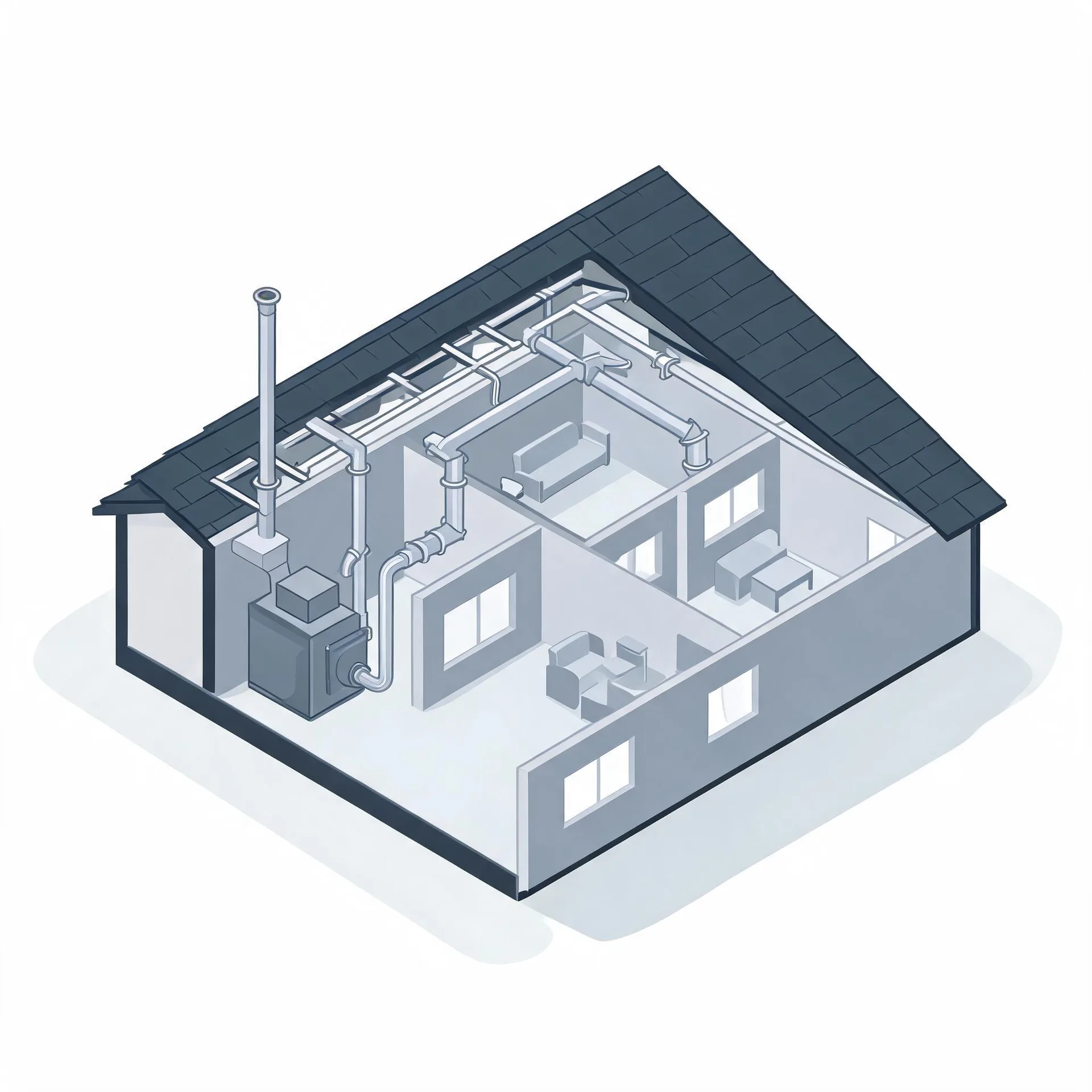
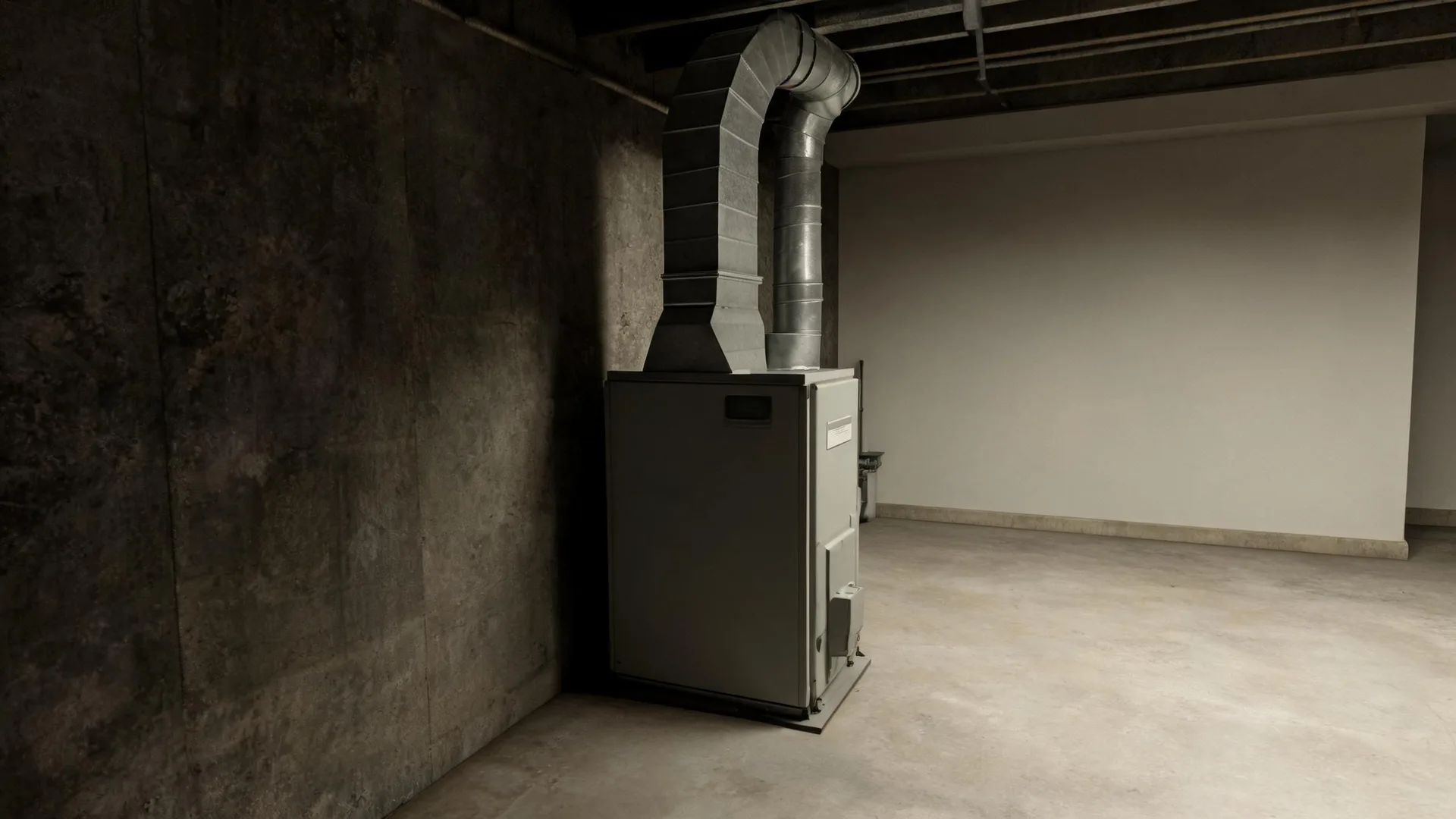
The heat exchanger sits inside the furnace cabinet in the basement or utility closet and is the piece a contractor looks at early. Cracks or buildup there affect the whole system. The burner assembly feeds flame into that chamber, and a faulty igniter, flame sensor, or burner itself is often where a no-heat call ends.
The blower motor and its fan wheel sit at the base of the cabinet and push conditioned air into the supply plenum. The control board, also inside the cabinet, coordinates every other component, so a contractor reads its fault codes before touching much else. The flue pipe runs from the cabinet to an exterior vent and carries combustion gases out of the house.
The drawing shows a typical furnace layout, and a licensed contractor determines which parts apply to the specific system in your home.
Find a contractor in Huntington CountyHuntington County by the numbers
144 severe weather events were recorded in Huntington County, Indiana between 2015 and 2024.
NOAA National Centers for Environmental Information, Storm Events Database, bulk CSV export, events 2015-01-01 through 2024-12-31.Half the homes in Huntington County, Indiana were built in 1966 or earlier (2020-2024 ACS 5-year).
U.S. Census Bureau, 2020-2024 American Community Survey 5-Year EstimatesHuntington County, Indiana holds 16,340 housing units (2020-2024 ACS 5-year).
U.S. Census Bureau, 2020-2024 American Community Survey 5-Year EstimatesOwners occupy 77.4% of the occupied homes in Huntington County, Indiana (2020-2024 ACS 5-year).
U.S. Census Bureau, 2020-2024 American Community Survey 5-Year EstimatesCodes & Standards Governing Furnace Repair in Huntington County, Indiana4 sourced rules and standards
What HVAC Repair Looks Like in Huntington County
Non-weatherized gas furnaces manufactured on or after November 19, 2015 must reach 80.0 percent AFUE.
Non-weatherized oil-fired furnaces manufactured on or after November 19, 2015 must reach 83.0 percent AFUE.
Mobile home gas furnaces manufactured on or after November 19, 2015 must reach 80.0 percent AFUE.
Non-weatherized gas furnaces manufactured on or after December 18, 2028 must reach 95.0 percent AFUE, up from the 80.0 percent minimum that applies to units manufactured before that date.
Severe Weather Events in Huntington County
Huntington County weather puts real load on heating equipment: temperature swings, storm pressure, and power disruptions all push furnaces harder and age components faster. How much stress that adds up to is a local question, and it shapes how often repair needs show up.
144 severe weather events, 2015–2024. Source: NOAA National Centers for Environmental Information, Storm Events Database.