Tell us about the job
Takes about a minute. No obligation.
A contractor quoting a furnace installation in Pike County starts with the house: its insulation, its layout, how it holds heat and where it loses it. 71 severe weather events were recorded in Pike County, Indiana between 2015 and 2024. At that rate, severe weather is part of life here but not a constant siege, so it shapes how a system is sized without overriding the other variables. A furnace that fits the ductwork and the heat loss calculation of this specific house will carry those seasons without being over-built for them or under-built against them.
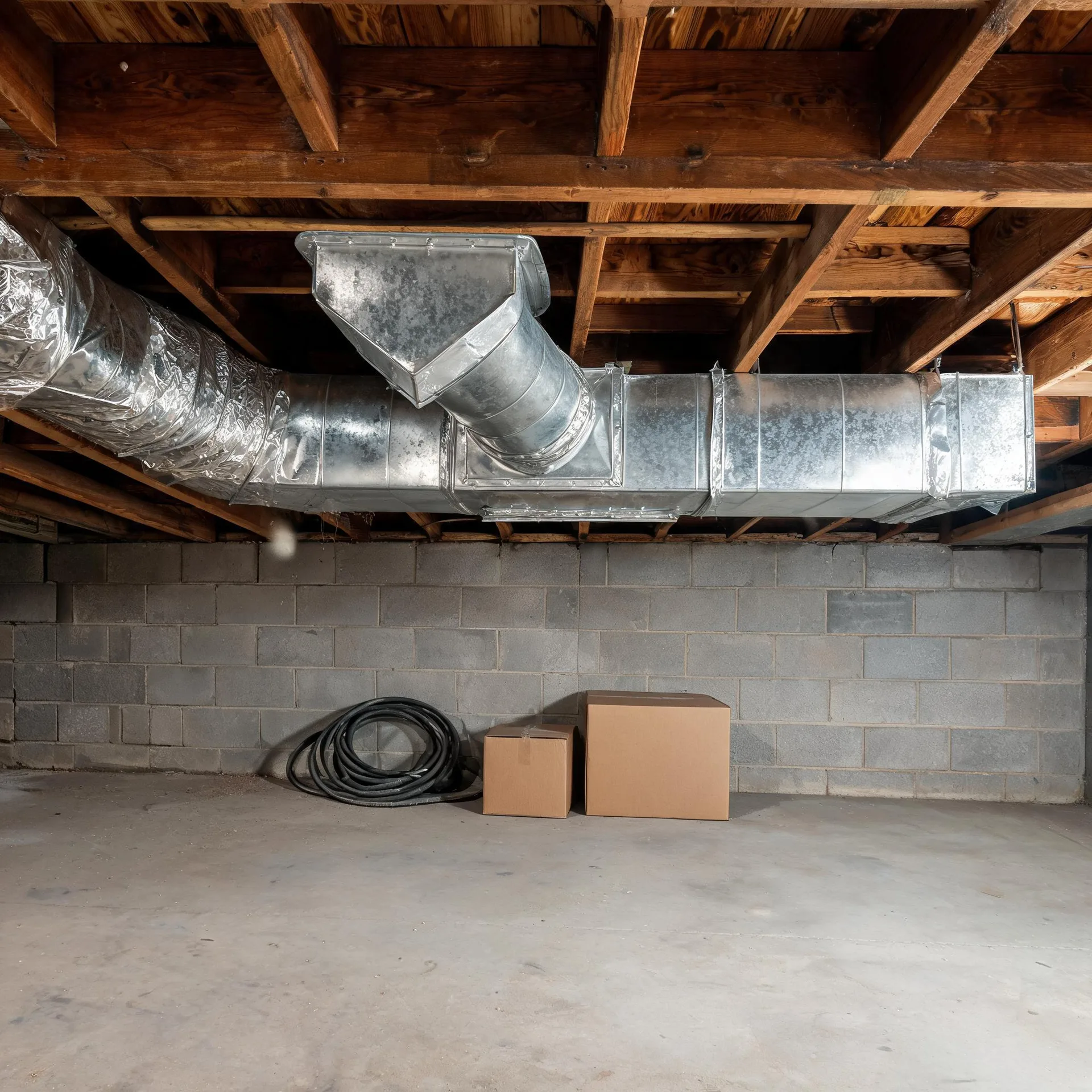
Ductwork laid in for an older furnace carries its own constraints into any new installation: the trunk sizes, the branch runs, the return paths were all cut for a different system load. Half the homes in Pike County, Indiana were built in 1973 or earlier (2020-2024 ACS 5-year). A contractor pricing a furnace replacement here checks whether that existing duct layout can move the air volume a current unit needs, because if it cannot, the duct work becomes part of the job before the equipment is even chosen. Electrical service gets the same look, since a panel from that era may not carry what a modern furnace and its accessories draw.
What Gets Installed With a New Furnace
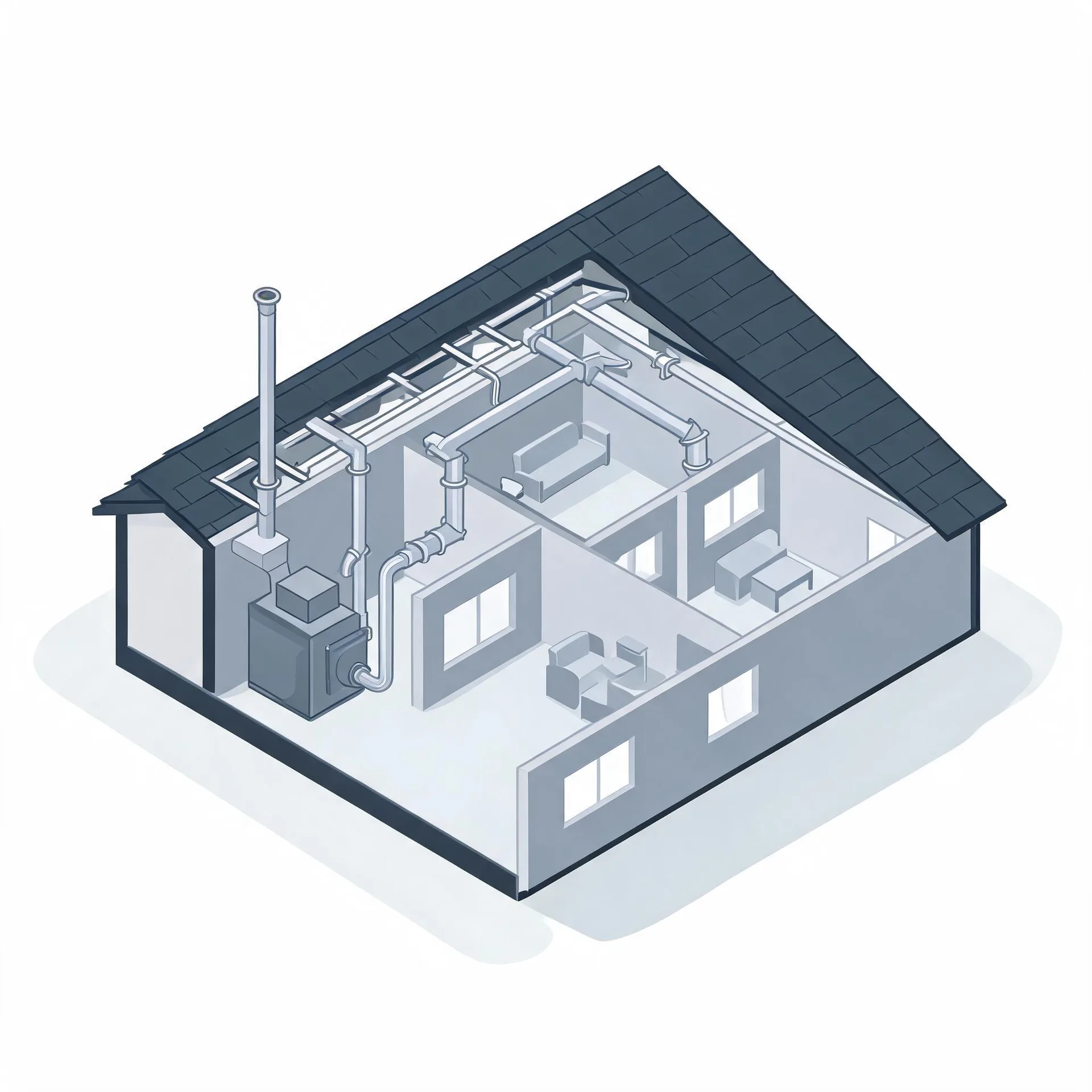
The furnace itself sits in the basement, utility room, or crawl space and is the unit that generates heat. A heat exchanger inside it warms the air that moves through your home. The blower motor, housed in the same cabinet, pushes that warmed air out into the supply side of your duct system.
The flue pipe runs from the furnace cabinet up and out of the house, carrying combustion gases away. The thermostat mounts on a wall in the living space and is the control point that tells the furnace when to fire and when to stop. A condensate drain line is also part of the installation on high-efficiency models, running from the unit to a floor drain.
The drawing shows a representative layout, and a licensed contractor determines what applies to your specific home.
Find a contractor in Pike CountyPike County by the numbers
71 severe weather events were recorded in Pike County, Indiana between 2015 and 2024.
NOAA National Centers for Environmental Information, Storm Events Database, bulk CSV export, events 2015-01-01 through 2024-12-31.Half the homes in Pike County, Indiana were built in 1973 or earlier (2020-2024 ACS 5-year).
U.S. Census Bureau, 2020-2024 American Community Survey 5-Year EstimatesPike County, Indiana holds 5,589 housing units (2020-2024 ACS 5-year).
U.S. Census Bureau, 2020-2024 American Community Survey 5-Year EstimatesOwners occupy 86.7% of the occupied homes in Pike County, Indiana (2020-2024 ACS 5-year).
U.S. Census Bureau, 2020-2024 American Community Survey 5-Year EstimatesFurnace Installation Rules That Apply in Pike County, Indiana4 codes & standards
What the Installation Actually Looks Like
Non-weatherized gas furnaces manufactured on or after November 19, 2015 must reach 80.0 percent AFUE.
Non-weatherized oil-fired furnaces manufactured on or after November 19, 2015 must reach 83.0 percent AFUE.
Mobile home gas furnaces manufactured on or after November 19, 2015 must reach 80.0 percent AFUE.
Non-weatherized gas furnaces manufactured on or after December 18, 2028 must reach 95.0 percent AFUE, up from the 80.0 percent minimum that applies to units manufactured before that date.
Severe Weather Events in Pike County
Weather extremes put real hours on heating equipment, and Pike County's climate is the baseline any installed furnace has to handle year after year. What gets recorded here shapes what local contractors specify and how they size the equipment they put in.
71 severe weather events, 2015–2024. Source: NOAA National Centers for Environmental Information, Storm Events Database.