Tell us about the job
Takes about a minute. No obligation.
A contractor quoting furnace installation in Warren County starts with what the house actually demands, not with assumptions borrowed from a harder climate. 34 severe weather events were recorded in Warren County, Indiana between 2015 and 2024. At that rate, severe weather is a real but infrequent visitor, which means a well-sized system installed correctly handles it without heroics. What drives performance here is the quality of the ductwork, the accuracy of the load calculation, and whether the unit was matched to the structure. A sloppy install in a mild county underperforms just as badly as one in a brutal one.
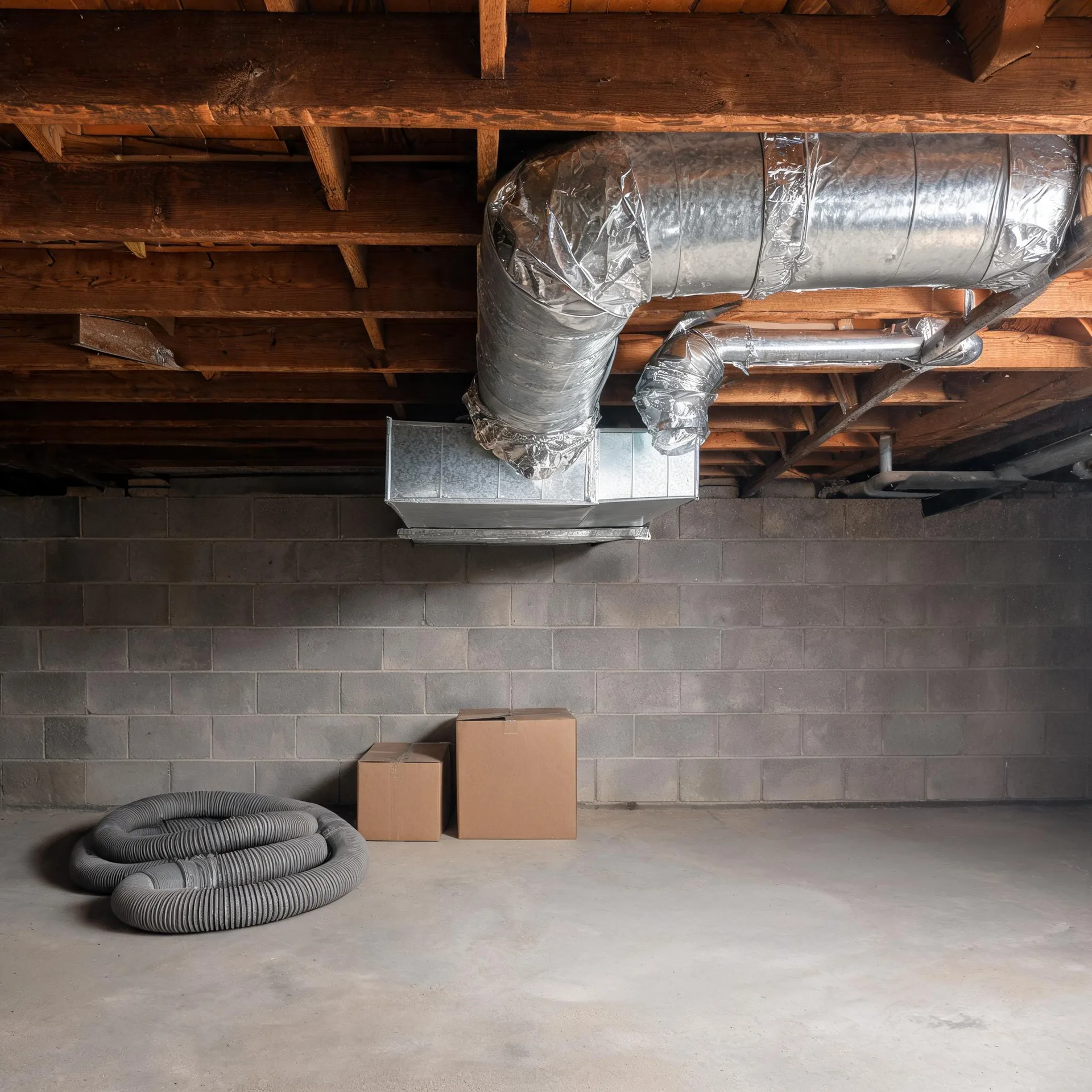
Ductwork in a house tells a contractor what that house was built for, and in Warren County a significant portion of the housing stock was built for something different from what any new furnace will ask of it. Half the homes in Warren County, Indiana were built in 1973 or earlier (2020-2024 ACS 5-year). When a contractor prices a furnace install here, the duct layout and the electrical service are the variables that widen or narrow the job. Ducts sized for an older system may need rerouting or resizing before a new unit can distribute heat evenly. That assessment happens before any equipment goes on the truck.
What Gets Installed With a New Furnace
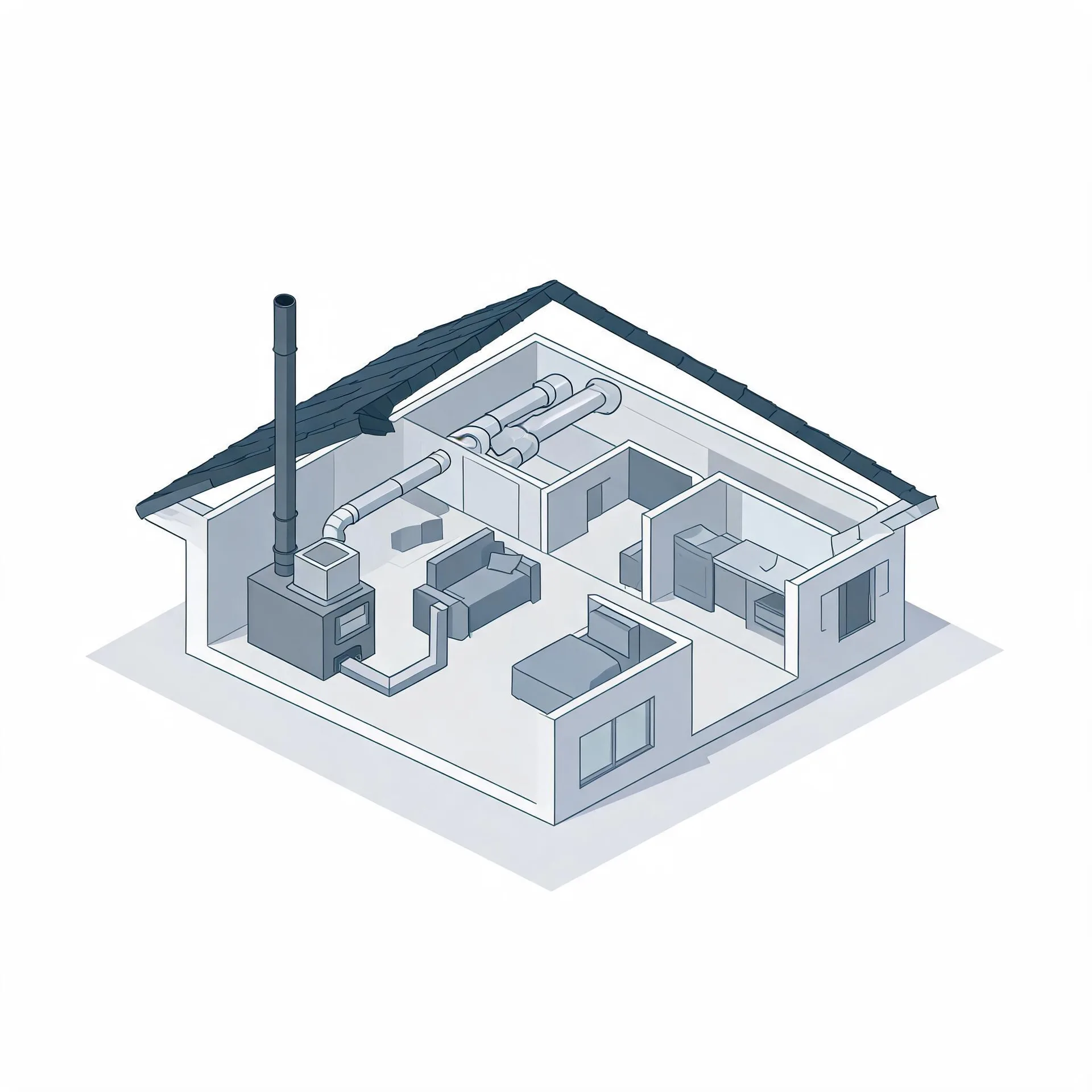
The furnace itself sits in a utility space, basement, or closet near the center of the house. It holds the heat exchanger, the burner assembly, and the blower in a single cabinet. A gas valve and igniter feed the burner, and a flue pipe runs from the cabinet up and out of the house to vent combustion gases.
The air handler or blower moves conditioned air out through the supply side and draws return air back in. A filter cabinet fits into the return side, right at the furnace, and a thermostat on a main living-area wall ties the whole system together and tells it when to run.
The drawing shows a typical layout, and a licensed contractor determines what fits and connects in your particular home.
Find a contractor in Warren CountyWarren County by the numbers
34 severe weather events were recorded in Warren County, Indiana between 2015 and 2024.
NOAA National Centers for Environmental Information, Storm Events Database, bulk CSV export, events 2015-01-01 through 2024-12-31.Half the homes in Warren County, Indiana were built in 1973 or earlier (2020-2024 ACS 5-year).
U.S. Census Bureau, 2020-2024 American Community Survey 5-Year EstimatesWarren County, Indiana holds 3,706 housing units (2020-2024 ACS 5-year).
U.S. Census Bureau, 2020-2024 American Community Survey 5-Year EstimatesOwners occupy 82.4% of the occupied homes in Warren County, Indiana (2020-2024 ACS 5-year).
U.S. Census Bureau, 2020-2024 American Community Survey 5-Year EstimatesFurnace Installation Rules for Warren County, Indiana4 sourced codes and standards
What the Installation Looks Like
Non-weatherized gas furnaces manufactured on or after November 19, 2015 must reach 80.0 percent AFUE.
Non-weatherized oil-fired furnaces manufactured on or after November 19, 2015 must reach 83.0 percent AFUE.
Mobile home gas furnaces manufactured on or after November 19, 2015 must reach 80.0 percent AFUE.
Non-weatherized gas furnaces manufactured on or after December 18, 2028 must reach 95.0 percent AFUE, up from the 80.0 percent minimum that applies to units manufactured before that date.
Severe Weather Events in Warren County
Weather puts a measurable load on heating and cooling equipment, and that load varies by location. A furnace sized and installed for what Warren County actually sees performs differently from one built to a national average.
34 severe weather events, 2015–2024. Source: NOAA National Centers for Environmental Information, Storm Events Database.