Tell us about the job
Takes about a minute. No obligation.
A furnace that breaks down in Wayne County has almost certainly been let down by something closer to home than the weather. 94 severe weather events were recorded in Wayne County, Indiana between 2015 and 2024. At roughly that rate, severe weather is something a system here encounters now and then, not a sustained operating condition that grinds components down season after season. A contractor diagnosing a failed heat exchanger or a worn inducer motor is going to look at filter history, duct condition, and how the unit was originally sized and installed. Those are the factors that decide which parts fail and when.
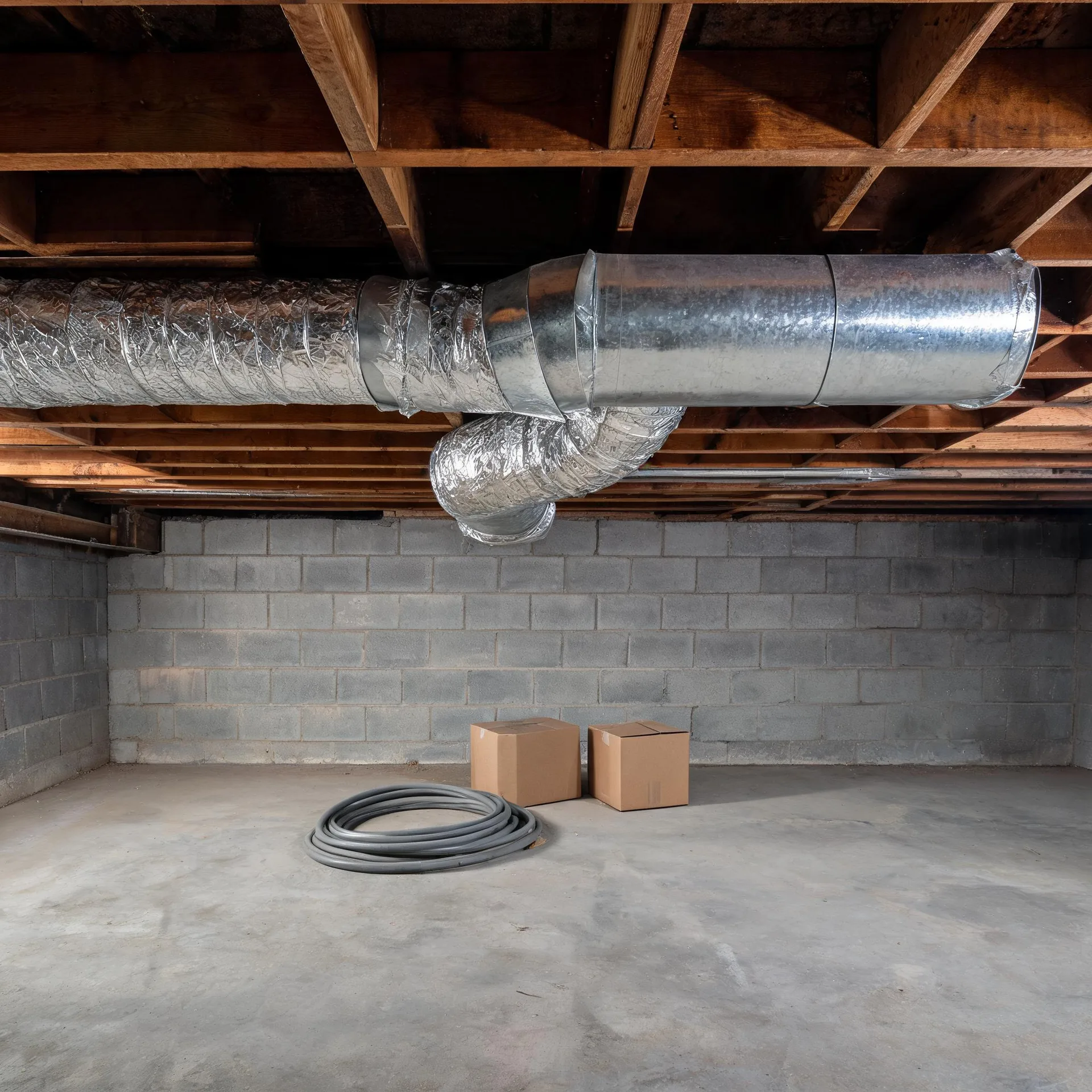
Ductwork in a house this old has seen several furnaces come and go, and each swap left its own footprint inside the system. Half the homes in Wayne County, Indiana were built in 1960 or earlier (2020-2024 ACS 5-year). When a furnace opens up in stock like this, what a contractor finds is often a mix of original components and newer ones that were fitted around them, and the repair scope shifts depending on which generation a failing part belongs to. Some parts are still made. Others have been out of production long enough that a contractor has to source alternatives or rethink the repair path entirely.
The Parts of a Furnace a Contractor Checks First
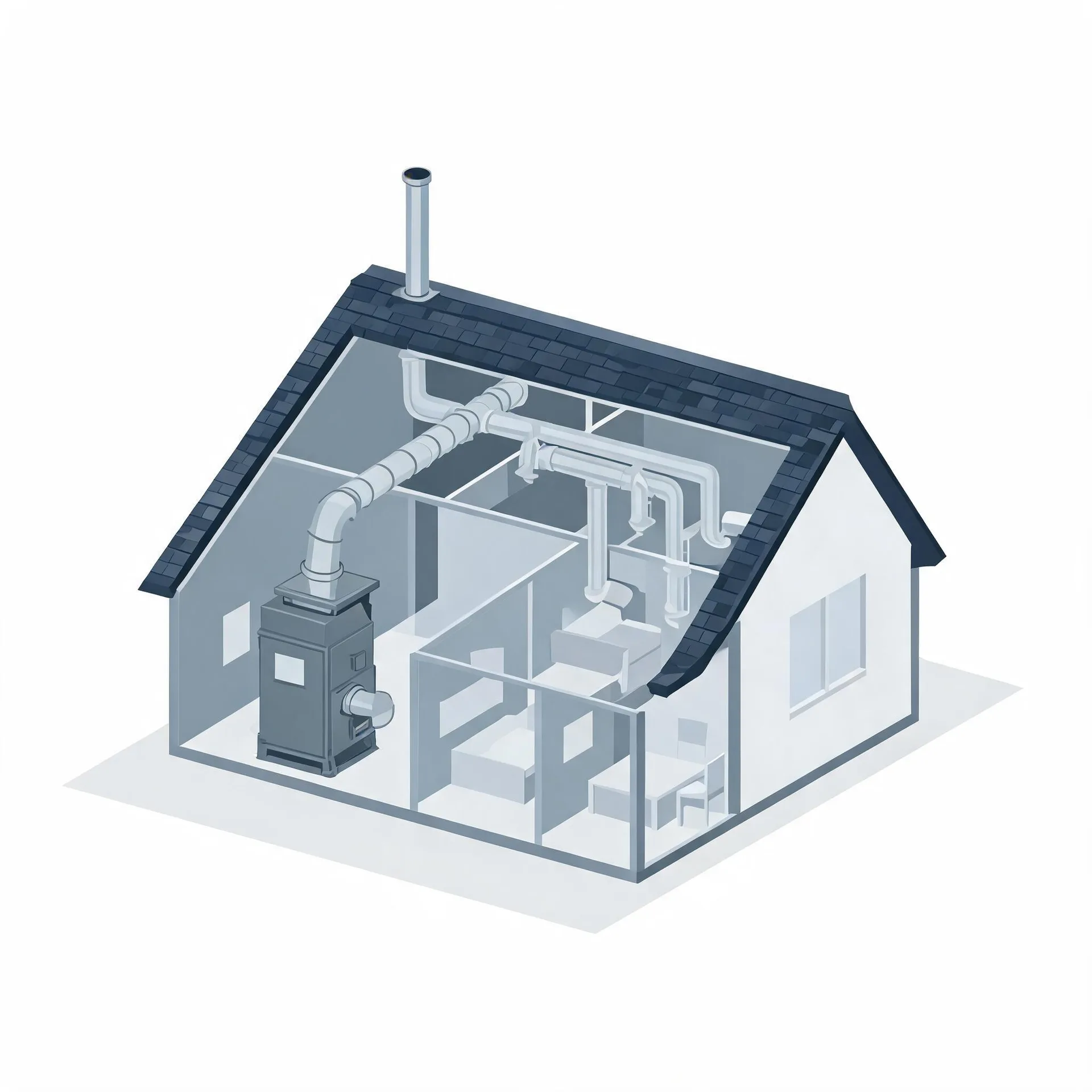
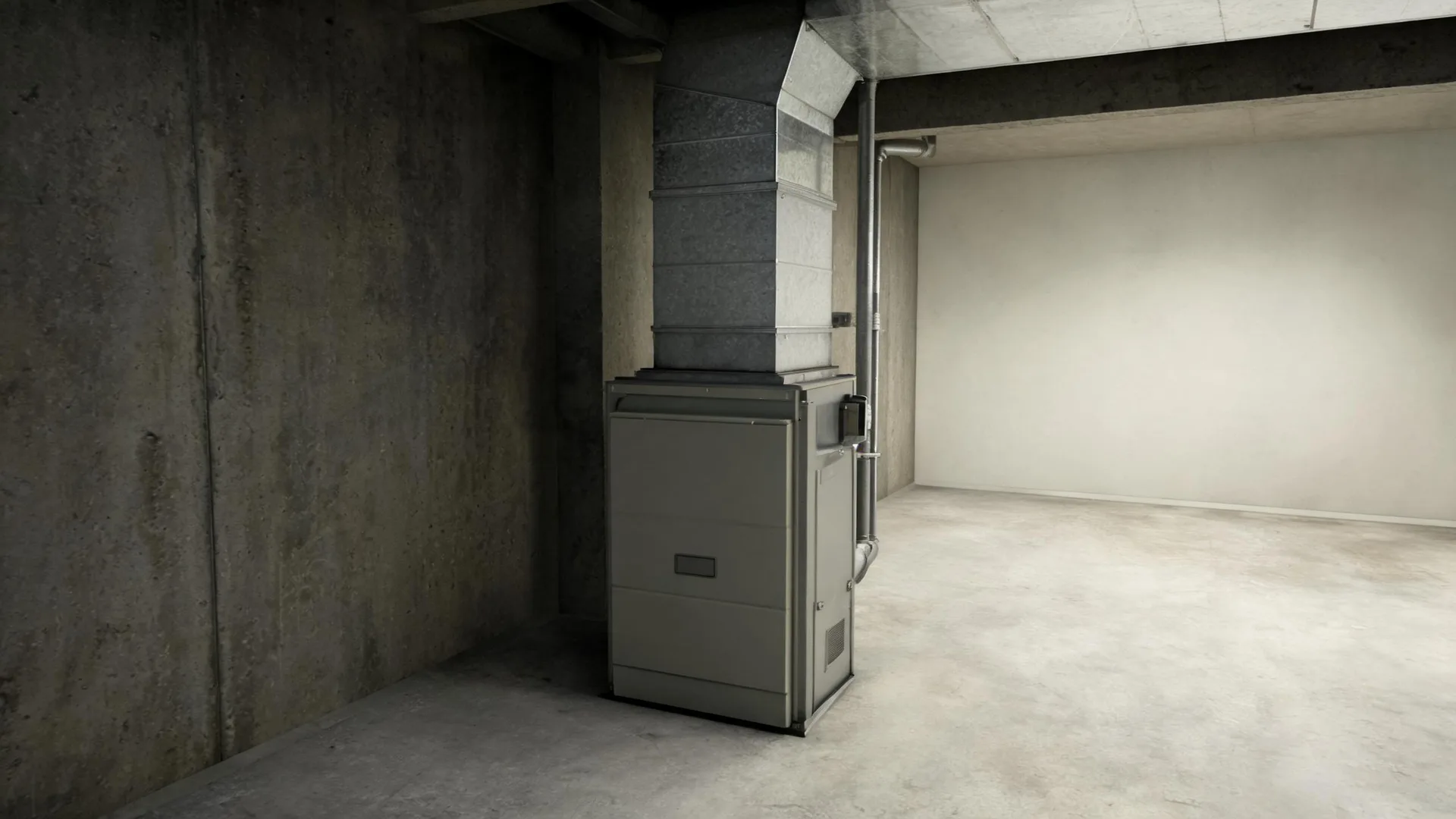
The heat exchanger sits at the heart of the furnace cabinet, usually in a basement or utility closet, and is the piece a contractor looks at early. Cracks or failures there affect both heat output and safety. The burner assembly, just below it, is where the fuel ignites, and problems there show up as uneven heat or a furnace that won't stay on.
The blower motor sits at the base of the cabinet and pushes heated air out through the supply side of your system. The control board and the ignitor are both inside the cabinet as well. The ignitor is one of the first pieces a contractor checks when the furnace runs briefly and then shuts off, and the control board is what a contractor reads when diagnosing signals from every other component.
The drawing shows a typical furnace layout, and a licensed contractor determines which parts apply to your specific setup.
Find a contractor in Wayne CountyWayne County by the numbers
94 severe weather events were recorded in Wayne County, Indiana between 2015 and 2024.
NOAA National Centers for Environmental Information, Storm Events Database, bulk CSV export, events 2015-01-01 through 2024-12-31.Half the homes in Wayne County, Indiana were built in 1960 or earlier (2020-2024 ACS 5-year).
U.S. Census Bureau, 2020-2024 American Community Survey 5-Year EstimatesWayne County, Indiana holds 30,736 housing units (2020-2024 ACS 5-year).
U.S. Census Bureau, 2020-2024 American Community Survey 5-Year EstimatesOwners occupy 69.2% of the occupied homes in Wayne County, Indiana (2020-2024 ACS 5-year).
U.S. Census Bureau, 2020-2024 American Community Survey 5-Year EstimatesCodes & Standards Governing Furnace Repair in Wayne County, Indiana4 sourced rules and standards
What Happens When the Contractor Comes Out
Non-weatherized gas furnaces manufactured on or after November 19, 2015 must reach 80.0 percent AFUE.
Non-weatherized oil-fired furnaces manufactured on or after November 19, 2015 must reach 83.0 percent AFUE.
Mobile home gas furnaces manufactured on or after November 19, 2015 must reach 80.0 percent AFUE.
Non-weatherized gas furnaces manufactured on or after December 18, 2028 must reach 95.0 percent AFUE, up from the 80.0 percent minimum that applies to units manufactured before that date.
Severe Weather Events in Wayne County
Extreme weather puts real stress on a furnace, pushing it harder and more often than mild conditions ever would. How much of that load a system carries depends on where it sits, which makes local weather history part of the picture for any repair conversation in Wayne County.
94 severe weather events, 2015–2024. Source: NOAA National Centers for Environmental Information, Storm Events Database.