Tell us about the job
Takes about a minute. No obligation.
A furnace repair in Fayette County starts with age and installation, not weather. 43 severe weather events were recorded in Fayette County, Indiana between 2015 and 2024. At that rate, severe weather is an occasional event in this area rather than a standing condition, which means the heat exchanger cracking or the inducer motor seizing almost certainly reflects years of normal wear or a fitment problem from the original job. A contractor arriving at a troubled furnace here will check the install quality and the service history before weighing anything else, because those are what the record actually points to.
Half the homes in Fayette County, Indiana were built in 1962 or earlier (2020-2024 ACS 5-year). A furnace running in a house from that era is often not the original unit, but it may still be old enough that the heat exchanger, draft inducer, or control board it takes is no longer a stocked item. When a contractor opens the cabinet, the question is whether the failed component can be sourced or whether the repair dead-ends at availability. That answer shapes the job more than the diagnosis does.
The Parts of a Furnace a Contractor Checks First
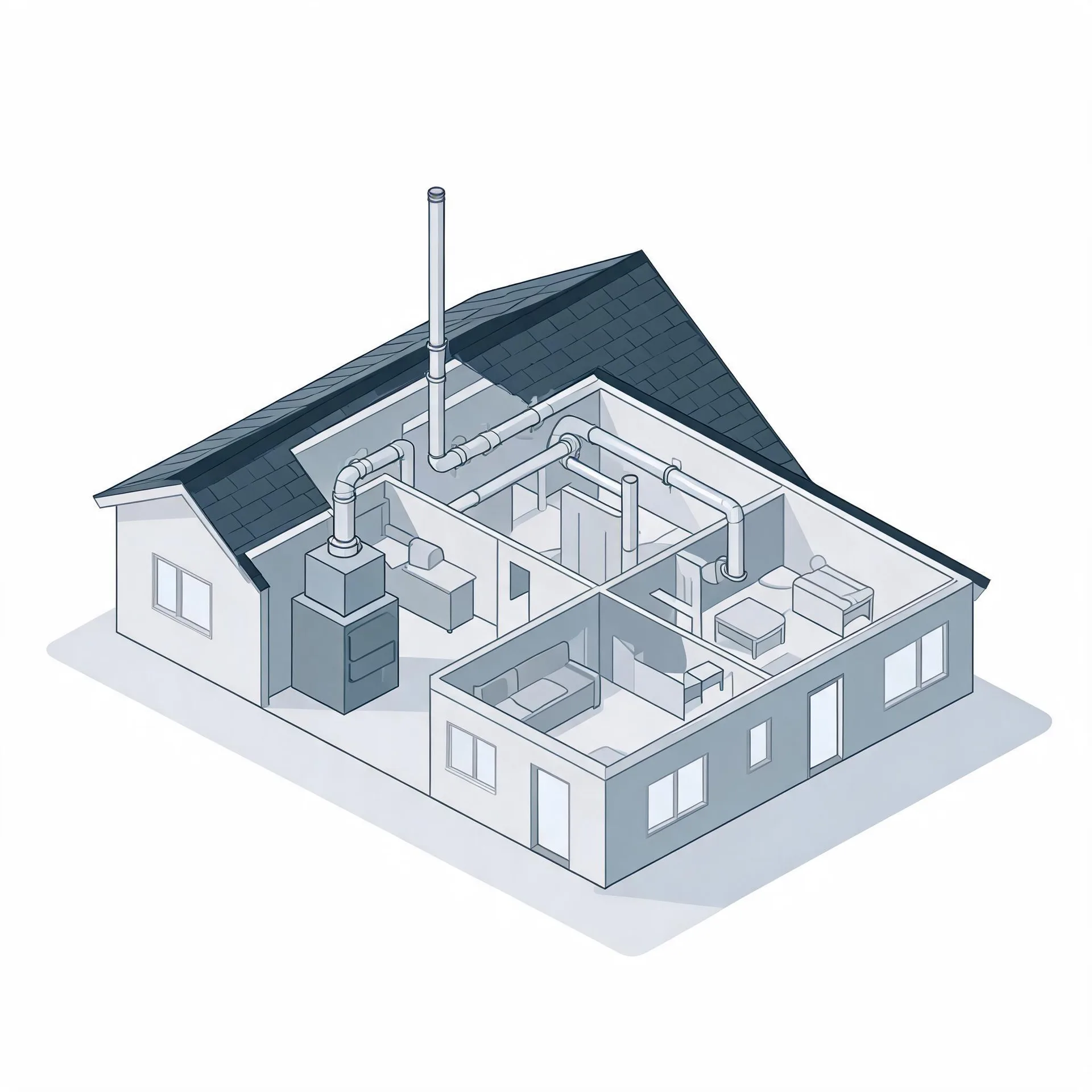
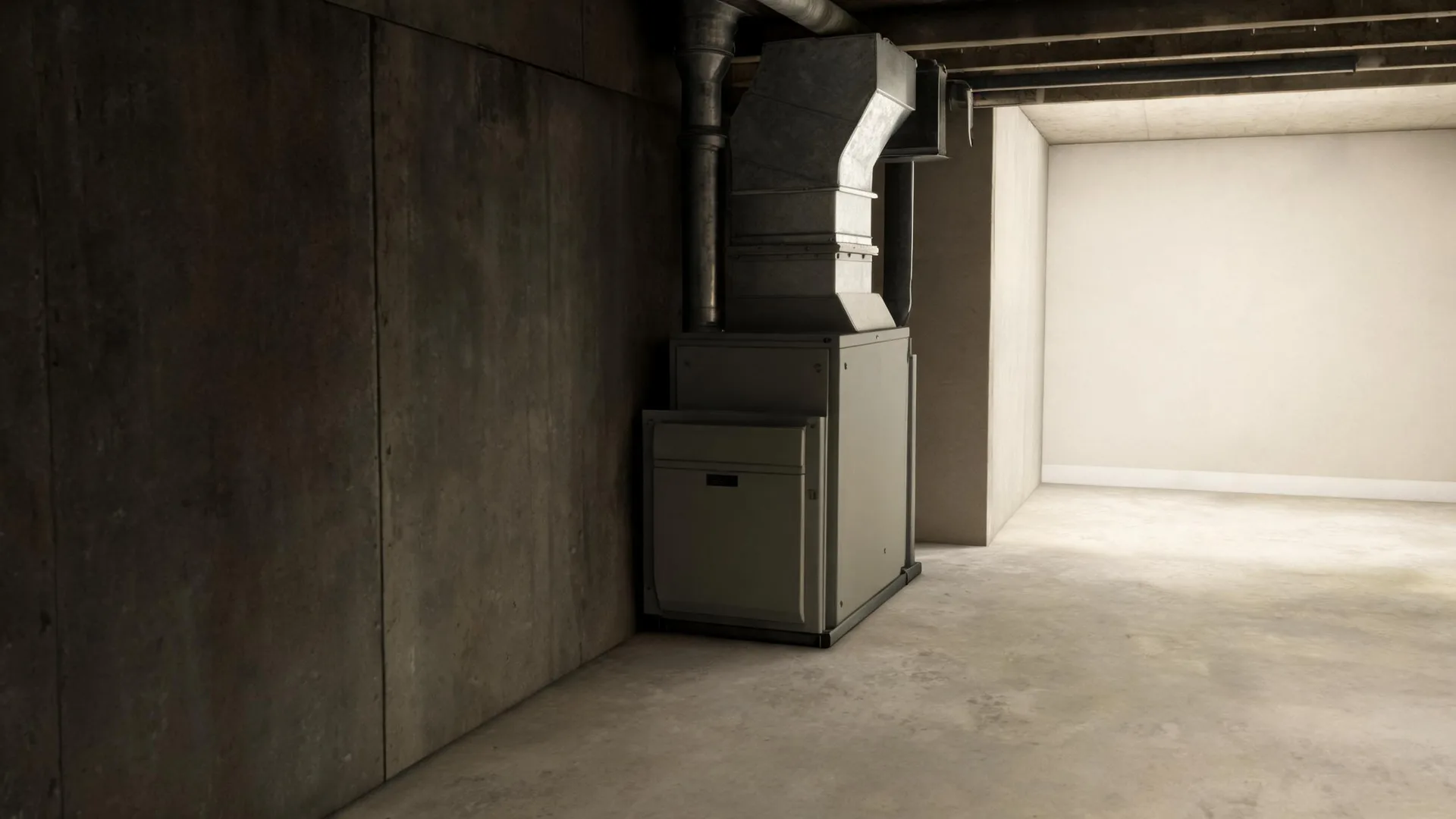
The heat exchanger sits inside the furnace cabinet in the basement or utility room and is where combustion gases are contained while the blower pushes warm air around them. Cracks or buildup here are a common source of heating failure and are usually the first thing a contractor examines. The burners, which sit just below it, get checked next for dirt or uneven flame.
The blower motor and its wheel sit at the base of the cabinet and move conditioned air into the supply plenum above. The igniter and flame sensor are small components mounted near the burners, and either one failing will shut the furnace down entirely. The flue pipe runs from the cabinet up and out of the house and carries exhaust away from the living space.
The drawing shows the general layout of a furnace system, and a licensed contractor determines what applies to the specific equipment and configuration in your house.
Find a contractor in Fayette CountyFayette County, Indiana, by the numbers
43 severe weather events were recorded in Fayette County, Indiana between 2015 and 2024.
NOAA National Centers for Environmental Information, Storm Events Database, bulk CSV export, events 2015-01-01 through 2024-12-31.Half the homes in Fayette County, Indiana were built in 1962 or earlier (2020-2024 ACS 5-year).
U.S. Census Bureau, 2020-2024 American Community Survey 5-Year EstimatesFayette County, Indiana holds 10,905 housing units (2020-2024 ACS 5-year).
U.S. Census Bureau, 2020-2024 American Community Survey 5-Year EstimatesOwners occupy 72.1% of the occupied homes in Fayette County, Indiana (2020-2024 ACS 5-year).
U.S. Census Bureau, 2020-2024 American Community Survey 5-Year EstimatesCodes & Standards Covering Furnace Repair in Fayette County, Indiana4 sourced rules and standards
What Happens When a Contractor Comes Out
Non-weatherized gas furnaces manufactured on or after November 19, 2015 must reach 80.0 percent AFUE.
Non-weatherized oil-fired furnaces manufactured on or after November 19, 2015 must reach 83.0 percent AFUE.
Mobile home gas furnaces manufactured on or after November 19, 2015 must reach 80.0 percent AFUE.
Non-weatherized gas furnaces manufactured on or after December 18, 2028 must reach 95.0 percent AFUE, up from the 80.0 percent minimum that applies to units manufactured before that date.
Severe Weather Events in Fayette County
Extreme weather puts real strain on a furnace, cycling it harder and more often than ordinary cold alone demands. How much of that pressure a system faces depends on where it runs, which is why local storm history belongs in a conversation about repair work.
43 severe weather events, 2015–2024. Source: NOAA National Centers for Environmental Information, Storm Events Database.