Tell us about the job
Takes about a minute. No obligation.
Sizing a furnace for Wayne County means accounting for what the climate has already been doing to ductwork, insulation, and the structure itself. 94 severe weather events were recorded in Wayne County, Indiana between 2015 and 2024. At roughly the midpoint of the national distribution, that record puts real but not extraordinary load on heating equipment here. A contractor quoting an installation has to establish how the house has handled that load before settling on equipment capacity, because a box that fits the catalog spec for a generic Indiana home can still be wrong for a particular address in Richmond or Centerville. The weather is a factor. The condition of the structure determines whether it is the deciding one.
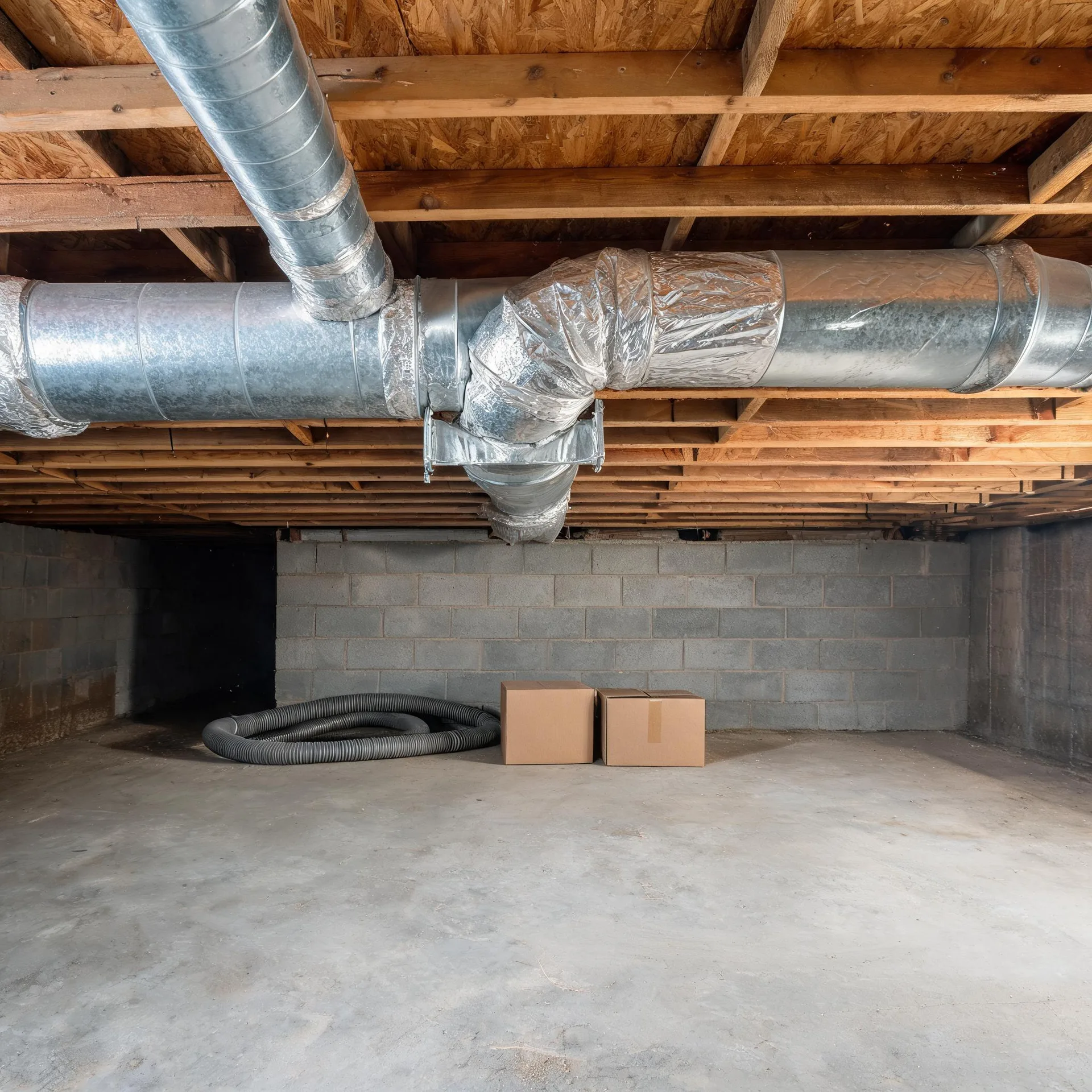
Ductwork sized for an old system carries assumptions about airflow that a modern furnace may not share. Half the homes in Wayne County, Indiana were built in 1960 or earlier (2020-2024 ACS 5-year). A contractor quoting a new furnace in housing this old has to assess whether the existing duct runs will move the volume a new unit pushes, and whether the electrical service will carry what it draws. Those are separate questions from which furnace fits the house on paper, and the answers come from what is already in the walls and the utility room, not from the equipment spec sheet.
What Gets Installed With a New Furnace
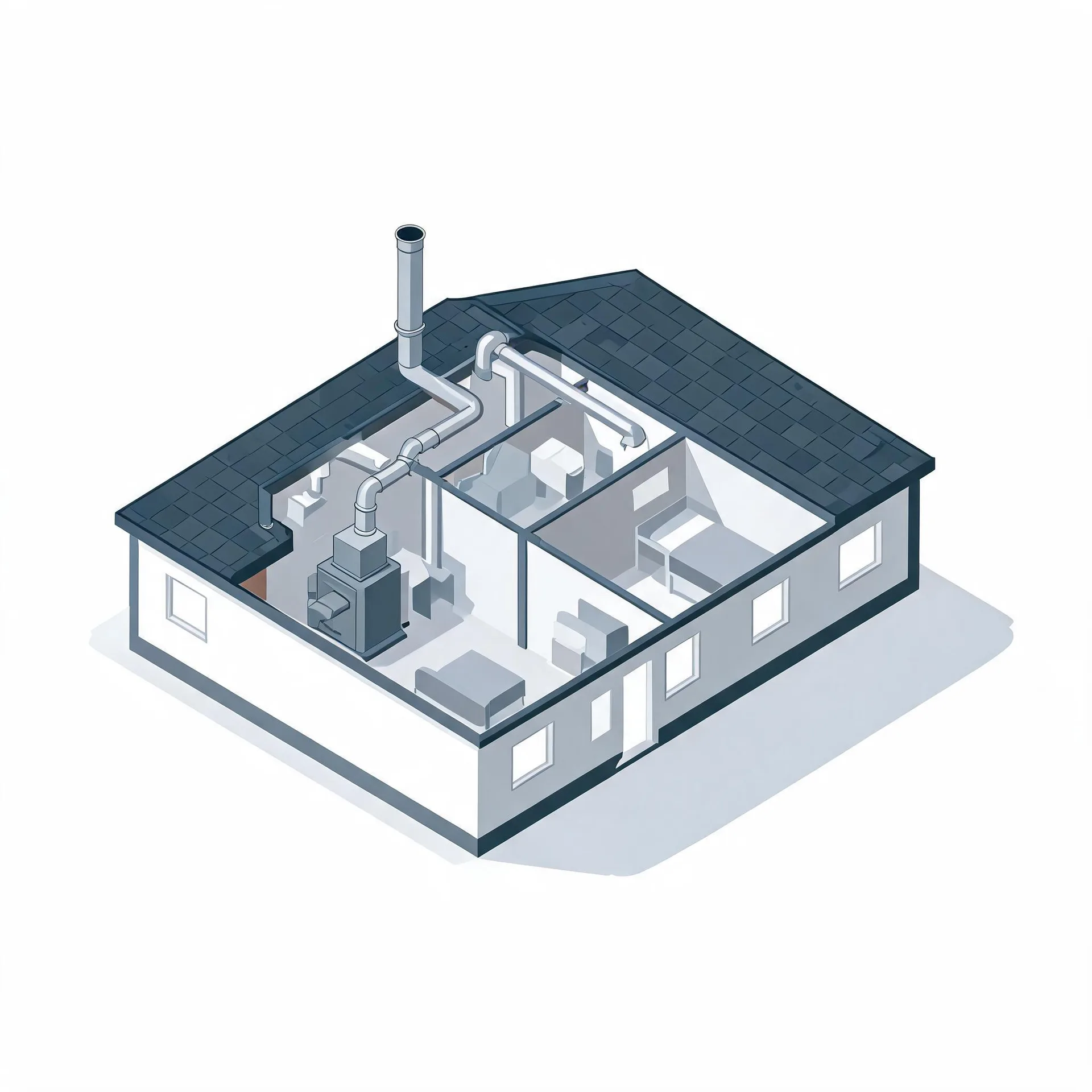
The furnace itself sits in a basement, utility room, or closet and is the piece that generates heat. A heat exchanger inside it transfers warmth to the air your home circulates. The flue pipe runs from the furnace to an exterior wall or roof, carrying combustion gases out of the house.
The blower motor and fan assembly sit inside the furnace cabinet and push conditioned air into the supply ducts. The thermostat mounts on an interior wall and is the control point the homeowner sees and touches every day. A condensate drain line runs from the unit to a floor drain when a high-efficiency model is part of the installation.
The drawing shows a typical layout, and a licensed contractor determines exactly which components and configurations apply to your home.
Find a contractor in Wayne CountyWayne County, Indiana, by the numbers
94 severe weather events were recorded in Wayne County, Indiana between 2015 and 2024.
NOAA National Centers for Environmental Information, Storm Events Database, bulk CSV export, events 2015-01-01 through 2024-12-31.Half the homes in Wayne County, Indiana were built in 1960 or earlier (2020-2024 ACS 5-year).
U.S. Census Bureau, 2020-2024 American Community Survey 5-Year EstimatesWayne County, Indiana holds 30,736 housing units (2020-2024 ACS 5-year).
U.S. Census Bureau, 2020-2024 American Community Survey 5-Year EstimatesOwners occupy 69.2% of the occupied homes in Wayne County, Indiana (2020-2024 ACS 5-year).
U.S. Census Bureau, 2020-2024 American Community Survey 5-Year EstimatesFurnace Installation Rules & Standards for Wayne County, Indiana4 sourced rules and standards
What the Installation Actually Looks Like
Non-weatherized gas furnaces manufactured on or after November 19, 2015 must reach 80.0 percent AFUE.
Non-weatherized oil-fired furnaces manufactured on or after November 19, 2015 must reach 83.0 percent AFUE.
Mobile home gas furnaces manufactured on or after November 19, 2015 must reach 80.0 percent AFUE.
Non-weatherized gas furnaces manufactured on or after December 18, 2028 must reach 95.0 percent AFUE, up from the 80.0 percent minimum that applies to units manufactured before that date.
Severe Weather Events in Wayne County
Weather in this part of Indiana puts real demands on heating equipment. A furnace sized and installed for local conditions holds up better than one spec'd for somewhere else.
94 severe weather events, 2015–2024. Source: NOAA National Centers for Environmental Information, Storm Events Database.