Tell us about the job
Takes about a minute. No obligation.
A contractor called out for furnace repair in Harrison County has to decide what actually wore the system down. 118 severe weather events were recorded in Harrison County, Indiana between 2015 and 2024. That puts the area in the middle range of weather load, which means the climate is a background factor rather than the dominant one. A heat exchanger that cracks, a blower motor that seizes, or a control board that fails here is more likely carrying the cost of age or skipped maintenance than of storm exposure. The contractor's first questions run toward service history and original installation quality, not toward what the sky has done.
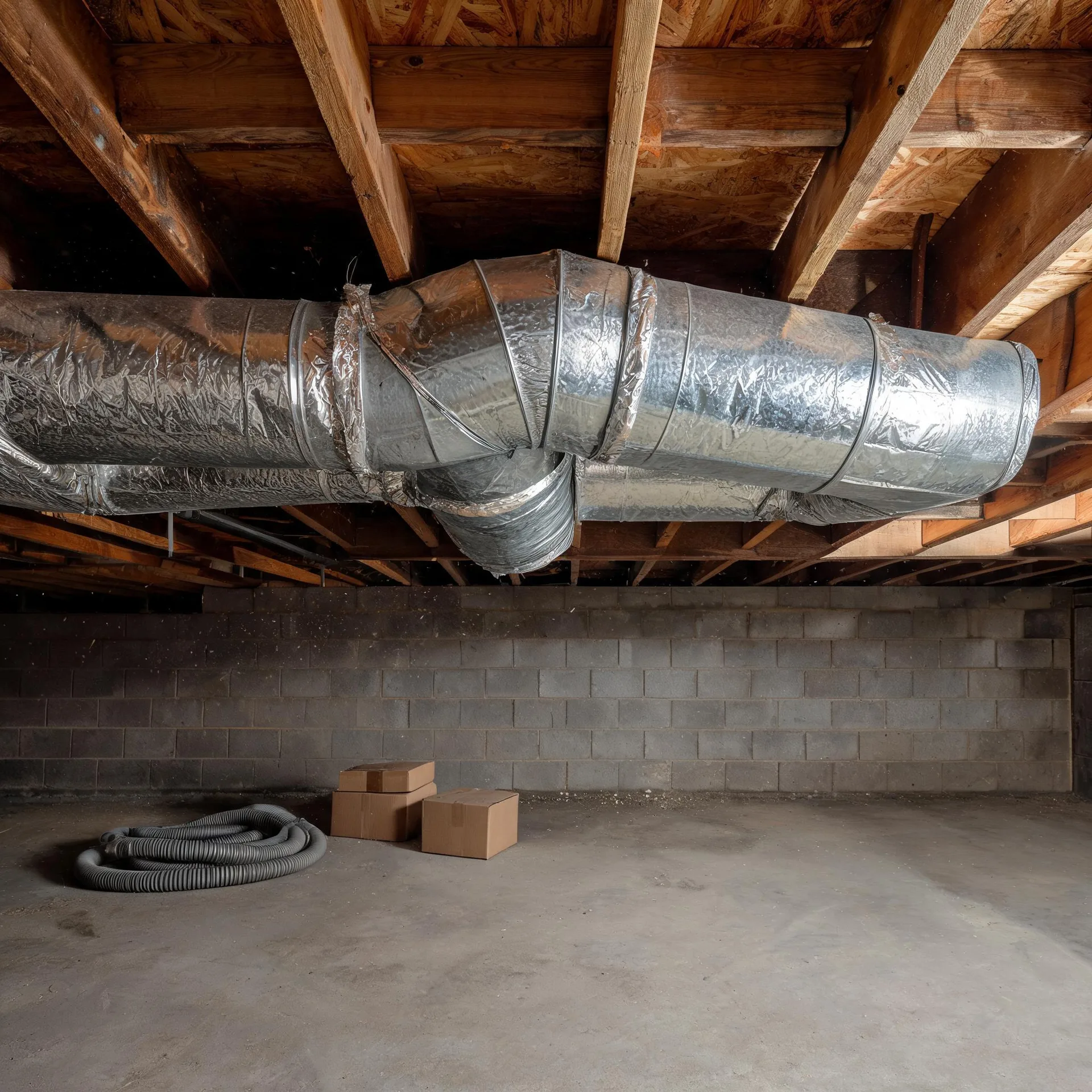
Furnaces in houses built this long ago have often been replaced once or swapped in piecemeal, which means the unit a contractor opens may carry components from several different service generations. Half the homes in Harrison County, Indiana were built in 1990 or earlier (2020-2024 ACS 5-year). Parts for equipment layered into stock of that age are sometimes discontinued, and a contractor has to confirm availability before committing to a repair path rather than a replacement. What the opened furnace actually holds decides the bill.
The Parts of a Furnace a Contractor Checks First
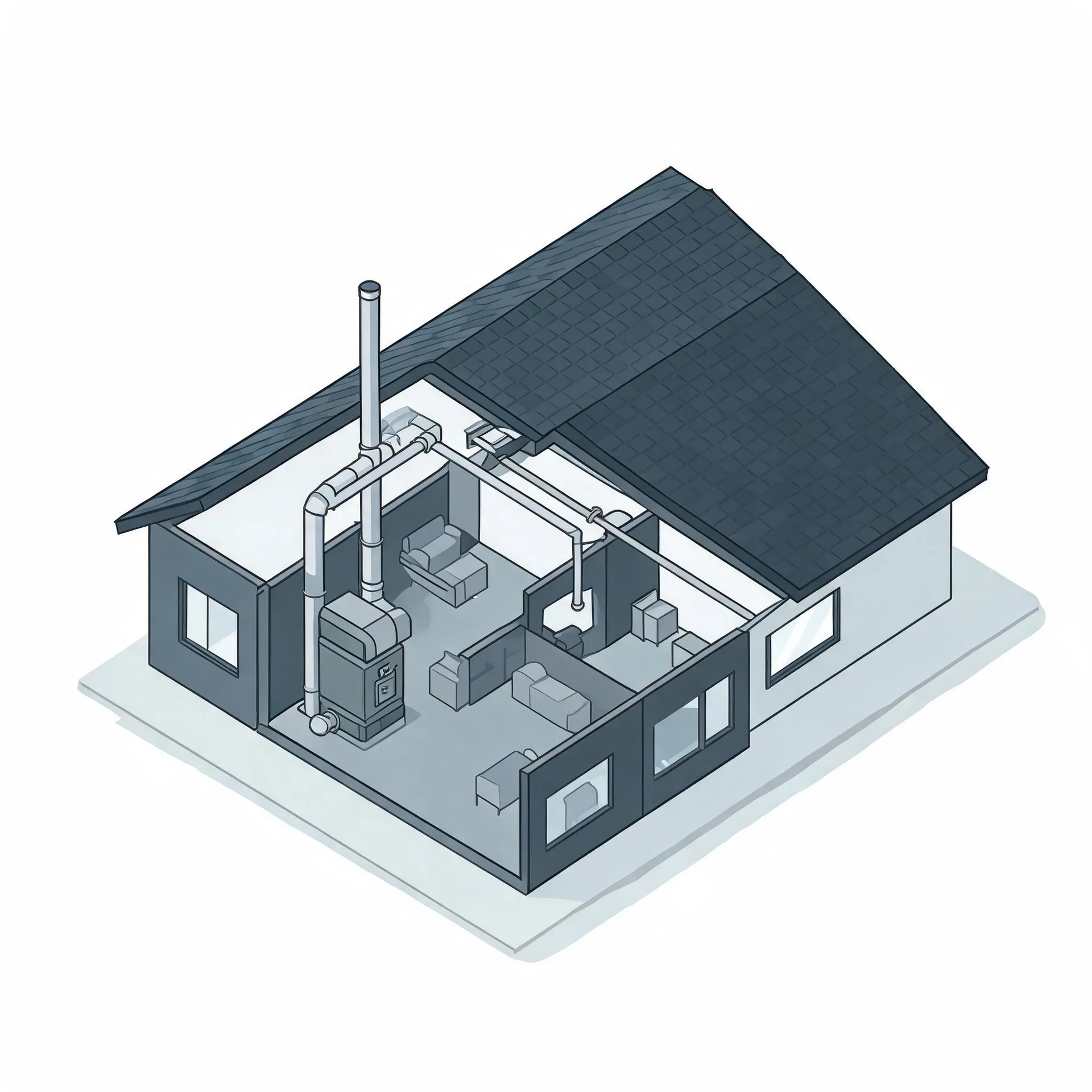
The heat exchanger sits inside the furnace cabinet in the basement or utility room and is the piece a contractor looks at closely during a repair call. Cracks or corrosion here affect the whole system. The burner assembly, which sits just below it, is where fuel ignites, and a dirty or misfiring burner is one of the first things a contractor rules out.
The blower motor and its fan wheel sit at the base of the cabinet and push conditioned air out through the supply side. The inducer motor pulls combustion gases out before a cycle starts, and the igniter and flame sensor work together to confirm the burner lit. A failed igniter or a coated flame sensor accounts for a large share of no-heat calls.
The drawing shows a typical furnace layout, and a licensed contractor determines which components apply to the specific equipment and configuration in your home.
Find a contractor in Harrison CountyHarrison County by the numbers
118 severe weather events were recorded in Harrison County, Indiana between 2015 and 2024.
NOAA National Centers for Environmental Information, Storm Events Database, bulk CSV export, events 2015-01-01 through 2024-12-31.Half the homes in Harrison County, Indiana were built in 1990 or earlier (2020-2024 ACS 5-year).
U.S. Census Bureau, 2020-2024 American Community Survey 5-Year EstimatesHarrison County, Indiana holds 16,953 housing units (2020-2024 ACS 5-year).
U.S. Census Bureau, 2020-2024 American Community Survey 5-Year EstimatesOwners occupy 83.6% of the occupied homes in Harrison County, Indiana (2020-2024 ACS 5-year).
U.S. Census Bureau, 2020-2024 American Community Survey 5-Year EstimatesCodes & Standards Covering Furnace Repair in Harrison County, Indiana4 sourced rules and standards
What Happens When a Contractor Comes Out
Non-weatherized gas furnaces manufactured on or after November 19, 2015 must reach 80.0 percent AFUE.
Non-weatherized oil-fired furnaces manufactured on or after November 19, 2015 must reach 83.0 percent AFUE.
Mobile home gas furnaces manufactured on or after November 19, 2015 must reach 80.0 percent AFUE.
Non-weatherized gas furnaces manufactured on or after December 18, 2028 must reach 95.0 percent AFUE, up from the 80.0 percent minimum that applies to units manufactured before that date.
Severe Weather Events in Harrison County
Harsh weather puts real strain on furnace systems, cycling them hard through temperature swings and power disruptions that compound wear over time. How much of that a furnace absorbs depends heavily on where it runs, which makes local weather history a useful part of understanding repair demand in Harrison County.
118 severe weather events, 2015–2024. Source: NOAA National Centers for Environmental Information, Storm Events Database.