Tell us about the job
Takes about a minute. No obligation.

A furnace repair in Floyd County starts with what the system has been asked to do indoors, season after season, not with what the sky outside has thrown at it. 76 severe weather events were recorded in Floyd County, Indiana between 2015 and 2024. At roughly the lower third of counties nationally, that is a measured rate, not a punishing one. When a heat exchanger cracks or a draft inducer fails here, a contractor checks the unit's service history and installation quality before anything else, because those are what produce failures at this frequency, not storm exposure.
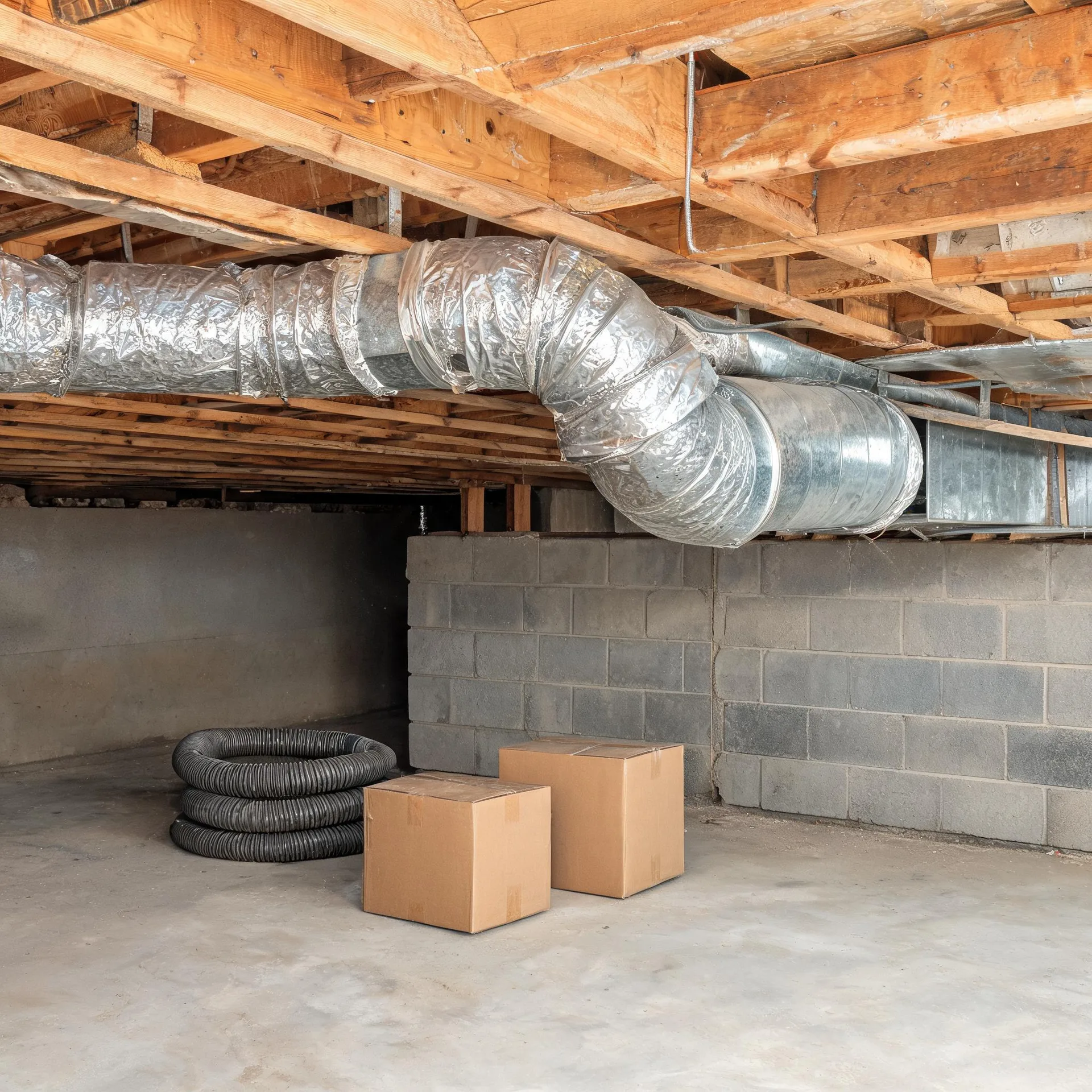
Furnace repair in an older house rarely ends where it appears to start. Half the homes in Floyd County, Indiana were built in 1980 or earlier (2020-2024 ACS 5-year). What that means for repair work is that once a contractor opens the unit, the heat exchanger, burners, and flue connections carry a record of sustained cycling that shapes what the actual fix turns out to be. A cracked heat exchanger may be the presenting complaint, but the draft conditions that stressed it are still there. Parts for systems of this vintage are not always in stock, and a contractor has to verify availability before a repair scope becomes a firm answer.
The Parts of a Furnace a Contractor Checks First
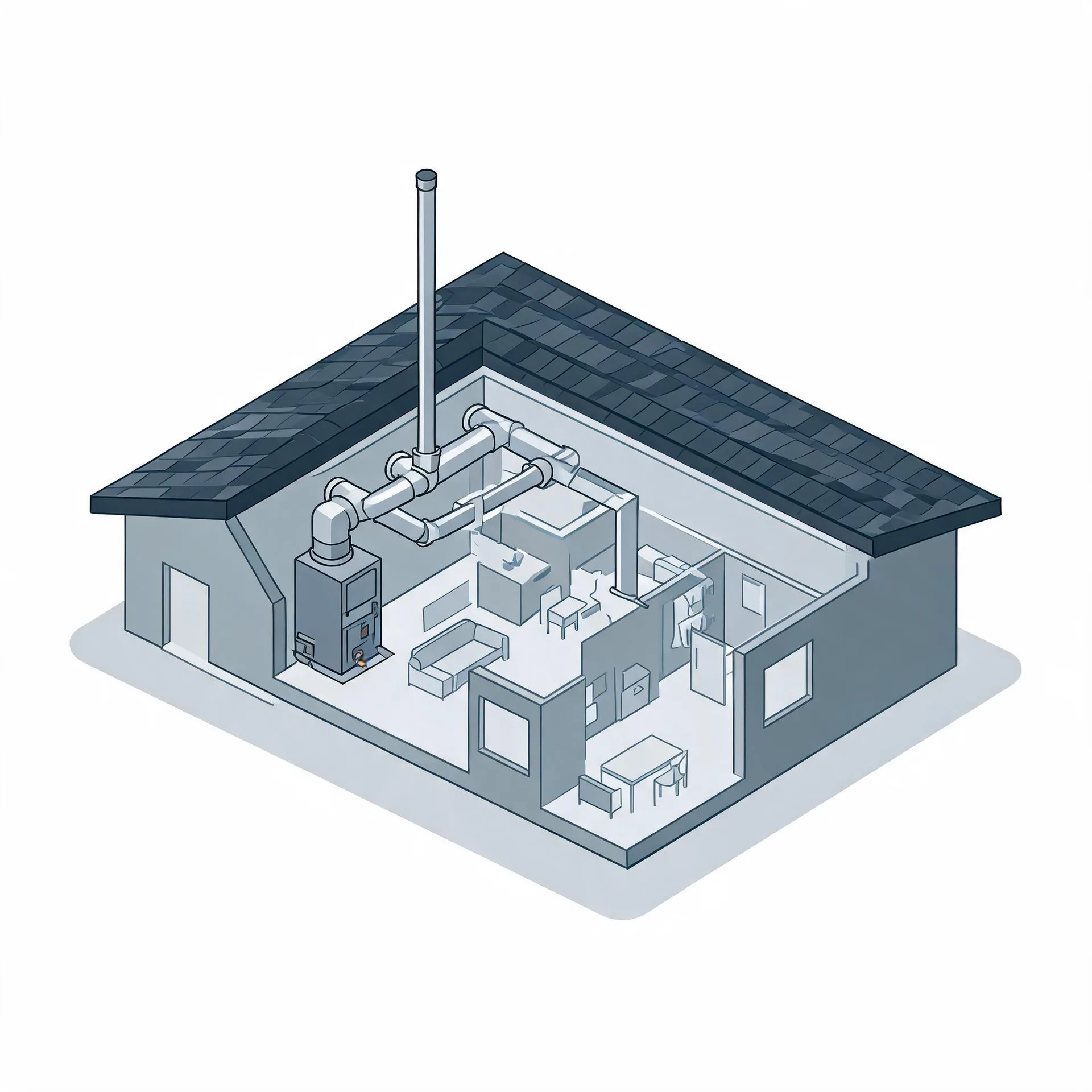
The furnace itself sits in a basement, utility room, or closet and is the piece a contractor opens up first. Inside it, the heat exchanger is the part most worth understanding: it separates combustion gases from the air your family breathes, and a crack there is why contractors look at it before almost anything else. The burners sit just below it and are what actually produce the flame.
The blower motor pulls air through the system and pushes heated air into the ducts. It sits in the lower cabinet of the furnace. The inducer motor, the ignitor, the flame sensor, and the control board are smaller parts that each carry a specific job, and a failure in any one of them can shut the whole system down just as completely as a failed burner.
The drawing shows a typical furnace layout, and a licensed contractor determines which components apply to your specific setup.
Find a contractor in Floyd CountyFloyd County, Indiana, by the numbers
76 severe weather events were recorded in Floyd County, Indiana between 2015 and 2024.
NOAA National Centers for Environmental Information, Storm Events Database, bulk CSV export, events 2015-01-01 through 2024-12-31.Half the homes in Floyd County, Indiana were built in 1980 or earlier (2020-2024 ACS 5-year).
U.S. Census Bureau, 2020-2024 American Community Survey 5-Year EstimatesFloyd County, Indiana holds 34,833 housing units (2020-2024 ACS 5-year).
U.S. Census Bureau, 2020-2024 American Community Survey 5-Year EstimatesOwners occupy 73.2% of the occupied homes in Floyd County, Indiana (2020-2024 ACS 5-year).
U.S. Census Bureau, 2020-2024 American Community Survey 5-Year EstimatesCodes & Standards Behind Furnace Repair in Floyd County, Indiana4 sourced rules & standards
What HVAC Repair Looks Like in Floyd County
Non-weatherized gas furnaces manufactured on or after November 19, 2015 must reach 80.0 percent AFUE.
Non-weatherized oil-fired furnaces manufactured on or after November 19, 2015 must reach 83.0 percent AFUE.
Mobile home gas furnaces manufactured on or after November 19, 2015 must reach 80.0 percent AFUE.
Non-weatherized gas furnaces manufactured on or after December 18, 2028 must reach 95.0 percent AFUE, up from the 80.0 percent minimum that applies to units manufactured before that date.
Severe Weather Events in Floyd County
Extreme weather puts real strain on a furnace: hard starts in cold snaps, long runtime during deep freezes, and stress on components that shortens the gap between service calls. How often that kind of weather hits Floyd County shapes how hard the equipment in this area has to work.
76 severe weather events, 2015–2024. Source: NOAA National Centers for Environmental Information, Storm Events Database.