Tell us about the job
Takes about a minute. No obligation.

A contractor quoting a furnace installation in Fountain County is not sizing against a punishing local climate. 45 severe weather events were recorded in Fountain County, Indiana between 2015 and 2024. At that rate, severe weather is an event here, not a standing condition, so the decisions that matter on an install come down to the house: duct layout, existing infrastructure, how well the original system was put in. Age and installation quality are what contractors actually find driving replacements in this county, and a new furnace sized and fitted correctly for the structure is what determines how it runs.
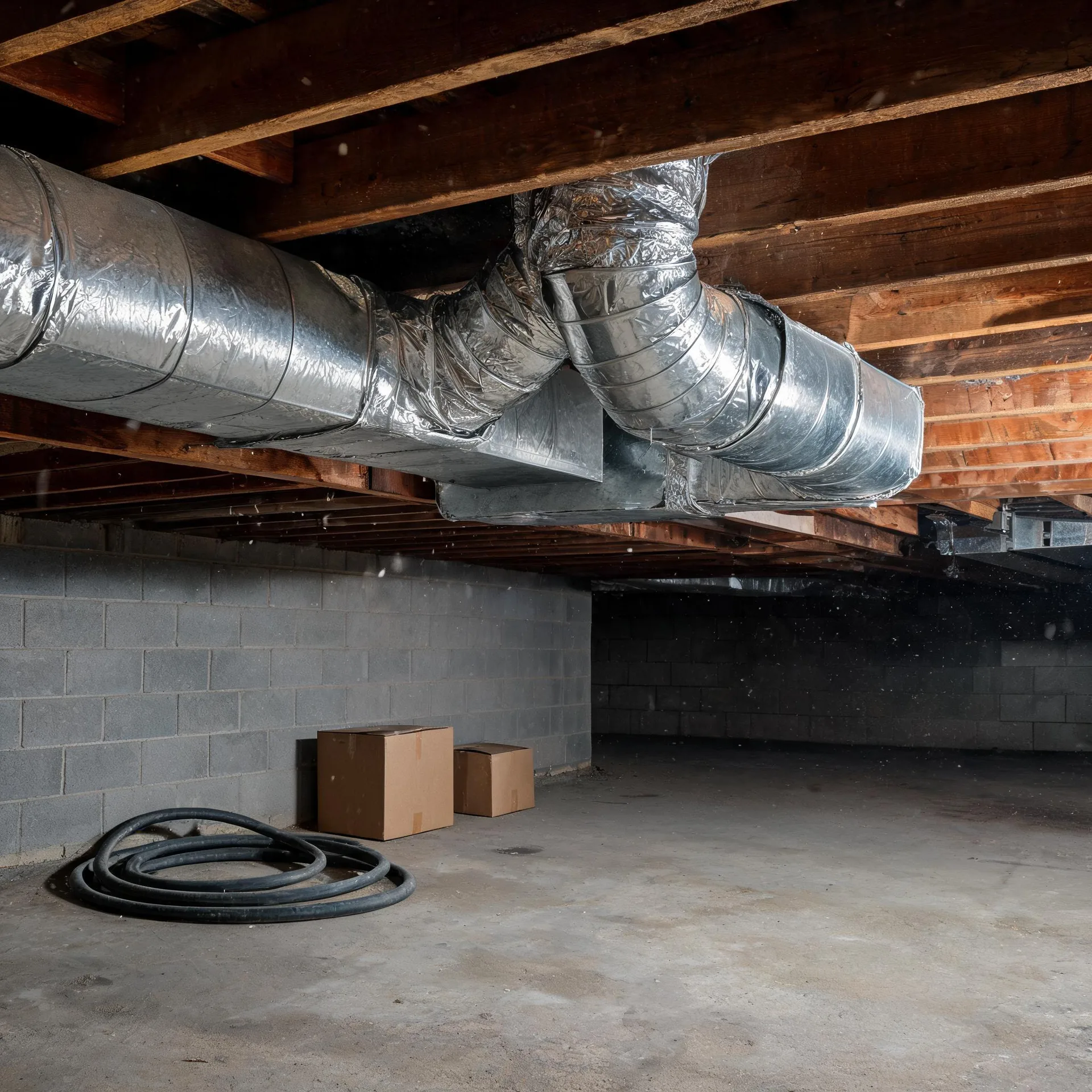
Ductwork sized and routed for an older generation of equipment is what a contractor meets in a large share of Fountain County homes. Half the homes in Fountain County, Indiana were built in 1966 or earlier (2020-2024 ACS 5-year). That gap between when the house was framed and what a new furnace demands means the existing duct layout gets measured and assessed before anything else is quoted or ordered. Trunks that are too narrow restrict airflow enough to undercut a new unit's output. Electrical service gets the same scrutiny, since a modern furnace draws differently than what the original wiring was planned around.
What Gets Installed With a New Furnace
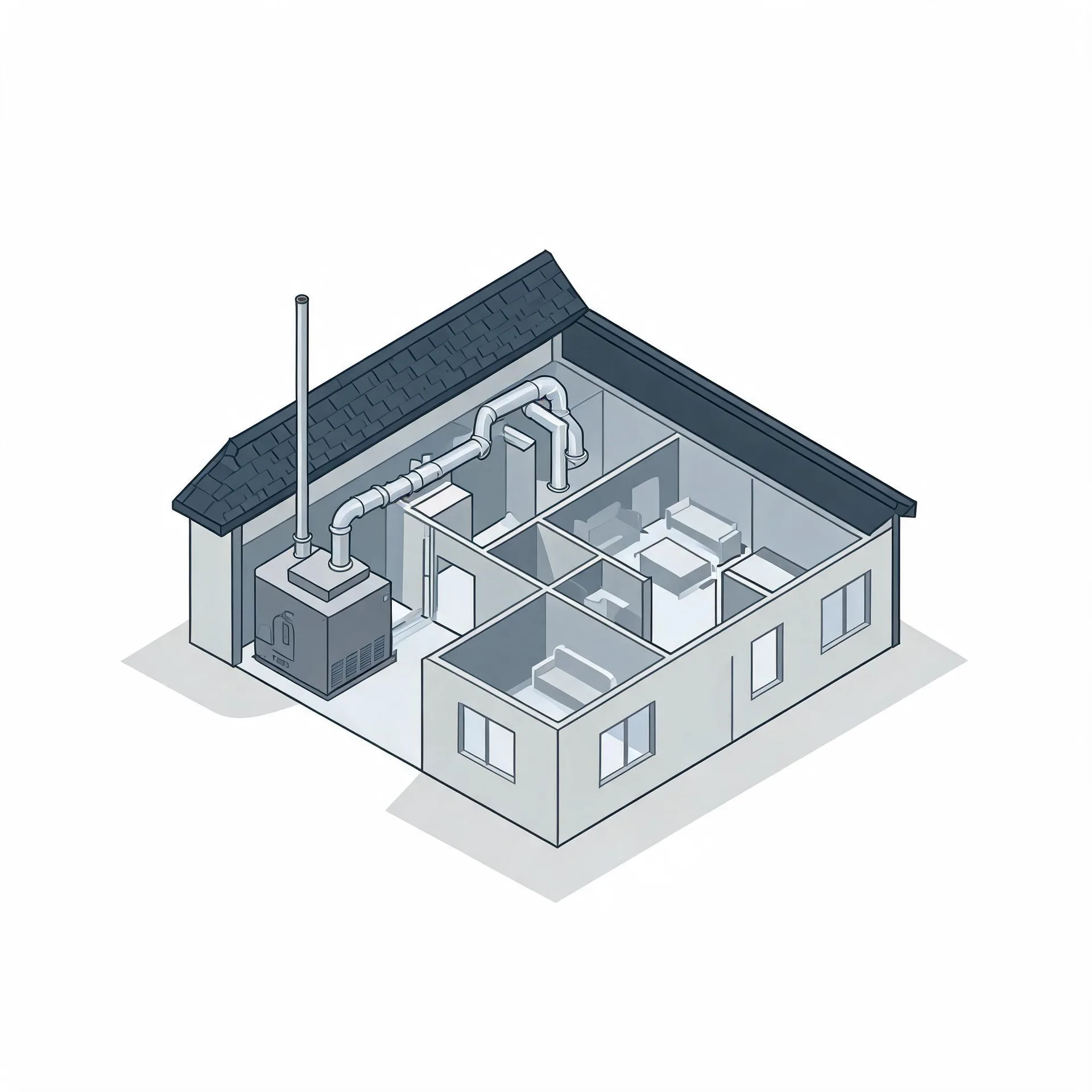
The furnace itself sits in a utility space, basement, or closet and is the unit a homeowner sees when they walk into that room. Inside it, a heat exchanger warms the air that moves through the house, and a burner assembly feeds it. The blower motor pushes that warmed air out into the supply side of the home.
A flue pipe runs from the furnace to an exterior wall or through the roof, carrying combustion gases out of the house. The thermostat goes on a main living-area wall and is the control point the household uses every day. A filter cabinet or rack sits at the air intake, where return air enters the unit before the cycle begins again.
The drawing shows the general layout of these components, and a licensed contractor determines exactly what applies to your house.
Find a contractor in Fountain CountyFountain County, Indiana, by the numbers
45 severe weather events were recorded in Fountain County, Indiana between 2015 and 2024.
NOAA National Centers for Environmental Information, Storm Events Database, bulk CSV export, events 2015-01-01 through 2024-12-31.Half the homes in Fountain County, Indiana were built in 1966 or earlier (2020-2024 ACS 5-year).
U.S. Census Bureau, 2020-2024 American Community Survey 5-Year EstimatesFountain County, Indiana holds 7,875 housing units (2020-2024 ACS 5-year).
U.S. Census Bureau, 2020-2024 American Community Survey 5-Year EstimatesOwners occupy 74.6% of the occupied homes in Fountain County, Indiana (2020-2024 ACS 5-year).
U.S. Census Bureau, 2020-2024 American Community Survey 5-Year EstimatesCodes & Standards Covering Furnace Installation in Fountain County, Indiana4 sourced rules and standards
What the Installation Actually Looks Like
Non-weatherized gas furnaces manufactured on or after November 19, 2015 must reach 80.0 percent AFUE.
Non-weatherized oil-fired furnaces manufactured on or after November 19, 2015 must reach 83.0 percent AFUE.
Mobile home gas furnaces manufactured on or after November 19, 2015 must reach 80.0 percent AFUE.
Non-weatherized gas furnaces manufactured on or after December 18, 2028 must reach 95.0 percent AFUE, up from the 80.0 percent minimum that applies to units manufactured before that date.
Severe Weather Events in Fountain County
Weather puts hours on heating equipment. How hard a furnace works over its life depends heavily on what the local climate demands of it, and that makes installation decisions in Fountain County a different calculation than they are elsewhere.
45 severe weather events, 2015–2024. Source: NOAA National Centers for Environmental Information, Storm Events Database.