Tell us about the job
Takes about a minute. No obligation.
A contractor quoting a furnace installation in Morgan County starts with the structure of the house, its insulation, its duct layout, its existing equipment, because those are the variables that drive the load calculation here. 75 severe weather events were recorded in Morgan County, Indiana between 2015 and 2024. At that rate, severe weather is an occasional fact of life in this county, not a standing operating condition that wears a system down season after season. A furnace that fails here has almost always failed because of age, original installation quality, or deferred maintenance. So when a contractor sizes a replacement, they are matching it to the house, not compensating for a climate that demands extra margin.
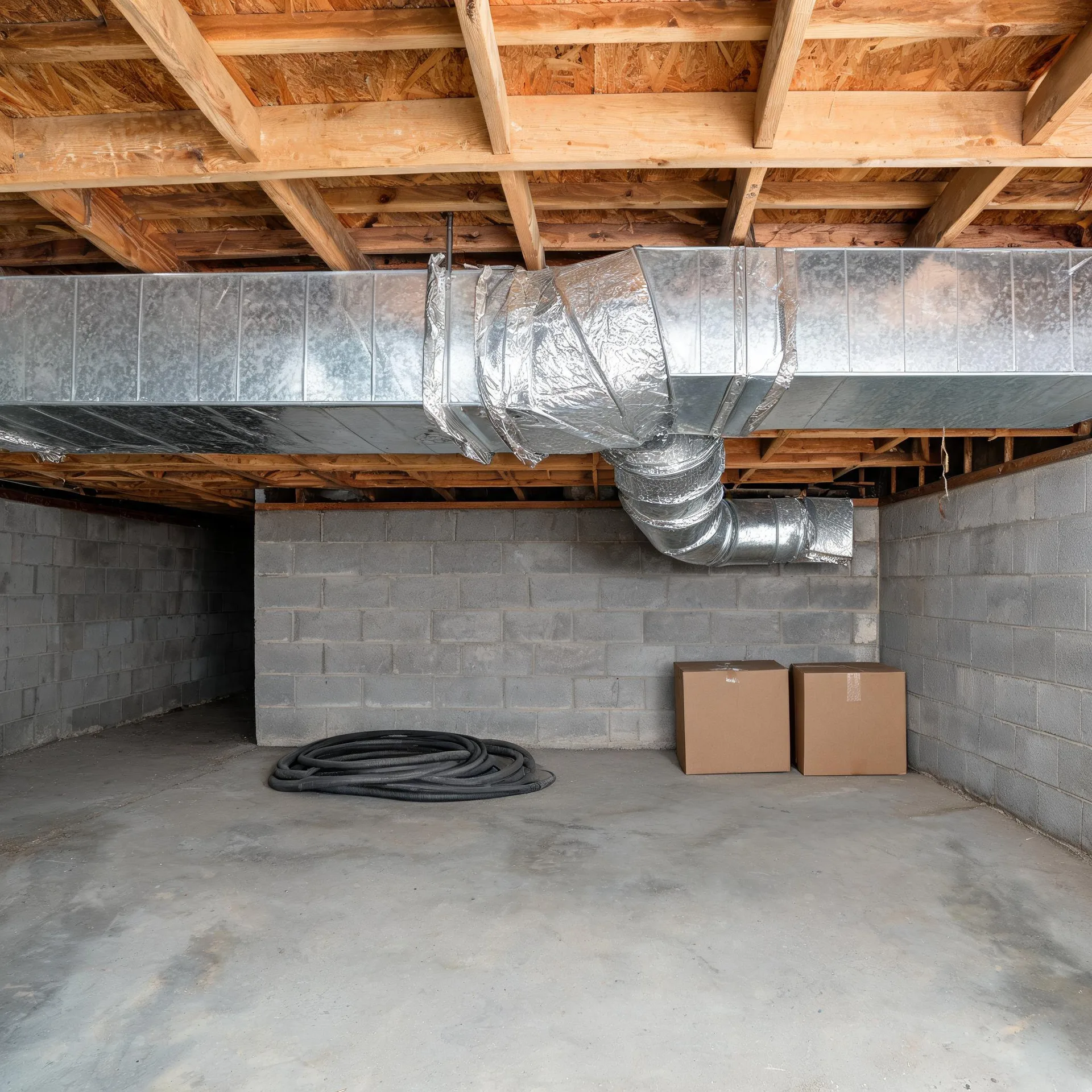
Ductwork laid down for an earlier generation of equipment carries assumptions about airflow, sizing, and routing that a new furnace will test immediately. Half the homes in Morgan County, Indiana were built in 1981 or earlier (2020-2024 ACS 5-year). A contractor putting in a furnace here has to assess what those ducts will actually deliver before the new unit goes in, because a mismatch between the system and the ductwork it feeds means the equipment runs harder and heats unevenly. The electrical service gets the same look. Both are questions about what the house already contains, and both shape the scope of the job before the furnace itself is ever priced.
What Gets Installed With a New Furnace
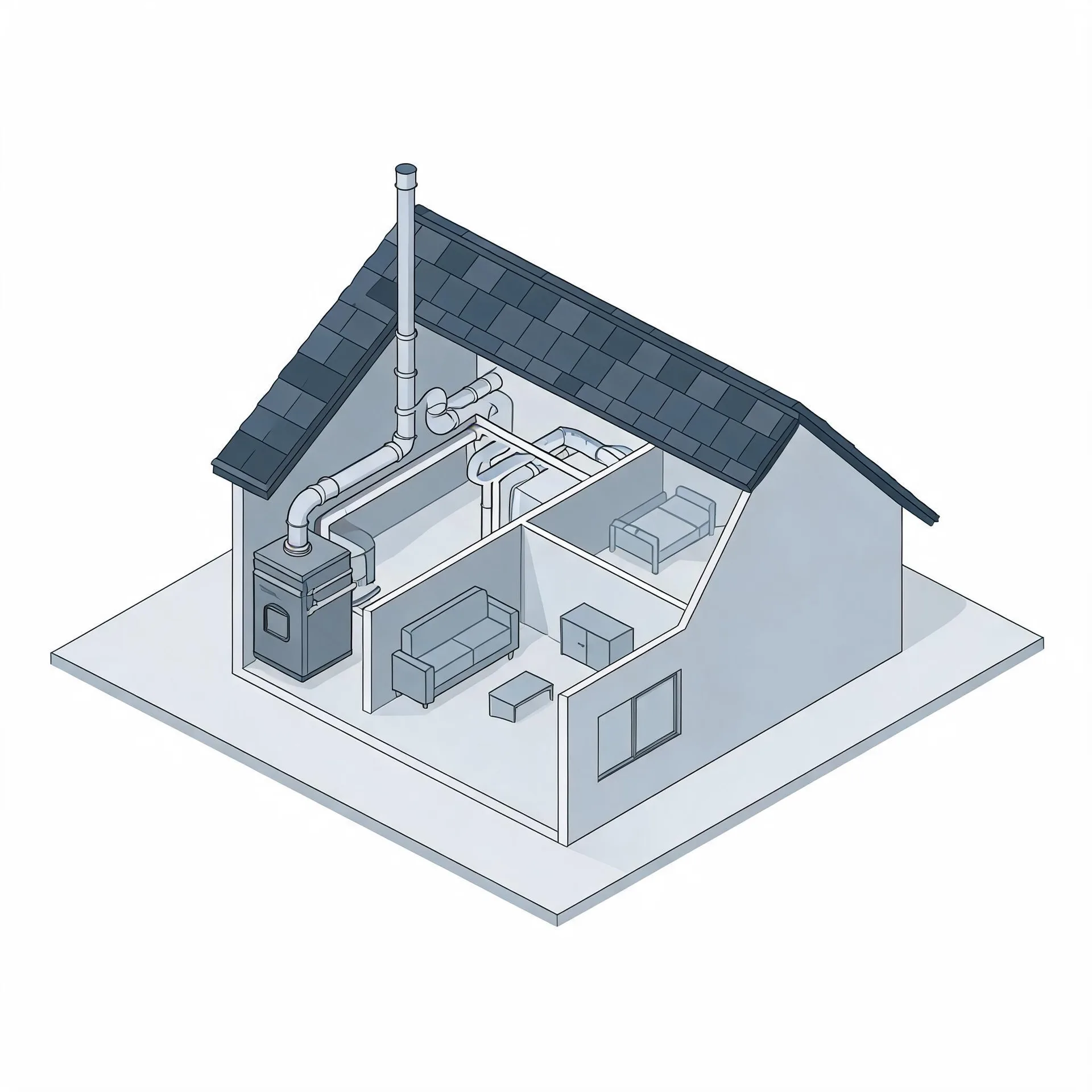
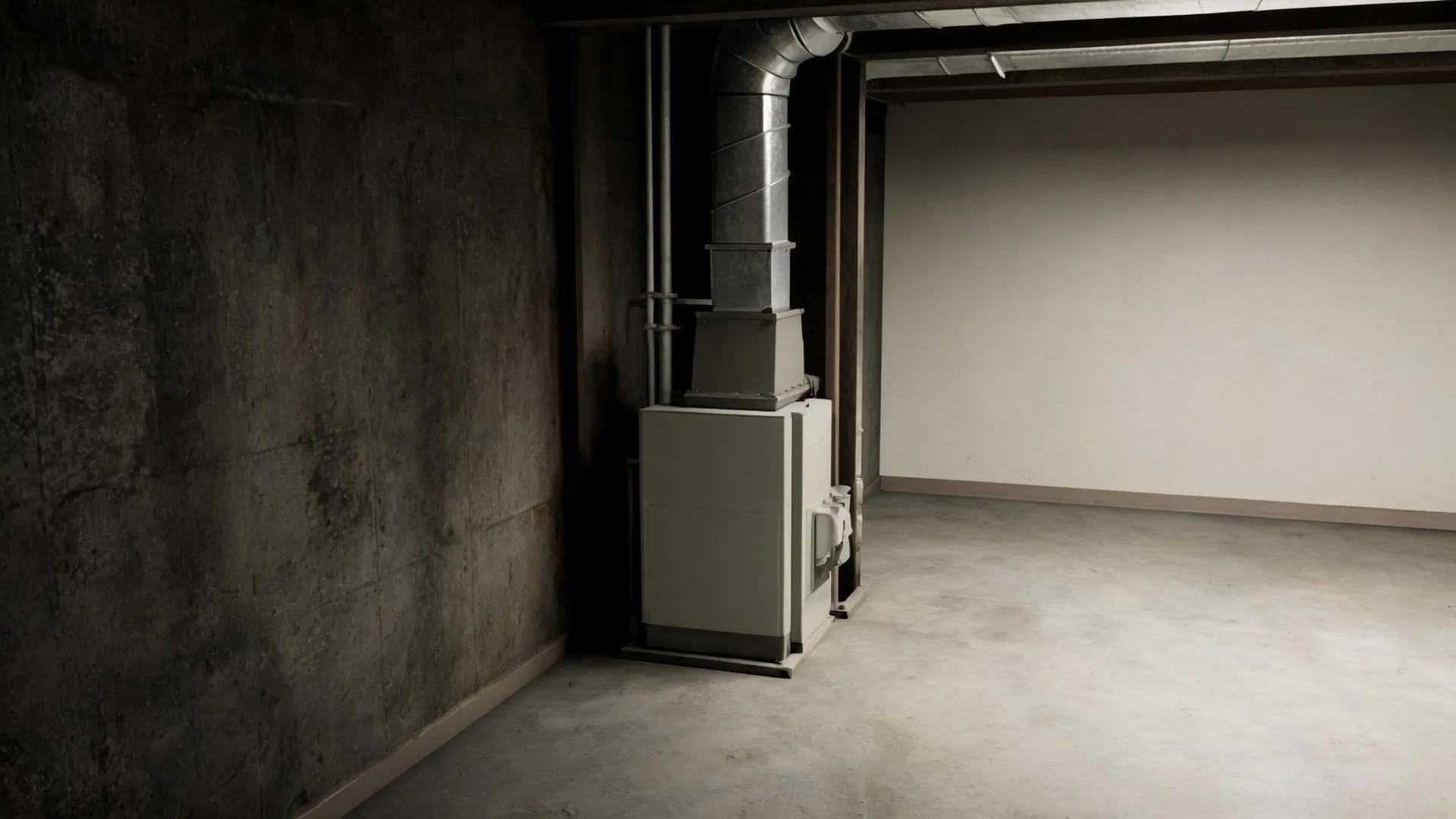
The furnace itself sits in a basement, utility room, or closet and is the unit a homeowner sees when they walk into that mechanical space. A contractor sets it on a pad or hangs it depending on the space, connects it to the gas supply, and ties it into the existing duct openings. The heat exchanger lives inside the cabinet, sealed from the air that moves through the house.
The flue pipe runs from the furnace cabinet through the wall or up through the roof and carries combustion gases out of the house. Alongside it, the contractor fits a new thermostat on an interior wall, which is the one piece in living space that the homeowner touches daily. A filter housing or media cabinet mounts at the air return to catch particulates before they reach the heat exchanger.
The drawing shows a general layout of these components, and a licensed contractor determines exactly what applies to the configuration of this house.
Find a contractor in Morgan CountyMorgan County, Indiana, by the numbers
75 severe weather events were recorded in Morgan County, Indiana between 2015 and 2024.
NOAA National Centers for Environmental Information, Storm Events Database, bulk CSV export, events 2015-01-01 through 2024-12-31.Half the homes in Morgan County, Indiana were built in 1981 or earlier (2020-2024 ACS 5-year).
U.S. Census Bureau, 2020-2024 American Community Survey 5-Year EstimatesMorgan County, Indiana holds 30,046 housing units (2020-2024 ACS 5-year).
U.S. Census Bureau, 2020-2024 American Community Survey 5-Year EstimatesOwners occupy 82.1% of the occupied homes in Morgan County, Indiana (2020-2024 ACS 5-year).
U.S. Census Bureau, 2020-2024 American Community Survey 5-Year EstimatesFurnace Installation Rules & Codes for Morgan County, Indiana4 sourced standards and regulations
What HVAC Installation Looks Like in Morgan County
Non-weatherized gas furnaces manufactured on or after November 19, 2015 must reach 80.0 percent AFUE.
Non-weatherized oil-fired furnaces manufactured on or after November 19, 2015 must reach 83.0 percent AFUE.
Mobile home gas furnaces manufactured on or after November 19, 2015 must reach 80.0 percent AFUE.
Non-weatherized gas furnaces manufactured on or after December 18, 2028 must reach 95.0 percent AFUE, up from the 80.0 percent minimum that applies to units manufactured before that date.
Severe Weather Events in Morgan County
Weather puts real demands on heating equipment, and those demands are local. A furnace sized and installed for Morgan County's conditions works differently than one designed to a national average.
75 severe weather events, 2015–2024. Source: NOAA National Centers for Environmental Information, Storm Events Database.