Tell us about the job
Takes about a minute. No obligation.
A contractor quoting a furnace installation in Brown County has to work from what this house actually demands of a heating system across a typical winter, and that means getting the sizing right before anything else. 46 severe weather events were recorded in Brown County, Indiana between 2015 and 2024. At that rate, severe weather is an occasional presence in this county, not a steady operating condition, so a poorly sized or loosely installed furnace will not find cover in the local weather record. Age, load calculation, and duct fit are what decide whether the system runs well or runs hard for the wrong reasons.
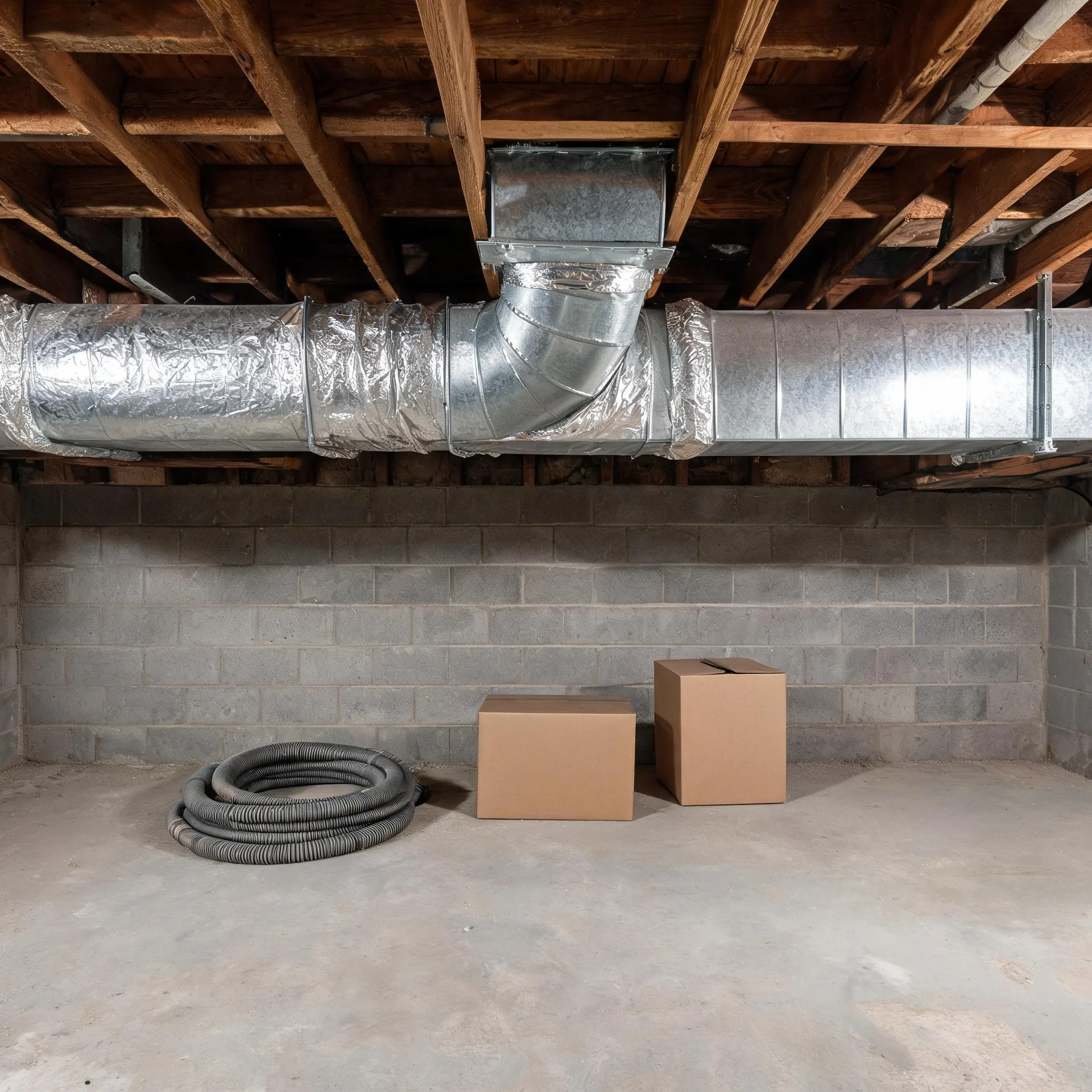
Ductwork laid down for an older furnace carries assumptions about static pressure, trunk sizing, and return placement that a modern unit does not share. Half the homes in Brown County, Indiana were built in 1982 or earlier (2020-2024 ACS 5-year). A contractor installing a new furnace in a house from that era has to establish whether the existing duct system will actually move air the way the new equipment demands, and that assessment shapes the scope of the job before any equipment is ordered. Some systems adapt without change. Others need trunk modifications or return additions that add time and cost the equipment price alone never signals.
What Gets Installed With a New Furnace
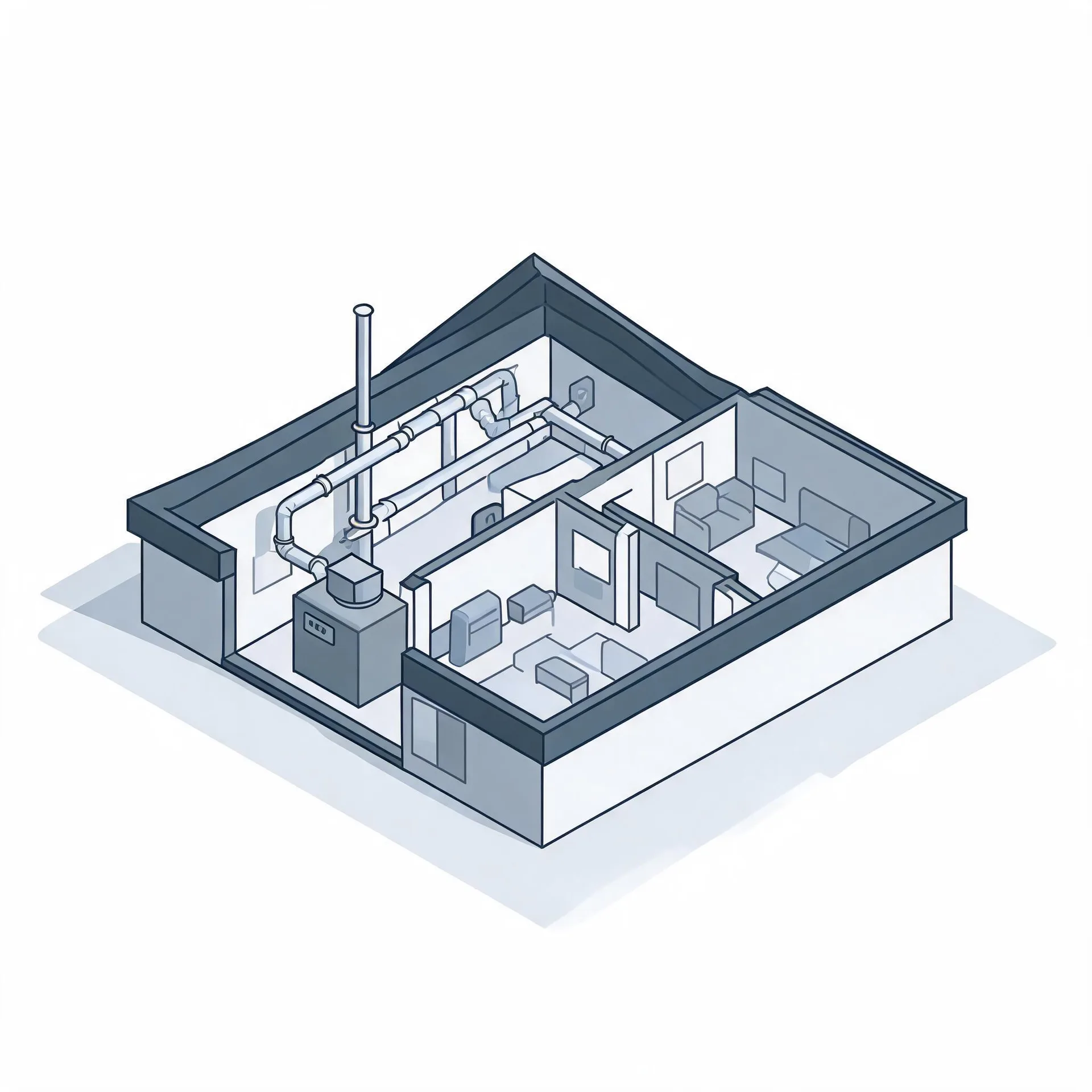
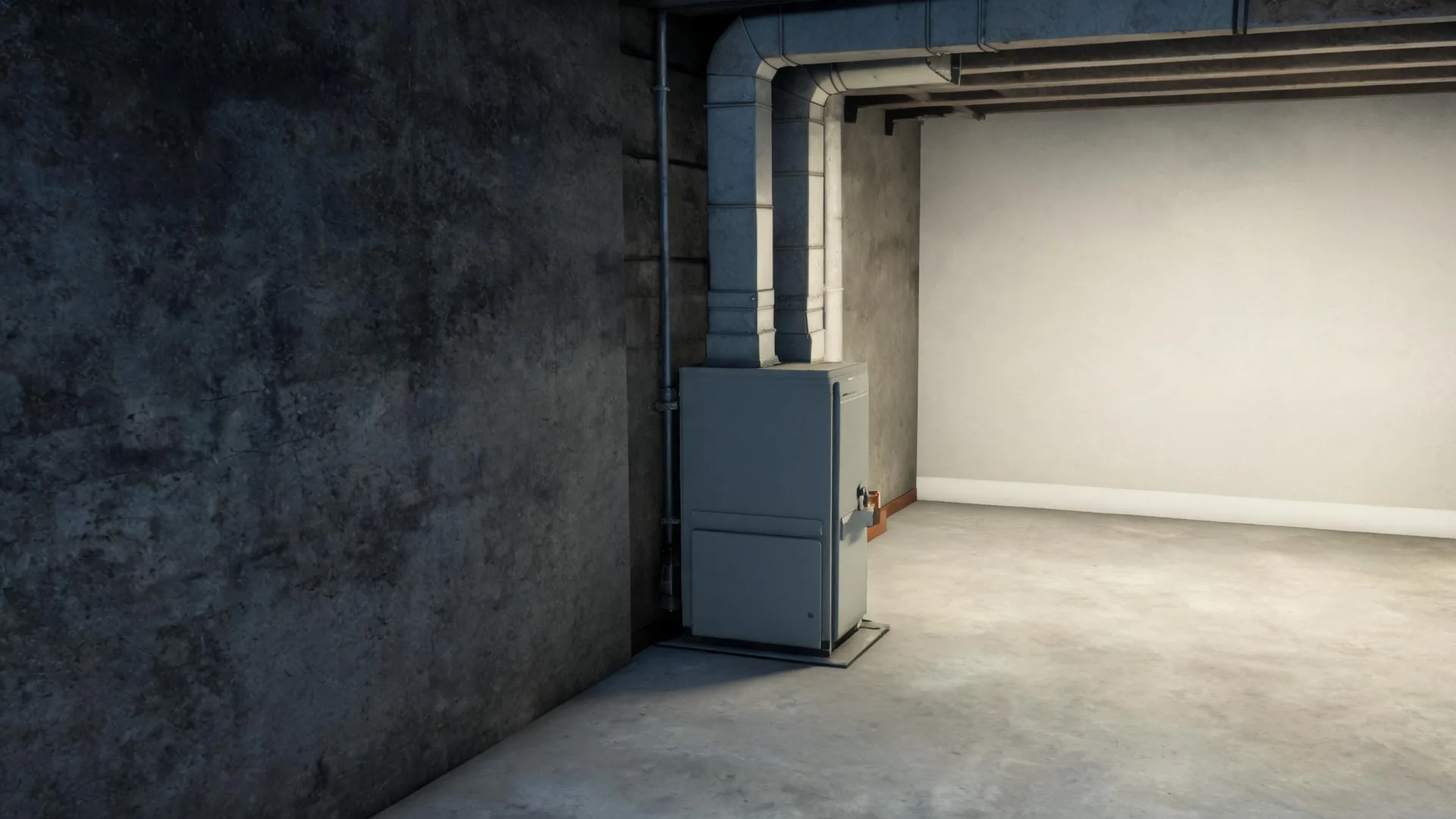
The furnace itself sits in a mechanical room, basement, or utility closet and is the unit a homeowner sees when they walk in. A contractor sets the cabinet there, connects it to the fuel supply, and ties it into the home's existing duct openings. That cabinet holds the burner assembly, the heat exchanger, and the blower that pushes conditioned air into the house.
The flue pipe runs from the furnace up and out of the house, carrying combustion gases away from the living space. Alongside it, the contractor fits a new air filter housing if one is needed, and connects the thermostat wiring so the new unit responds to the controls already on the wall.
The drawing shows a typical furnace layout, and a licensed contractor determines exactly what applies to your house.
Find a contractor in Brown CountyBrown County, Indiana, by the numbers
46 severe weather events were recorded in Brown County, Indiana between 2015 and 2024.
NOAA National Centers for Environmental Information, Storm Events Database, bulk CSV export, events 2015-01-01 through 2024-12-31.Half the homes in Brown County, Indiana were built in 1982 or earlier (2020-2024 ACS 5-year).
U.S. Census Bureau, 2020-2024 American Community Survey 5-Year EstimatesBrown County, Indiana holds 8,577 housing units (2020-2024 ACS 5-year).
U.S. Census Bureau, 2020-2024 American Community Survey 5-Year EstimatesOwners occupy 86.6% of the occupied homes in Brown County, Indiana (2020-2024 ACS 5-year).
U.S. Census Bureau, 2020-2024 American Community Survey 5-Year EstimatesFurnace Installation Rules & Codes for Brown County, Indiana4 sourced rules and standards
What happens when the contractor shows up
Non-weatherized gas furnaces manufactured on or after November 19, 2015 must reach 80.0 percent AFUE.
Non-weatherized oil-fired furnaces manufactured on or after November 19, 2015 must reach 83.0 percent AFUE.
Mobile home gas furnaces manufactured on or after November 19, 2015 must reach 80.0 percent AFUE.
Non-weatherized gas furnaces manufactured on or after December 18, 2028 must reach 95.0 percent AFUE, up from the 80.0 percent minimum that applies to units manufactured before that date.
Severe Weather History in Brown County
Brown County's weather puts real demands on heating equipment over the course of a system's life. Understanding that load is part of choosing and installing a furnace that holds up here.
46 severe weather events, 2015–2024. Source: NOAA National Centers for Environmental Information, Storm Events Database.