Tell us about the job
Takes about a minute. No obligation.
A furnace installation in DeKalb County starts with what the local climate actually asks of the equipment, and that question is answered by the record, not by guesswork. 66 severe weather events were recorded in DeKalb County, Indiana between 2015 and 2024. At that rate, severe weather is an infrequent presence rather than a standing load, which means a contractor sizing and installing a furnace here is working primarily from heating degree days and the thermal characteristics of the house. The ductwork layout, equipment capacity, and installation method all follow from those demands. Storm history is not what drives the specification.
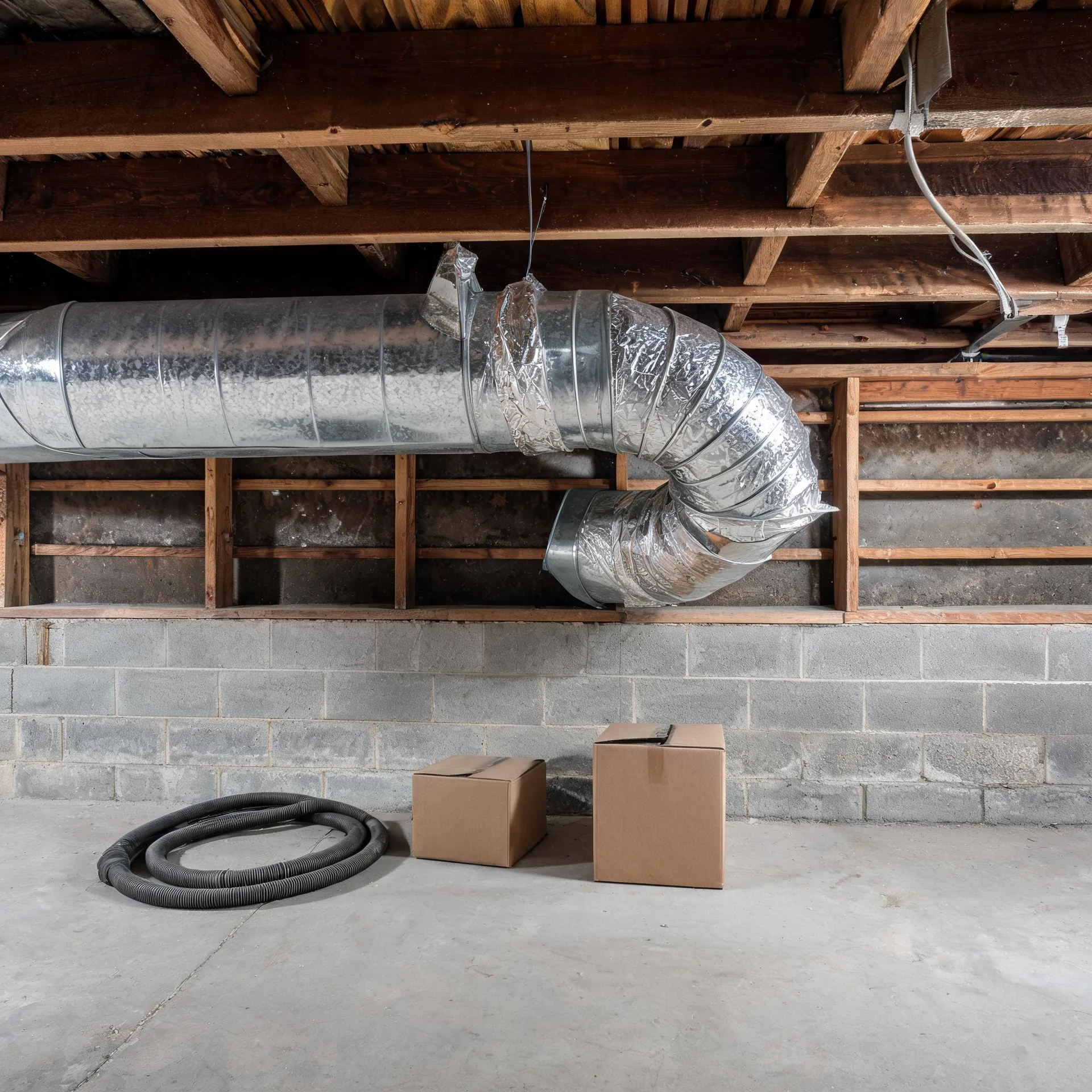
Ductwork laid down for a furnace of a different generation carries assumptions about airflow, return placement, and trunk sizing that a new unit does not share. Half the homes in DeKalb County, Indiana were built in 1975 or earlier (2020-2024 ACS 5-year). A contractor installing a furnace in stock like this has to assess whether the existing distribution system can actually move what the new equipment puts out, and that assessment shapes the scope before any equipment is selected. If the duct runs cannot carry the load, the installation expands. The electrical supply gets the same check, since modern furnaces draw differently than what the original wiring was sized to serve.
What Gets Installed With a New Furnace
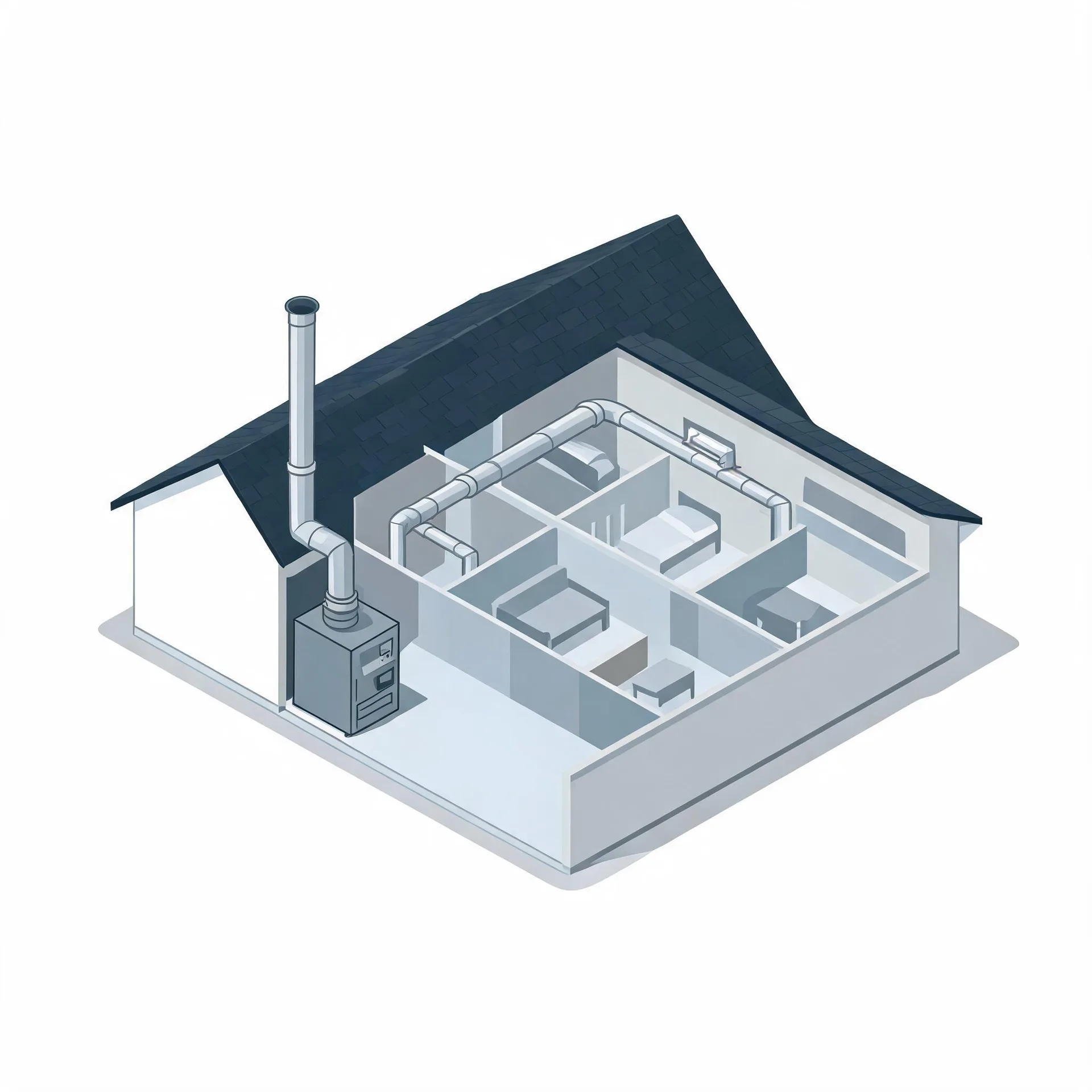
The furnace itself sits in the basement, utility room, or crawlspace and is the unit a homeowner is most likely to recognize. Inside it, a heat exchanger warms the air that moves through the house, and a burner assembly feeds the heat exchanger by burning natural gas or propane. A draft inducer fan pulls combustion gases out through the flue.
The blower motor and its housing sit inside the furnace cabinet and push conditioned air into the supply side of the duct system. The flue pipe runs from the furnace to an exterior wall or roof, carrying exhaust gases out of the house. A thermostat mounts on an interior wall and is the control point that tells the furnace when to run.
The drawing beside this text shows a typical layout, and a licensed contractor determines what applies to your specific house.
Find a contractor in DeKalb CountyDeKalb County, by the numbers
66 severe weather events were recorded in DeKalb County, Indiana between 2015 and 2024.
NOAA National Centers for Environmental Information, Storm Events Database, bulk CSV export, events 2015-01-01 through 2024-12-31.Half the homes in DeKalb County, Indiana were built in 1975 or earlier (2020-2024 ACS 5-year).
U.S. Census Bureau, 2020-2024 American Community Survey 5-Year EstimatesDeKalb County, Indiana holds 18,384 housing units (2020-2024 ACS 5-year).
U.S. Census Bureau, 2020-2024 American Community Survey 5-Year EstimatesOwners occupy 82.1% of the occupied homes in DeKalb County, Indiana (2020-2024 ACS 5-year).
U.S. Census Bureau, 2020-2024 American Community Survey 5-Year EstimatesCodes & Standards Governing Furnace Installation in DeKalb County, Indiana4 sourced rules and standards
What the installation actually looks like
Non-weatherized gas furnaces manufactured on or after November 19, 2015 must reach 80.0 percent AFUE.
Non-weatherized oil-fired furnaces manufactured on or after November 19, 2015 must reach 83.0 percent AFUE.
Mobile home gas furnaces manufactured on or after November 19, 2015 must reach 80.0 percent AFUE.
Non-weatherized gas furnaces manufactured on or after December 18, 2028 must reach 95.0 percent AFUE, up from the 80.0 percent minimum that applies to units manufactured before that date.
Severe Weather Events in DeKalb County
Local weather puts real demands on heating equipment, and those demands vary by where you live. Furnace installations in DeKalb County are sized and specified with that local load in mind.
66 severe weather events, 2015–2024. Source: NOAA National Centers for Environmental Information, Storm Events Database.