Tell us about the job
Takes about a minute. No obligation.
A contractor quoting a furnace installation in LaGrange County is working from the specifics of the house first: its square footage, its insulation, the condition of the duct runs. 62 severe weather events were recorded in LaGrange County, Indiana between 2015 and 2024. At that rate, severe weather is a real but infrequent feature of life here, not a constant operating load that reshapes what equipment gets specified. The sizing call and the installation details come down to the building itself, and a contractor who gets those wrong produces a system that short-cycles or runs out of capacity on the coldest nights regardless of how the weather record reads.
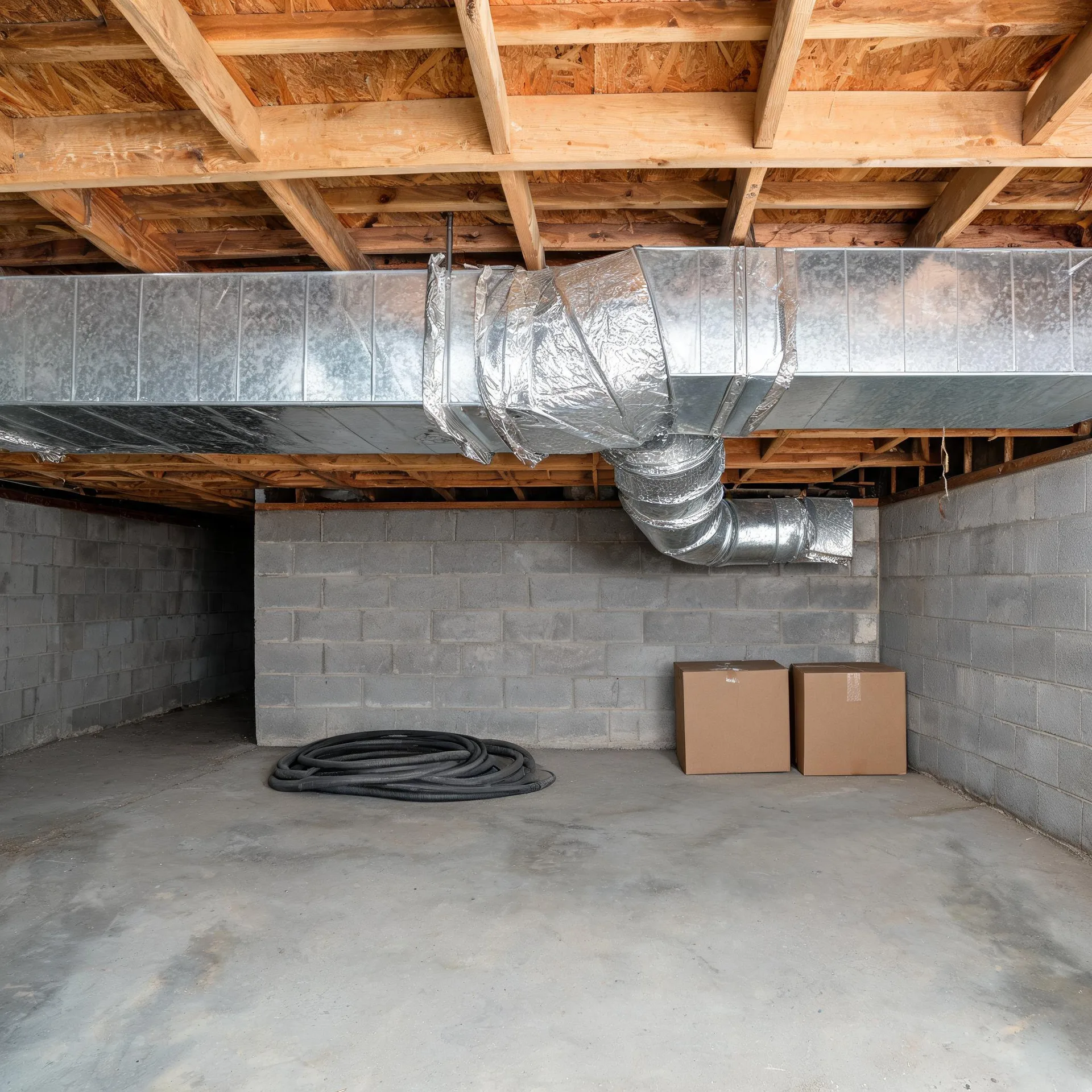
Ductwork laid down for an older furnace was sized to move air for that furnace, and a new unit draws and pushes differently. Half the homes in LaGrange County, Indiana were built in 1982 or earlier (2020-2024 ACS 5-year). A contractor quoting a furnace installation in a house from that era has to assess the existing duct runs before pricing the job, because undersized or poorly routed ductwork will undercut the performance of whatever unit goes in. The electrical service is a separate check. Both variables come from the house itself, and both get looked at before the equipment selection is final.
What Gets Installed With a New Furnace
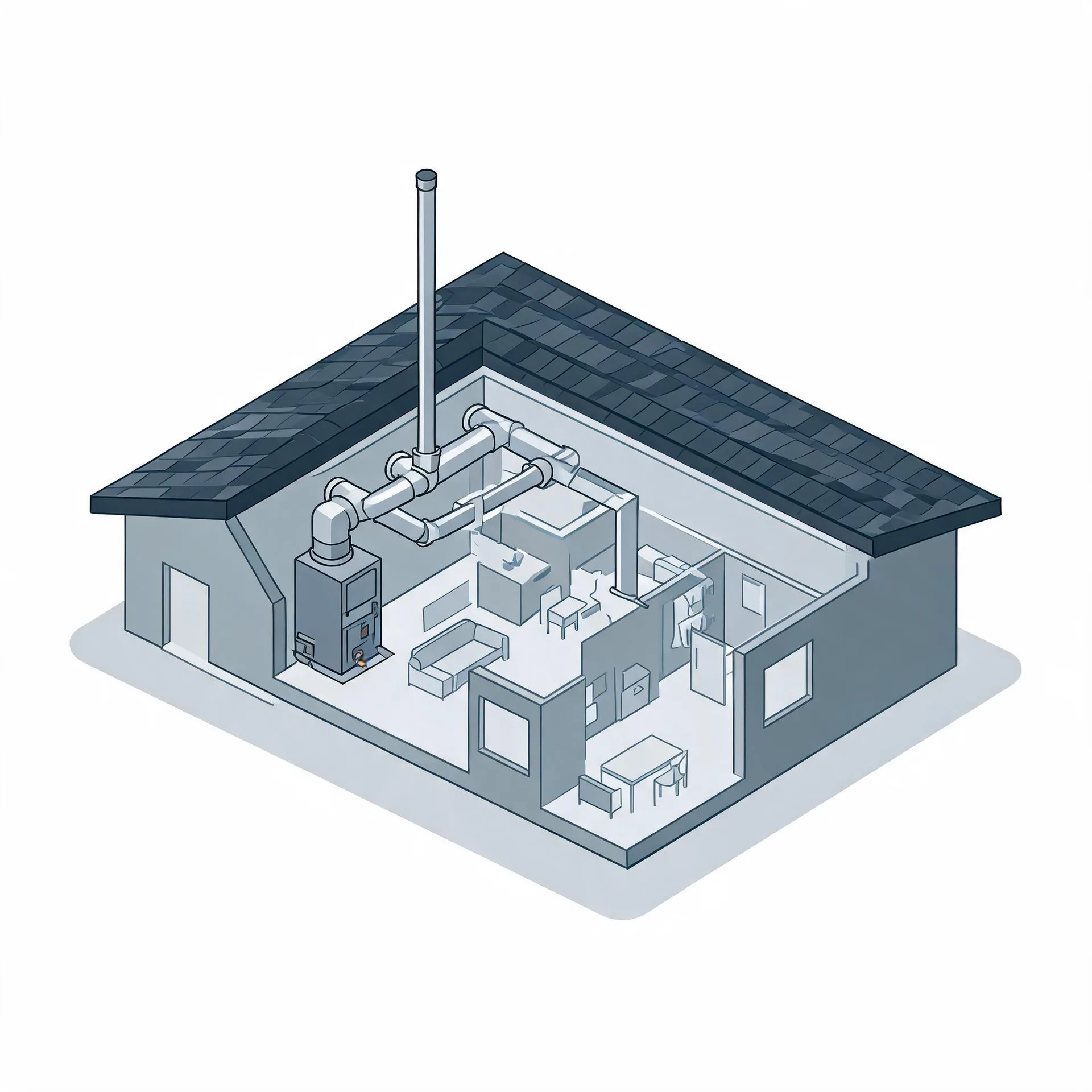
The furnace itself sits in a mechanical room, basement, or utility closet and is the piece doing the heating work. A heat exchanger inside the cabinet warms the air before it moves out into the house. The burner assembly and igniter sit within that same cabinet, feeding and starting the combustion that produces the heat.
The flue pipe runs from the furnace to an exterior wall or up through the roof, carrying combustion gases out of the house. The air handler and blower motor push conditioned air into the supply side of the duct system. A thermostat mounts on an interior wall and is the control point that tells the furnace when to fire.
The drawing shows a general layout of these components, and a licensed contractor determines what applies to the specific configuration of your home.
Find a contractor in LaGrange CountyLaGrange County, by the numbers
62 severe weather events were recorded in LaGrange County, Indiana between 2015 and 2024.
NOAA National Centers for Environmental Information, Storm Events Database, bulk CSV export, events 2015-01-01 through 2024-12-31.Half the homes in LaGrange County, Indiana were built in 1982 or earlier (2020-2024 ACS 5-year).
U.S. Census Bureau, 2020-2024 American Community Survey 5-Year EstimatesLaGrange County, Indiana holds 15,151 housing units (2020-2024 ACS 5-year).
U.S. Census Bureau, 2020-2024 American Community Survey 5-Year EstimatesOwners occupy 83.0% of the occupied homes in LaGrange County, Indiana (2020-2024 ACS 5-year).
U.S. Census Bureau, 2020-2024 American Community Survey 5-Year EstimatesCodes & Standards Governing Furnace Installation in LaGrange County, Indiana4 sourced rules & standards
What happens when the contractor shows up
Non-weatherized gas furnaces manufactured on or after November 19, 2015 must reach 80.0 percent AFUE.
Non-weatherized oil-fired furnaces manufactured on or after November 19, 2015 must reach 83.0 percent AFUE.
Mobile home gas furnaces manufactured on or after November 19, 2015 must reach 80.0 percent AFUE.
Non-weatherized gas furnaces manufactured on or after December 18, 2028 must reach 95.0 percent AFUE, up from the 80.0 percent minimum that applies to units manufactured before that date.
Severe Weather Events in LaGrange County
Weather extremes put real hours on heating equipment, and how hard a furnace works over its life is a local question shaped by local conditions. What happens in LaGrange County drives sizing decisions, load calculations, and the durability demands a contractor has to plan for.
62 severe weather events, 2015–2024. Source: NOAA National Centers for Environmental Information, Storm Events Database.