Tell us about the job
Takes about a minute. No obligation.

A contractor quoting a furnace install in Montgomery County has to work out what the house actually demands before they can size equipment correctly. 63 severe weather events were recorded in Montgomery County, Indiana between 2015 and 2024. At that rate, severe weather is a genuine factor in a system's operating life, not an extreme one, which means it belongs in the load calculation without dominating it. The decisions that drive a good install here are the ones they always are: how well the unit fits the structure, how the ductwork moves air, and whether the heat-loss numbers match the equipment selected.
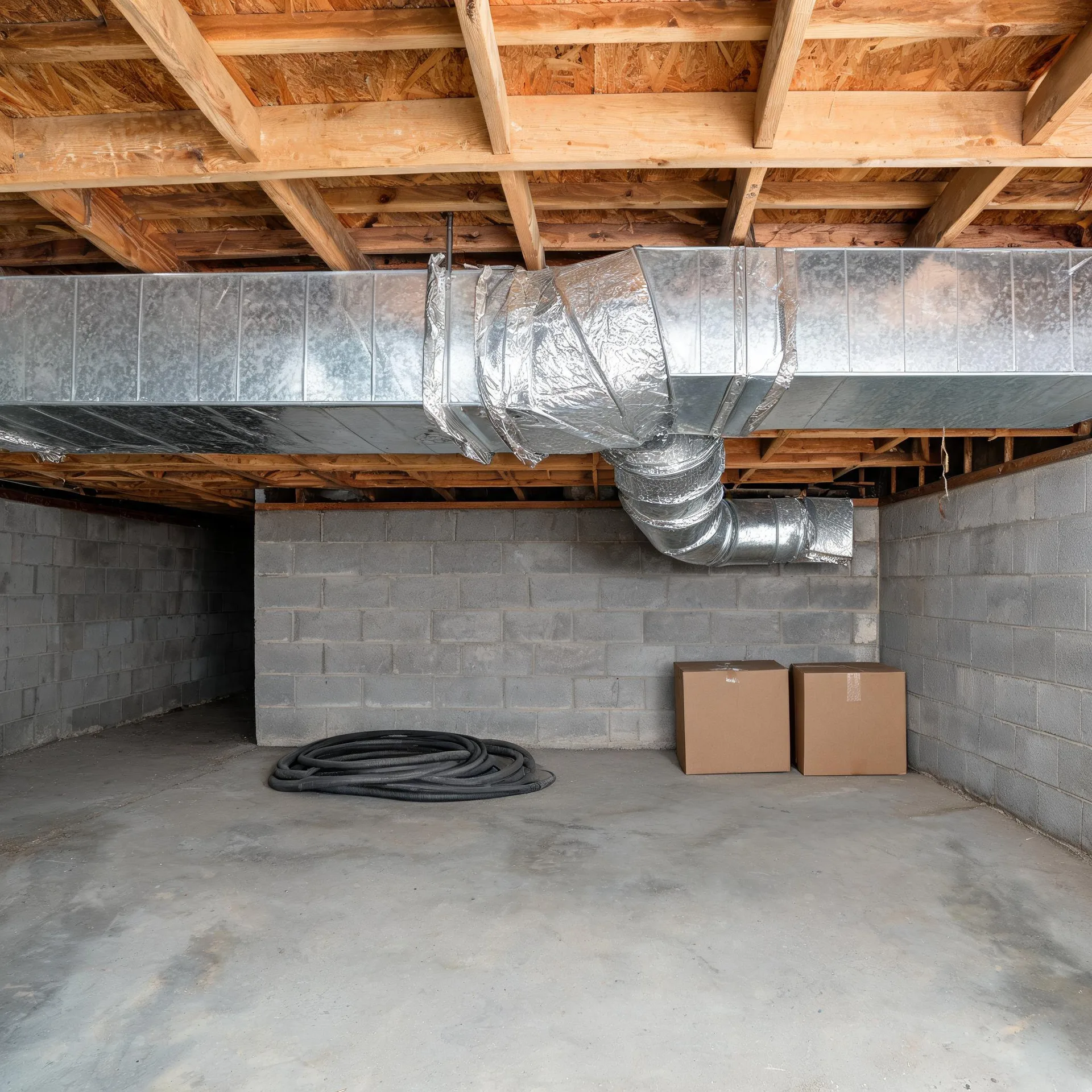
Ductwork sized and routed for an older system may not move air the way a new furnace needs it to. Half the homes in Montgomery County, Indiana were built in 1967 or earlier (2020-2024 ACS 5-year). A contractor putting in a modern unit has to look at what those ducts actually do: where they run, how they branch, and whether the existing layout will deliver heat evenly or just push it toward the nearest register. If the ductwork cannot handle it, the furnace installation brings sheet-metal work with it.
What Gets Installed With a New Furnace
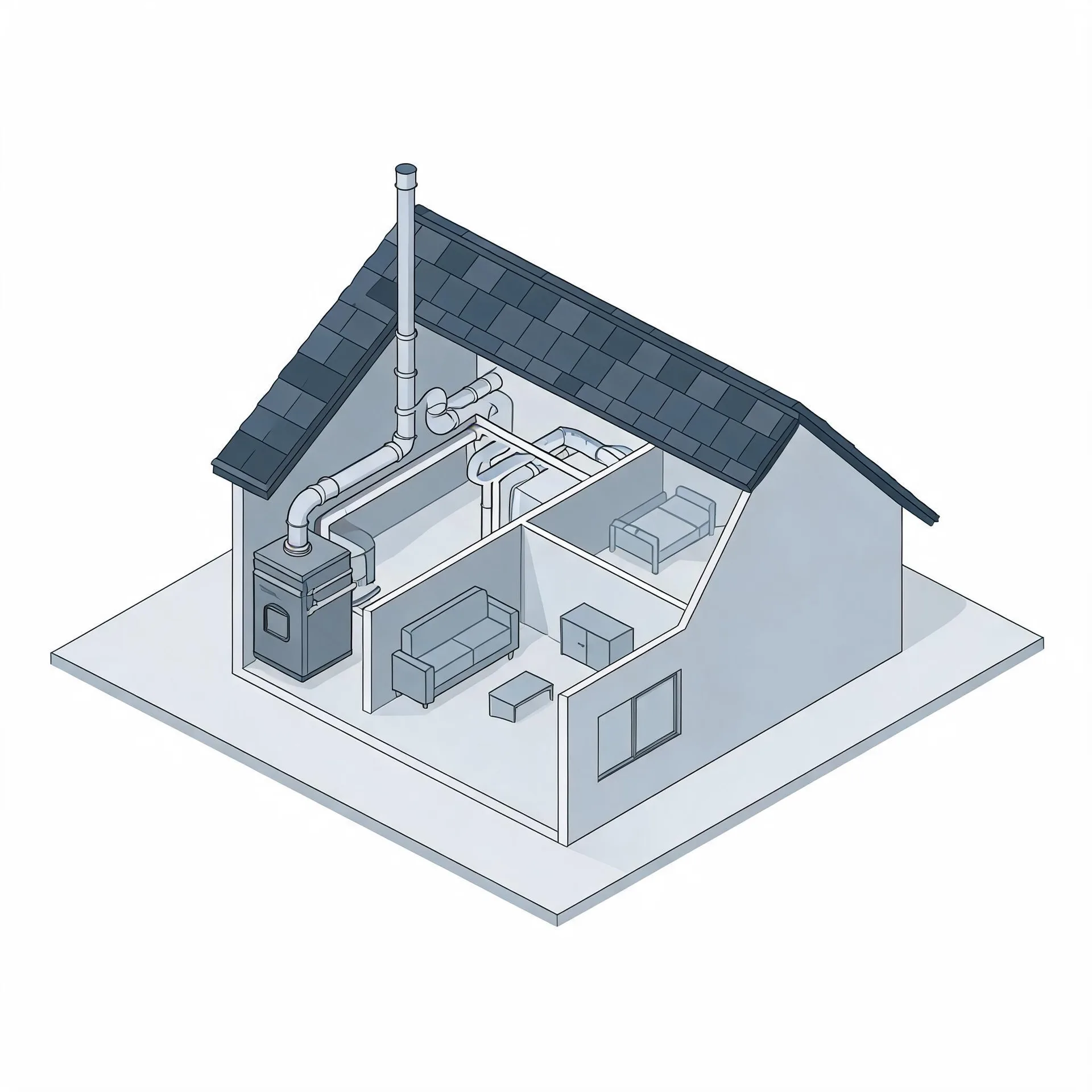
The furnace itself sits in the basement, utility room, or crawl space and is the unit a homeowner would walk up to and recognize. Inside it, a heat exchanger and a blower work together: the exchanger warms the air, and the blower pushes that air out into the house. A new installation puts all of these components in place as a single unit.
The flue or vent pipe runs from the furnace to an outside wall or up through the roof, carrying combustion gases out of the house. Alongside it, a gas line connection and a thermostat complete the system: the gas line feeds the burner, and the thermostat gives the homeowner a way to control everything from one spot.
The drawing shows a typical layout, and a licensed contractor determines what applies to your specific home and setup.
Find a contractor in Montgomery CountyMontgomery County, Indiana, by the numbers
63 severe weather events were recorded in Montgomery County, Indiana between 2015 and 2024.
NOAA National Centers for Environmental Information, Storm Events Database, bulk CSV export, events 2015-01-01 through 2024-12-31.Half the homes in Montgomery County, Indiana were built in 1967 or earlier (2020-2024 ACS 5-year).
U.S. Census Bureau, 2020-2024 American Community Survey 5-Year EstimatesMontgomery County, Indiana holds 16,585 housing units (2020-2024 ACS 5-year).
U.S. Census Bureau, 2020-2024 American Community Survey 5-Year EstimatesOwners occupy 80.3% of the occupied homes in Montgomery County, Indiana (2020-2024 ACS 5-year).
U.S. Census Bureau, 2020-2024 American Community Survey 5-Year EstimatesFurnace Installation Rules for Montgomery County, Indiana4 codes, standards & laws
What the Installation Actually Looks Like
Non-weatherized gas furnaces manufactured on or after November 19, 2015 must reach 80.0 percent AFUE.
Non-weatherized oil-fired furnaces manufactured on or after November 19, 2015 must reach 83.0 percent AFUE.
Mobile home gas furnaces manufactured on or after November 19, 2015 must reach 80.0 percent AFUE.
Non-weatherized gas furnaces manufactured on or after December 18, 2028 must reach 95.0 percent AFUE, up from the 80.0 percent minimum that applies to units manufactured before that date.
Severe Weather Events in Montgomery County
Weather puts real load on heating equipment, and what a furnace faces in Montgomery County differs from what it faces anywhere else. That local pattern shapes how a contractor sizes and installs equipment that holds up over time.
63 severe weather events, 2015–2024. Source: NOAA National Centers for Environmental Information, Storm Events Database.