Tell us about the job
Takes about a minute. No obligation.
A contractor diagnosing a furnace repair in Delaware County has to decide whether the failure came from wear or from what the system has been running against. 88 severe weather events were recorded in Delaware County, Indiana between 2015 and 2024. At that rate, severe weather is part of life here, but spread across years, it sits closer to a recurring pressure than a constant assault. A furnace that breaks down in this county is more likely failing because of age, neglected filters, or a heat exchanger that has cycled too many seasons than because the weather overwhelmed it. The contractor checks both, but the maintenance record usually tells the story first.
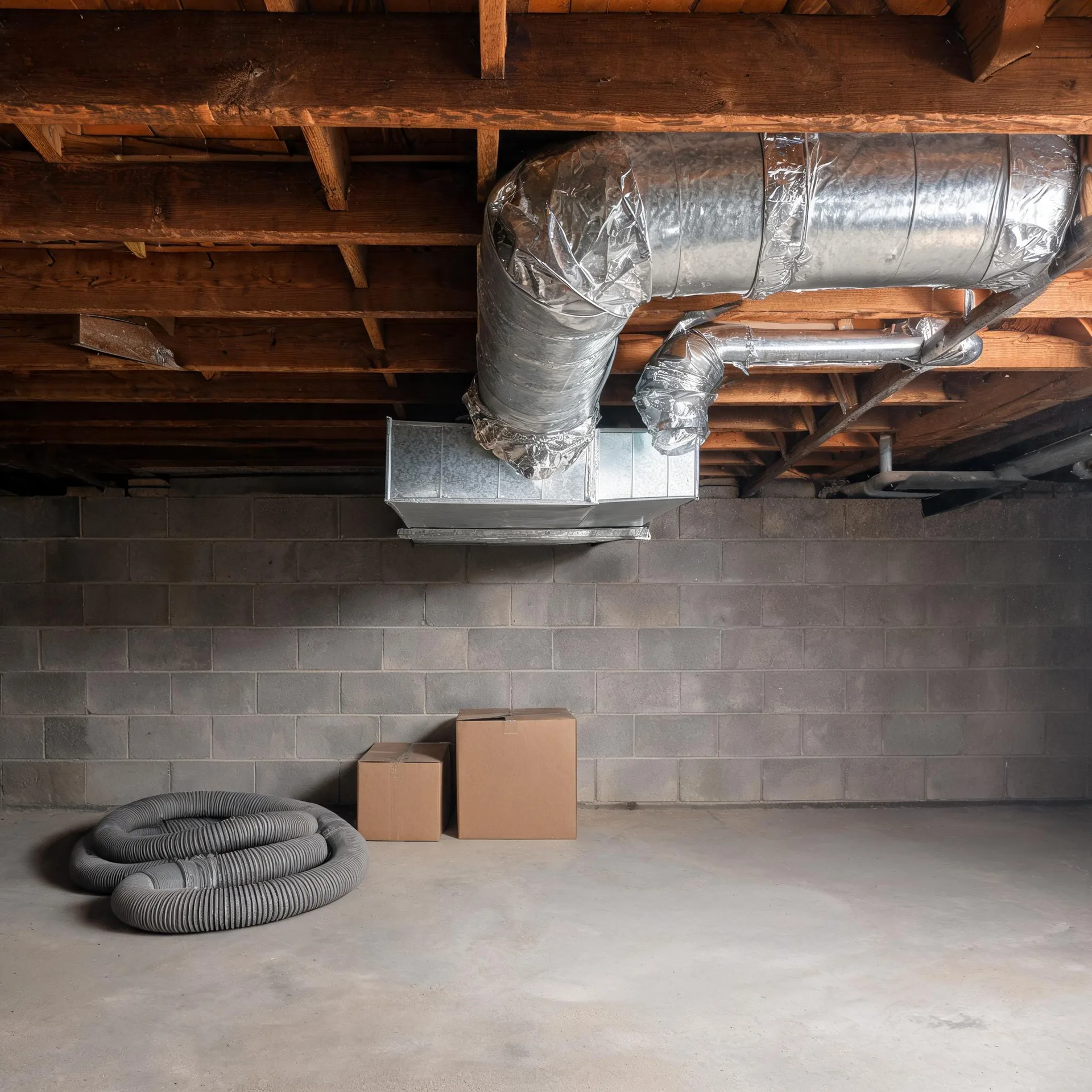
Half the homes in Delaware County, Indiana were built in 1967 or earlier (2020-2024 ACS 5-year). A furnace built for a house of that vintage has had time to move through its original parts, through whatever replacements were available at the time, and into territory where the supply chain gets thin. A contractor who opens the heat exchanger or the gas valve assembly and identifies the fault still has to answer a second question: whether a matching replacement part ships at all. That answer shapes the repair scope as much as the diagnosis does.
The Parts of a Furnace a Contractor Checks First
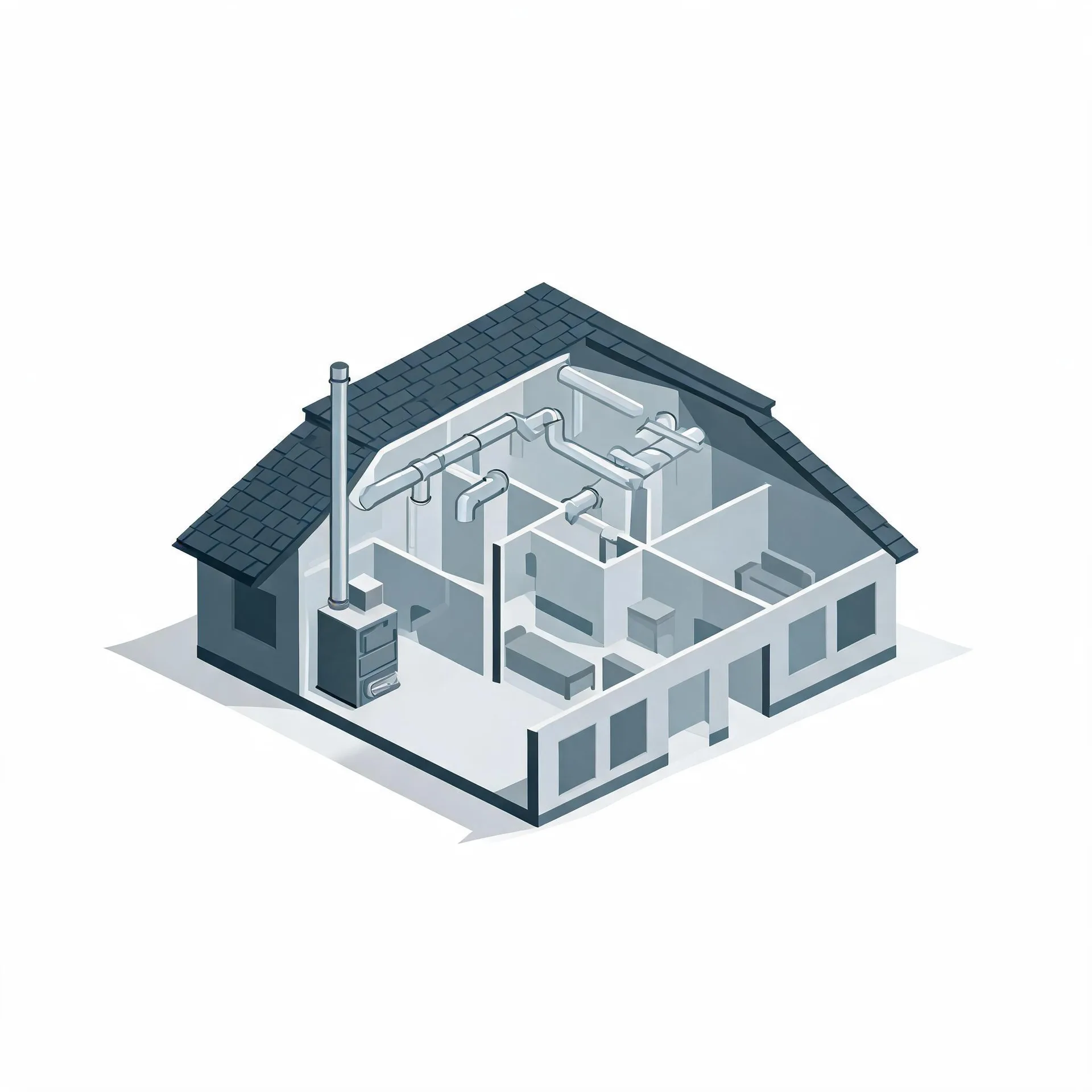
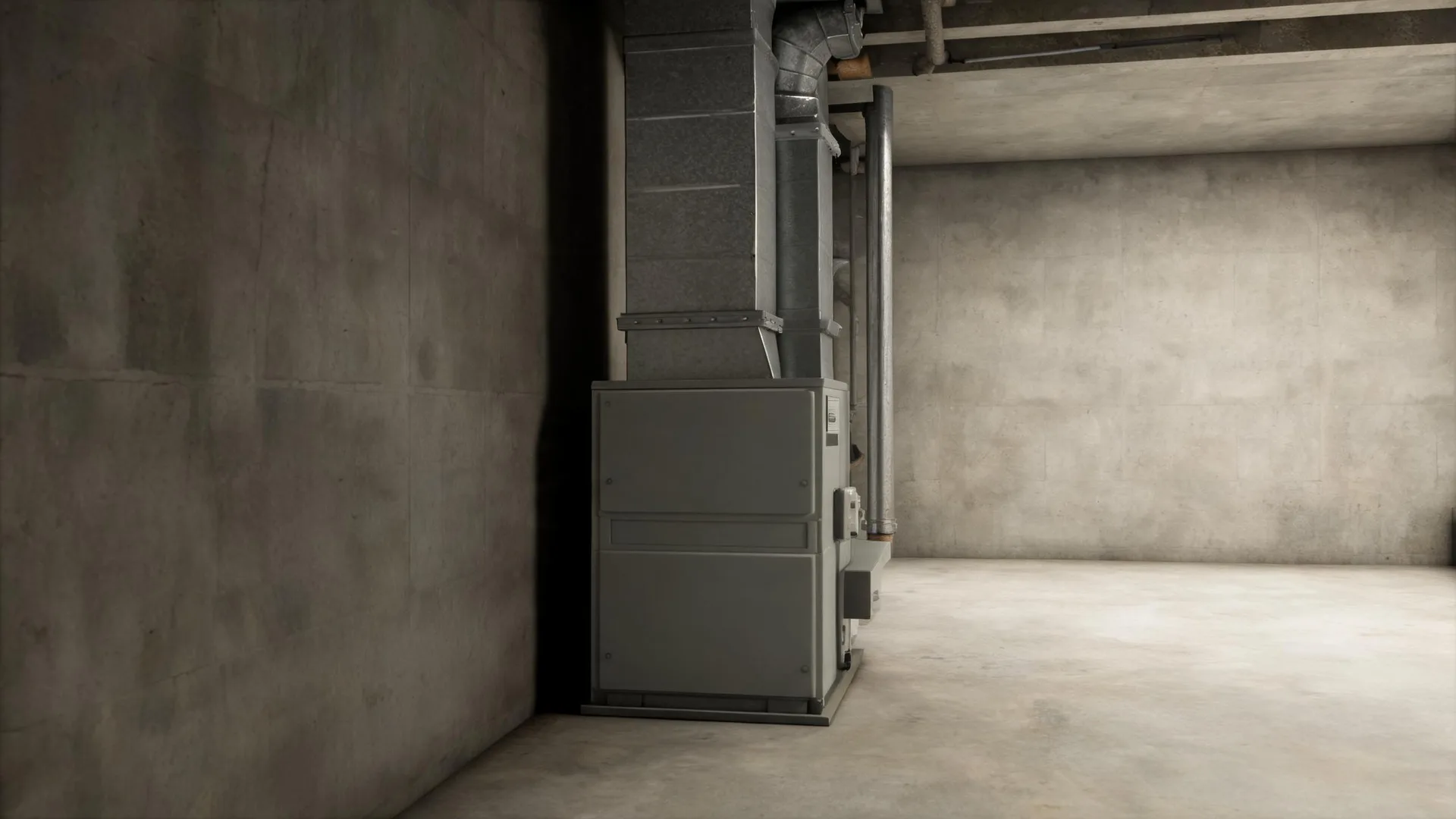
The furnace cabinet sits in the basement, utility closet, or garage and houses the components a contractor examines when something goes wrong. Inside it, the heat exchanger carries combustion gases away from the living space while warming the air around it. A cracked exchanger is one of the first things a contractor rules out, because it affects both heat output and safety. The burners, which ignite the gas to start the heating cycle, are checked for buildup or uneven flame.
The blower motor sits at the base of the cabinet and pushes conditioned air through the supply ducts. When a furnace runs but heat does not reach the rooms, the blower and its capacitor are early suspects. The flue pipe runs from the cabinet to an exterior vent, and blockage or corrosion there can shut the system down. The control board and the flame sensor are smaller components that a contractor tests when the unit cycles oddly or fails to light.
The drawing shows a general layout of these components, and a licensed contractor determines which parts apply to the specific equipment and configuration in your home.
Find a contractor in Delaware CountyDelaware County, Indiana, by the numbers
88 severe weather events were recorded in Delaware County, Indiana between 2015 and 2024.
NOAA National Centers for Environmental Information, Storm Events Database, bulk CSV export, events 2015-01-01 through 2024-12-31.Half the homes in Delaware County, Indiana were built in 1967 or earlier (2020-2024 ACS 5-year).
U.S. Census Bureau, 2020-2024 American Community Survey 5-Year EstimatesDelaware County, Indiana holds 51,635 housing units (2020-2024 ACS 5-year).
U.S. Census Bureau, 2020-2024 American Community Survey 5-Year EstimatesOwners occupy 66.5% of the occupied homes in Delaware County, Indiana (2020-2024 ACS 5-year).
U.S. Census Bureau, 2020-2024 American Community Survey 5-Year EstimatesCodes & Standards Behind Furnace Repair in Delaware County, Indiana4 sourced rules and standards
What HVAC Repair Looks Like in Delaware County
Non-weatherized gas furnaces manufactured on or after November 19, 2015 must reach 80.0 percent AFUE.
Non-weatherized oil-fired furnaces manufactured on or after November 19, 2015 must reach 83.0 percent AFUE.
Mobile home gas furnaces manufactured on or after November 19, 2015 must reach 80.0 percent AFUE.
Non-weatherized gas furnaces manufactured on or after December 18, 2028 must reach 95.0 percent AFUE, up from the 80.0 percent minimum that applies to units manufactured before that date.
Severe Weather Events in Delaware County
Weather in Delaware County puts real stress on heating equipment: temperature swings, high humidity, and storm-driven power fluctuations all shorten the life of components and push systems into failure. A furnace that runs hard through rough seasons is one that needs local attention from someone who knows what the conditions here actually demand.
88 severe weather events, 2015–2024. Source: NOAA National Centers for Environmental Information, Storm Events Database.