Tell us about the job
Takes about a minute. No obligation.

A furnace repair in Putnam County starts with the unit's service history, because that is where the answer almost always lives. 78 severe weather events were recorded in Putnam County, Indiana between 2015 and 2024. At that rate, severe weather is an event here rather than a grinding condition, which means it rarely accounts for what a contractor finds inside a failed heat exchanger or a seized inducer motor. The wear patterns a contractor uncovers tend to point toward deferred maintenance, aging components, or an install that was never quite right.
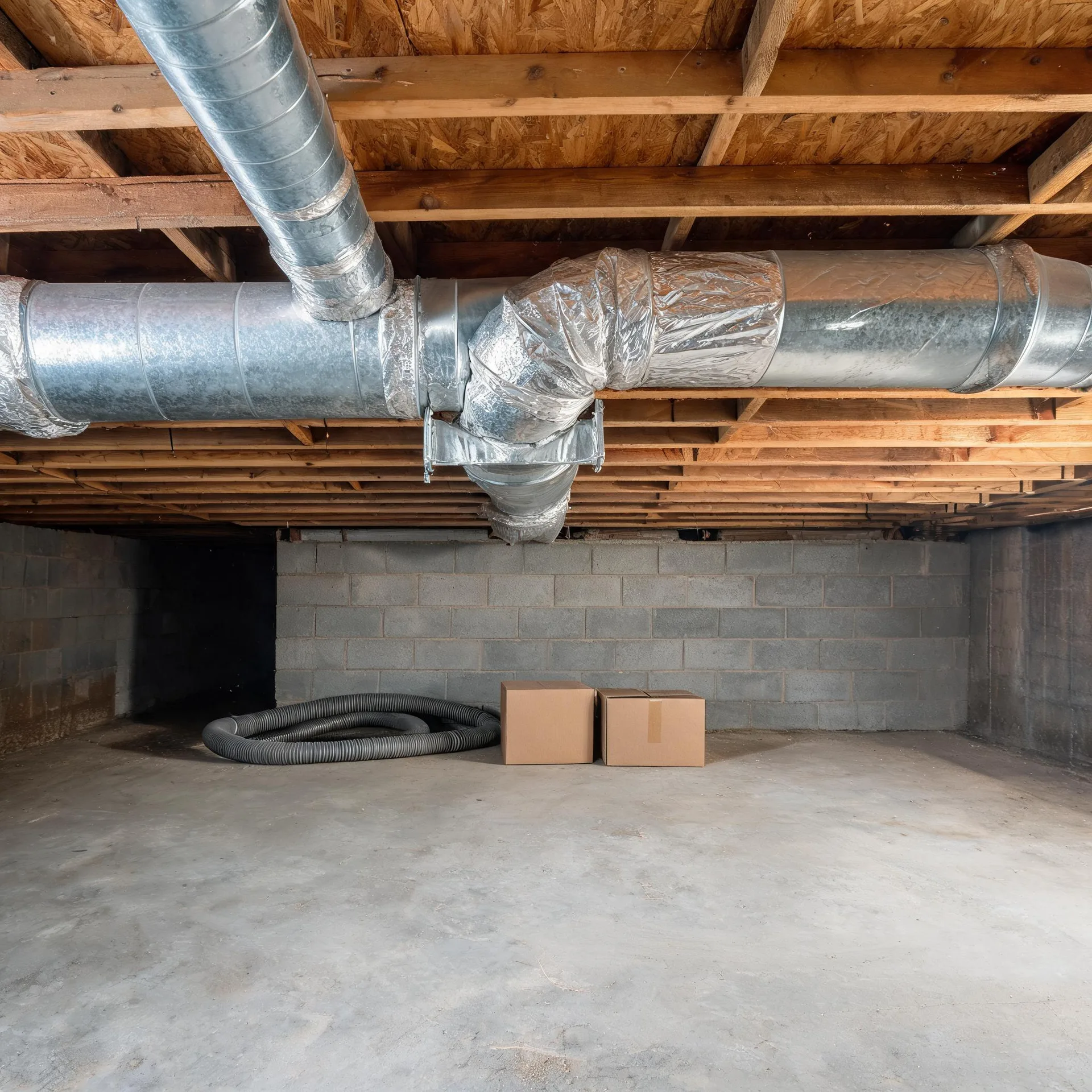
Ductwork in a house this old has been patched, rerouted, and asked to carry loads it was never sized for, and that history shows up the moment a contractor opens the furnace and starts tracing why it failed. Half the homes in Putnam County, Indiana were built in 1981 or earlier (2020-2024 ACS 5-year). A heat exchanger that has been cycling through Putnam County winters inside a house of that vintage carries wear that a visual check from the outside does not reveal. What the contractor finds inside the cabinet, and whether the manufacturer still makes the part it needs, is what sets the actual scope and cost of the repair.
The Parts of a Furnace a Contractor Checks First
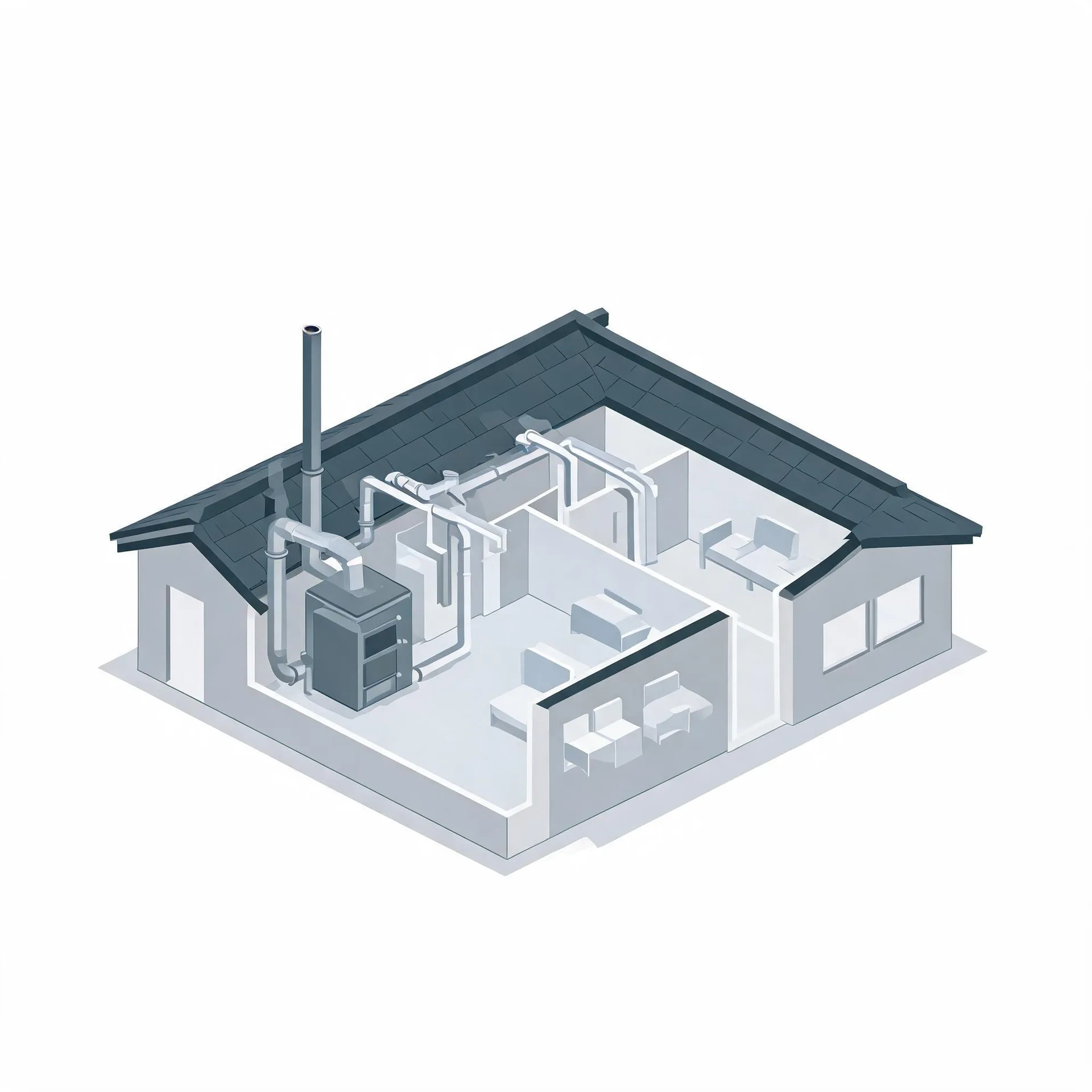
The furnace itself sits in a mechanical room, basement, or utility closet and is the heart of the system. Inside it, the heat exchanger is what a contractor reaches for early when something is wrong. A cracked or corroded exchanger affects how the unit burns, and the burners themselves, which fire inside the heat exchanger, are another common starting point when a furnace runs poorly or not at all.
The blower motor and its fan wheel sit inside the furnace cabinet and push conditioned air into the supply side of the house. The flue pipe runs from the top or back of the cabinet up through the wall or roof, and the draft inducer motor that moves exhaust through it is another piece a contractor tests when a furnace trips out or fails to ignite.
The drawing shows a typical furnace layout, and a licensed contractor determines which components apply to your specific system and what each one needs.
Find a contractor in Putnam CountyPutnam County by the Numbers
78 severe weather events were recorded in Putnam County, Indiana between 2015 and 2024.
NOAA National Centers for Environmental Information, Storm Events Database, bulk CSV export, events 2015-01-01 through 2024-12-31.Half the homes in Putnam County, Indiana were built in 1981 or earlier (2020-2024 ACS 5-year).
U.S. Census Bureau, 2020-2024 American Community Survey 5-Year EstimatesPutnam County, Indiana holds 15,268 housing units (2020-2024 ACS 5-year).
U.S. Census Bureau, 2020-2024 American Community Survey 5-Year EstimatesOwners occupy 75.4% of the occupied homes in Putnam County, Indiana (2020-2024 ACS 5-year).
U.S. Census Bureau, 2020-2024 American Community Survey 5-Year EstimatesFurnace Repair Rules & Codes for Putnam County, Indiana4 sourced standards and regulations
What Happens When the Contractor Comes Out
Non-weatherized gas furnaces manufactured on or after November 19, 2015 must reach 80.0 percent AFUE.
Non-weatherized oil-fired furnaces manufactured on or after November 19, 2015 must reach 83.0 percent AFUE.
Mobile home gas furnaces manufactured on or after November 19, 2015 must reach 80.0 percent AFUE.
Non-weatherized gas furnaces manufactured on or after December 18, 2028 must reach 95.0 percent AFUE, up from the 80.0 percent minimum that applies to units manufactured before that date.
Severe Weather Events in Putnam County
Extreme weather puts stress on furnaces that ordinary winters do not. How hard that equipment works over time is partly a local question, shaped by what the weather here actually does.
78 severe weather events, 2015–2024. Source: NOAA National Centers for Environmental Information, Storm Events Database.