Tell us about the job
Takes about a minute. No obligation.
A contractor quoting a furnace installation in Pulaski County is not walking into a climate that grinds equipment down season after season. 30 severe weather events were recorded in Pulaski County, Indiana between 2015 and 2024. At that rate, severe weather is an occasional event, not a standing condition, so the decisions that drive a proper install here are about the house itself: its age, its existing ductwork, and how well the last system was maintained. Sizing the new furnace to what this structure actually needs matters more than building in extra capacity to absorb weather strain.
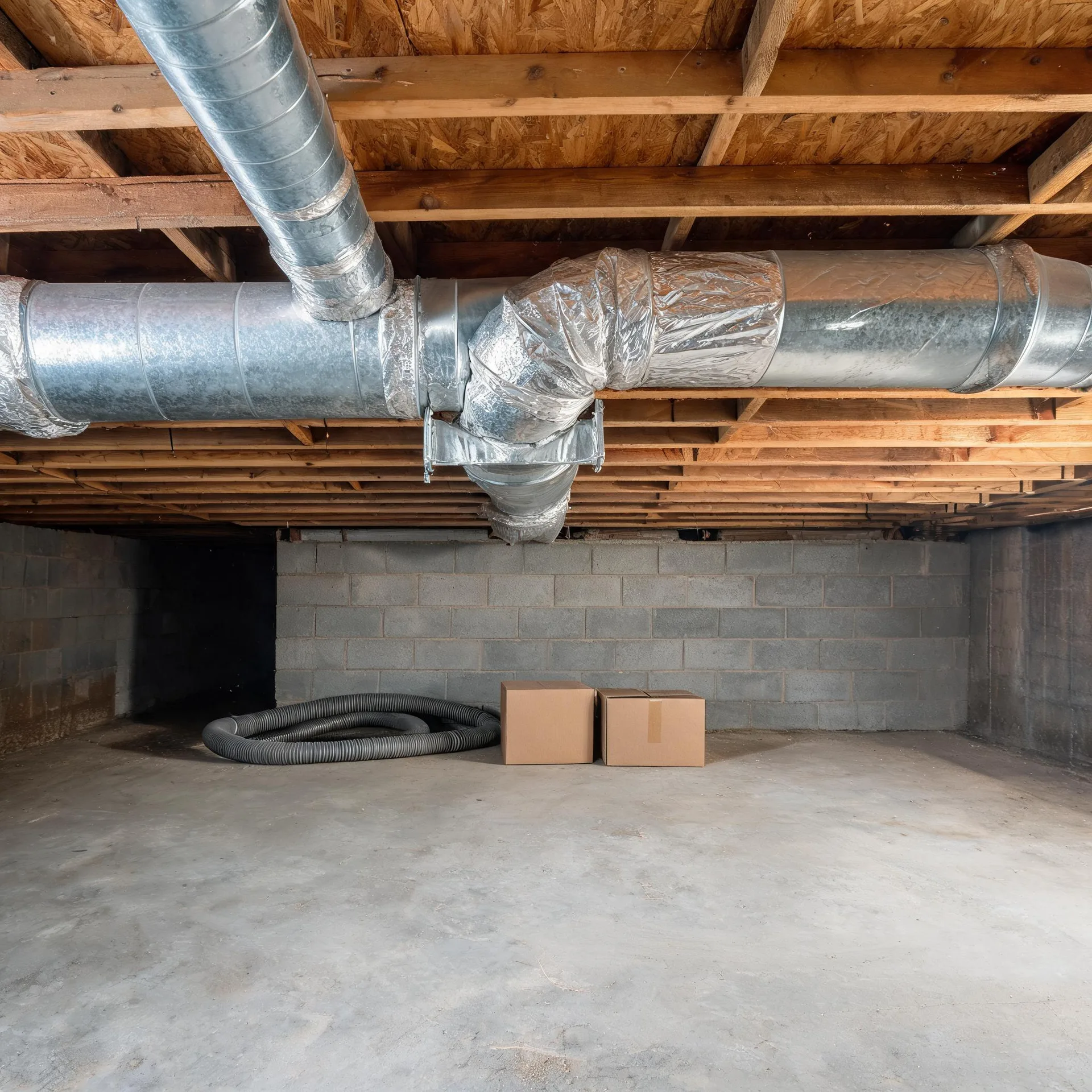
Ductwork laid down for an older furnace was designed around that furnace's static pressure and airflow, and a new unit does not inherit those assumptions for free. Half the homes in Pulaski County, Indiana were built in 1970 or earlier (2020-2024 ACS 5-year). A contractor quoting a furnace replacement here will measure what the existing trunk lines and branch runs can actually move, because undersized or poorly routed duct that worked adequately before will restrict a new system and push heating costs up without any fault in the equipment itself. The electrical service gets checked on the same visit, since load requirements have shifted across the decades the housing stock spans. What a homeowner pays for a furnace installation in Pulaski County depends heavily on what those two assessments turn up.
What Gets Installed With a New Furnace
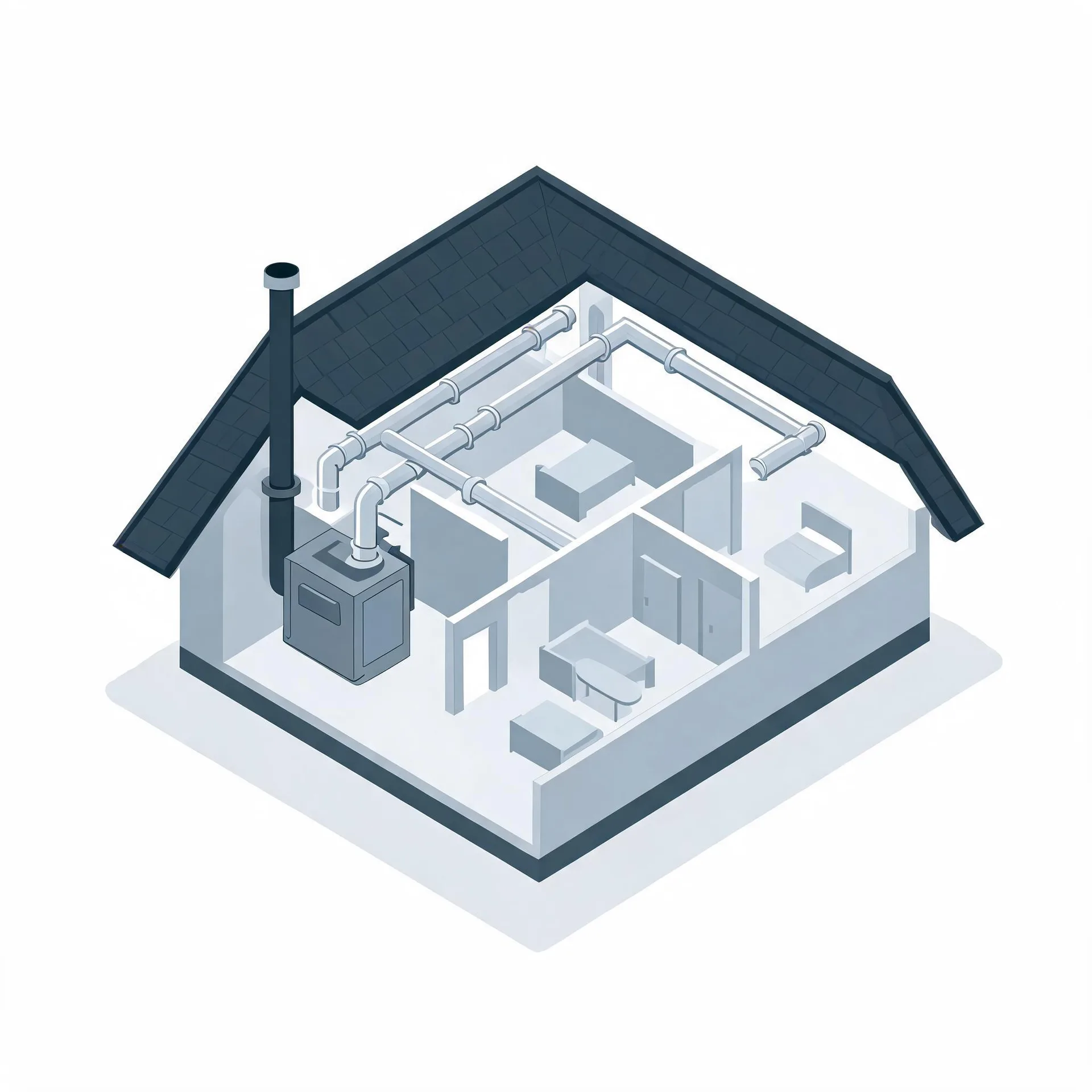
The furnace itself sits in a mechanical room, basement, or utility closet and is the unit a homeowner sees when they walk into that space. It houses the burner, the heat exchanger, and the blower, all within one cabinet. That cabinet is the heart of what a contractor brings in and sets into place.
The flue pipe runs from the furnace up and out of the house, carrying combustion gases outside. The thermostat mounts on a wall in the living space and is the control point a homeowner touches every day. A condensate drain line also connects to high-efficiency units, running to a floor drain or utility sink nearby.
The drawing shows a typical layout, and a licensed contractor determines exactly what applies to your home.
Find a contractor in Pulaski CountyPulaski County by the Numbers
30 severe weather events were recorded in Pulaski County, Indiana between 2015 and 2024.
NOAA National Centers for Environmental Information, Storm Events Database, bulk CSV export, events 2015-01-01 through 2024-12-31.Half the homes in Pulaski County, Indiana were built in 1970 or earlier (2020-2024 ACS 5-year).
U.S. Census Bureau, 2020-2024 American Community Survey 5-Year EstimatesPulaski County, Indiana holds 5,850 housing units (2020-2024 ACS 5-year).
U.S. Census Bureau, 2020-2024 American Community Survey 5-Year EstimatesOwners occupy 74.6% of the occupied homes in Pulaski County, Indiana (2020-2024 ACS 5-year).
U.S. Census Bureau, 2020-2024 American Community Survey 5-Year EstimatesFurnace Installation Rules for Pulaski County, Indiana4 codes & standards
What the Installation Actually Looks Like
Non-weatherized gas furnaces manufactured on or after November 19, 2015 must reach 80.0 percent AFUE.
Non-weatherized oil-fired furnaces manufactured on or after November 19, 2015 must reach 83.0 percent AFUE.
Mobile home gas furnaces manufactured on or after November 19, 2015 must reach 80.0 percent AFUE.
Non-weatherized gas furnaces manufactured on or after December 18, 2028 must reach 95.0 percent AFUE, up from the 80.0 percent minimum that applies to units manufactured before that date.
Severe Weather Events in Pulaski County
Pulaski County weather puts real demands on heating equipment over its working life. How hard a furnace works, and how reliably it needs to perform, is shaped by local conditions, which is why installation decisions here are not the same as they would be elsewhere.
30 severe weather events, 2015–2024. Source: NOAA National Centers for Environmental Information, Storm Events Database.