Tell us about the job
Takes about a minute. No obligation.
A contractor sizing and installing a furnace in Newton County has to work out what the equipment will actually run against, and the answer here shapes the job less than homeowners often expect. 61 severe weather events were recorded in Newton County, Indiana between 2015 and 2024. At that rate, severe weather is an event in this county, not a standing condition, and a furnace installed here is not absorbing a relentless weather load year after year. That shifts where a contractor's attention lands: installation quality, proper sizing for the structure, and duct integrity matter more to long-term performance than weather tolerance. A system that struggles here is more likely undersized or poorly commissioned than worn down by the climate.
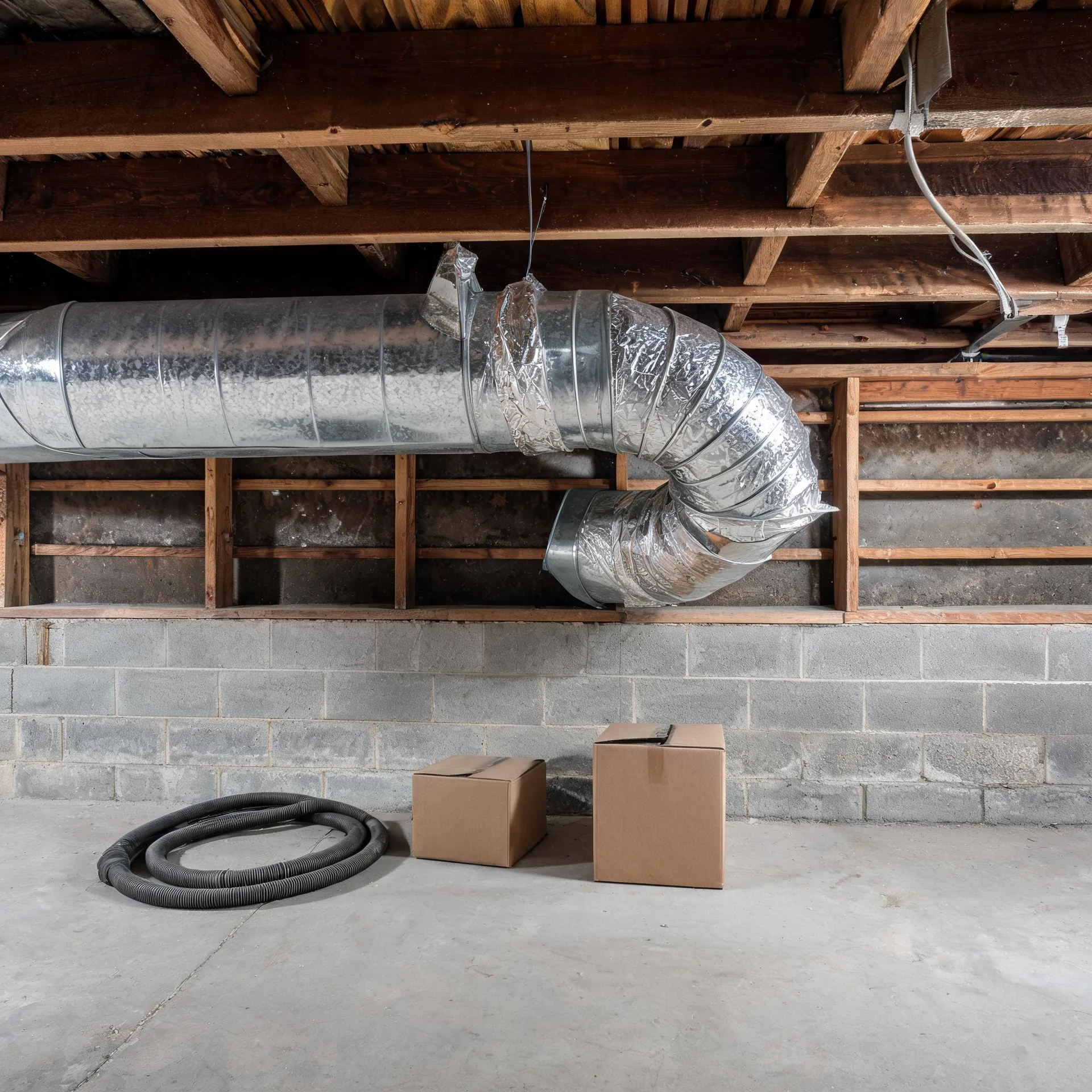
Ductwork sized and laid out for an older generation of heating equipment does not quietly adapt to a new furnace without someone checking it first. Half the homes in Newton County, Indiana were built in 1971 or earlier (2020-2024 ACS 5-year). A contractor installing a new furnace in stock this old has to establish what the existing duct system will actually carry before the unit is ever ordered, because a mismatch between duct capacity and the new system's airflow pushes heat back through the equipment and shortens its life. The electrical service gets the same look. What a house of this vintage was wired for and what a modern furnace draws are questions with answers that sometimes agree and sometimes produce a change order.
What Gets Installed With a New Furnace
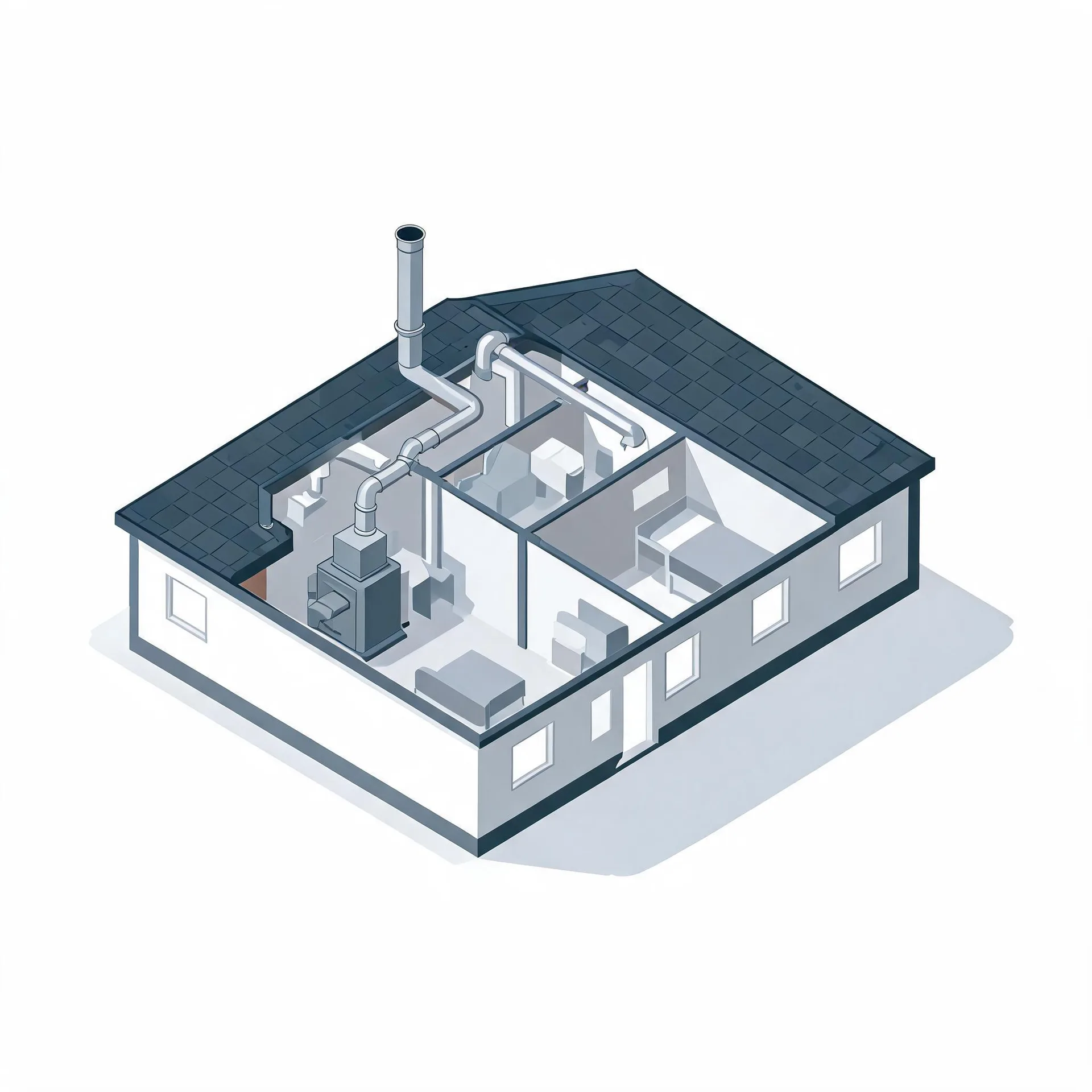
The furnace itself sits in a mechanical room, basement, or utility closet and is the core unit a contractor puts in place. Attached to it is the flue or vent pipe, which runs to an exterior wall or up through the roof and carries combustion gases out of the house. The air filter housing mounts at the furnace's return-air opening and holds the filter that screens incoming air.
The thermostat goes on an interior wall, reads the temperature in the living space, and tells the furnace when to fire. A condensate drain line runs from high-efficiency units to a floor drain or utility sink, clearing the water those models pull from exhaust gases. The gas supply line connects to the furnace's valve, and a licensed contractor verifies that connection meets local code before the unit runs.
The drawing shows a typical layout, and a licensed contractor determines exactly which components apply to your home.
Find a contractor in Newton CountyNewton County, Indiana, by the numbers
61 severe weather events were recorded in Newton County, Indiana between 2015 and 2024.
NOAA National Centers for Environmental Information, Storm Events Database, bulk CSV export, events 2015-01-01 through 2024-12-31.Half the homes in Newton County, Indiana were built in 1971 or earlier (2020-2024 ACS 5-year).
U.S. Census Bureau, 2020-2024 American Community Survey 5-Year EstimatesNewton County, Indiana holds 6,093 housing units (2020-2024 ACS 5-year).
U.S. Census Bureau, 2020-2024 American Community Survey 5-Year EstimatesOwners occupy 81.1% of the occupied homes in Newton County, Indiana (2020-2024 ACS 5-year).
U.S. Census Bureau, 2020-2024 American Community Survey 5-Year EstimatesFurnace Installation Rules for Newton County, Indiana4 sourced standards and codes
What happens during an HVAC installation in Newton County
Non-weatherized gas furnaces manufactured on or after November 19, 2015 must reach 80.0 percent AFUE.
Non-weatherized oil-fired furnaces manufactured on or after November 19, 2015 must reach 83.0 percent AFUE.
Mobile home gas furnaces manufactured on or after November 19, 2015 must reach 80.0 percent AFUE.
Non-weatherized gas furnaces manufactured on or after December 18, 2028 must reach 95.0 percent AFUE, up from the 80.0 percent minimum that applies to units manufactured before that date.
Severe Weather Events in Newton County
Newton County's climate puts real demands on heating equipment over time. How hard a furnace works across its life is a local question, and the weather record here is part of that answer.
61 severe weather events, 2015–2024. Source: NOAA National Centers for Environmental Information, Storm Events Database.