Tell us about the job
Takes about a minute. No obligation.
A contractor quoting a furnace installation in Franklin County has to settle what the heating load actually is before specifying equipment, and the local weather record is one part of that picture. 47 severe weather events were recorded in Franklin County, Indiana between 2015 and 2024. At that rate, severe weather is an event here rather than a standing condition, which means the climate alone does not drive the sizing decision the way it might elsewhere. What drives it is the construction of the house, how well the ductwork moves air, and whether the equipment matched those specifics in the first place. A furnace that was sized and installed correctly for this house will handle what the county throws at it.
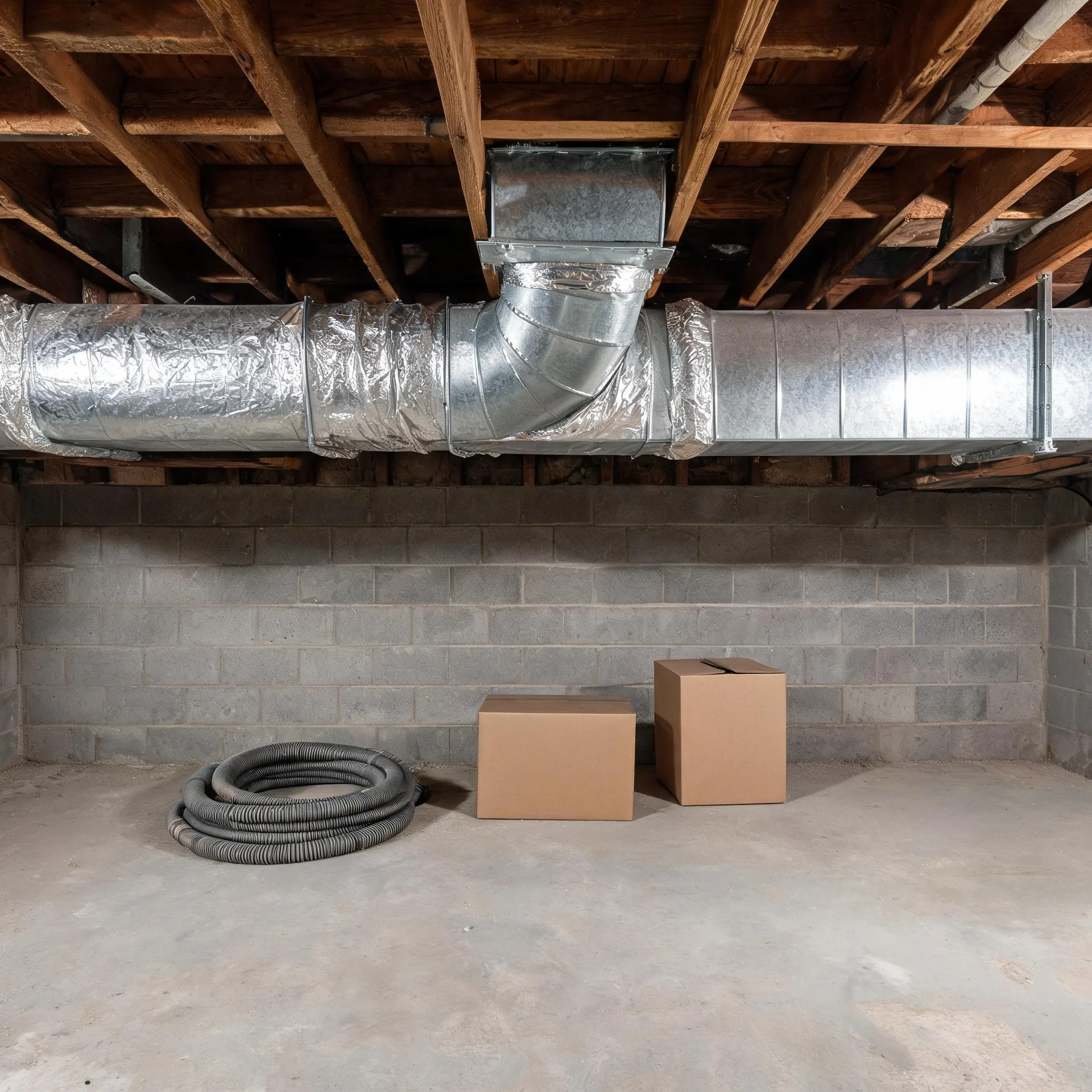
Ductwork in a house this old was designed around a different furnace than anything a contractor will put in today. Half the homes in Franklin County, Indiana were built in 1981 or earlier (2020-2024 ACS 5-year). That gap between what the ducts were built for and what a new unit demands is where a furnace installation either works or stalls. A contractor pulling the old unit will check whether the existing trunk lines move enough air for the new system's output, and whether the electrical service at the panel covers the load. If the ducts are undersized or the runs are poorly configured, the equipment choice waits on that answer.
What Gets Installed With a New Furnace
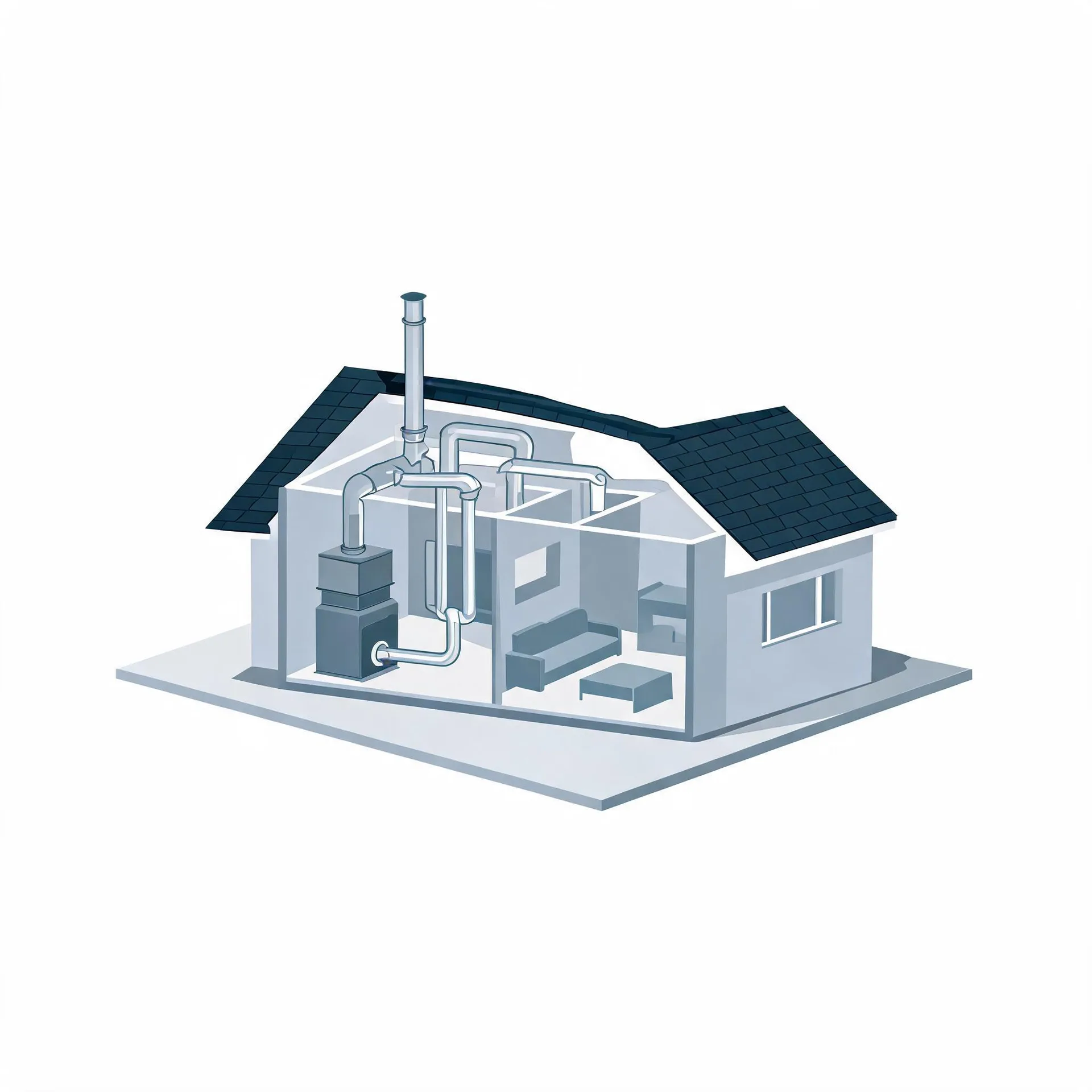
The furnace itself sits in the basement, utility room, or crawl space and is the core unit a contractor sets in place. Attached to it is the flue or vent pipe, which runs through the wall or roof and carries combustion gases out of the house. The air handler and blower assembly live inside the furnace cabinet, pulling return air in and pushing conditioned air out.
The thermostat mounts on a main living-area wall and gives the homeowner control over the whole system. A contractor also installs or replaces the filter housing where return air enters the unit, along with the gas line connection and any condensate drain components the new unit requires.
The drawing shows a general layout of these components, and a licensed contractor determines exactly what applies to the setup in your home.
Find a contractor in Franklin CountyFranklin County, Indiana, by the numbers
47 severe weather events were recorded in Franklin County, Indiana between 2015 and 2024.
NOAA National Centers for Environmental Information, Storm Events Database, bulk CSV export, events 2015-01-01 through 2024-12-31.Half the homes in Franklin County, Indiana were built in 1981 or earlier (2020-2024 ACS 5-year).
U.S. Census Bureau, 2020-2024 American Community Survey 5-Year EstimatesFranklin County, Indiana holds 9,796 housing units (2020-2024 ACS 5-year).
U.S. Census Bureau, 2020-2024 American Community Survey 5-Year EstimatesOwners occupy 81.5% of the occupied homes in Franklin County, Indiana (2020-2024 ACS 5-year).
U.S. Census Bureau, 2020-2024 American Community Survey 5-Year EstimatesFurnace Installation Rules and Codes for Franklin County, Indiana4 sourced standards and regulations
What the Installation Actually Looks Like
Non-weatherized gas furnaces manufactured on or after November 19, 2015 must reach 80.0 percent AFUE.
Non-weatherized oil-fired furnaces manufactured on or after November 19, 2015 must reach 83.0 percent AFUE.
Mobile home gas furnaces manufactured on or after November 19, 2015 must reach 80.0 percent AFUE.
Non-weatherized gas furnaces manufactured on or after December 18, 2028 must reach 95.0 percent AFUE, up from the 80.0 percent minimum that applies to units manufactured before that date.
Severe Weather Events in Franklin County
Heating equipment in Franklin County works against whatever the local climate throws at it, and storm load is part of that picture. A furnace sized and installed for this area accounts for the conditions here, not somewhere else.
47 severe weather events, 2015–2024. Source: NOAA National Centers for Environmental Information, Storm Events Database.