
What size furnace an Indiana home needs

Get in touch with a local installer about a new furnace.

Find my pro

There's no single furnace size that fits every Indiana home. The right size comes from a load calculation, a room-by-room look at your square footage, your insulation, your windows, and how many walls face the outside. A furnace sized by square footage alone is often wrong in either direction. Too big, and it short-cycles, heating the house in bursts that waste gas and wear out parts sooner. Too small, and it runs nonstop through January and still can't keep the house warm on the coldest mornings. Indiana winters push a furnace hard enough that this matters more here than in a milder climate. An installer who does this work regularly will run the calculation on your actual house rather than guess from a chart, and size the unit and the ductwork together, since a furnace can only heat as well as the ducts let it move air.

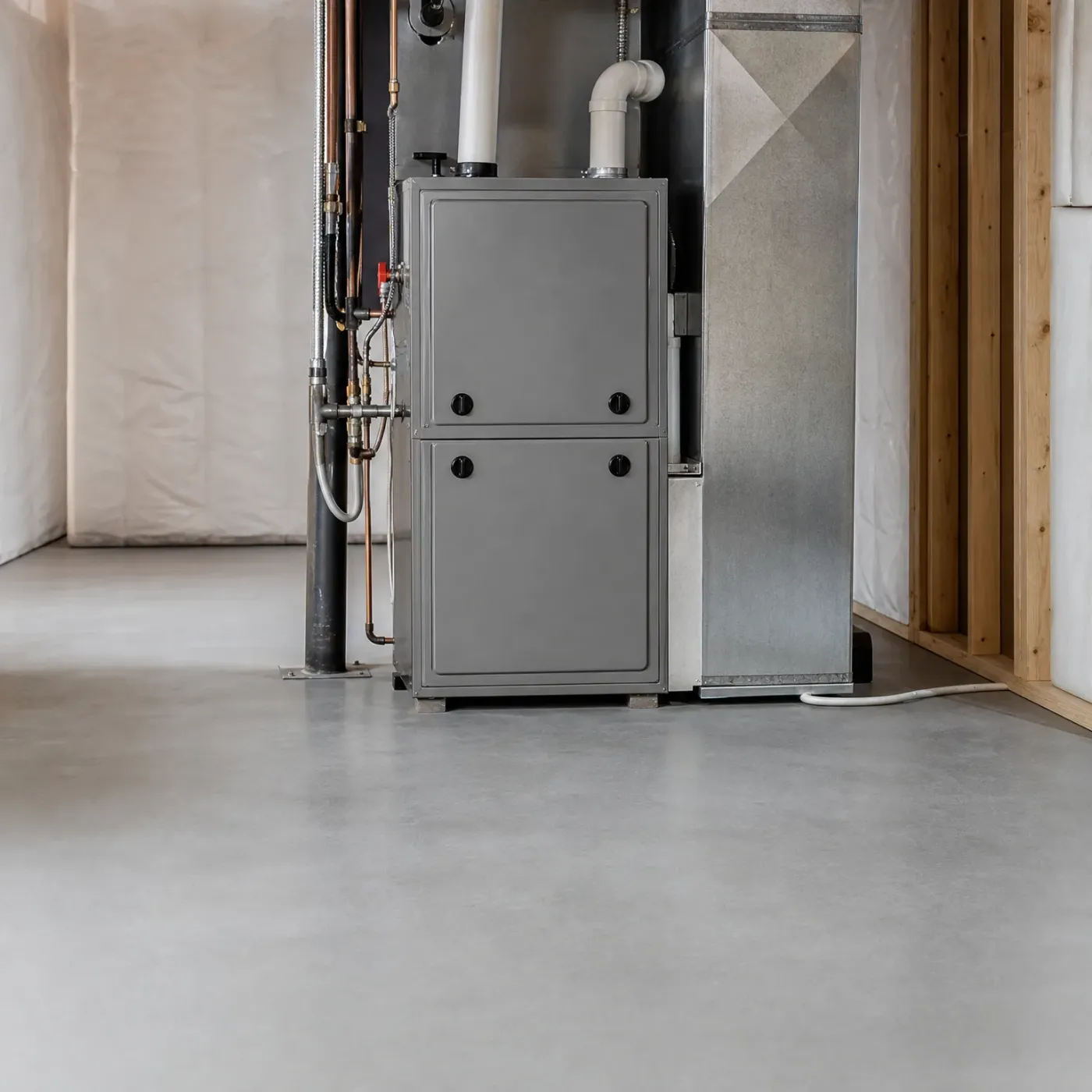
A gray furnace with white PVC vent pipes stands beside sheet-metal ductwork in a basement with a smooth concrete floor, exposed wood framing, and plastic sheeting on the walls.

Furnace sized right

A properly sized furnace runs long, steady cycles that warm every room evenly and hold the temperature without climbing and falling all winter. It cycles on and off far less often, which spares the igniter and blower motor the repeated startup strain that wears them down over the years.
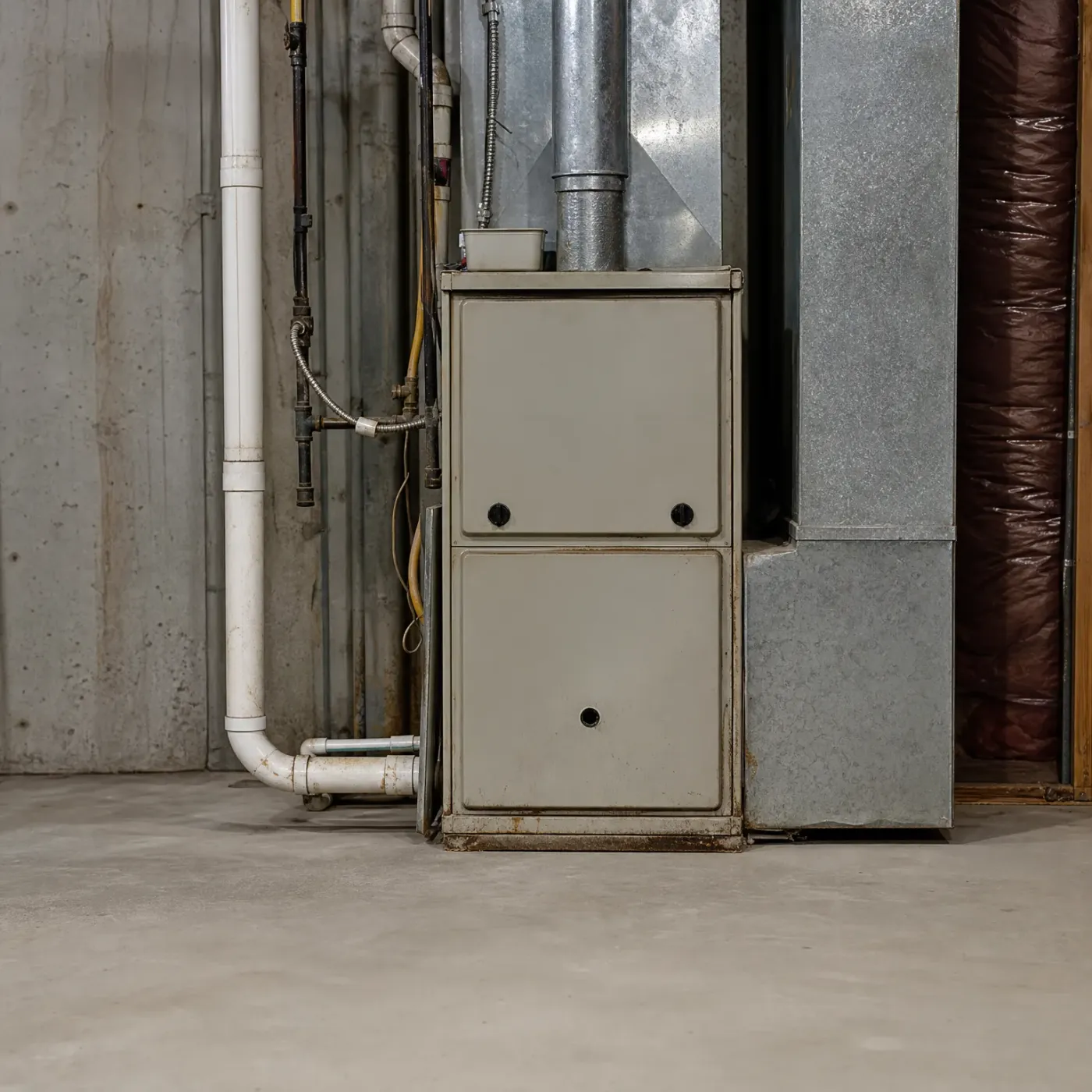
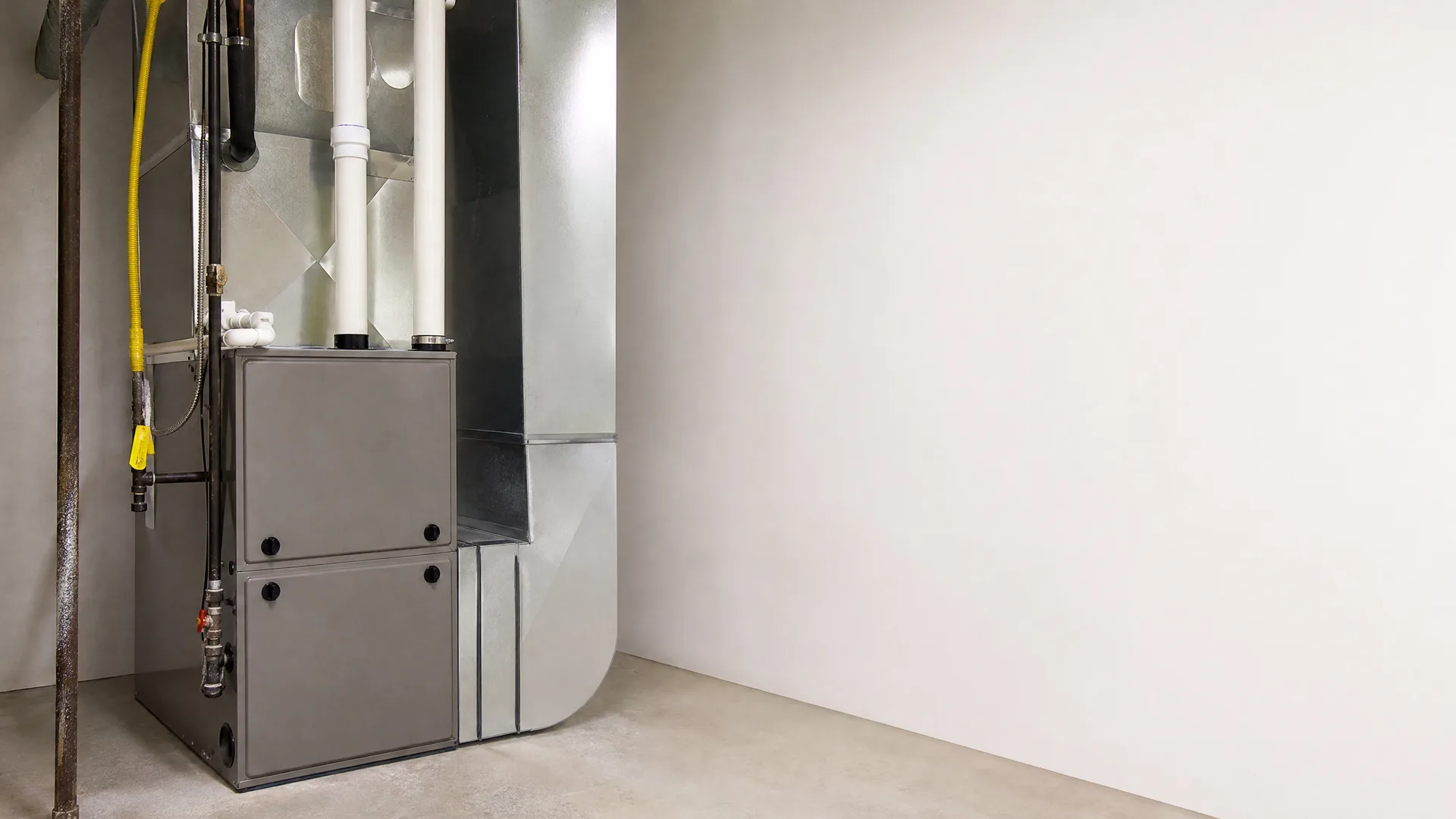
A beige furnace with two access panels stands against a concrete basement wall, with galvanized sheet-metal ductwork, a white PVC pipe, flexible conduit and insulated ducting around it.

Furnace sized wrong

An oversized furnace blasts heat fast, shuts off, then starts again a few minutes later, leaving some rooms warm and others cold. An undersized one runs almost constantly on the coldest days and still can't keep up. Either way the blower motor and igniter take the wear, and that shortens the furnace's life.

Too Small vs. Too Large

Furnace too small

  • It runs nonstop on the coldest days in January and February and still can't hold the temperature you set.
  • The blower motor and igniter cycle far more often, since the furnace is always trying to catch up.
  • Rooms farthest from the furnace, upstairs bedrooms or additions, stay noticeably colder than the rest of the house.
  • Gas use climbs because the furnace is working longer hours to make up for what it can't deliver in capacity.
  • It may get through a mild stretch fine, then fall behind the moment a cold snap hits.

Furnace too large

  • It heats the house fast, then shuts off, then kicks back on again within minutes, all day long.
  • That short cycling wears the igniter and blower motor down faster than a furnace that runs steady cycles.
  • Rooms near the furnace overheat while rooms farther away never fully catch up before it shuts off again.
  • It costs more to install than the size your home actually needs, without delivering better comfort.
  • The air feels less even since the furnace blasts heat in bursts rather than holding a steady temperature.
A gas furnace with two gray access panels stands against a plain wall in a basement, connected to sheet-metal ductwork, white PVC vent pipes, and a yellow gas line.

Why a load calculation beats square footage

Square footage tells you the size of the box. It says nothing about how fast that box loses heat. A Manual J load calculation counts your windows, checks which walls face north, and factors in how much insulation is in your attic. Two homes of the same size can need furnaces with a 20,000 BTU difference between them because one has old single-pane windows and the other doesn't.

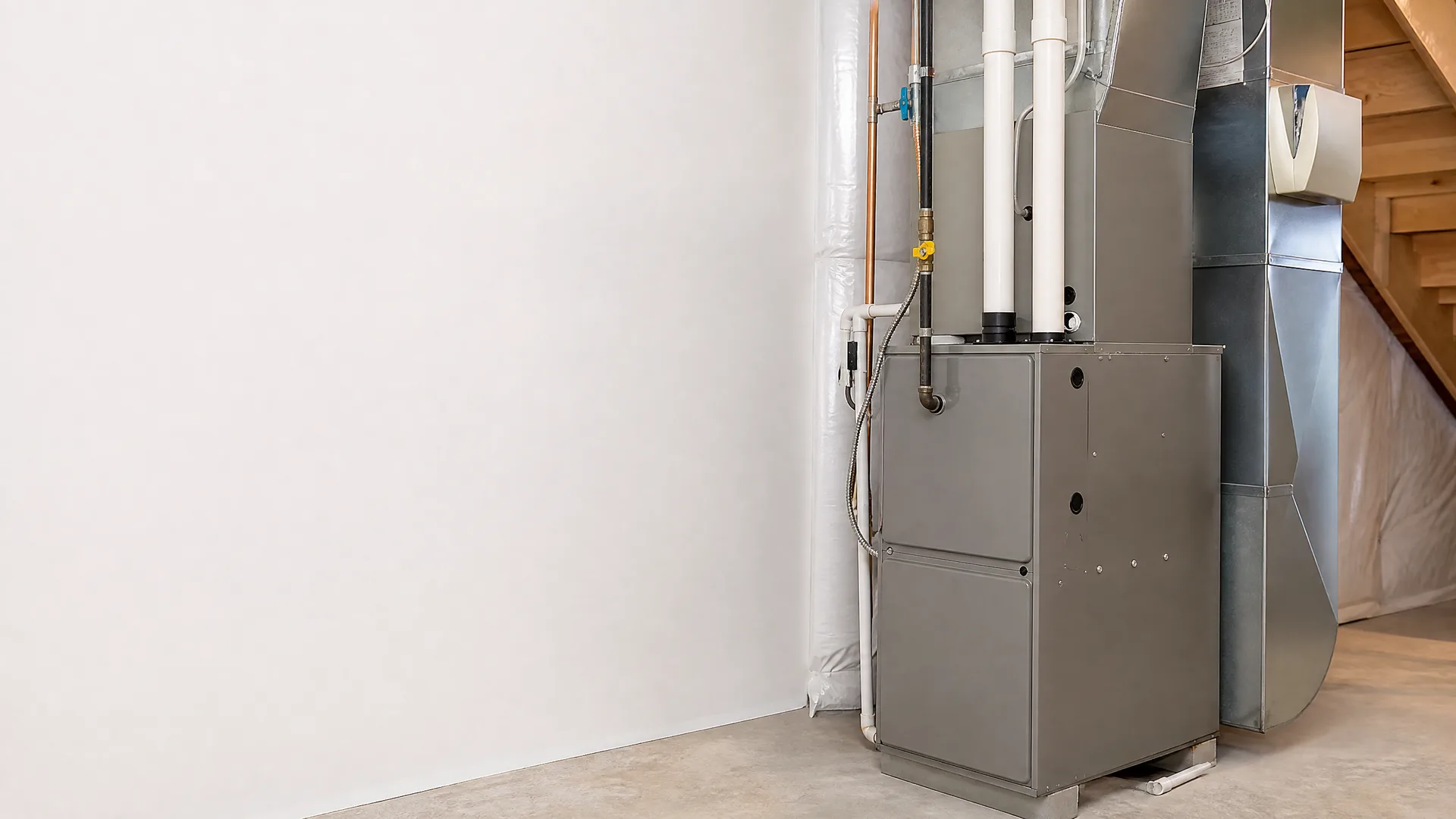
A gray high-efficiency furnace in a basement corner with white PVC vent pipes, copper and black gas piping, and sheet-metal ductwork beside a plain white wall and wooden stair framing.

What the furnace does with that number

Once a contractor has your load number in BTUs per hour, the furnace has to produce slightly more than that at full fire, not a lot more. An oversized furnace reaches your thermostat setting fast, then shuts off, then has to start again within minutes. Gas furnaces are rated for a maximum number of cycles per hour, and a furnace that's too big for the house will hit that limit on a cold January night.

Winter nights average 22°F statewide

That 22°F overnight low is what your furnace is up against most nights from December through February. A furnace sized too small will run the whole night and still lose ground before morning. Getting the size right is what keeps the house steady at that temperature, not just warm for an hour.

NOAA nClimDiv 1991-2020 county normals weighted by homes

A man with grey hair and stubble in a dark sweater sits on a grey sofa indoors, looking off to the side, with a potted plant and a sunlit window behind him.
A man with gray hair, a beard and glasses, wearing a dark green sweater, sits on a gray sofa in a sunlit living room with a potted plant, table lamp and wooden sideboard behind him.
A middle-aged man with graying hair and a short beard sits on a blue sofa in a living room, looking toward a window, with a bookshelf, lamp and framed picture in the background.
A man with graying curly hair and a dark green sweater sits on a gray sofa in a sunlit living room, looking off to the side, with a framed picture, shelving, an armchair and a window with sheer curtains behind him.

A furnace pro near you

A Manual J calculation isn't something to run yourself off a chart. It takes someone standing in your house, measuring your windows, checking your insulation, and sizing the furnace to what your home actually loses on a 22°F night, not to a square footage guess. That's the kind of work a local contractor does by walking through your rooms, not by phone. Getting matched with one licensed to install furnaces in Indiana, someone who sizes systems for homes dealing with the same winters and the same muggy summers you get here, means the number you end up with is built for your house. One contractor takes on your request, looks at what your home needs, and follows up with you directly. That beats guessing at a size now and living with a furnace that either can't keep up in February or short cycles itself into early repairs.

The Right Size, Confirmed

  • The right furnace size for your Indiana home comes from a Manual J load calculation, not the square footage of the house.
  • A furnace sized too small runs nonstop on the coldest nights and still loses ground before morning.
  • A furnace sized too big short cycles, wearing the igniter and blower motor faster and leaving some rooms uneven.
  • Windows, insulation, and how many walls face outside all change what a home needs, even at the same square footage.
  • Getting the size right means steady heat through December, January, and February without the furnace straining or overshooting.

No two Indiana homes lose heat the same way, even when the square footage matches on paper. One house has south-facing windows and newer insulation. Another has three walls facing north and a drafty attic. Square footage can't see any of that. A load calculation can, because it accounts for what the house actually loses on a cold night, not what a chart assumes it should lose.

Get the size wrong in either direction and the furnace shows it. Too small, and it runs through the night on the coldest stretches of December and January without catching up. Too big, and it shuts off before the house warms through, leaving the room with the thermostat comfortable and the room down the hall cold. Either way, the igniter and blower motor absorb the wear, cycling more than they should.

A furnace sized correctly does neither. It runs long enough to heat the house evenly, shuts off when the work is done, and starts again without strain. That's the whole goal, and it only happens when someone measures the house instead of guessing from its footprint.

The equipment matters, but so does who sizes it. A local contractor who installs furnaces in homes like yours every winter has already seen what Indiana houses typically need, and sizes to what your house loses, not to a average.

A woman with shoulder-length brown hair wearing a beige knit cardigan sits in a gray upholstered armchair near a window, looking off to the side with a slight smile, with bookshelves blurred in the background.
A woman with her hair in a bun holds a sleeping young child against her chest, both wrapped in a textured beige knit blanket on a sofa in a dimly lit room with a lamp, framed picture, and bookshelf behind them.

Furnace Installation

A local pro for your furnace installation

The pro who reaches out is licensed in Indiana.

A black-framed smartphone standing upright against a plain white background, its screen filled with solid green.
Step 1 of 3: Equipment