Tell us about the job
Takes about a minute. No obligation.

A furnace repair in Vigo County is not a simple parts swap until a contractor has worked out what wore the system down. 76 severe weather events were recorded in Vigo County, Indiana between 2015 and 2024. At that rate, severe weather is a standing feature of life for every furnace in this area, not an occasional variable, and the heat exchanger, inducer motor, and pressure switches all carry that cumulative load. A contractor who skips that history and replaces the obvious failed part first may close out a job that opens again before the next heating season.
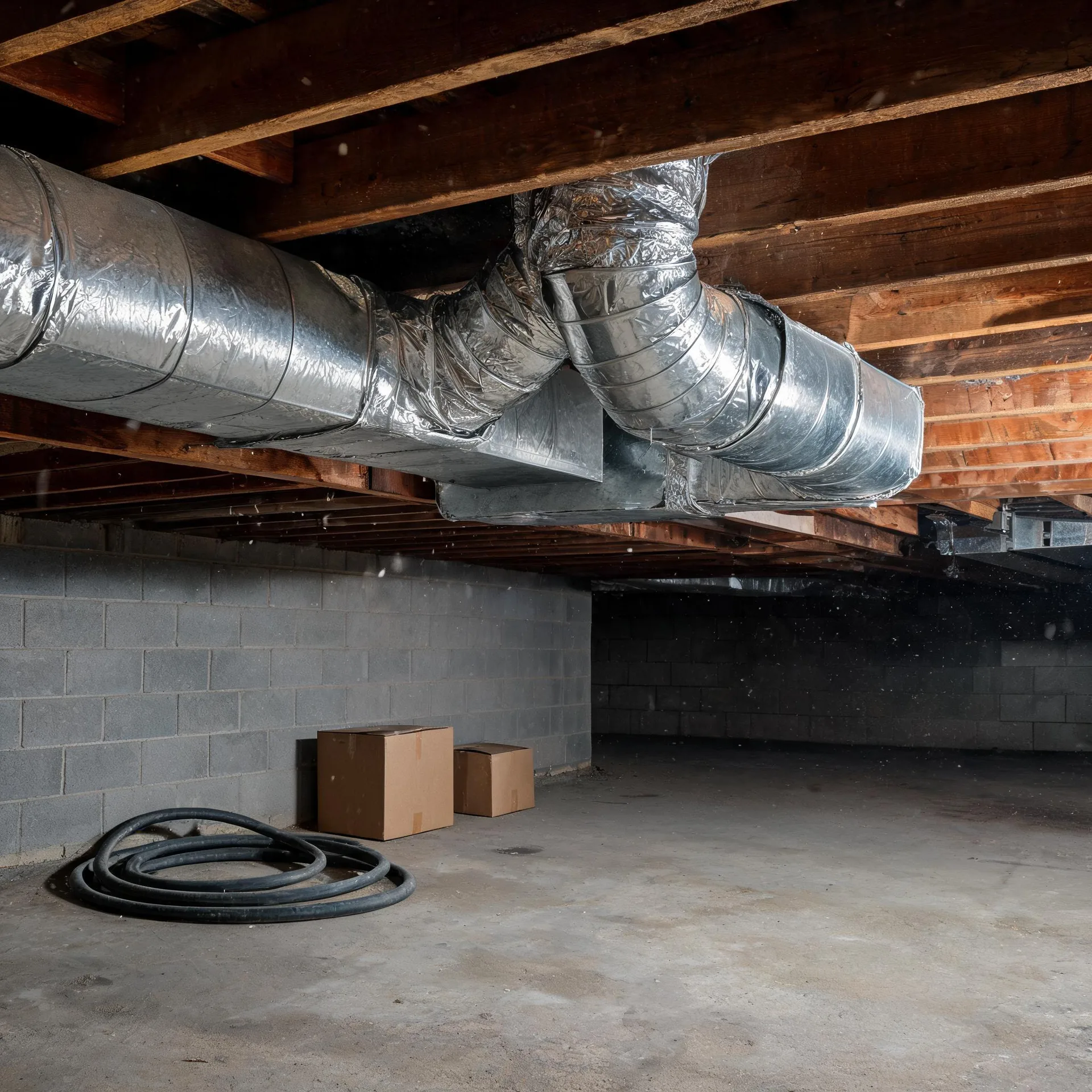
Ductwork and wiring in houses this old were put in for the equipment of their day, and the furnaces that replaced those original systems are themselves aging. Half the homes in Vigo County, Indiana were built in 1968 or earlier (2020-2024 ACS 5-year). A contractor who opens a unit in a house like this has to find out whether the heat exchanger, burner assembly, or ignition component it needs is still being made, and in what form. Aftermarket substitutes exist for some parts, direct replacements for others, and nothing practical for a few. That last category is what turns a repair call into a longer conversation.
The Parts of a Furnace a Contractor Checks First
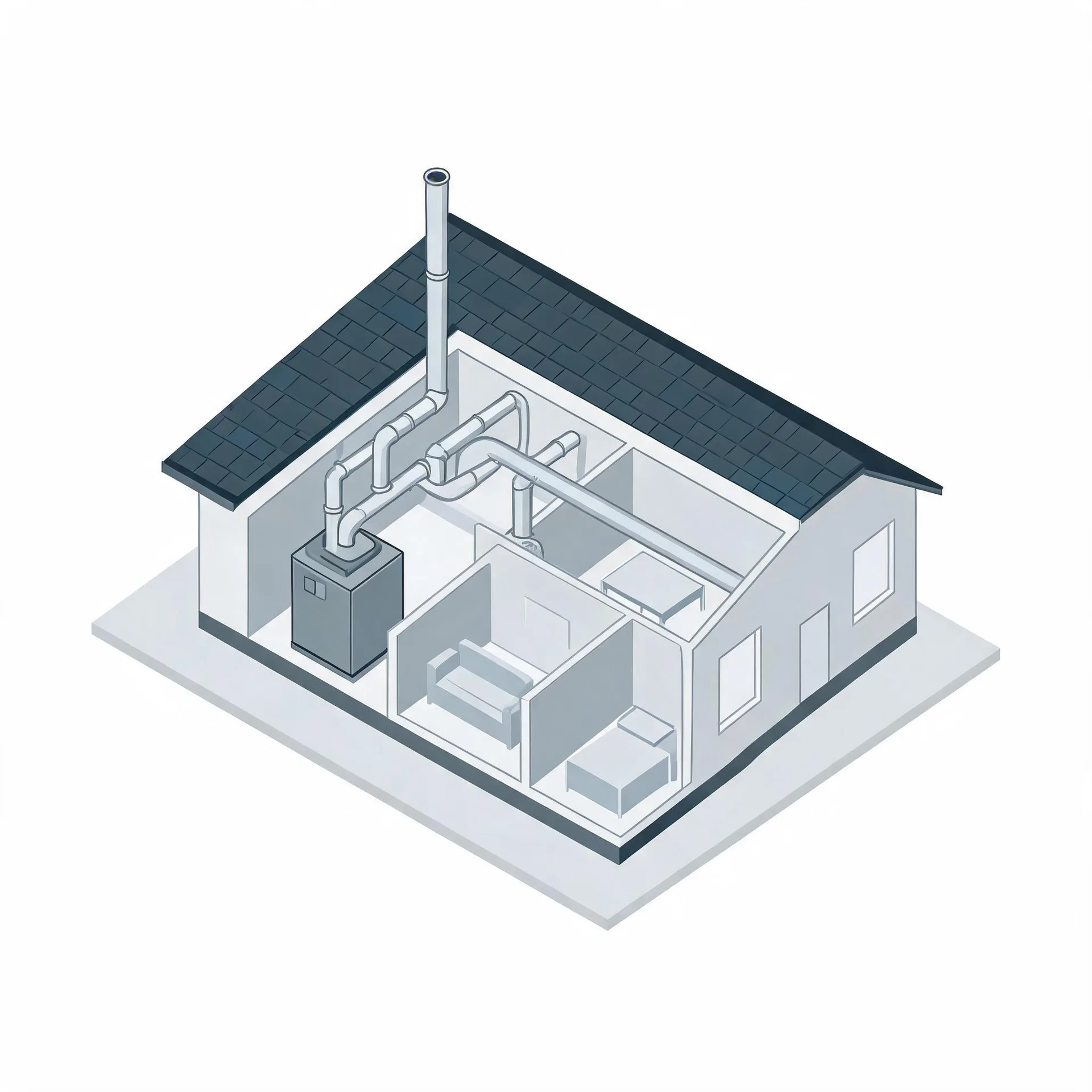
The heat exchanger sits at the core of the furnace cabinet in your utility space, and it is where most repair calls eventually lead. The burner assembly fires beneath it, and the blower motor pushes conditioned air out from behind it. When any of those three are off, the furnace either stops producing heat or stops moving it.
The flue pipe runs from the top of the cabinet up and out of the house, carrying combustion gases away. Alongside it, the control board and the igniter sit inside the cabinet and handle the startup sequence. A contractor checking a no-heat call will move through the igniter and the control board before pulling anything larger.
The drawing shows a representative furnace layout, and a licensed contractor will determine which components apply to your specific setup.
Find a contractor in Vigo CountyVigo County by the Numbers
76 severe weather events were recorded in Vigo County, Indiana between 2015 and 2024.
NOAA National Centers for Environmental Information, Storm Events Database, bulk CSV export, events 2015-01-01 through 2024-12-31.Half the homes in Vigo County, Indiana were built in 1968 or earlier (2020-2024 ACS 5-year).
U.S. Census Bureau, 2020-2024 American Community Survey 5-Year EstimatesVigo County, Indiana holds 46,891 housing units (2020-2024 ACS 5-year).
U.S. Census Bureau, 2020-2024 American Community Survey 5-Year EstimatesOwners occupy 61.7% of the occupied homes in Vigo County, Indiana (2020-2024 ACS 5-year).
U.S. Census Bureau, 2020-2024 American Community Survey 5-Year EstimatesCodes & Standards Covering Furnace Repair in Vigo County, Indiana4 sourced rules & standards
What HVAC Repair Looks Like in Vigo County
Non-weatherized gas furnaces manufactured on or after November 19, 2015 must reach 80.0 percent AFUE.
Non-weatherized oil-fired furnaces manufactured on or after November 19, 2015 must reach 83.0 percent AFUE.
Mobile home gas furnaces manufactured on or after November 19, 2015 must reach 80.0 percent AFUE.
Non-weatherized gas furnaces manufactured on or after December 18, 2028 must reach 95.0 percent AFUE, up from the 80.0 percent minimum that applies to units manufactured before that date.
Severe Weather Events in Vigo County
Harsh weather puts real strain on furnace systems, and Vigo County's climate is the reason local repairs look different from repairs elsewhere. A furnace that cycles hard through weather extremes wears faster, and knowing the local pattern helps a contractor diagnose what has actually failed.
76 severe weather events, 2015–2024. Source: NOAA National Centers for Environmental Information, Storm Events Database.