Tell us about the job
Takes about a minute. No obligation.
A furnace repair call in Gibson County asks a contractor to sort out what wore the system down before they can price the fix. 127 severe weather events were recorded in Gibson County, Indiana between 2015 and 2024. At that rate, severe weather is part of the normal operating life of equipment here, not an outlier season. Heat exchangers and limit switches in particular carry the load of repeated stress cycles, and a contractor working through a diagnosis will check those components for fatigue before concluding the failure is simply age. What they find there shapes both the repair and what they recommend next.
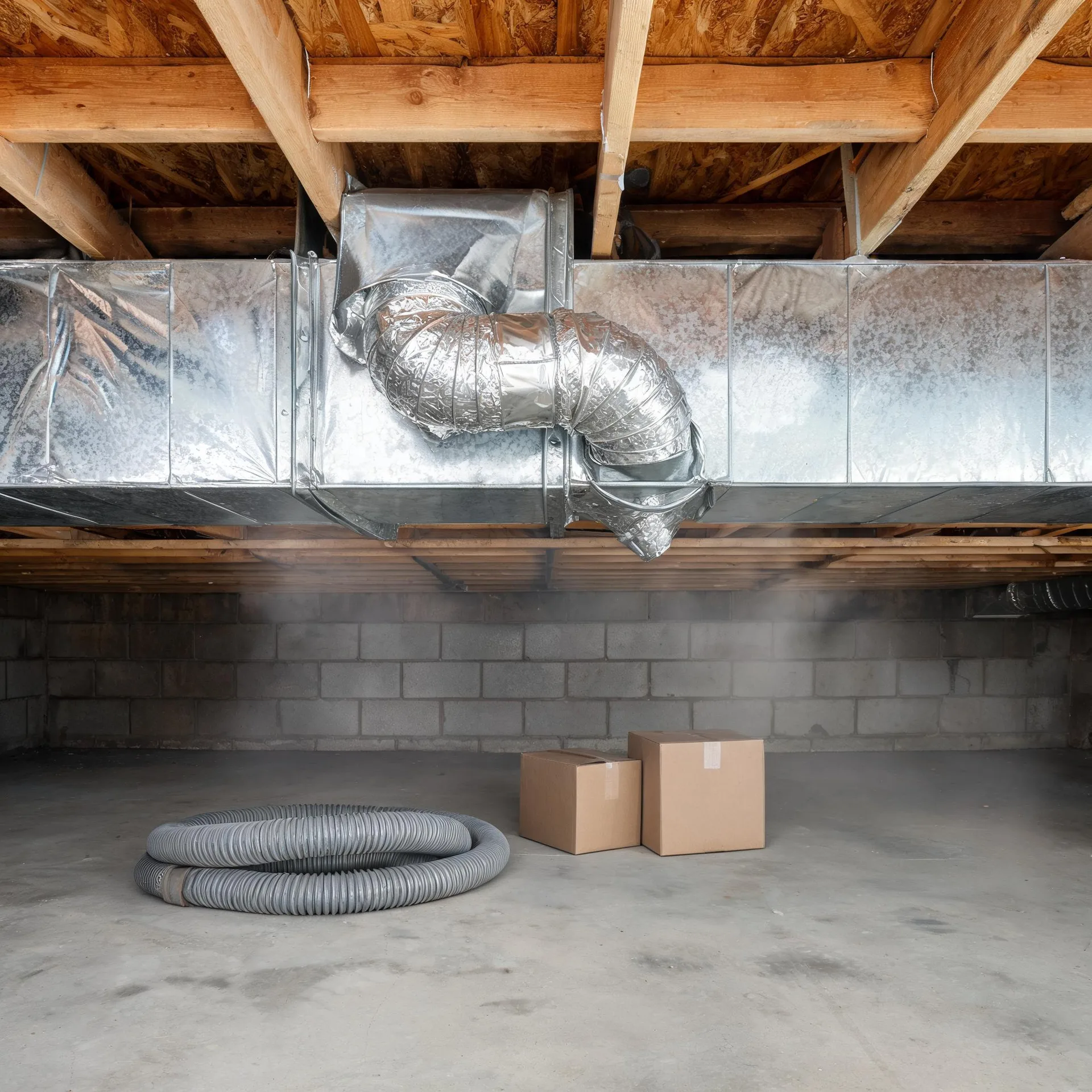
Ductwork in a house this old was sized and routed for whatever system was running when the house was last touched, not necessarily the furnace in it now. Half the homes in Gibson County, Indiana were built in 1974 or earlier (2020-2024 ACS 5-year). That gap in generations is what shapes a repair call: once a contractor opens the unit, the heat exchanger and burner assembly tell the real story, and the first practical question is whether the parts that system takes are still being made. If they are, the repair moves forward. If they are not, the scope changes and a homeowner is deciding something larger than a service call.
The Parts of a Furnace a Contractor Checks First
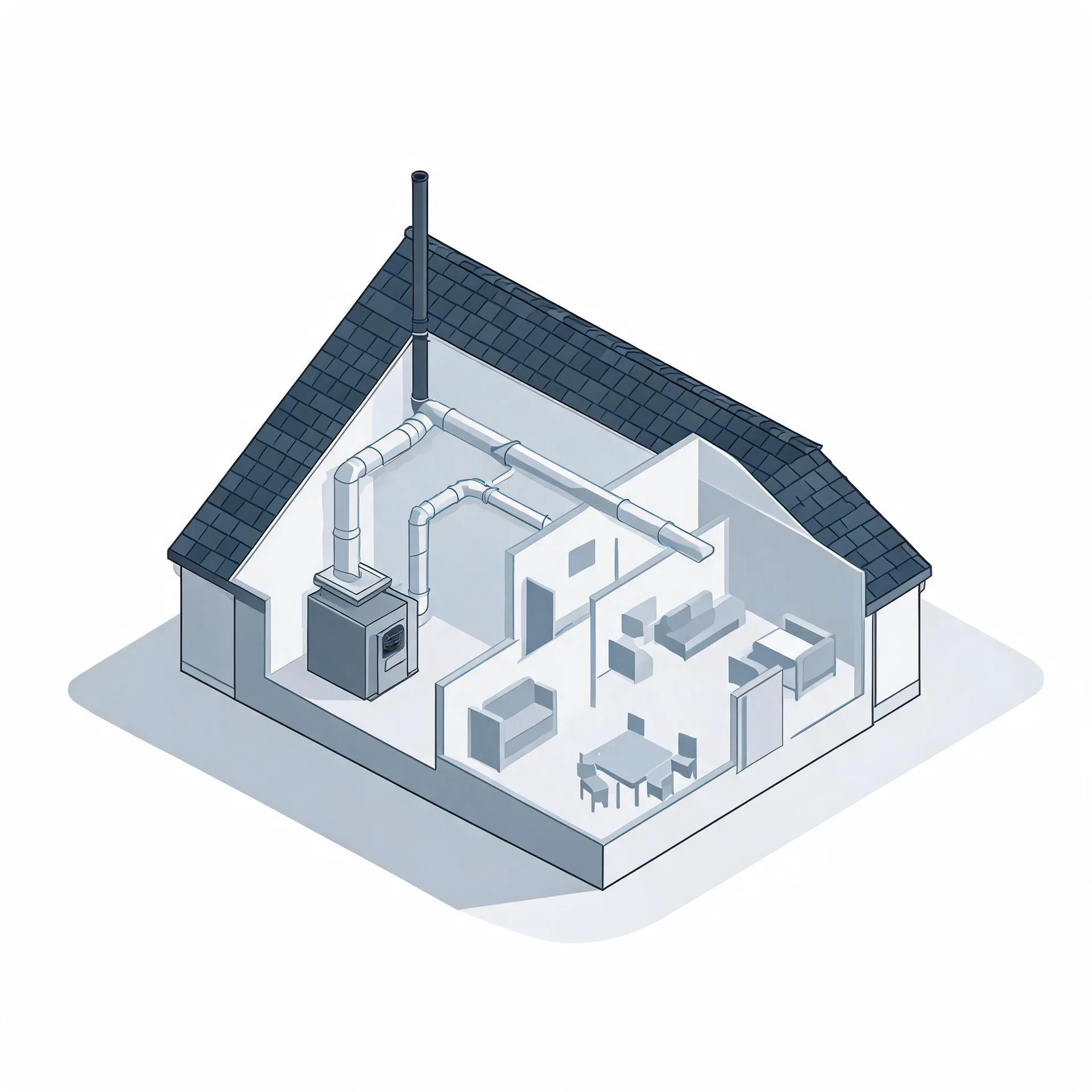
The heat exchanger sits at the core of the furnace cabinet in your basement or utility room. It is the piece a contractor looks at early because a crack there lets combustion gases pass into the air your home breathes. The burners feed into it, and when a burner is dirty or misaligned, the heat exchanger runs unevenly.
The blower motor and its fan sit below the heat exchanger and push conditioned air into the supply side of your duct system. The draft inducer, mounted at the top of the cabinet, pulls exhaust out through the flue. The control board ties every component together, and when something behaves erratically, that board is where a contractor looks to read fault codes and trace what failed.
The drawing shows the general layout of a furnace system, and a licensed contractor determines which parts apply to your specific installation.
Find a contractor in Gibson CountyGibson County, Indiana, by the numbers
127 severe weather events were recorded in Gibson County, Indiana between 2015 and 2024.
NOAA National Centers for Environmental Information, Storm Events Database, bulk CSV export, events 2015-01-01 through 2024-12-31.Half the homes in Gibson County, Indiana were built in 1974 or earlier (2020-2024 ACS 5-year).
U.S. Census Bureau, 2020-2024 American Community Survey 5-Year EstimatesGibson County, Indiana holds 14,890 housing units (2020-2024 ACS 5-year).
U.S. Census Bureau, 2020-2024 American Community Survey 5-Year EstimatesOwners occupy 76.7% of the occupied homes in Gibson County, Indiana (2020-2024 ACS 5-year).
U.S. Census Bureau, 2020-2024 American Community Survey 5-Year EstimatesCodes & Standards Governing Furnace Repair in Gibson County, Indiana4 sourced rules & standards
What HVAC Repair Looks Like in Gibson County
Non-weatherized gas furnaces manufactured on or after November 19, 2015 must reach 80.0 percent AFUE.
Non-weatherized oil-fired furnaces manufactured on or after November 19, 2015 must reach 83.0 percent AFUE.
Mobile home gas furnaces manufactured on or after November 19, 2015 must reach 80.0 percent AFUE.
Non-weatherized gas furnaces manufactured on or after December 18, 2028 must reach 95.0 percent AFUE, up from the 80.0 percent minimum that applies to units manufactured before that date.
Severe Weather Events in Gibson County
Harsh weather puts real strain on furnace components, and how hard that strain runs depends on what the local climate actually delivers. That makes weather history in Gibson County a direct input to understanding repair frequency and equipment wear.
127 severe weather events, 2015–2024. Source: NOAA National Centers for Environmental Information, Storm Events Database.