Tell us about the job
Takes about a minute. No obligation.

A furnace quoted and sized for a milder place will not hold up to what Porter County asks of it. 145 severe weather events were recorded in Porter County, Indiana between 2015 and 2024. At that rate, severe weather is not an occasional surprise for a system here; it is part of the normal operating load a furnace accumulates over its life. A contractor installing a new furnace in this county has to account for that load when selecting equipment capacity and specifying the installation, because an undersized unit running hard against regular weather stress will wear its heat exchanger and blower components faster than one sized to the actual demand.
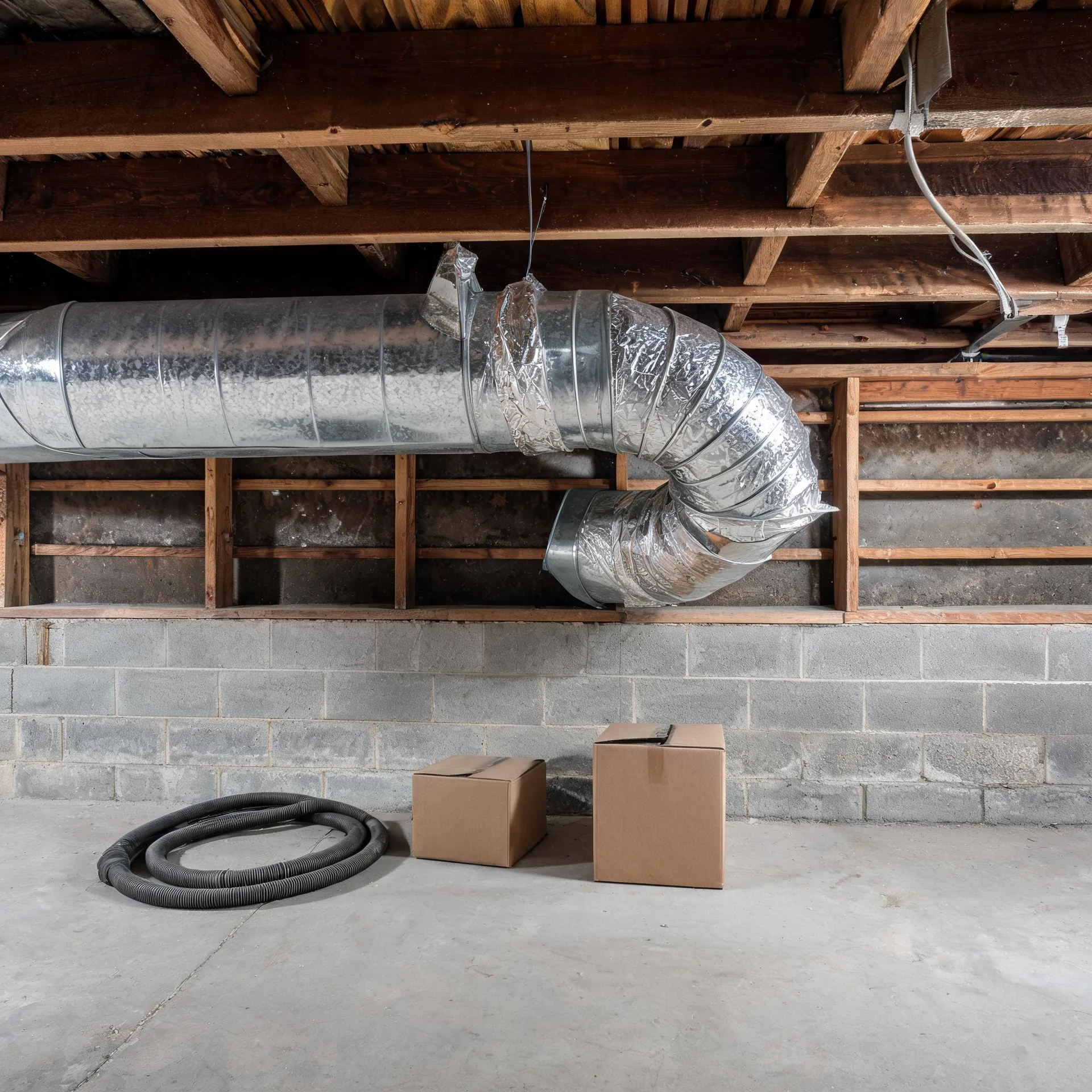
Ductwork laid down for a furnace that no longer exists is what shapes a replacement job in much of this county. Half the homes in Porter County, Indiana were built in 1982 or earlier (2020-2024 ACS 5-year). The gap between what those ducts were designed to carry and what a modern furnace delivers is where a contractor spends the real assessment time: measuring static pressure, checking trunk sizes, and deciding whether the existing runs can handle the new system's airflow without being torn out or rerouted. The electrical side follows the same logic, since service capacity in houses that age was not planned around today's equipment loads. Get the duct and panel picture wrong at the start and the equipment selection that follows it is built on a bad foundation.
What Gets Installed With a New Furnace
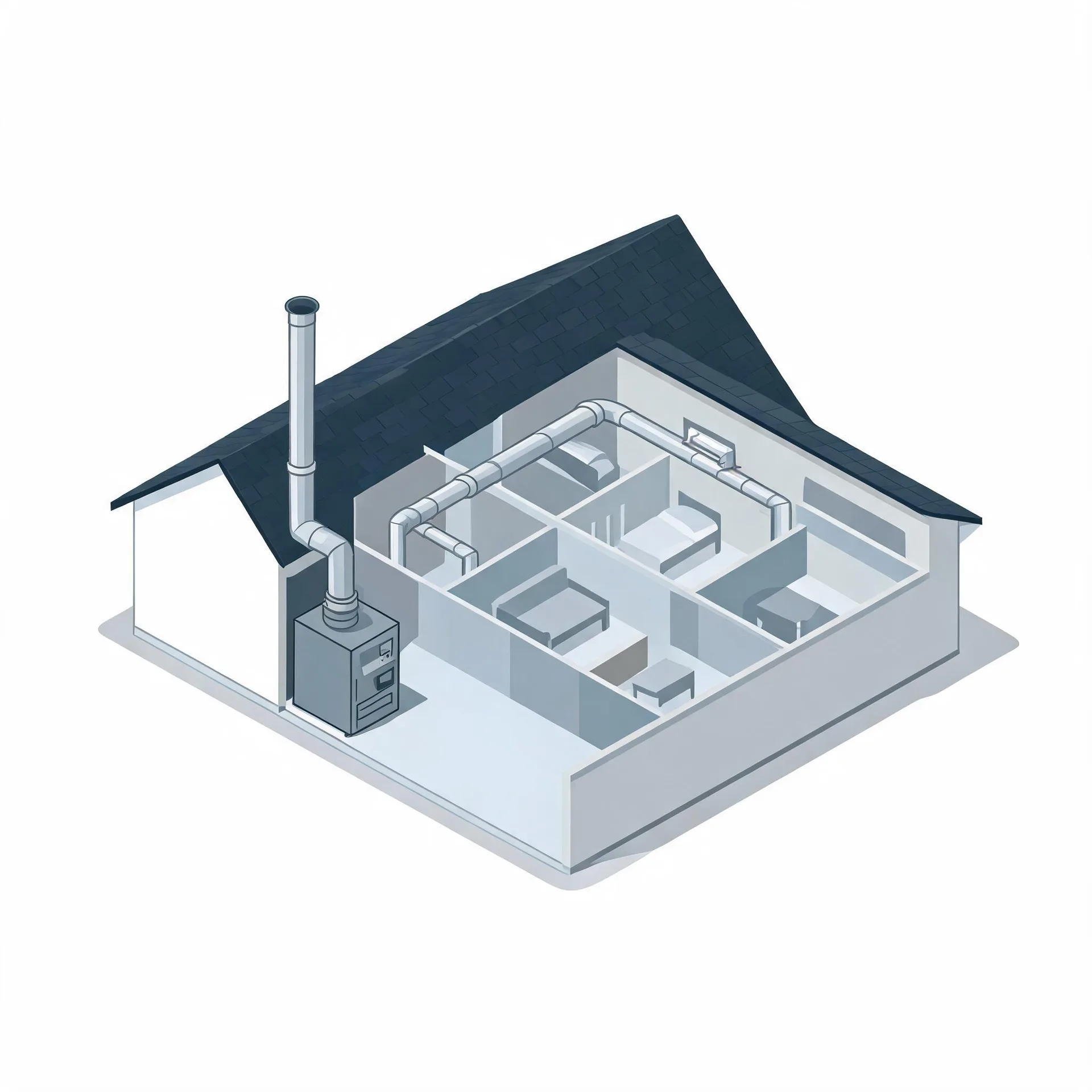
The furnace itself sits in a utility space, most often a basement, mechanical room, or closet. It is the box that generates heat. Mounted on or near it, the air handler moves conditioned air into the duct system that serves the rest of the house.
The flue pipe runs from the furnace to an exterior wall or through the roof, carrying combustion gases out of the house. A thermostat goes on an interior wall and gives the homeowner control over the system. The contractor also sets a filter housing where return air enters the unit before it is heated and circulated.
The drawing shows a typical layout, and a licensed contractor determines exactly what applies to your home.
Find a contractor in Porter CountyPorter County, Indiana, by the numbers
145 severe weather events were recorded in Porter County, Indiana between 2015 and 2024.
NOAA National Centers for Environmental Information, Storm Events Database, bulk CSV export, events 2015-01-01 through 2024-12-31.Half the homes in Porter County, Indiana were built in 1982 or earlier (2020-2024 ACS 5-year).
U.S. Census Bureau, 2020-2024 American Community Survey 5-Year EstimatesPorter County, Indiana holds 72,662 housing units (2020-2024 ACS 5-year).
U.S. Census Bureau, 2020-2024 American Community Survey 5-Year EstimatesOwners occupy 77.7% of the occupied homes in Porter County, Indiana (2020-2024 ACS 5-year).
U.S. Census Bureau, 2020-2024 American Community Survey 5-Year EstimatesFurnace Installation Rules & Standards for Porter County, Indiana4 sourced regulations and codes
What HVAC Installation Looks Like in Porter County
Non-weatherized gas furnaces manufactured on or after November 19, 2015 must reach 80.0 percent AFUE.
Non-weatherized oil-fired furnaces manufactured on or after November 19, 2015 must reach 83.0 percent AFUE.
Mobile home gas furnaces manufactured on or after November 19, 2015 must reach 80.0 percent AFUE.
Non-weatherized gas furnaces manufactured on or after December 18, 2028 must reach 95.0 percent AFUE, up from the 80.0 percent minimum that applies to units manufactured before that date.
Severe Weather Events in Porter County
Heating equipment in Porter County works against whatever the climate puts on it, and that workload shapes what gets installed and how it gets sized. A furnace that fits the local pattern lasts longer and costs less to run.
145 severe weather events, 2015–2024. Source: NOAA National Centers for Environmental Information, Storm Events Database.